
6 Phi Phi dive sites a local guide trusts for sharks and photos
Bida Nok, Bida Nai, King Cruiser wreck, Anemone Reef, Hin Dot and Three Pinnacles are the six Phi Phi diving sites worth building a trip around. Sheltered bays at Bida Nok and Bida Nai suit confident beginners, while the wreck and pinnacles reward divers with a few dozen logged dives. Phi Phi dives year-round, but November to April brings the calmest seas and clearest water.
TL;DR:
- Most dive sites around Phi Phi, like Bida Nok and Bida Nai, are suitable for beginners with calm waters and easy depths, especially from November to April.
- Advanced sites such as the King Cruiser wreck and Anemone Reef require stronger current awareness and experience, with visibility often reduced at wrecks.
- Site conditions, including current and visibility, heavily influence which locations are accessible on any given day, especially outside peak season.
- Wildlife sightings include leopard sharks at Bida Nok, blacktip reef sharks at Hin Dot, and turtles at most sites, with macro photography opportunities on the Three Pinnacles.
- Booking with a local operator ensures site conditions, safety gear, and expert guidance are tailored to current conditions, minimizing risk and maximizing wildlife encounters.
Table of Contents
- The best diving spots around Phi Phi at a glance
- What each Phi Phi dive site actually looks like underwater
- Matching your certification to the right site
- Best time to dive Phi Phi and what the water looks like
- Wildlife you’ll actually see, and how to photograph it well
- Getting there, safety checks and what to ask your operator
- Why Phi Phi remains my go-to recommendation for shark encounters
- Book a guided Phi Phi dive or snorkel day with Qbictravel
- Sources
The best diving spots around Phi Phi at a glance
You don’t need to dive all 25 or so recognised sites around Koh Phi Phi to have a brilliant week underwater. Six sites cover almost every skill level and interest, from lazy leopard sharks to schooling barracuda around a sunken ferry.
Beginner-friendly and sheltered:
- Koh Bida Nok — a wall and pinnacle dive with a calm southern bay for training dives and reliable leopard shark sightings on the sandy ledges below.
- Koh Bida Nai — a gentler cousin to Bida Nok, with soft coral gardens and easier bottom time for newer divers.
Current-aware and advanced:
- King Cruiser wreck — a sunken car ferry that now hosts schooling fish and soft coral growth, popular on day-trip itineraries out of Phuket.
- Anemone Reef — a submerged pinnacle carpeted in anemones, prone to surface current and best tackled with an experienced guide.
- Hin Dot — a rocky pinnacle known for swim-throughs and the odd blacktip reef shark cruising past.
- Three Pinnacles — near Tonsai Bay, this is the macro photographer’s site, thick with nudibranchs and small reef life.
What each Phi Phi dive site actually looks like underwater
Every site on this list has its own personality, and knowing what’s waiting below the surface changes how you brief yourself before jumping in.
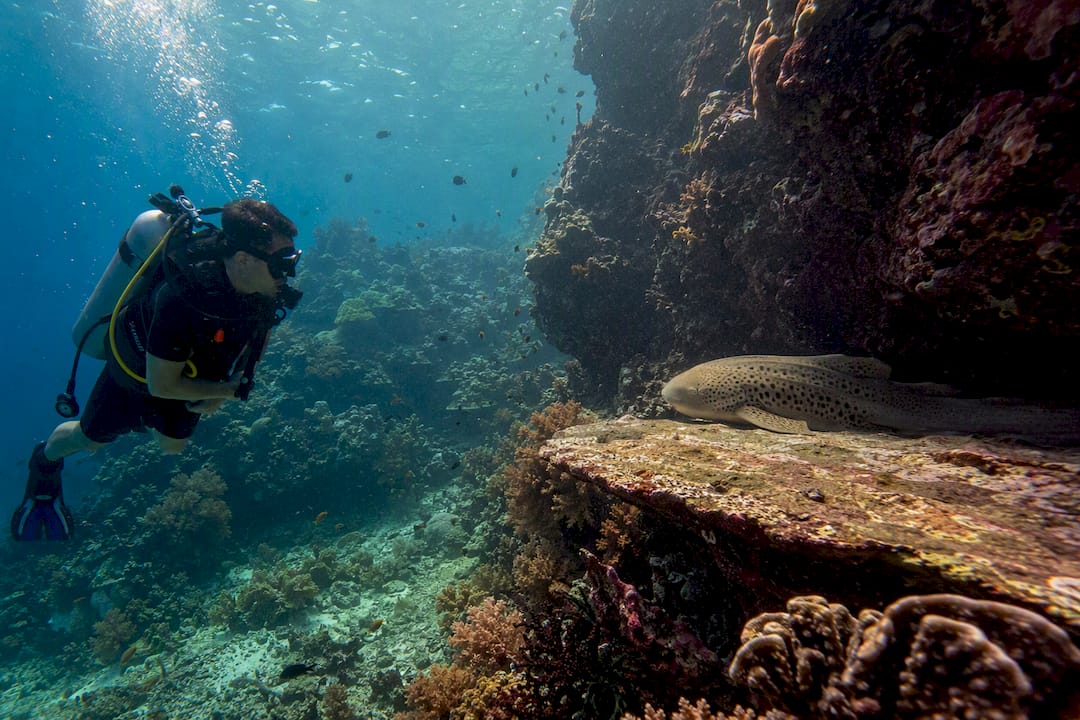
Koh Bida Nok is the headline act. It’s a wall and pinnacle dive with terraces and swim-throughs running from around 5 to 28 metres, and visibility often reaches 20 to 25 metres on a good day. Leopard sharks rest on sandy ledges between 12 and 18 metres with enough regularity that spotting one feels almost guaranteed. The site suits every level because it offers a sheltered southern bay for training dives and a deeper northern entry for divers who want more depth and current exposure.
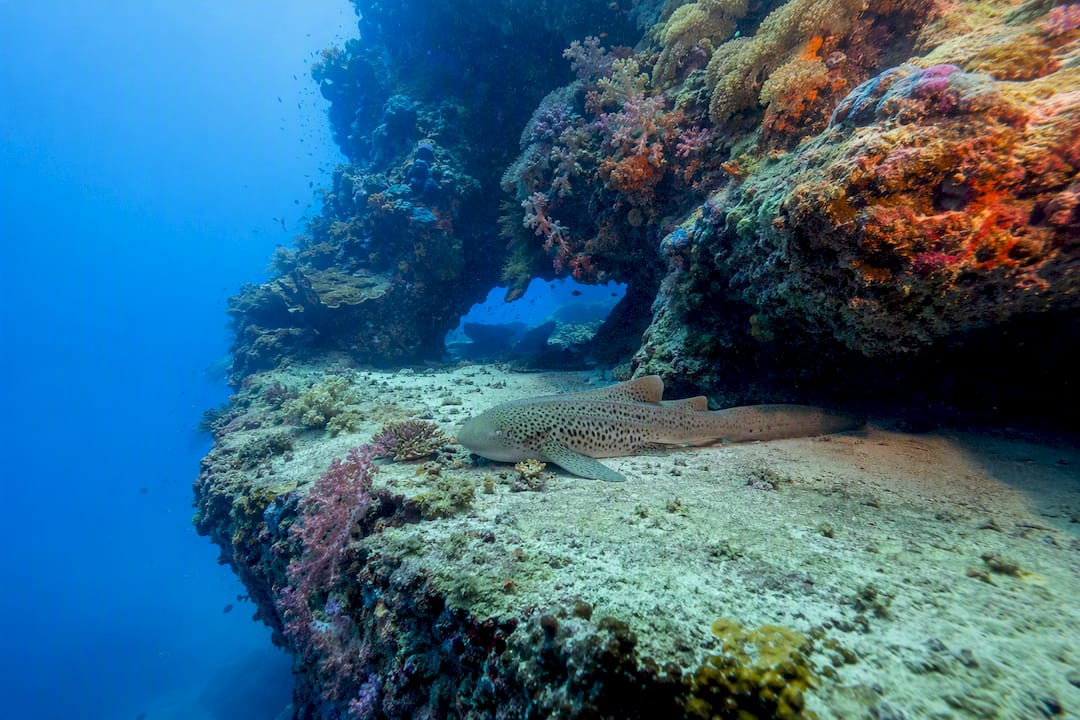
Koh Bida Nai sits close by and plays a gentler role, with softer topography and fewer surprises in the current department, making it a natural pairing with Bida Nok on a two-tank day.
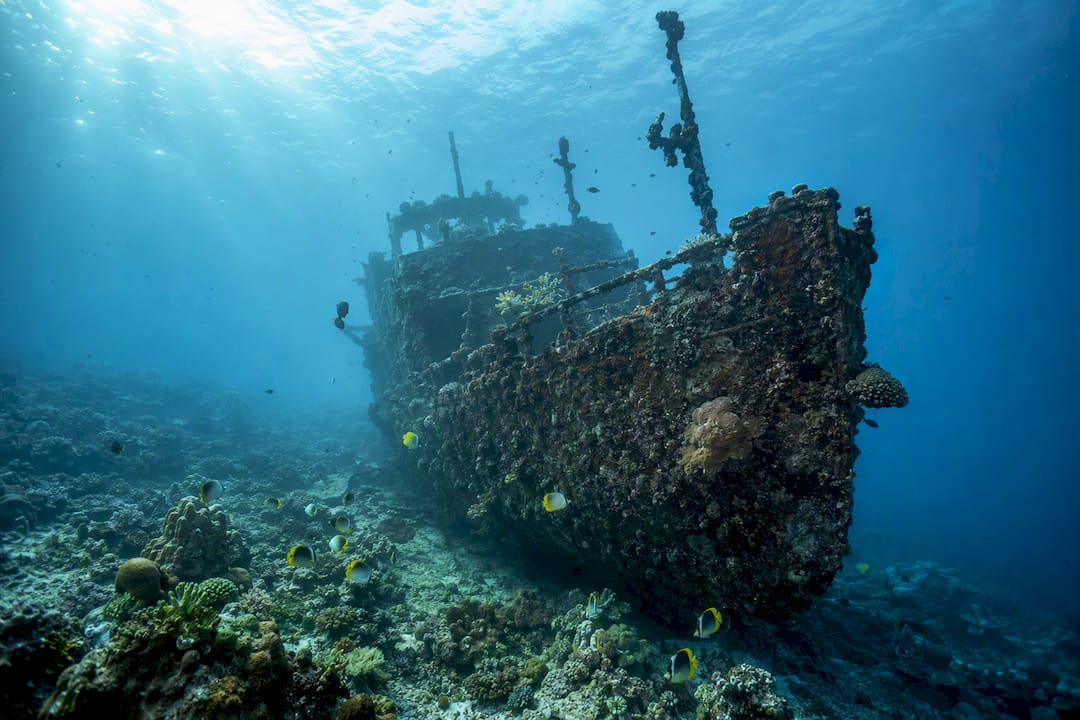
King Cruiser wreck rests upright on the seabed after sinking in 1997, and the structure now shelters schools of fusiliers and batfish along with soft coral colonies climbing the hull. Visibility runs murkier than at the Bidas, so a torch helps even in daylight.
Anemone Reef is a submerged pinnacle rising from around 25 metres to just below the surface, carpeted in anemones and often patrolled by schooling barracuda. Surface current can build quickly here, which is exactly why a guide who knows the day’s conditions matters more than at the sheltered bays.
Hin Dot offers swim-throughs and rocky overhangs between roughly 5 and 20 metres, with blacktip reef sharks a realistic if not daily sighting.
Three Pinnacles, tucked near Tonsai Bay, rewards patience over depth. Dense nudibranch populations and unusual small subjects make it the pick for macro photographers, and it’s often overlooked by divers chasing bigger animals elsewhere.
Matching your certification to the right site
Not every Phi Phi site suits every diver, and mismatching skill level to conditions is the most common mistake we see on group bookings.
- Open water divers should prioritise Koh Bida Nok’s southern bay and Koh Bida Nai, where depth stays forgiving and current is manageable.
- Advanced divers can push into Bida Nok’s northern entry, Anemone Reef and Hin Dot, where current and depth both increase.
- Experienced divers with wreck training get the most from King Cruiser, given the reduced visibility and structure to navigate.
- Whatever your level, ask your operator about the day’s current forecast, group size and whether the dive plan matches your last logged dive.
A standard two-tank day out of Phi Phi Don or Phuket typically covers two of these sites depending on sea conditions.
Best time to dive Phi Phi and what the water looks like
Peak window: November to April. This period brings the calmest seas and the clearest water, with visibility regularly hitting 20 to 25 metres at sites like Bida Nok. Diving continues year-round, though conditions outside this window turn more variable, with stronger swell and murkier water on unlucky days.
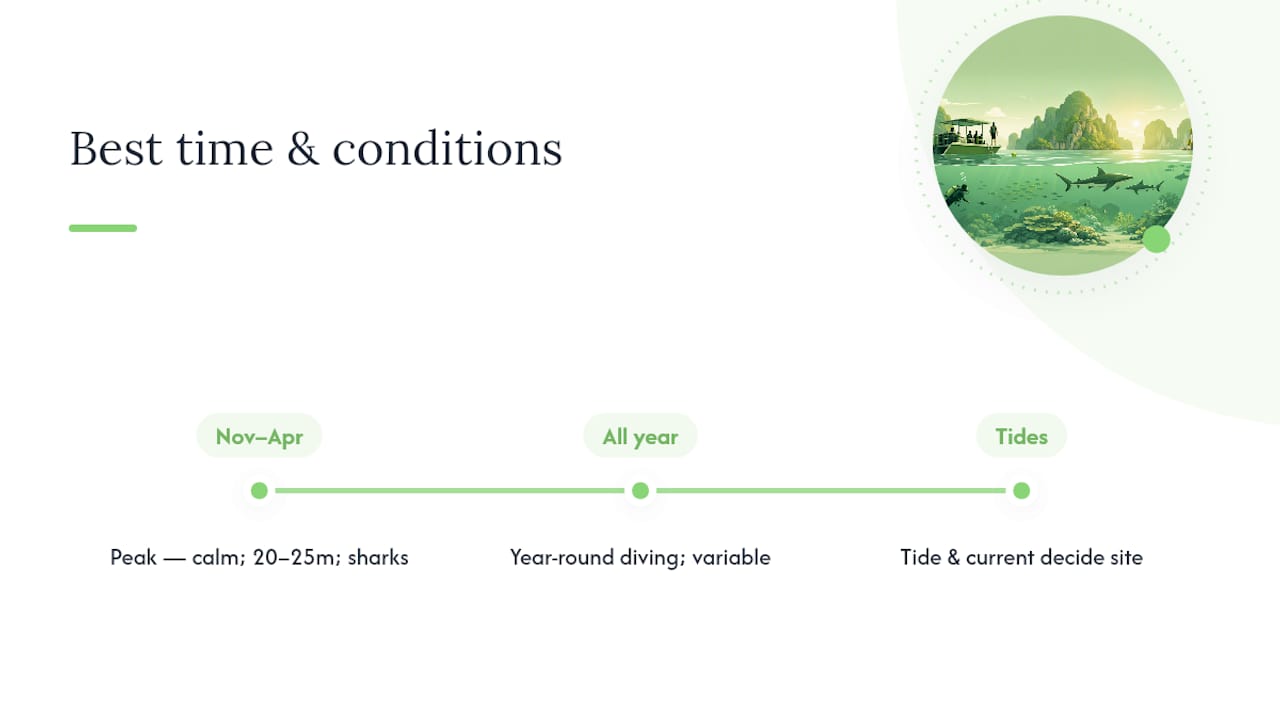
Plankton blooms during the peak months occasionally draw whale sharks into the area, a genuine bonus for anyone diving the outer pinnacles in that season. Tide and current on the day often decide which sites an operator actually runs, so a sheltered bay might replace an exposed pinnacle at short notice. That’s not a downgrade, just good judgement.
Wildlife you’ll actually see, and how to photograph it well
Leopard sharks resting on sandy ledges at Bida Nok are the signature sighting, and the best approach is from above rather than head-on, which reduces disturbance and improves your chances of a longer look. Blacktip reef sharks turn up around Hin Dot, and turtles drift past most of the sites on a lazy day.
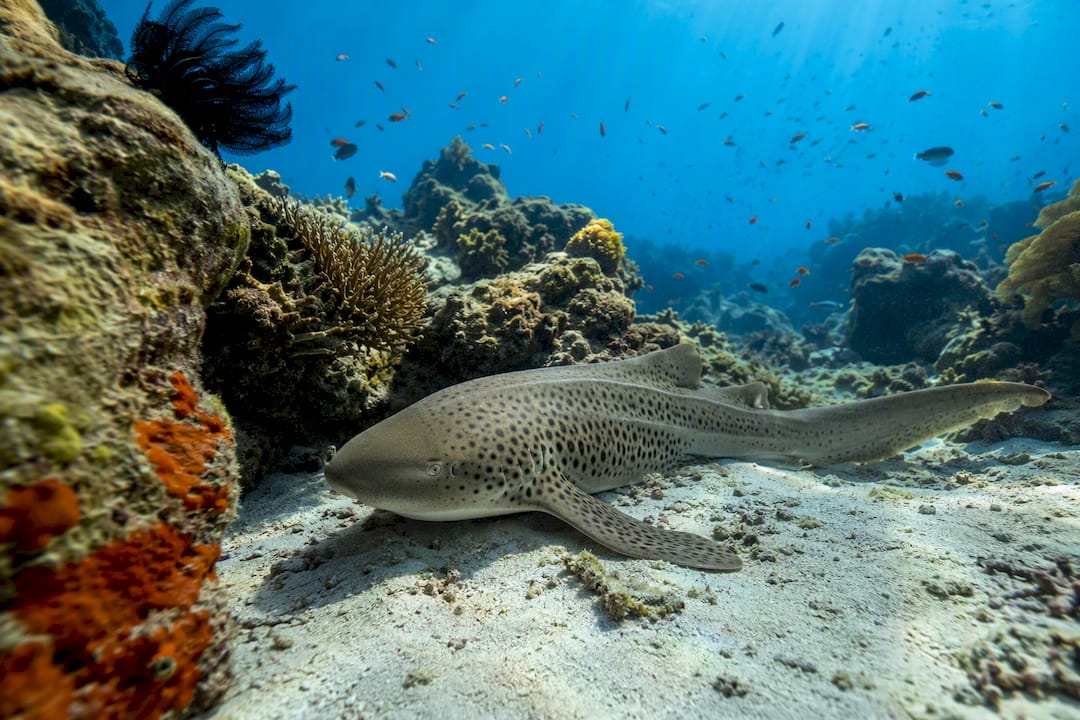
For camera settings, walls and wrecks reward wide-angle lenses around 14 to 16mm equivalent, framing the subject against the scale of the structure. Pinnacles and crevices call for macro glass, ideally 60 to 105mm, paired with a slow, patient search rather than a quick scan.
Pro Tip: Deploy your surface marker buoy well before ascent at exposed pinnacles like Anemone Reef. Current can drift a group faster than you expect, and an SMB gives your boat a fixed point to find you by.
Getting there, safety checks and what to ask your operator
Most dive days launch from Phi Phi Don itself or run as day trips from Phuket or Krabi, with boat transfers typically taking under an hour depending on departure point. No formal marine park fee applies to sites like the Bidas in most reference guides, though operators still manage access and local rules on the day.
Before booking, ask your operator:
- What’s the guide-to-diver ratio on the boat?
- Is emergency oxygen carried on every trip?
- Does the guide have current experience at exposed sites like Anemone Reef?
- Are SMBs and whistles standard kit for every diver?
Why Phi Phi remains my go-to recommendation for shark encounters
Phi Phi sits in a sweet spot between the seasonal Similan Islands and Phuket’s calmer inshore reefs. The limestone walls, reliable soft coral growth and year-round access make it a far safer bet for shark encounters than chasing a narrower Similan season.
At Qbictravel, we build trips around the diver in front of us, not a fixed script. If the forecast turns rough at Anemone Reef, we’d rather move the group to Bida Nok than push a dive that isn’t worth the risk.
— Carl
Book a guided Phi Phi dive or snorkel day with Qbictravel
Qbictravel is the local alternative to piecing together transfers, gear rental and site knowledge yourself. We handle the boat, the guide, the equipment and the site selection based on the day’s actual conditions, not a fixed brochure route, so you spend your time underwater instead of on logistics.

If you’re after a full scuba day, our Phuket diving tours cover Phi Phi’s top sites with local guides who know when to swap Anemone Reef for a sheltered bay. Not yet certified? Our Phuket diving certification guide walks through your options before you commit to a trip. Travelling with a mixed group of divers and snorkellers? Check our best snorkelling spots in Phi Phi guide, and browse our full tours page to see what fits your dates. Get in touch on WhatsApp or book online to lock in your Phi Phi day.
Sources
- Koh Bida Nok | Scuba Diving Guide | Underwater Atlas
- Bida Nok dive site | DiveNavigator
- Koh Phi Phi diving (Midnight Blue Elephant)


