
Half-day walk in Old Phuket Town: food, museums & the Sunday market
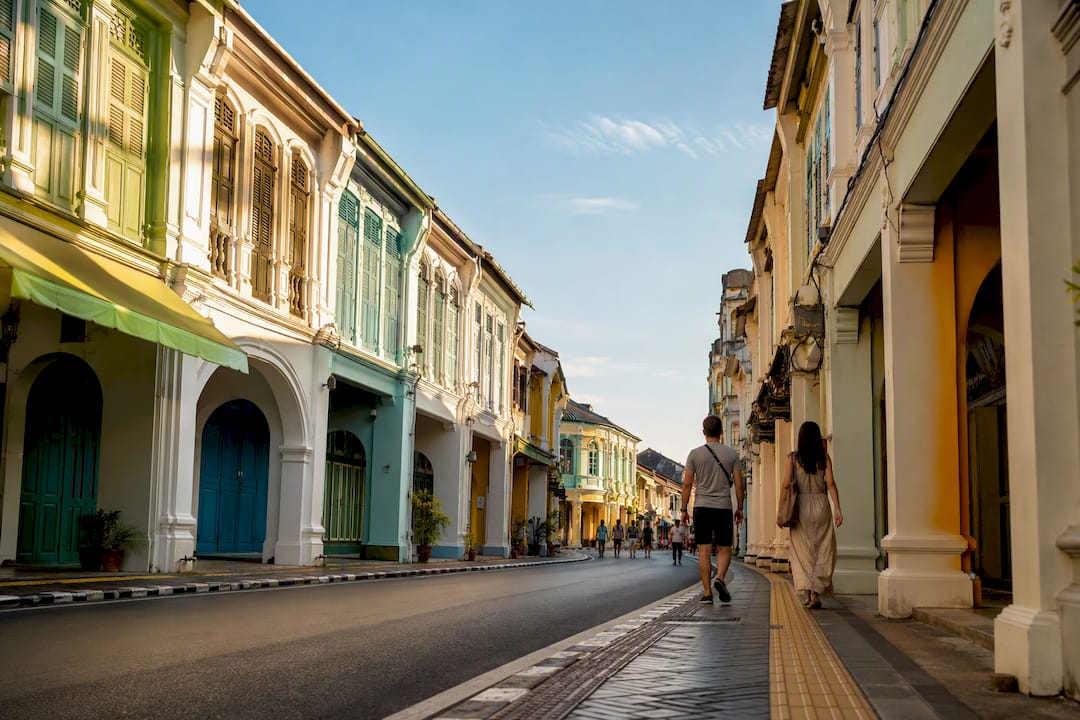
Old Phuket Town is Phuket’s walkable, Sino-Portuguese heart, built on 19th century tin money and Peranakan culture, and the best way to see it is a half-day walk along Thalang Road, timed for the Sunday Walking Street whenever your dates allow. You’ll cover pastel shophouses, one solid museum, and a proper feed, all inside a loop that takes a few hours on foot.
TL;DR:
- Visiting during November to March offers the best weather, with early mornings and late afternoons ideal for avoiding heat and crowds.
- The main walking route takes about three to four hours, covering architectural highlights, museums, and food stops, with shorter options for less mobility.
- Thalang Road and Soi Romanee are the key streets, with Soi Romanee best photographed early or late to avoid congestion and harsh midday light.
- Sunday Walking Street transforms Thalang Road into a lively food market from 4pm, making it the centerpiece of any visit if timed right.
- Cash is preferred for street food and small shops, and dress modestly when visiting active shrines like Jui Tui.
Table of Contents
- What makes Old Phuket Town worth exploring on foot?
- What’s the best walking route through Old Phuket Town?
- Where should you eat in Old Phuket Town?
- When is the Sunday Walking Street on and what’s it like?
- Which museums and heritage houses are worth your time?
- Should you stay in Old Town or near the beach?
- When should you visit Old Phuket Town?
- How do you get to Old Phuket Town and get around once there?
- What should you know before you go?
- Why this guide leads with the walk, not a checklist
- Want a guided version of this walk instead?
- Where this guide’s facts come from
- Sources
What makes Old Phuket Town worth exploring on foot?
The short version of Phuket’s history explains almost everything you’ll see on the street. Tin mining brought waves of Hokkien Chinese labourers to the island through the 1800s, and the wealth that followed built a merchant class with connections stretching to Penang and other Straits ports. That mix of Chinese tradition and colonial-era European style produced the Peranakan cultural fusion you’ll still find in the architecture, the shrines, and the food today.
Thalang Road is where that history is easiest to read. It’s the main artery of Old Phuket Town, lined with two and three-storey shophouses that mix Chinese timber shutters with European stucco arches and columns. Government offices, old trading houses, and family shophouses sit side by side, and because the street stays busy with cafés and shops during the day, it’s the natural spine for any walking tour.
Soi Romanee, a short lane just off Thalang Road, is the one most people photograph. It’s narrow, closed to most traffic, and painted in the pastel yellows, blues, and pinks that have made it Old Town’s most recognisable stretch. It was once a red-light district; today it’s mostly cafés, boutique doorways, and photographers waiting for a gap in the crowd. Go early or late in the day if you want the lane without twenty other people in your shot.
Beyond the two main streets, a handful of stops deserve a slot in your plan:
- Thai Hua Museum — a restored 1930s Chinese school building that traces Hokkien migration, tin mining, and the Peranakan lifestyle through room-by-room exhibits.
- Baan Chinpracha (Chinpracha House) — a private family mansion still owned by descendants of a Phuket tin baron, giving a rare look at how the merchant elite actually lived.
- Jui Tui Shrine — an active Chinese shrine rather than a tourist prop, tied closely to Phuket’s Vegetarian Festival and worth a quiet five minutes even outside festival season.
- Phang Nga Road and Dibuk Road — quieter side streets with government buildings and grand old residences, good for a slower architectural detour.
- Krabi Road and Yaowarat Road — less photographed but useful for spotting original shopfront details away from the main crowds.
The architecture itself rewards a slower look. Original shophouses tend to have deep, narrow footprints, ornate stucco motifs above the doorways, and wooden shutters rather than glass. Many have been converted into cafés and boutiques, and conservation pressure means some “restorations” lean heavier on modern retrofit than authentic detail. Once you know what to look for, spotting the genuine facades from the reproductions becomes part of the fun.
What’s the best walking route through Old Phuket Town?
A half-day walk of two to four hours is enough to cover the architecture, grab a coffee, and get through one museum properly. If you want the market too, stretch it into a full afternoon and finish on Thalang Road as the Sunday stalls set up.
Here’s a route that works whether you’re doing the short version or the long one:
- Start on Thalang Road (0–30 minutes). Begin near the junction with Phang Nga Road and walk the length of the street slowly, noting the facades on both sides. This is your orientation lap.
- Detour into Soi Romanee (15–20 minutes). Turn off Thalang Road for the photogenic lane, then loop back.
- Thai Hua Museum (45–60 minutes). Budget the best part of an hour here if you want to actually read the exhibits rather than skim them.
- Coffee stop on Dibuk or Phang Nga Road (20–30 minutes). Most cafés in this stretch sit inside restored shophouses, and they double as a genuine break from the heat.
- Baan Chinpracha visit (30–45 minutes). A shorter stop than the museum, but worth it for the interior detail alone.
- Jui Tui Shrine (10–15 minutes). A quick, quiet stop; keep your voice down and your camera respectful.
- Krabi Road or Yaowarat Road wander (20–30 minutes). Optional, for anyone with energy left and a taste for less-photographed streets.
- Finish on Thalang Road for food. If it’s Sunday, this is where the Walking Street market takes over from around 4pm.
That gives you roughly three and a half hours for the full loop, or you can cut steps 5 and 7 for a tighter two-hour version if the heat or your schedule demands it.
For anyone with limited mobility or visiting during the rainiest months, stick to Thalang Road and the museum only; both are flat, shaded in parts, and short enough to manage without long stretches between rest points. Skip Soi Romanee’s uneven side paths if you’re using a wheelchair or pushing a pram, and lean on tuk-tuks between stops rather than walking the full loop.
Pro Tip: Shoot Soi Romanee before 9am or after 4pm. The light is softer, the lane is quieter, and you’ll avoid the worst of the midday crowd stacking up for the same three photo spots.
Where should you eat in Old Phuket Town?
Peranakan food is the reason many visitors extend their walk into a full afternoon. The Chinese-Malay-Thai fusion that shaped the architecture shaped the kitchen too, and a handful of dishes turn up again and again on local menus.
Look out for these on any menu or stall:
- Moo hong — slow-braised pork belly in a sweet soy sauce, a Phuket signature rather than a generic Thai dish.
- Hokkien mee — thick yellow noodles stir-fried with pork, prawns, and egg.
- Oh aew — a chewy dessert jelly served with syrup and crushed ice, good for cooling down mid-walk.
- Dim sum and Hokkien-style dumplings — found at several morning stalls near the market streets.
China Inn Café, tucked into a restored shophouse on Thalang Road, is one of the better-known heritage cafés for a reason: the building itself is part of the draw, with original wooden beams and a courtyard that feels a world away from the street outside. It’s a good midpoint stop on the walking route above, whether you want coffee, a light lunch, or just shade.
Beyond that one, the stretch of cafés along Dibuk and Thalang Road tends to be reliable rather than showy, and most convert former shophouses rather than building new. Street stalls are a different rhythm entirely: daytime stalls near Ranong Road lean towards produce, snacks, and quick noodle dishes, while the evening stalls that appear for Sunday Walking Street focus on grilled skewers, desserts, and dishes meant to be eaten walking.
A few practical points worth knowing before you go:
- Most stalls and smaller cafés expect cash; card readers are common at sit-down restaurants but far less reliable at street level.
- Vegetarian and vegan options exist but aren’t always signposted in English, so a translation app or a simple “no meat” phrase in Thai helps.
- Weekday lunchtimes are quieter than weekend evenings, so if you want a relaxed sit-down meal rather than a market crush, aim for midday on a Tuesday or Wednesday.
- Reservations are rarely needed outside peak December to January dates, though popular cafés can still queue at weekends.
When is the Sunday Walking Street on and what’s it like?
Sunday Walking Street, known locally as Lard Yai, closes Thalang Road to traffic and turns it into the busiest food market in Old Phuket Town. Arrive between 4pm and 6pm if you want to browse stalls before the evening crush sets in properly. The market runs into the night, but the earlier window gives you first pick of the food without fighting crowds three deep at every stall.
Expect grilled meats, regional desserts, handicrafts, and live street performers scattered along the closed road. It is regarded as the most concentrated way to sample Peranakan and Thai street food in one visit, and it is worth building your whole Sunday itinerary around it rather than treating it as an afterthought.
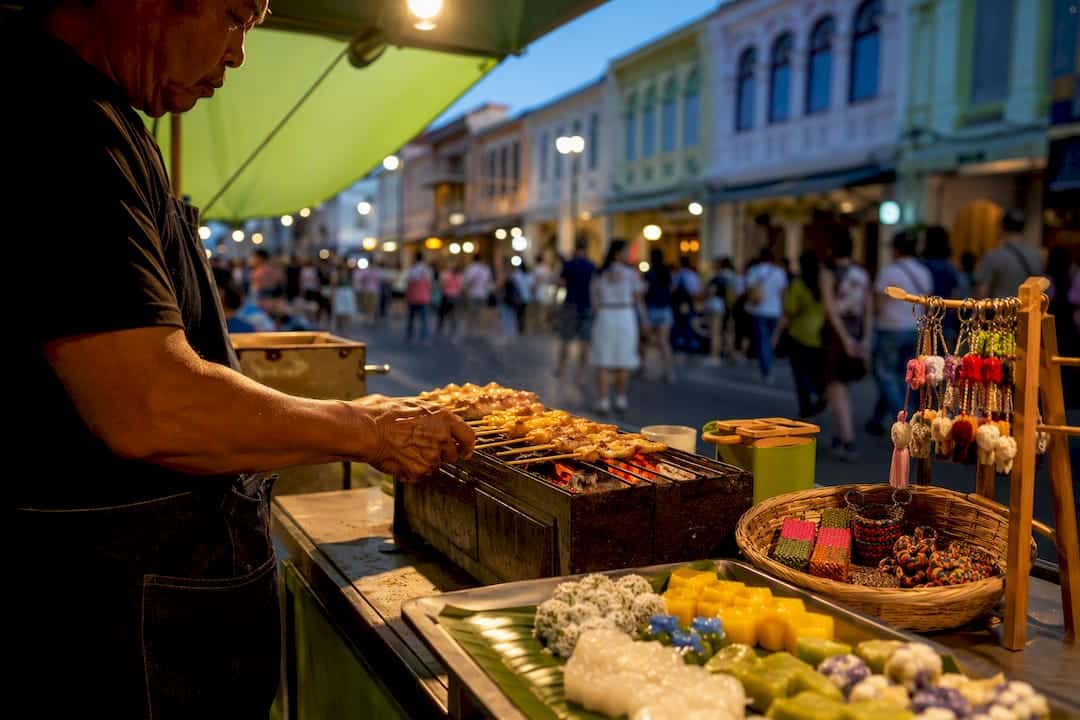
Away from Sunday evenings, smaller daytime markets scattered through Old Town specialise in different things: some focus on produce and dried goods for locals doing their weekly shop, others lean towards crafts and souvenirs aimed at visitors. Neither matches Lard Yai for atmosphere, but they’re useful if you’re in town midweek and want a taste of local commerce without the crowds.
One scheduling note that catches drivers out: on Sunday evenings, motor traffic is blocked along the market stretch of Thalang Road, so plan any drop-off or pick-up via the nearby Ranong or Phang Nga Road junctions rather than expecting a vehicle to reach the market itself.
If your visit lines up with the Vegetarian Festival, usually held in September or October, expect a different atmosphere around Jui Tui Shrine entirely. The shrine is one of the main hubs for the festival’s processions, and the area around it fills with devotees, incense, and ritual activity that has little to do with tourism. It’s a genuinely striking thing to witness, but dress modestly and keep a respectful distance from ceremonies in progress.
Bargaining at Lard Yai is light-touch by Thai standards; a polite smile and a counter-offer at street stalls is normal, but expect fixed prices at most food vendors, since haggling over a plate of noodles isn’t really the local custom.
Which museums and heritage houses are worth your time?
If you only have time for one indoor stop, make it the Thai Hua Museum. Housed in a restored 1930s Chinese school building, it walks through the Hokkien migration story, the tin-mining economy that funded the town, and the daily life of Peranakan families through room-by-room displays. Budget 45 minutes to an hour if you want to read the exhibits rather than skim past them.
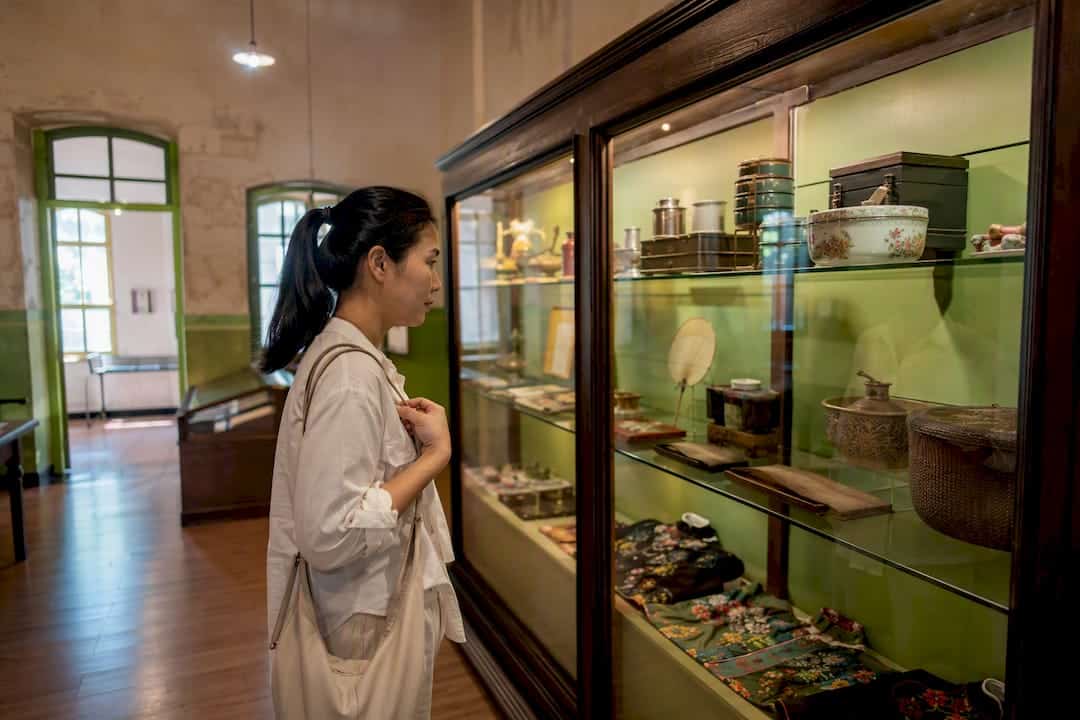
Baan Chinpracha (Chinpracha House) offers a different angle on the same history. Where the museum tells the collective story, Chinpracha House shows how one wealthy tin-mining family actually lived, with the mansion still owned by descendants and furnished with period pieces rather than replicas. It’s a shorter visit, closer to 30 to 45 minutes, but the interior detail makes it worth the ticket even if you’ve already done the museum.
Beyond those two, a few smaller stops are worth noticing from the street rather than booking as formal visits:
- Old government buildings on Phang Nga Road, several still in civic use, showing the same Sino-Portuguese detailing as the shophouses.
- Jui Tui Shrine, best appreciated as a five-minute pause rather than a ticketed attraction.
- Restored shophouse facades along Krabi Road, useful for spotting original stucco work away from the busiest tourist stretch.
Opening times and ticket prices for both main sites are subject to change, and neither publishes especially prominent signage on entrance fees, so it’s worth checking current hours locally or via the tourism authority before building your day around a specific slot. Both sites tend to close by late afternoon, so slot them into the earlier half of your walking loop rather than saving them for after dinner.
Should you stay in Old Town or near the beach?
Staying inside Old Phuket Town suits anyone whose trip is built around walking, food, and culture rather than sea access. You’re within a few minutes of Thalang Road, the museums, and the Sunday market, and evenings mean stepping outside rather than booking a taxi. Beach areas like Patong or Kata solve a different problem entirely: sand, sea, and nightlife, at the cost of a 30 to 45 minute run back into town for anything covered in this guide.
Accommodation in Old Town leans towards boutique hotels and restored shophouse conversions rather than large resort chains, which fits the character of the neighbourhood but means fewer rooms overall, especially in peak season.
On On Hotel, one of the oldest hotels in Phuket Town and a genuine slice of the town’s Sino-Portuguese character, is worth knowing as a reference point for what a heritage stay here looks like: simple rooms, historic bones, and a location that puts you inside the walking loop rather than a taxi ride from it.
A few practical points for choosing where to sleep:
- Book Old Town heritage hotels well ahead for December to January, when both rooms and flights fill fastest.
- If mobility is a concern, check whether a property has lift access, since many restored shophouses retain original narrow staircases.
- Splitting a longer trip between an Old Town base and a beach stay lets you get both experiences without constant travel between them.
- Families with young children may find beach-adjacent resorts more practical for downtime, using Old Town as a day trip instead.
When should you visit Old Phuket Town?
November to April is the most reliable stretch for walking Old Phuket Town, with lower humidity and a much smaller chance of a downpour cutting your afternoon short. December and January bring the heaviest crowds and the highest accommodation prices, so aim for November or February to March if you’d rather have the streets to yourself.
June through September is Phuket’s rainy season, and while showers rarely last all day, they’re frequent enough to disrupt an outdoor walking plan. If you’re travelling during these months, build in a museum or café buffer, so a sudden downpour becomes a coffee break rather than a wrecked itinerary.
For time of day, early morning and late afternoon both beat the midday heat, and early morning has the added benefit of nearly empty streets for photography. If your dates allow it, plan your visit for a Sunday and simply extend the afternoon walk into the evening market rather than treating them as separate trips.
How do you get to Old Phuket Town and get around once there?
From Phuket Airport, a taxi or Grab to Old Town takes roughly 45 minutes depending on traffic, and pre-booking through your hotel avoids the airport taxi queue. From Patong or other west-coast beaches, expect 25 to 40 minutes by taxi or Grab, with songthaews (shared pickup trucks) running a slower but cheaper route between the beach and Phuket Town’s main terminal.
Once you’re there, the whole walking loop covered in this guide is genuinely walkable, so you won’t need transport between stops. For getting to and from the edges of town, a tuk-tuk works well for short hops and small groups, while a rented motorbike suits confident riders comfortable with local traffic, though Old Town’s narrow one-way streets make scooters more hassle than help within the core itself.
If you’re driving, avoid trying to park directly on Thalang Road, especially on Sundays when the market closes it to vehicles entirely; nearby side streets off Phang Nga Road are a more realistic bet.
What should you know before you go?
Cash still rules the smaller stalls and shophouse cafés, even though card readers have become common at sit-down restaurants. Carry enough baht for a day of street food and small purchases, and don’t expect every vendor to have change for a large note.
Photography etiquette matters most around active shrines like Jui Tui. Take photos respectfully, avoid using flash near worshippers, and dress modestly if you’re stepping inside rather than just passing by.
A short checklist for the day:
- Wear light, breathable clothing and closed shoes rather than flip-flops for the walking stretches.
- Carry water; shaded café stops double nicely as rehydration breaks.
- Keep valuables in a crossbody bag rather than a loose backpack in market crowds.
- Support family-run cafés and shophouse boutiques over chain alternatives where you can; it keeps the neighbourhood’s character intact.
Pro Tip: Midday sun in Old Town bounces hard off pale shophouse walls. If you’re walking between 11am and 2pm, treat every café stop as sun relief, not just a coffee break.
Why this guide leads with the walk, not a checklist
Most guides to Old Phuket Town read like inventories: a list of buildings, a list of museums, a list of cafés, with no real sense of how a visitor should string them together in one afternoon. That approach undersells the place. Old Town rewards a slower, connected route far more than a rushed tick-list of “top ten sights,” because half the value here is architectural texture you only notice by walking past it twice, not photographing it once.
The route in this guide was built around that idea: pick one museum rather than trying to squeeze in three, treat a café stop as a deliberate rest point rather than an afterthought, and time the Sunday market as the centrepiece of a visit rather than a bonus. That’s a different kind of planning than most travel content offers, and it comes from watching how visitors actually move through the neighbourhood rather than how it photographs on a map.
Qbic Travel runs guided city tours through Phuket that touch on this same Old Town core for travellers who’d rather have a local handle the logistics. Whether you walk it yourself with this guide or book a guided version, the neighbourhood rewards patience over speed.
— Carl
Want a guided version of this walk instead?
If self-guiding the Old Town loop sounds like more planning than you fancy on holiday, Qbic Travel runs a guided Phuket city tour that covers the Old Town highlights with hotel pick-up included, so you skip the taxi logistics and the “which street next” guesswork entirely. A guided tour suits travellers short on time, families juggling different paces, or anyone who’d simply rather have a local point out which facade is original stucco and which is a modern retrofit.

A typical Amazing Phuket tour includes guided commentary on the Sino-Portuguese architecture, a stop near the main heritage streets, and the flexibility to add on other Phuket experiences the same trip, from ATV routes to jet ski runs if you want to turn a cultural morning into an adventure-packed day. Qbic Travel’s broader tours listing covers everything else on offer if Old Town is just one stop on a longer Phuket itinerary. Check current dates and book your slot directly through the city tour page above, and pair it with a jet ski or ATV tour later in your trip if you want both culture and adrenaline in one visit.
Where this guide’s facts come from
The historical background here draws on Phuket’s tin-mining and migration history, heritage site descriptions from the Old Phuket Town overview, and architectural detail from academic work on Sino-Portuguese conservation. Market timing and shrine notes come from local directory listings and Sawasdee’s feature on Phuket’s Sino-Portuguese heritage.
Opening hours, ticket prices, and festival dates shift, so confirm the current details for the Thai Hua Museum, Baan Chinpracha, and any Vegetarian Festival dates directly before you travel, rather than relying solely on any guide, including this one.
Sources
- History of Phuket — Wikipedia
- Phuket
- Sino‑Portuguese architecture — Visit Thailand Today
- Old Phuket Town: Self-Guided Walking Tour and Travel Guide 2026 — CleverThai


