
Book Feb to Apr: Phuket Diving Season for Mantas and Whale Sharks
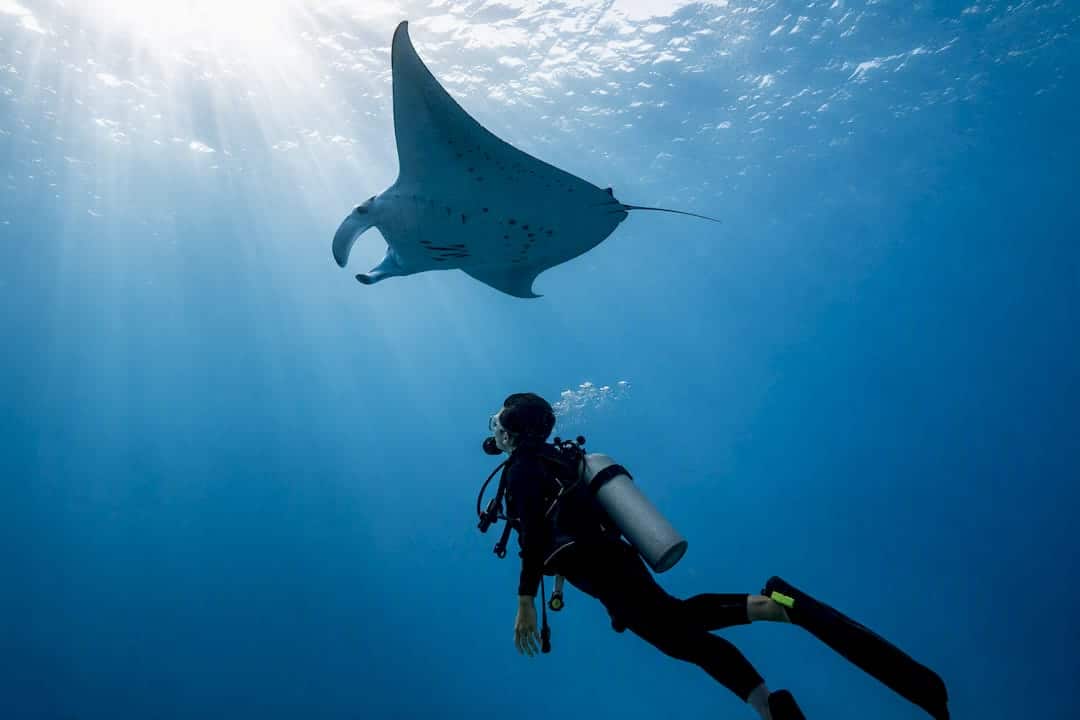
The best time to dive in Phuket is the dry, high season running roughly from November to April, with February to April giving you the strongest odds of manta rays and whale sharks. The Similan Islands National Park shuts completely from mid-May to mid-October, so liveaboards pause during that window. Sheltered Phuket sites still dive year-round, just with softer visibility and more variable seas.
TL;DR:
- The optimal diving period is from November to April, with February to April offering the best chances to see manta rays and whale sharks.
- The Similan Islands close from mid-May to mid-October, limiting offshore diving during that window, but sheltered sites remain accessible year-round.
- February and March are the best months for pelagic encounters and clear visibility, especially around Koh Bon and the Similans.
- Green season (May to October) offers fewer crowds and lower prices at sheltered sites but features more variable seas and reduced offshore visibility.
- Booking early for peak months and being flexible with dive sites and schedules can maximize your experience during Phuket’s seasonal shifts.
Table of Contents
- Phuket diving season at a glance: high, shoulder and green windows
- When to dive in Phuket: a month-by-month planner
- Which Phuket dive sites are open, and when?
- What visibility, water temperature and wildlife to expect
- How to dive Phuket in the green season without regret
- Your Phuket dive booking checklist
- Qbic Travel’s local take on the Phuket diving calendar
- Where to check the facts yourself
- Why the “best season” question misses the point
- Ready to book your Phuket dive trip?
- Sources
Phuket diving season at a glance: high, shoulder and green windows
Divers planning around the Phuket diving season usually split the year into three practical windows, and each one suits a different kind of traveller.
- High season (November to April): calm seas, the clearest water of the year, and full access to offshore gems like the Similan Islands. PADI’s Thailand diving guide points to this stretch, particularly November through April, as the Andaman Sea’s most reliable clarity.
- Shoulder months (mid-October and late April): conditions sit close to peak season, but boats and hotels are quieter and prices drop. Siam Dive’s operator research flags these as smart windows for budget-conscious divers who still want good visibility.
- Green/low season (May to October): rougher seas and reduced visibility offshore, but sheltered, near-shore sites stay diveable, and you’ll have them largely to yourself.
None of these windows is objectively “best” for every diver. Locals in the trade tend to frame it as a trade-off rather than a verdict, with high season winning on conditions and the green season winning on cost and crowds.
When to dive in Phuket: a month-by-month planner
Picking the right month depends on what you’re chasing, whether that’s flat-calm water, big pelagics, or a bargain rate. Here’s how the year typically unfolds.
- November: the season switches on. Seas settle, visibility climbs, and the Similans reopen after their monsoon closure.
- December: one of the most stable months, with visibility often 25 to 30 metres and water around 28°C.
- January: conditions peak. Expect busy boats around Chinese New Year, so book early if you’re travelling then.
- February: manta ray and whale shark sightings start picking up around Koh Bon and the Similans.
- March: widely rated the sweet spot of the year. Siam Dive’s calendar specifically recommends early March as the optimal single week for a one-time Phuket trip, balancing clarity, pelagics and manageable crowds.
- April: still excellent diving, though a late-season plankton bloom can soften visibility slightly while boosting your odds of a manta encounter.
- May: the Similans close mid-month. Liveaboard season winds down; book any last offshore trips well ahead.
- June to August: monsoon swells arrive. Sheltered sites remain open, but expect day-to-day variation.
- September: typically the wettest stretch. Local operators lean heavily on daily forecast checks before confirming trips.
- October: the Similans reopen mid-month, and by late October conditions are already improving fast.
If you only have one trip in you, early March is hard to beat. If flexibility matters more than perfection, the shoulder weeks either side of the closure dates offer nearly the same reward for less outlay.
Which Phuket dive sites are open, and when?
The single most important date on any dive calendar here is the Similan Islands National Park closure. It shuts annually from 15 May to 15 October, a national park regulation, and no liveaboards run to the Similans during that window.
That doesn’t mean Phuket goes quiet. Several sites keep running throughout the year:
- Racha Yai — relaxed reef diving, good for newer divers, open year-round.
- Racha Noi — deeper, more current-prone, better suited to experienced divers, with occasional pelagic surprises.
- Shark Point, King Cruiser wreck, Anemone Reef, Tin Lizzy — sheltered, near-shore sites that stay accessible even when the weather turns.
The pelagic hotspots, by contrast, are tightly seasonal. Koh Bon, Koh Tachai and Richelieu Rock all sit further offshore and depend on the calmer window between November and April to be reachable, which is exactly when manta and whale shark sightings cluster.
What visibility, water temperature and wildlife to expect
Conditions shift more than most first-time visitors expect, so it pays to know the numbers before you pack.
In numbers: during peak months, visibility commonly runs 25 to 30 metres with water around 28°C, and January to February are the most stable weeks of the year. Green season visibility can drop well below that, mainly due to plankton and runoff.
Water temperature barely changes across the year, typically sitting between 27°C and 30°C, so a 3mm wetsuit or even a rash guard is enough for most divers. If you’re prone to feeling the cold on longer dives, pack a 5mm suit for green-season trips when currents can feel sharper.
Wildlife timing matters more than temperature. Manta rays and whale sharks are most likely from February to April around Koh Bon and the Similans, occasionally extending to Racha Noi. Outside that window, expect strong macro life and healthy resident reef fish rather than big pelagic encounters.
How to dive Phuket in the green season without regret
Diving between May and October takes a slightly different mindset, but it’s far from a write-off.
- Stick to sheltered east-coast and near-shore sites, and choose operators who check marine forecasts daily rather than fixed schedules.
- Expect visibility to vary day to day, and build in flexibility rather than fixed expectations.
- Book flexible dates and consider dive insurance through a provider like DAN, since monsoon swells occasionally force last-minute reschedules.
- Enjoy the upside: smaller boats, fewer divers per site, and noticeably lower prices.
Pro Tip: Ask your operator directly how they monitor conditions each morning during green season. The good ones check swell and wind forecasts before confirming any boat crossing, not just the night before.
Your Phuket dive booking checklist
Whatever month you’re eyeing, a few practical steps make the difference between a smooth trip and a scramble.
- Book early for peak weeks. January and Chinese New Year fill liveaboards fast; aim for 2 to 3 months’ lead time for offshore trips, less for shoulder months.
- Choose day trips over liveaboards outside November to April, since offshore multi-day boats mostly follow the Similan season.
- Pack for warm water but bring a thicker suit if you’re diving green season currents.
- Buy dive insurance and ask your operator about their cancellation policy and how they handle rough-weather boat crossings before you pay a deposit.
Qbic Travel’s local take on the Phuket diving calendar
Carl, who oversees trip planning content for Qbic Travel, spends a fair chunk of the year on Phuket’s boats and jetties watching how conditions actually shift month to month, not just what the calendars say.
Qbic Travel backs that local knowledge with a track record worth mentioning: a 99% issue-free service rate and a 4.5 rating from 237 reviews, verified by Trustindex.
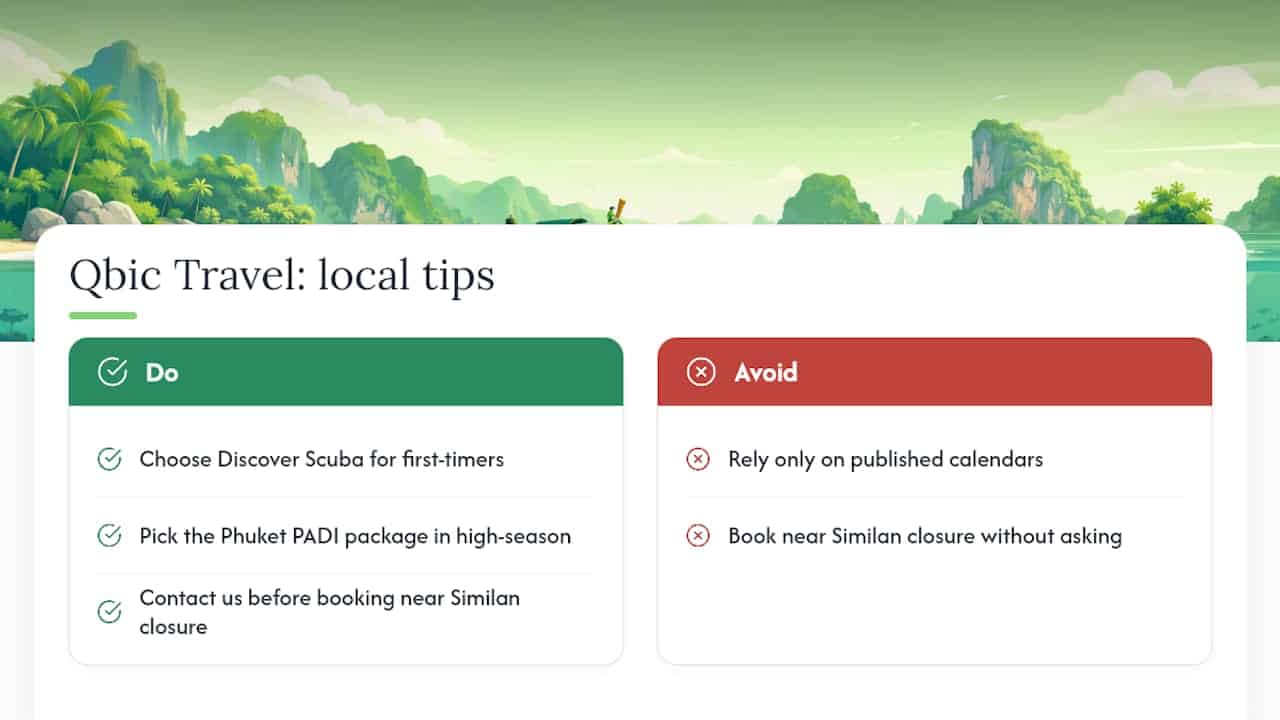
If you’re weighing up dates, our Discover Scuba Diving Phuket experience works well for first-timers wanting a taste of local reefs regardless of season, while the Phuket dive package with PADI suits divers building toward certification during the high-season months. Reach out before booking if your dates fall near the Similan closure, so we can steer you towards sites that are actually open.
Where to check the facts yourself
Park dates and seasonal patterns change occasionally, so it’s worth cross-checking primary sources before you commit to dates.
- PADI’s Thailand diving overview for general seasonal framing.
- Underwater Atlas’s Phuket dive guide for visibility and temperature data.
- AsiaByLocals’s Phuket diving guide for site-specific seasonal notes.
- Siam Dive’s Phuket diving calendar for month-by-month booking guidance.
- DAN’s membership and insurance page for coverage during unpredictable seasons.
Why the “best season” question misses the point
Most advice on the Phuket diving season stops at “go between November and April,” which is true but incomplete. The more useful question isn’t when the water looks best on paper. It’s what you’re actually prioritising: flat-calm conditions for a first certification, the best odds at a manta encounter, or a quiet reef with nobody else on it.
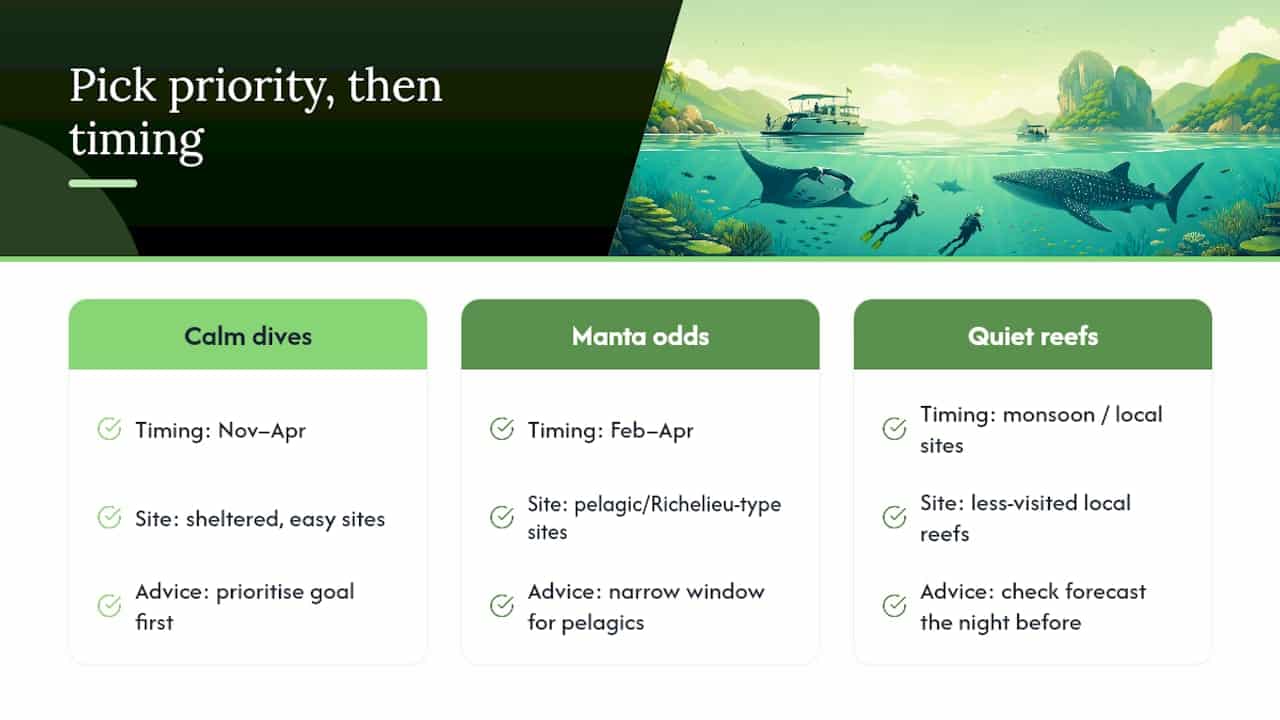
Conventional wisdom treats the Similan closure as a dead zone to avoid entirely. That undersells Phuket’s local sites, which keep working through the monsoon and reward divers who don’t mind checking the forecast the night before. If you’re chasing pelagics specifically, narrow your window further still, aiming for February to April rather than the full high season.
Prioritise your actual goal first, then let the calendar follow it. A diver who wants Richelieu Rock in perfect visibility needs a different month than one who just wants an easy, sheltered dive with a friend who’s never been underwater.
— Carl
Ready to book your Phuket dive trip?
Qbic Travel plans its Phuket water adventures around exactly the seasonal patterns covered here, so you’re not left guessing which sites are realistically open on your travel dates. Rather than a generic dive shop booking, you get local timing knowledge baked into every itinerary, whether that’s steering you towards sheltered reefs in green season or offshore pelagic runs in March.

Beyond diving, Qbic Travel runs a full spread of Phuket adventures worth pairing with your trip, from jet ski tours around the coastline to ATV adventures inland. If diving is your main event, check our Phuket scuba diving page for current availability and get in touch to confirm which sites suit your exact travel window before you lock in flights.
Sources
- Diving in Thailand
- Scuba Diving in Phuket | Dive guide | Underwater Atlas
- Phuket diving & snorkeling guide (AsiaByLocals)
- The Phuket diving calendar: when to actually book (Siam Dive)
- DAN membership/insurance (join page)


