
10 Safety Checks for Snorkeling in Phuket: Sea, Jellyfish, First Aid
Yes, snorkelling around Phuket is generally safe when you check the sea-state flags, get a proper guide briefing, and carry basic protective kit like reef shoes and vinegar. The real risk isn’t the water itself, it’s skipping the morning briefing or ignoring a red flag. If a sting or injury turns serious, call the Tourist Police on 1155 and head to Bangkok Hospital Phuket, which stocks box jellyfish anti-venom.
TL;DR:
- Always check the sea-state flags and weather conditions early in the morning before heading out for snorkelling in Phuket.
- Booking trips with early departures reduces exposure to stronger winds and swell that develop later in the day.
- Wearing a rashguard, reef shoes, and ensuring proper gear fit are crucial for protection against stings and injuries.
- Most jellyfish risks are seasonal, but always ask guides daily about current blooms, especially for the dangerous Portuguese Man-o’-War and box jellyfish.
- Prioritize operators who provide thorough safety briefings, small groups, and proper safety equipment to minimize risks more effectively than just avoiding peak jellyfish season.
Table of Contents
- Your pre-swim safety checklist for Phuket snorkelling
- Which jellyfish in Phuket are dangerous, and how do you treat a sting?
- When should you avoid the water in Phuket?
- What to pack and how to handle minor injuries
- How do you choose a genuinely safe snorkel tour in Phuket?
- How Qbic Travel builds these safety measures into every trip
- What actually keeps you safe snorkelling in Phuket
- Book a snorkel trip that takes safety as seriously as you do
- Where to check further safety details
- Sources
Your pre-swim safety checklist for Phuket snorkelling
Many snorkelling mishaps in Phuket occur due to missed safety steps before entering the water. Here’s the order that actually protects you.
- Check the flags and the forecast first. Red flags mean stay out, no exceptions. Look at the sky and sea surface that morning, not last night’s forecast.
- Book trips with early departures. Winds and swell tend to build through the day, so a 7am boat is calmer water than a 1pm one.
- Ask your guide directly about jellyfish that day. Blooms shift with wind and current, so yesterday’s calm bay can change overnight, and local boat crews track this daily.
- Wear a rashguard or thin wetsuit. It protects against stings and sunburn in one go, and pair it with reef shoes for rocky entry points.
- Check your mask seal and fin fit before entering the water. A leaking mask ruins a trip fast, and loose fins are how ankles get twisted on coral shelves.
- Use a life jacket or snorkel vest when your guide recommends one, especially in open water crossings between islands.
- Stay within sight of your group and watch for boat traffic, particularly near busy anchor points where speedboats queue.
- Pack reef-safe sunscreen and a small bottle of vinegar. Both are sold at almost any 7-Eleven near the piers.
- Never touch or stand on coral, even if it looks dead. It’s slower to recover than people assume, and sharp edges cause deep cuts.
- Know your emergency chain: boat crew first, then Tourist Police on 1155, then Bangkok Hospital Phuket for anything serious.
Pro Tip: Keep your vinegar bottle in a zip-lock bag in your dry bag, not loose in your daypack. Salt water and boat spray corrode the cap faster than you’d think, and a leaked bottle is one less tool if you actually need it.
Which jellyfish in Phuket are dangerous, and how do you treat a sting?
Most jellyfish you’ll encounter around Phuket are harmless moon jellyfish, pale and slow-moving, that leave nothing worse than a mild itch. The ones that matter are far less common but far more serious.
- Moon jellyfish: common, mild sting at worst, rarely a concern.
- Spotted jellyfish: occasional stinging, uncomfortable but not dangerous.
- Portuguese Man-o’-War: less frequent but can deliver a painful, long-lasting sting.
- Box jellyfish: rare but serious, and the species genuinely requiring immediate medical attention when suspected.
Seasonality follows a rough pattern. December through February tends to run lowest risk. March through May sees an uptick, and the southwest monsoon from roughly May through October brings the highest chance of blooms, particularly on exposed west coast beaches. East coast bays tend to stay calmer year-round, though nothing is guaranteed, which is exactly why asking your guide each morning beats relying on a seasonal calendar alone.
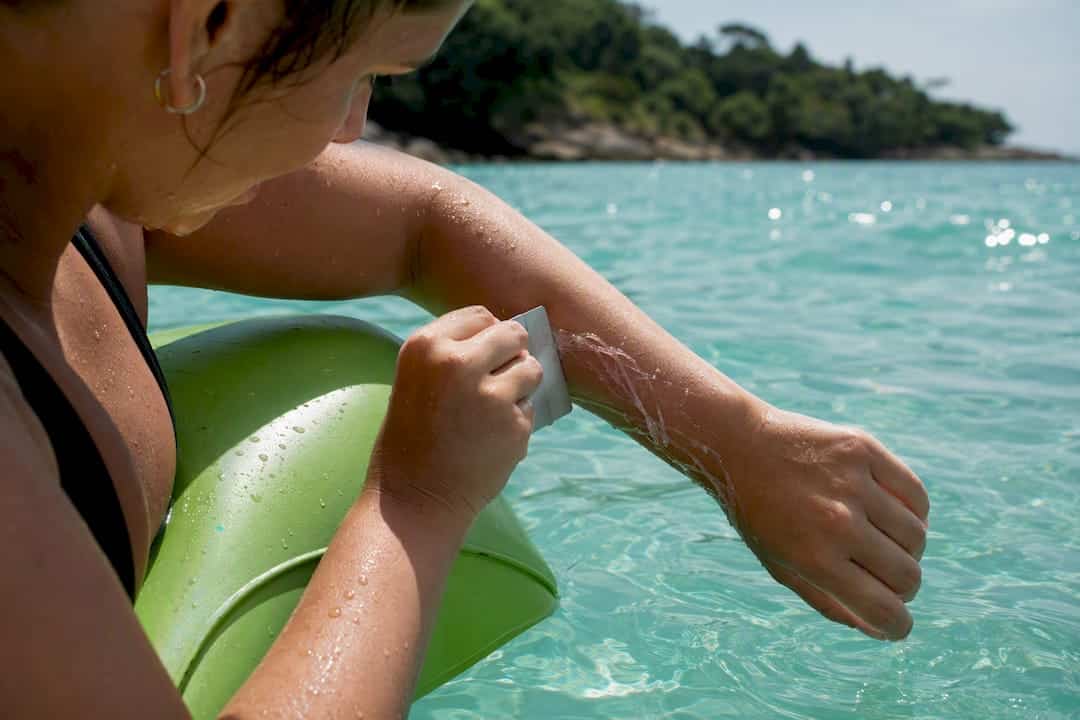
If you’re stung, don’t rub the area and don’t rinse with fresh water. Fresh water can trigger the remaining stinging cells to fire. Rinse with sea water or vinegar for 30 to 60 seconds, scrape off any visible tentacle fragments with a card edge rather than fingers, and use hot water once the tentacles are cleared to help with pain. Call Tourist Police on 1155 for anything beyond mild discomfort, and get to Bangkok Hospital Phuket immediately for suspected box jellyfish contact, since the hospital carries the relevant anti-venom on site.
When should you avoid the water in Phuket?
Phuket’s dry season, roughly November to April, gives you the calmest, clearest conditions for snorkelling. The southwest monsoon from May to October brings rougher swell, and reputable operators cancel trips far more often during these months.
Rip currents are the hazard most tourists underestimate. They’re easy to miss if you don’t know what you’re looking at.
- Look for a channel of water that seems calmer than the waves either side of it, often with fewer breaking waves.
- Watch for a patch of brownish or churned-up water heading straight out from shore.
- If you’re caught in one, don’t fight it directly. Swim parallel to the beach until you’re clear, then head back in.
- Treat red flags as absolute. Lifeguard coverage is limited to a handful of beaches, so the flag itself is often the only warning system you’ll get.
When an operator cancels or reschedules for bad sea state, that’s not overcaution, it’s the sign of a company paying attention. A firm’s willingness to lose a day’s booking over a red flag tells you more about its safety culture than any brochure will.
What to pack and how to handle minor injuries
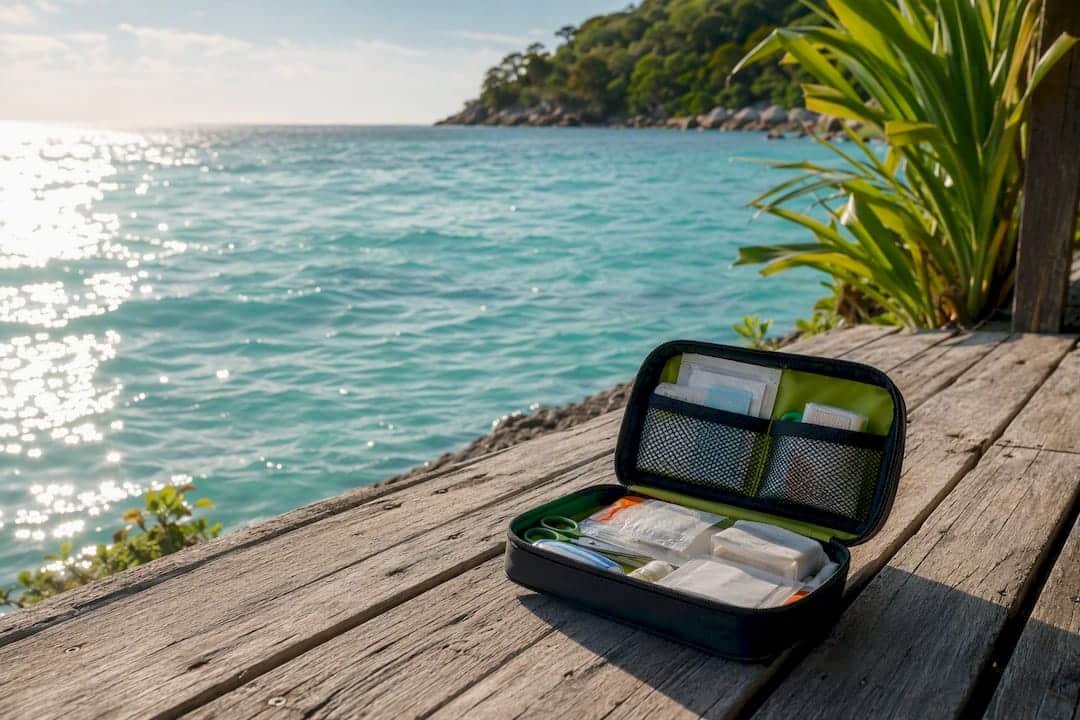
A short kit list solves most of the physical problems snorkellers run into; for a complete packing guide, see this beach packing essentials checklist. Bring a rashguard or thin wetsuit, reef shoes, a mask and fins that actually fit, and a snorkel vest or life jacket if your guide suggests one for the site you’re visiting.
Reef-safe sunscreen matters more than people expect, both for your skin and for the coral itself, and it’s cheap and easy to find at 7-Eleven branches and dive shops across the island.
- Coral cuts: clean promptly with fresh water once out of the sea, apply antiseptic, and watch for redness or swelling over the next 24 hours.
- Sea urchin punctures: soak the foot in hot water to help with pain, and see a clinic if spines remain embedded, since they can work deeper if left.
- Stay hydrated through the day, particularly if you’re out on a boat for several hours in direct sun.
- Go easy on alcohol the night before an early snorkel trip. Fatigue and dehydration are behind more incidents than most people realise.
Pro Tip: If you’re unsure whether a cut needs a clinic visit, check for warmth, swelling, or pus forming over the next day. Coral cuts carry bacteria that plain soap and water don’t always clear on their own.
How do you choose a genuinely safe snorkel tour in Phuket?
The single biggest factor in snorkelling incidents isn’t the marine life, it’s poor supervision and rushed briefings. A five-minute rundown before shoving everyone off the back of a boat isn’t a briefing, it’s a liability.
- Ask about group size before booking. Smaller groups mean staff can actually watch everyone in the water.
- Ask how long the safety briefing runs, and expect it to cover mask fit, clearing your snorkel, hand signals, and how to enter and exit the boat safely.
- Confirm safety kit on board, including TIS-approved life jackets and vinegar for stings.
- Watch for red flags when booking: no briefing offered, oversized groups packed onto one boat, pressure to swim into deeper water than you’re comfortable with, or no clear policy on cancelling for bad sea state.
- Favour guided trips over solo shore snorkelling wherever possible. A trained guide who knows the site’s current patterns and jellyfish history is watching for things a first-time visitor simply can’t spot.
How Qbic Travel builds these safety measures into every trip
Attention to detail on the water shows up in the numbers. Qbic Travel has a strong track record and positive customer feedback that reflect the day-to-day discipline of running trips properly rather than cutting corners.
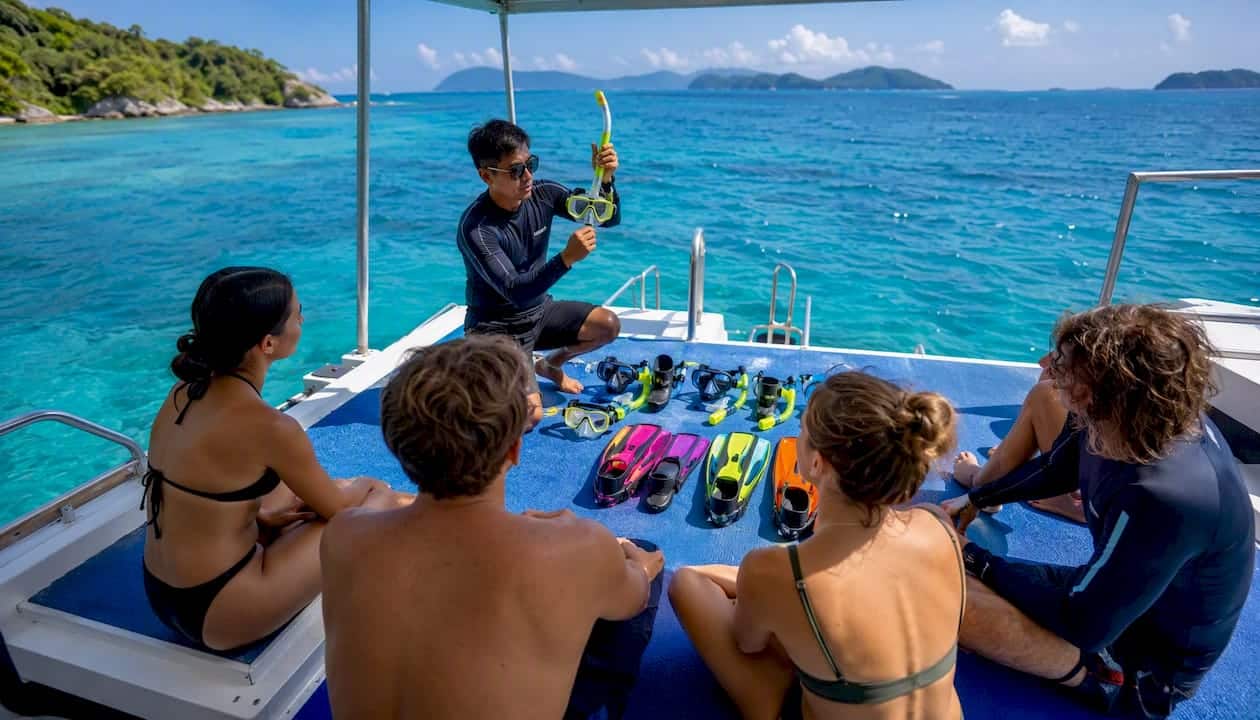
In practice, that means a proper pre-boarding brief every time, small group sizes so guides can actually keep watch, vinegar carried on board as standard, trained staff, and a straightforward cancellation policy when the sea state turns. When you’re booking any operator in Phuket, ask for exactly these things by name.
What actually keeps you safe snorkelling in Phuket
Most safety advice for tourists in Phuket leans too hard on jellyfish, probably because stings make for a dramatic headline. The bigger, quieter risk is supervision, or the lack of it. A rushed briefing and an oversized group cause more injuries over a season than box jellyfish ever will, and that’s not a controversial claim, it’s what the incident patterns actually show.
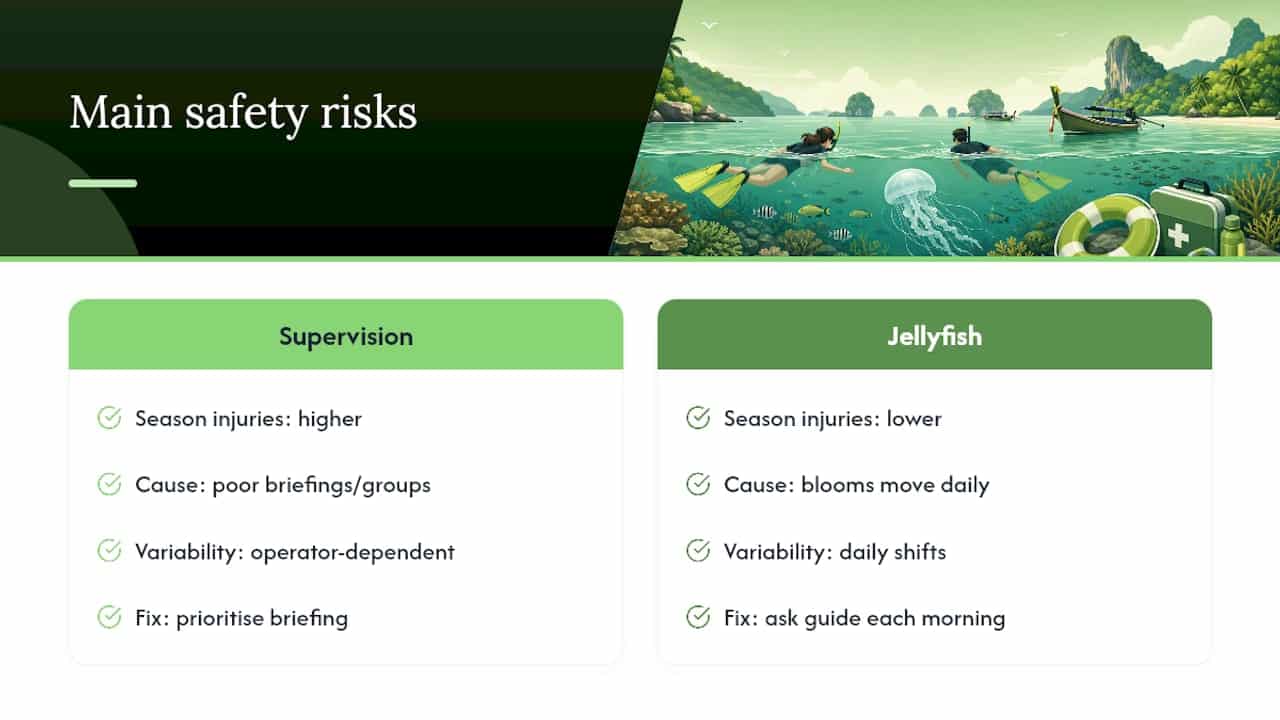
Where conventional advice falls short is treating “jellyfish season” as a fixed calendar you can plan around. It isn’t. Blooms move with wind and current on a daily basis, which means the useful habit isn’t memorising which month is riskiest, it’s asking your guide the same question every single morning.
If you take one thing from this guide, prioritise the operator’s briefing quality over the marketing photos. A guide who checks conditions daily and adjusts the site accordingly is doing more for your safety than any wetsuit or vinegar bottle ever could.
— Carl
Book a snorkel trip that takes safety as seriously as you do
Qbic Travel runs its boat and snorkel trips around the same principles covered here: a proper pre-departure briefing, appropriately sized groups so guides can actually keep an eye on everyone, and gear that fits, not whatever’s left in the box. Compared with piecing together your own gear rental and shore access, a guided trip removes the guesswork on where currents run and where the reef is safe to enter.

If a snorkel-focused day appeals, the private boat tours give you smaller groups and more flexibility around sea conditions than a mass-market trip. For something with more speed and variety, the tour and cruise category covers a range of island-hopping options with snorkelling stops built in. Whichever trip you book, ask the team directly about group size, briefing length, and what’s carried on board for stings, and head to the tours page to check current dates and availability.
Where to check further safety details
For emergencies, call Tourist Police on 1155 or contact Bangkok Hospital Phuket directly for serious stings or injuries. For sea conditions and rip current guidance, see Phuket, and for a fuller breakdown of local dive safety rules, Dive Journey’s Phuket guide is worth bookmarking before your trip.
This article is general information, not a substitute for advice from a qualified doctor. Consult a qualified healthcare professional about your own circumstances before acting on anything here.
Sources
- Jellyfish in Phuket: Seasons, Species & Treatment 2026
- Phuket Dive Safety & Local Rules
- What it takes to stay safe while snorkelling in Phuket waters | Thaiger


