Phuket Boat Accessibility: How to Plan a Trip That Works
Boat trips in Phuket can work for travellers with reduced mobility, but only when the boarding method is confirmed for your exact date, pier and boat. Gangways, tides and beach landings change from one trip to the next. The best results come from a private or small-group boat, a clear conversation about your needs before you pay, and door-to-door transport planned around you. At Qbic Travel we offer private and group boat excursions with hotel pick-up and flexible booking by WhatsApp or online, so you can ask your questions first and settle the details before the day.
TL;DR
- “Accessible” has no fixed meaning on Phuket boats. Ask for the exact boarding method, the number of unavoidable steps, handrails and who can physically help.
- Piers differ and sea conditions change the boarding method, so confirm each stop of the trip, not just the departure.
- Speedboats and longtails often involve steps, narrow boarding points or beach landings. A slower, larger vessel can suit some passengers better than the fastest one.
- Road-connected Phuket is easier than a small island reached by longtail. Choose the day around the weather and tide.
- Message us on WhatsApp with your actual needs before booking, and we will help you shape a day that fits.
Table of Contents
- Why boat accessibility in Phuket is so uneven
- The boarding chain, link by link
- Which kind of trip suits which traveller
- The questions to ask before you book
- Weather, tides and the season
- Safety basics that apply to everyone
- Planning the rest of the day around the boat
- What we offer for a calm, well-planned day
- Our view: plan the boarding before you plan the island
- FAQ
- Sources
Why boat accessibility in Phuket is so uneven
Thailand’s accessibility is patchy. Newer malls, buildings and transport lines usually have lifts and ramps, while older streets, temples and small guesthouses often do not. A Thailand accessible-travel guide notes that boats and islands are often the hardest part, and that Phuket is easier than a small island reached by longtail boat.
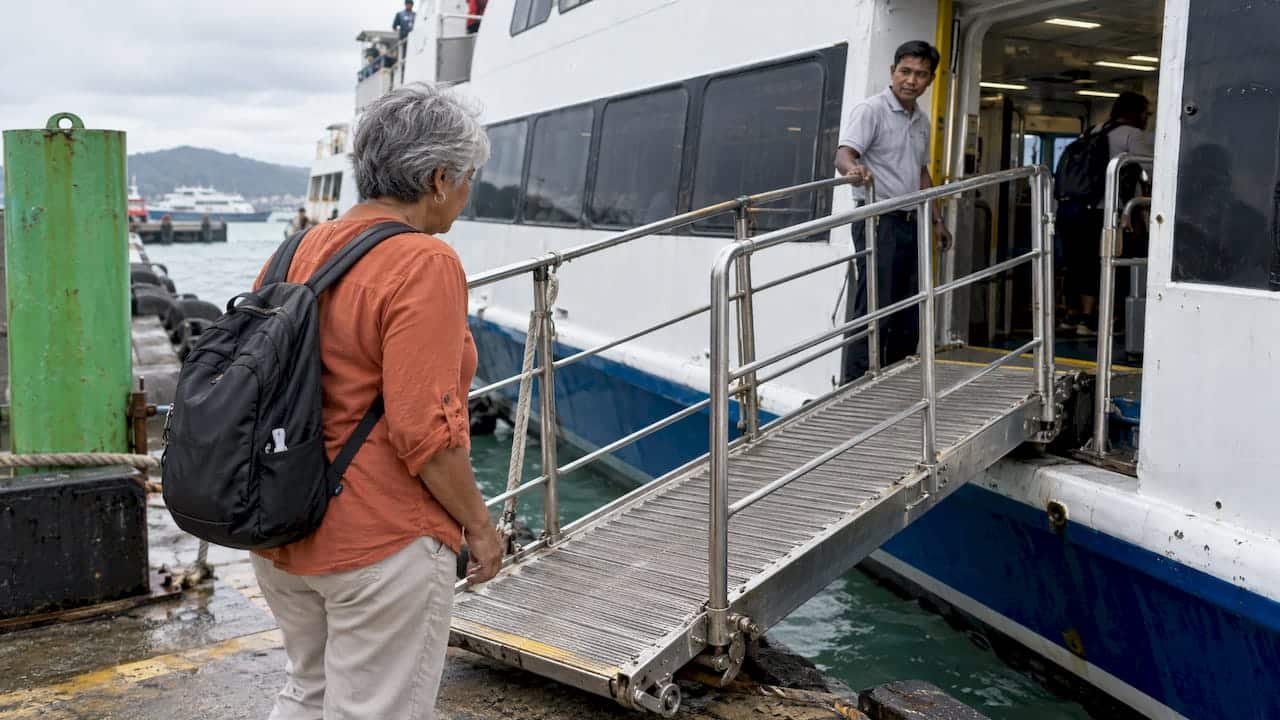
A step-free hotel does not guarantee a step-free day. Visit Phuket’s reduced-mobility planning page warns that gangways, floating pontoons, beach landings and transfers between boats can make some trips unsuitable, even when your hotel is easy to get around.
The practical lesson is simple. A boat trip is a chain of small moves: car to pier, pier to boat, boat to seat, seat to toilet, boat to beach and back. Any single link can break the plan, so you check every link.
The boarding chain, link by link
1. Getting to the pier
Many Phuket departures leave from a pier that is a drive away from your hotel. A faster boat from a distant pier can lose its advantage on the road. ThaiWayGo’s ferry guide makes the same point: choose the vessel for the passenger and baggage, not for the shortest advertised sailing.
This is where hotel pick-up matters. A door-to-door pick-up means one transfer from the lobby instead of a chain of changes between taxis, shuttles and walking. We include hotel pick-up with our tours. For airport arrivals, our Phuket Airport Taxi starts from 800 THB and the Phuket Airport Minibus from 1,200 THB.
2. The pier and the gangway
Piers differ. At Rassada Pier, the main domestic ferry port for routes to Phi Phi, Lanta, Krabi and Ao Nang, Direct Ferries reports that assistance for passengers with reduced mobility is available on request, but gangways can be steep and slippery when wet. It also advises telling the operator well in advance.
On the other side of the Phi Phi route, boarding at Tonsai Pier can involve steps and depends on sea conditions. That is why a single answer such as “yes, it is accessible” is never enough. The tide alone can turn a gentle slope into a steep one.
3. Stepping onto the boat
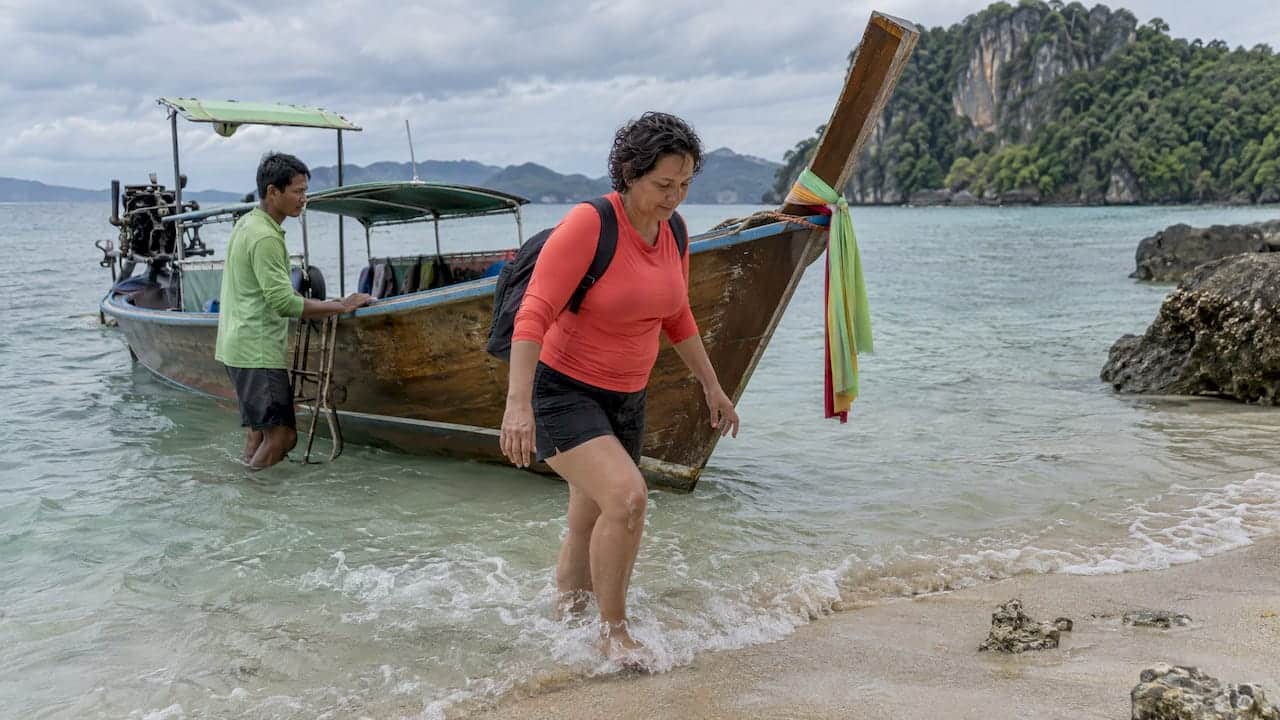
Speedboats and longtails in Phuket commonly involve steps, narrow boarding points and moving surfaces, as Totally Phuket’s accessible-travel guide describes. A longtail sits low and its entry is narrow, so it is rarely the first choice if you use a wheelchair or walk with difficulty. If you are weighing the two styles, our longtail versus speedboat comparison explains how each feels on the day.
A larger, steadier vessel with a wider deck and a seat you can reach with fewer steps is usually the gentler option. Our speedboat versus catamaran guide covers that choice in more detail.
4. Seats, toilets and moving around
Once aboard, ask where you will sit, whether there is a handrail on the way, and whether the toilet is reachable. The ThaiWayGo guide lists exactly these questions for travellers with limited mobility: can the wheelchair stay with you, is there a step-free route from check-in to the seat, who handles the chair at a transfer, and is the toilet accessible.
5. Landing on an island
Beach landings are often the hardest part. On smaller islands, passengers may transfer from a speedboat to a longtail offshore and wade ashore, and the same guide to accessible travel in Thailand recommends road-connected Phuket over a small island for a first trip. If a stop has a wade landing you cannot manage, the day can still be good. You stay on board, enjoy the view and swim or snorkel from the boat if that suits you, and you agree this in advance rather than at the beach.
Which kind of trip suits which traveller
The table below is a planning guide, not a guarantee. Confirm every item for your date.
| Trip type | Typical boarding | What to ask | Often suits |
|---|---|---|---|
| Longtail to a beach | Low, narrow entry, often a wade landing | Can we avoid the wade landing? | Confident walkers |
| Group speedboat to islands | Steps, a pier gap that changes with the tide | How many steps, who helps? | Active travellers needing a hand |
| Private boat or charter | Set with the operator in advance | Which pier, which boarding method? | Families, seniors, anyone needing a tailored plan |
| Larger vessel with a wider deck | Wider gangway, often one main boarding point | Can I reach my seat and the toilet without steps? | Travellers wanting a steadier ride |
| Sunset or evening cruise | Calmer sea, fixed route | Is the pier lit and the gangway dry? | Travellers who prefer a slower pace |
For a private plan, our private boat tours in Phuket and boat charter with crew pages show what is available. A private boat lets you agree the day’s pace and stops with the operator beforehand, which is the point when boarding is the main concern.
The questions to ask before you book
Visit Phuket’s planning guide stresses that “accessible” can mean very different things, so share your real requirements instead of relying on a label. A booking confirmation is not proof of step-free travel: ThaiWayGo says gangway angle, tidal height, beach boarding, stairs and luggage handling vary by pier and vessel.
Copy these into a message and send them before you pay:
- Exact boarding method. Gangway, floating pontoon, steps down from a dock or a beach?
- Unavoidable steps. How many, and how steep?
- Handrails. Are there rails at the dock, the gangway and on deck?
- Physical help. Who can give it, and how many crew are on board?
- Your equipment. Can a folding wheelchair, walker or pushchair stay with you? Who handles it at each transfer?
- Seat and toilet. Where will you sit, and is the toilet reachable?
- Every stop. What is the landing method at each island or beach?
- Tide and weather. What changes if the sea is rough or the tide is low?
- Plan B. If a landing is not workable on the day, what happens instead?
If an operator cannot explain the boarding procedure at each stop clearly, Totally Phuket’s advice is to pick a different activity. A clear answer is the sign that the day has been thought through.
We take bookings through our website and WhatsApp, which makes this easy: write your needs in one message, and the answers stay in writing. Give your group size, ages, mobility aids and the stops you hope to see.
Weather, tides and the season
Sea conditions change the boarding method, so the date matters as much as the boat. Rough water makes every transfer harder, and low tide can make a pier gangway steeper. Our guide to reading Phuket boat trip weather lists five questions to ask about conditions, and they apply doubly when mobility is a factor.
We offer flexible and last-minute booking, which helps here. You can wait for a calm forecast and then lock in a day, rather than committing weeks ahead to a date you cannot control.
Safety basics that apply to everyone
Thailand’s Marine Department regulates boat operators, and blog-phuket.com’s safety guide says life jackets are required for all passengers. It also notes that the harbour master can close piers and stop small-boat departures in heavy weather. A trip cancelled for weather is a safety decision, not a spoiled day.
The same guide stresses that choices at booking and boarding matter most: pick an established, licensed operator, wear the life jacket, check the monsoon season, and never board an overcrowded boat or sail against a weather warning.
Keep these Thai emergency numbers saved on your phone: 1669 for medical help, 191 for police and 1155 for the Tourist Police. If you use a wheelchair, have a medical condition or take regular medication, speak to your own doctor before a long day at sea, and carry your medication and a copy of your prescriptions.
Planning the rest of the day around the boat
A good accessible day is rarely only about the boat. Think about the hours either side:
- Pick-up and drop-off. Ask for a door-to-door transfer from your hotel so you are not walking along a busy pier road.
- Pace. A full-day itinerary packs in stops. A half-day or a single-island plan leaves room to rest.
- Shade and water. Bring sun protection, drinking water and a hat. Hours on deck add up, particularly in the dry season heat.
- Companions. A travelling friend or relative helps at transfers. If you want a local expert alongside you, our Tour Guide service is 3,000 THB.
- Mixed groups. In a family where some members want adventure and others want calm, a private boat lets everyone share the same day.
For travellers who prefer a gentle pace, our guide to picking a gentle island day for seniors walks through easier options, and the same thinking helps families with young children and pushchairs.
What we offer for a calm, well-planned day
If you want a boat day built around your needs, start with the private and group boat excursions on our island tours page. We cover James Bond Island, Phi Phi, Raya and Racha, and Coral Island, with hotel pick-up and flexible booking. Our MV Phuket Champagne is priced from 3,500 to 4,800 THB, and a full day on the Singh Luxury Speed Boat runs from 27,000 to 46,000 THB. See the Phuket tours overview to compare options.
Send us a WhatsApp message with your group, your mobility needs and the date you have in mind. We will talk through the plan with you before you book.

Our Qbic Travel Phuket service has a 99% issue-free rate verified by Trustindex and a 4.5 rating from 237 reviews. You can see the full range of boat options on our boat and tour services page.
Our view: plan the boarding before you plan the island
Most people choose the island first and think about the boat later. For travellers with reduced mobility, we think the order should be the other way round. The island is the reward, but the boarding is what decides whether the day works.
That is why we like private and small-group boat days. The day is agreed with you in advance, you tell us what you need, and the plan is shaped around it rather than squeezed into a fixed tour. Our tours are meticulously planned, and we offer personalised itineraries and flexible booking, so you are not locked into a date the sea will not honour.
Our advice is the same for every guest. Message us on WhatsApp, tell us who is travelling and what each person finds easy or hard, and ask the nine questions above. Then choose the pier, the boat and the stops that suit your group, and leave the rest to a calm sea.
Carl
FAQ
Can I take a wheelchair on a Phuket boat trip?
Sometimes, but it depends on the pier, the vessel and the tide on the day. Speedboats and longtails often involve steps and narrow boarding points, so ask about the exact boarding method and whether the chair can stay with you. Contact the operator before you book, and consider a private boat so the plan can be arranged in advance.
Which Phuket boat is easiest to board?
Larger vessels with a wider deck and a single, well-managed boarding point are usually gentler than longtails or small speedboats. A slower boat can suit you better than a fast one, especially if the fast one leaves from a distant pier. Always confirm boarding, seating and toilet access for your date.
Is Phuket easier than the smaller islands for limited mobility?
Yes. A guide to accessible travel in Thailand recommends road-connected Phuket over a small island reached by longtail, because beach landings and offshore transfers are hardest on smaller islands. Plan a trip that leaves from Phuket and keeps landings to a minimum.
How far ahead should I tell the operator about my needs?
As early as you can. Direct Ferries advises notifying the operator well in advance so assistance, seating and crew support can be arranged where available. With us you can send details by WhatsApp when you book, and we offer last-minute booking if you are waiting for a calm day.
What should I do in an emergency at sea?
Follow the crew’s instructions and keep your life jacket on. On land, call 1669 for medical help, 191 for the police or 1155 for the Tourist Police.
Sources
- Accessible Travel in Thailand: Wheelchairs, Transport and more
- Accessible Phuket Travel and Reduced-Mobility Planning
- Accessible travel in Phuket, Totally Phuket
- Thailand Ferry Guide: Tickets, Piers and Transfers
- Phuket to Ao Nang ferry, Direct Ferries
- Koh Phi Phi to Phuket ferry, Direct Ferries
- How Safe Are Boat Trips in Phuket