Phuket Cultural Etiquette: A Practical Guide for Visitors
Phuket is relaxed, but a handful of customs are taken seriously by almost everyone you meet: how you greet people, what you wear at temples, where your feet point and how loudly you speak. Get these right and you will be welcomed more warmly. They matter just as much on an adventure day as on a temple visit, because a jet ski or island tour often includes a stop at a shrine, a viewpoint or a village. At Qbic Travel we run adventure and cultural tours around Phuket, so this guide covers the etiquette our guests meet in real itineraries, in plain terms.
TL;DR
- Greet with a smile and a light wai (palms together) only when someone offers one first, and never wai children.
- Cover shoulders, upper arms and knees at temples, and take your shoes off before entering any temple or home.
- Never touch anyone’s head, never point your feet or soles at people or Buddha images, and women must not touch monks.
- Keep your voice soft, skip public displays of affection and keep topless sunbathing off the beach plan.
- Pack a light scarf or sarong and a dry change of clothes so a swim or ride never leaves you underdressed at a stop.
Table of Contents
- The wai and how to greet people in Phuket
- Temples and cultural landmarks: dress and behaviour
- When to take your shoes off
- Head, feet and gestures
- Public behaviour, beaches and the royal family
- Etiquette on island tours, boats and adventure days
- Plan an adventure day that fits Phuket’s customs
- FAQ
- Sources
The wai and how to greet people in Phuket
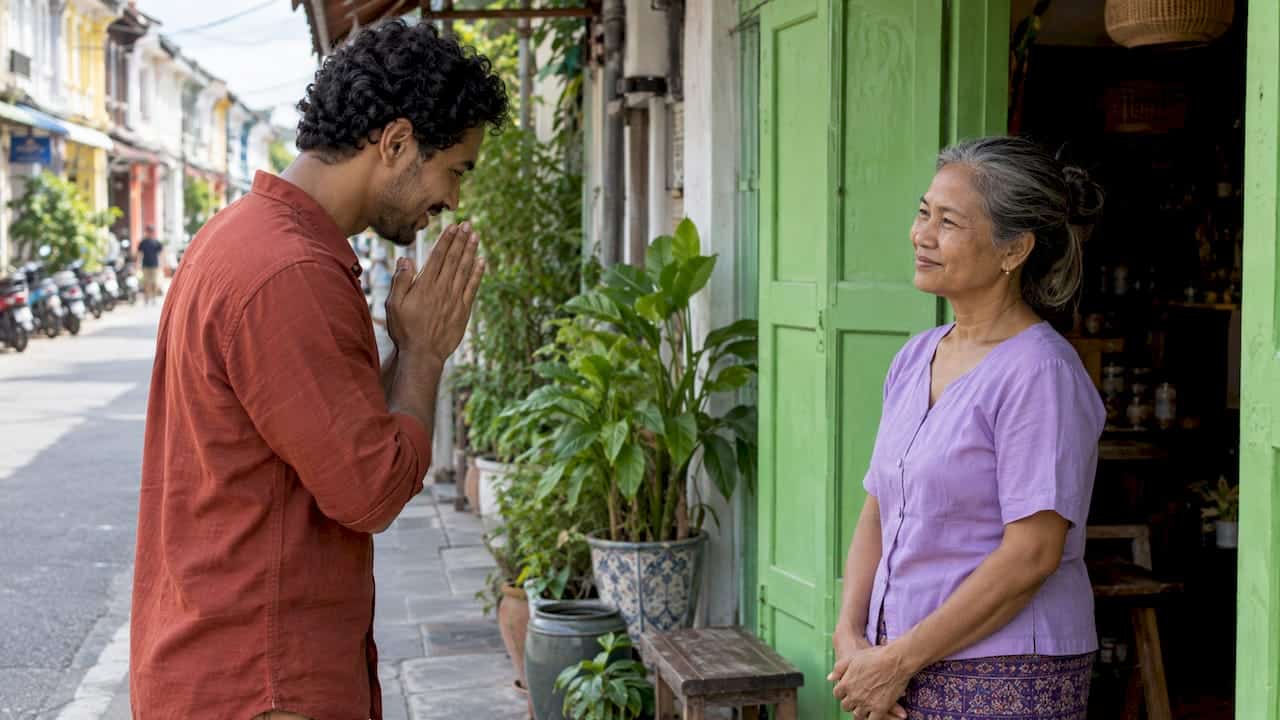
The wai is the Thai greeting of pressing your palms together near your chest or face and bowing slightly. The official Sawasdee Thailand brochure recommends this lotus-bud palm greeting as the respectful alternative to a handshake. It also says it is polite to bend down slightly when you walk past someone who is seated.
The height of the hands signals respect. According to The Culture Trip’s guide to the wai, a relaxed wai with the fingertips near the nose is for peers, a more formal one rises towards the forehead, and the highest is reserved for the royal family, monks and greatly respected people.
As a visitor you do not need to master the levels. Follow this rule of thumb:
- Return a wai when someone offers one, with a smile.
- Do not start a wai with children, and nod and smile instead. Social rank in Thailand is largely set by age, so waiing someone younger is the one real slip.
- Say the polite word that goes with it: sawasdee khrap if you are male, sawasdee ka if you are female. Khop khun means thank you.
- Use khun before a name, for example Khun Somchai, rather than a first name on its own, as one Phuket etiquette guide advises.
A sincere, slightly imperfect wai is better received than a rushed one. When in doubt, smile. It is never wrong.
Temples and cultural landmarks: dress and behaviour
Around 95% of Thais are Buddhist, Lonely Planet notes, and temples are active places of worship, not just sights. The practical rules are consistent from the grandest site to the smallest roadside shrine.
What to wear
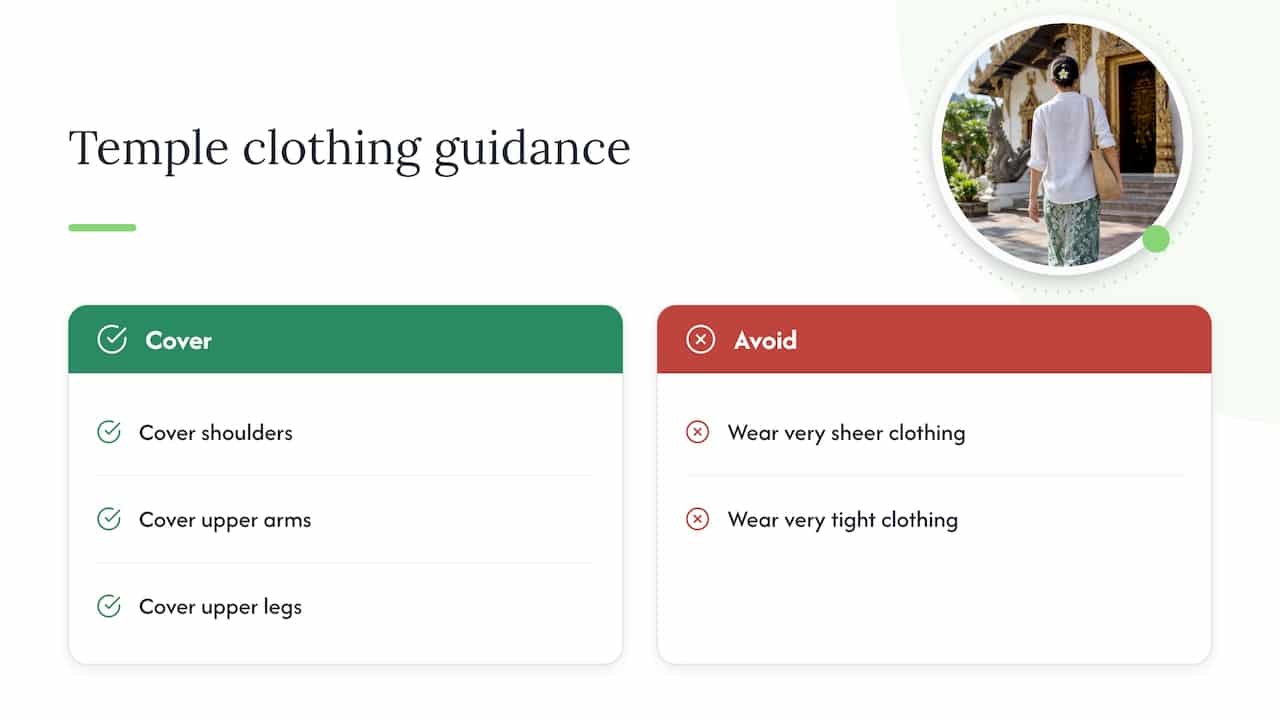
Cover your shoulders, upper arms and upper legs. This applies to men as well as women: a Phuket temple guide says men in shorts and vest tops are turned away just as often. The spirit of the rule is modesty, so clothing that is very sheer or very tight can be refused even when it technically covers the right areas.
A light scarf is the easiest fix, because loan sarongs at the gate are not always available. Our own guide to the Big Buddha dress code goes through what you can and cannot wear in Phuket’s heat, and the footwear and hygiene section is worth a read before you go. If you want to know what happens if you turn up underdressed, see what happens at the gate.
How to behave inside
The Thai Tourism Authority’s visitor tips page lists the basics. Dress appropriately, take your shoes off, keep your voice down and do not climb on or touch Buddha statues. Treat that last one seriously: the same temple guide says climbing or touching a Buddha image is regarded as a grave offence and has led to real legal consequences for tourists.
A few more habits help:
- Give way to monks on footpaths and do not sit next to them on public transport.
- Never point the soles of your feet at a Buddha image or a monk. In a temple hall, sit with your legs tucked to one side.
- Step back before turning your back on a Buddha image.
- Take photos quietly and never pose in a way that puts you above or in front of an image, for example with your back to it or sitting on it.
Women and monks
It is forbidden for a woman to touch a monk or his robes, or to hand him something directly. The Sawasdee Thailand brochure states this clearly. If you need to give something to a monk, place it on a cloth or a table, or let a man pass it on. The rule applies to belongings as well as to the monk himself.
When to take your shoes off
Shoes come off at temples and in homes. The tourism authority’s guidance covers both, and every temple has a rack or a spot outside for footwear. The practical signal is simple: if you see a row of shoes outside a door, take yours off too. That includes many small shops, some clinics and massage places.
Three tips make it easy:
- Wear sandals or slip-ons on any day that might include a temple, a homestay or a spa.
- Step over the raised threshold at a doorway rather than treading on it. Thresholds are traditionally treated with respect.
- Do not walk into a prayer hall with shoes in your hand. Leave them outside.
Massage is one more place these habits apply. If you are planning a treatment, this guide to booking a male massage therapist in Thailand explains what to expect from the visit and the day-to-day courtesies that go with it.
Head, feet and gestures
Thailand’s etiquette follows a simple map of the body. The head is high and respected, and the feet are low. The Sawasdee Thailand brochure spells this out, and it explains most of the rules visitors trip over.
- Do not touch anyone’s head, children included. It is treated as sacred.
- Do not point with your feet, rest them on a table or chair, or step over people sitting on the floor. If you must pass, go around or ask politely.
- Do not point with your index finger at people, Buddha images or monks. Use your whole hand, or tilt your chin.
- Beckon palm down. Wanderlust Magazine notes that curling a finger towards yourself can seem rude, so wave your fingers towards yourself with the palm facing down.
- Do not stand on or throw money. Baht notes and coins carry the king’s image, so stepping on a dropped note is read as disrespect. If one blows away on a boat deck, grab it with your hand.
On the first day it is a lot to remember. The easiest approach is to treat anything involving the top of your head or the bottom of your feet with care. That one idea covers most situations.
Public behaviour, beaches and the royal family
Thais generally speak softly. The official brochure says Thais like well-groomed visitors and dislike shouting, loud talk and violent confrontation. Raising your voice to resolve a problem rarely works. A calm, smiling tone gets better results at a hotel desk, a taxi rank or a pier.
Other points for ordinary days:
- Public affection: holding hands is fine. Hugging and kissing in public is considered impolite.
- Beachwear stays at the beach. Lonely Planet notes that topless and nude sunbathing is frowned upon. Away from the sand, cover up, particularly if you are heading to a religious site afterwards.
- The royal family: lèse-majesté, which means insulting or criticising the monarchy, is a criminal offence in Thailand, as Lonely Planet points out. Do not joke or comment about the royal family, online or in person. Stand when the royal or national anthem plays, as the tourism authority advises.
- Keep your cool. Smiling through small frustrations is part of local manners.
The guidance rests on the Ministry of Culture and the Tourism Authority of Thailand, and a few rules are kept by everyone from taxi drivers to ministers. That is why they count even on a relaxed holiday.
Etiquette on island tours, boats and adventure days
If your plans are jet skis, ATVs and island hopping rather than temples alone, the same ideas apply with a few twists.
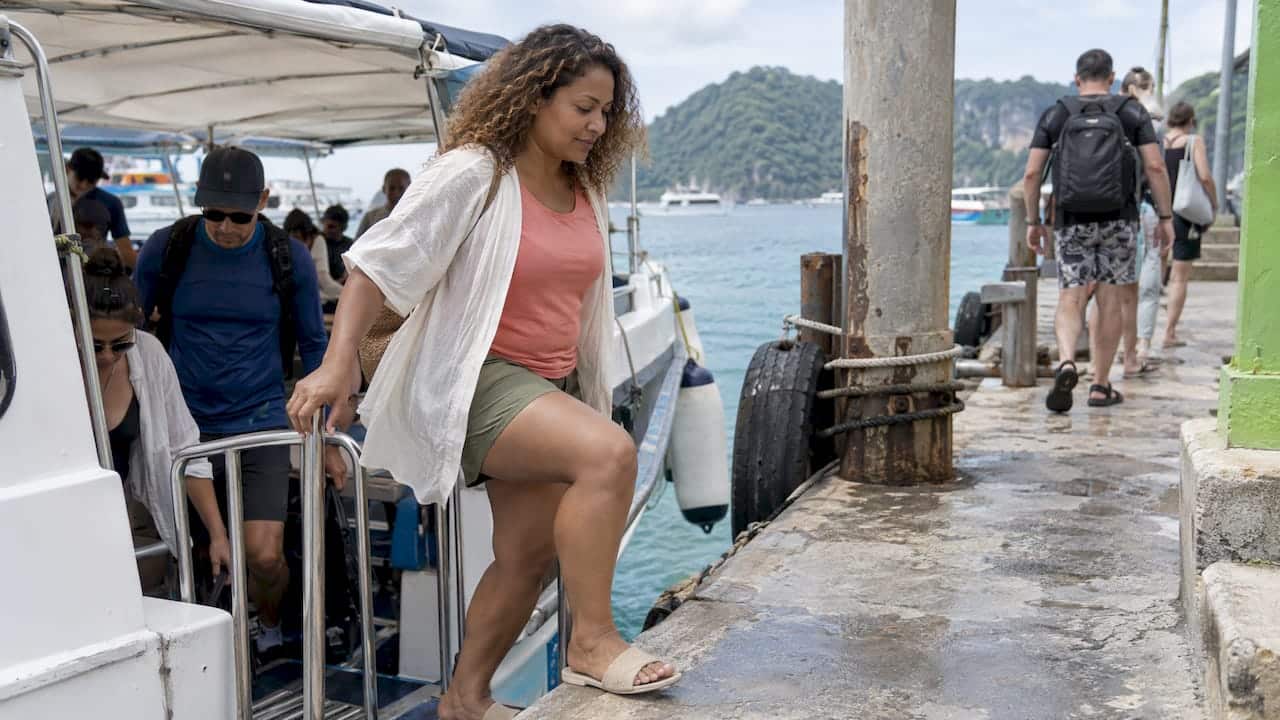
Pack for both worlds. You may ride in a swimsuit and stop at a shrine or a local pier afterwards. Bring a dry T-shirt, a cover-up or scarf, and slip-on sandals. Wet swimwear is not suitable at a religious site. Our Big Buddha dress code guide also covers timing a visit around the dress rules.
Respect shrines on the water. Island tours often pass spirit houses and small shrines. Keep your voice low, do not touch offerings and do not sit on or climb on any shrine.
Keep money and belongings dry and off the floor. Since notes carry the monarch’s image, treat cash with a little care, and keep it in a dry bag on a boat.
Be a calm guest. Shouting at a crew, a guide or another guest, even in the middle of a delay or a change of plan, is the quickest way to lose goodwill. A patient tone solves more problems.
With Qbic Travel, you can book island tours, jet ski and ATV adventures with hotel pick-up, and our team arranges everything via the website or on WhatsApp. If you want a local to handle introductions and cultural stops, our Tour Guide service costs 3,000 THB, according to our service page. We have a 4.5 rating from 237 reviews and a 99% issue-free service rate verified by Trustindex.
Our view: etiquette is part of the adventure
Guests often ask whether etiquette will spoil the fun. We think it does the opposite. A traveller who knows the wai, packs a scarf and slips off their shoes at the right door gets a different holiday: people smile back, doors open and conversations start.
That is why we plan our trips around the whole day, not only the thrill. A jet ski run to the islands, an ATV ride through the hills and a cultural stop can sit in the same itinerary, and the best days are the ones where you arrive prepared for each part. Dry clothes in the bag, a scarf for the temple stop, a relaxed attitude and a smile.
Our approach is built on careful planning and flexible booking, from hotel pick-up to last-minute changes, so that you can concentrate on enjoying Phuket rather than worrying about whether you are doing the right thing.
Carl
Plan an adventure day that fits Phuket’s customs
If you want a day that mixes thrills with real local culture, start with our island tours around Phuket, or browse the full range of tours in Phuket. For adrenaline, see our jet ski and ATV adventures. All of them include hotel pick-up, and you can book online or on WhatsApp, including at short notice.

Bring your scarf, your sandals and your sense of humour. We will take care of the rest.
FAQ
Should I wai back in Phuket?
Yes, return a wai when it is offered, with a smile and a slight bow. Do not start one with children, and give a nod and smile instead. When in doubt, a smile is always acceptable.
What should I wear to a temple in Phuket?
Cover your shoulders, upper arms and knees, whether you are a man or a woman. Avoid anything sheer or very tight, and carry a scarf in case a sarong is not available at the gate. Our Big Buddha dress code guide explains how to dress for the heat.
Is it rude to point in Thailand?
Pointing with your index finger at people, monks or Buddha images is considered impolite, and pointing with your feet is worse. Use an open hand or a tilt of the chin to indicate direction.
Can I wear a swimsuit away from the beach?
It is best not to. Swimwear belongs on the beach and on the boat. Take a dry change of clothes for any stop away from the water, especially temples, markets and restaurants.
Sources
- Sawasdee Thailand brochure
- Tips, Tourism Authority of Thailand
- 18 things you need to know before visiting Thailand, Lonely Planet
- How to wai properly in Thailand, The Culture Trip
- Phuket etiquette guide: respecting Thai culture
- Temple etiquette in Thailand
- 7 etiquette tips for travelling in Thailand, Wanderlust