
Phi Phi Island Fees for Visitors: 400 THB, Pay Cash or Book a Tour
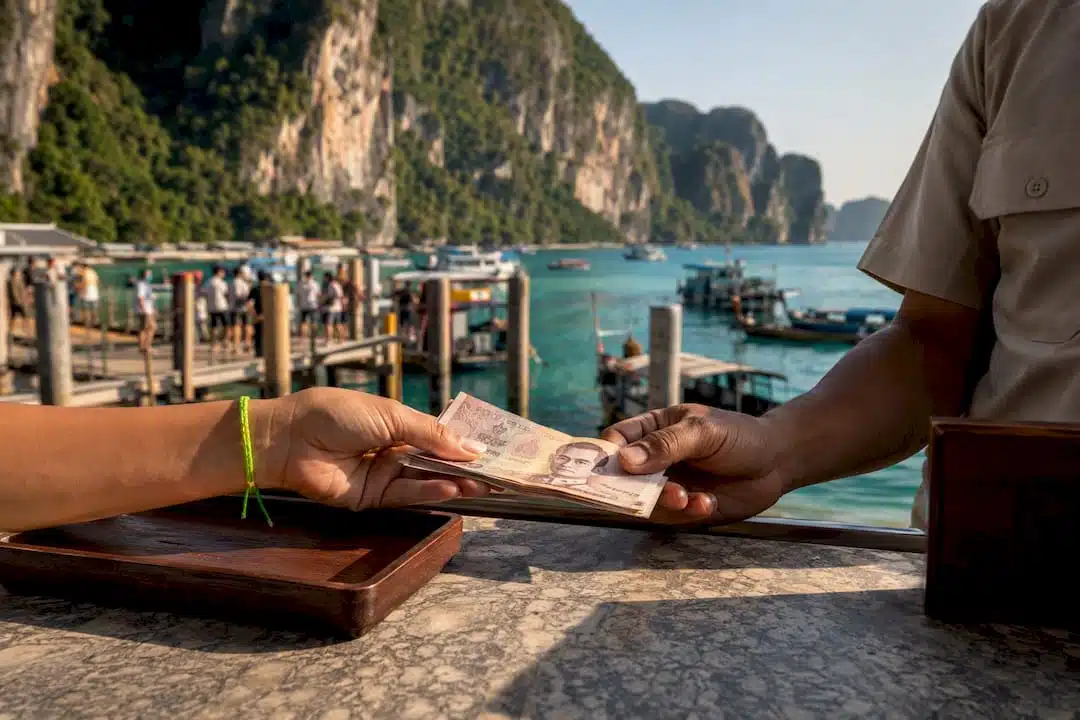
The Phi Phi Island fee for foreign adults is 400 THB, with foreign children (aged 3 to 14) charged 200 THB, and scuba divers usually paying an extra surcharge on top. Thai nationals pay a fraction of that. Bring cash: kiosks rarely take cards, and rangers do check tickets, so hold onto yours for the whole day.
TL;DR:
- Foreign adults pay a 400 THB national park fee, with additional charges for scuba divers and small pier fees, which can raise the total cost significantly.
- Payment must be made in cash at kiosks, pier checkpoints, or onboard, so travelers should carry small notes in Thai baht and keep their tickets visible all day.
- Maya Bay access is restricted with regulated entry, activity limits, and seasonal closures aimed at ecological recovery, so trips may be rerouted on short notice.
- Public ferries typically exclude the park fee, which is paid separately on arrival, while organized tours may include the fee in their upfront price.
- Booking through operators like Qbic Travel clarifies fee inclusions, offers hotel transfer services, and reduces the hassle of handling multiple cash payments at the pier.
Table of Contents
- What does the Phi Phi Islands entrance fee actually cover?
- Where do you pay the Phi Phi Island boat fee?
- What are the current rules for visiting Maya Bay?
- Does your tour price include the Phi Phi park fee?
- What should you actually pack and expect on the day?
- How Qbic Travel keeps park fees simple
- Independent ferry or an inclusive tour: which fits you?
- Book a Phi Phi trip where the fees are already sorted
- Where to double-check current fees and closures
- Sources
What does the Phi Phi Islands entrance fee actually cover?
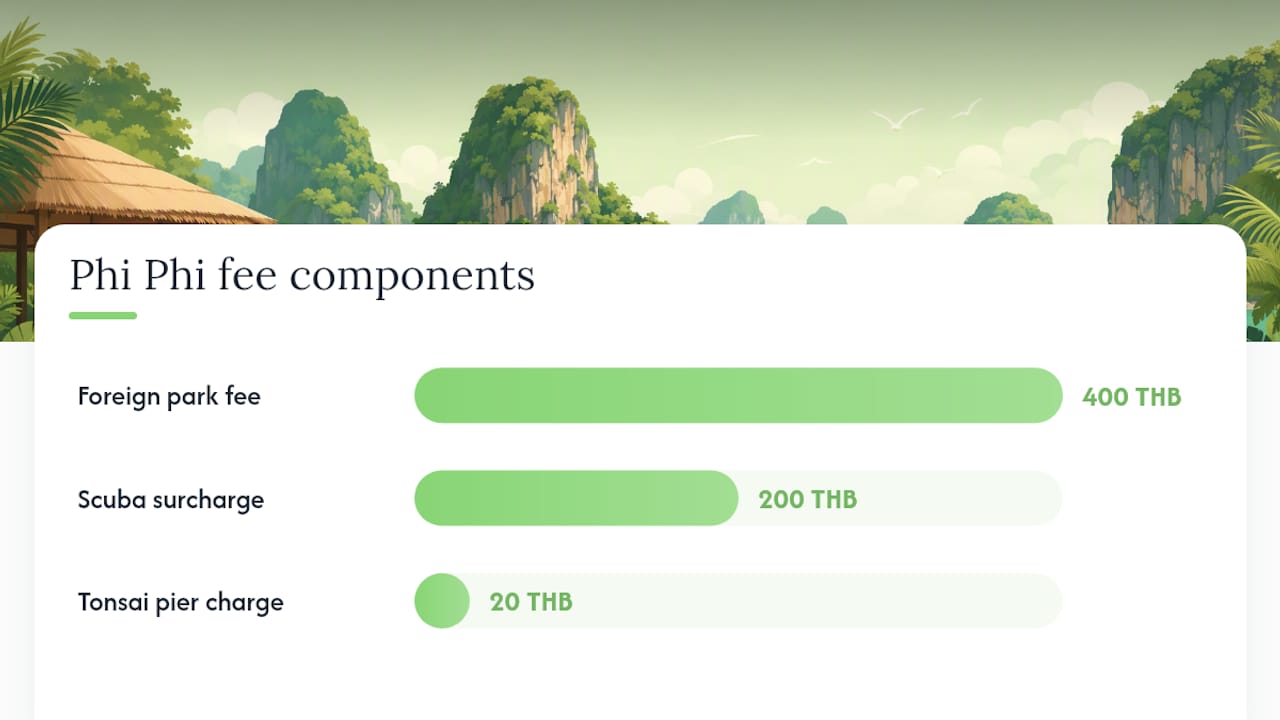
The core charge is the national park entrance fee set by Hat Noppharat Thara–Mu Ko Phi Phi National Park, and it’s the one every visitor needs to budget for regardless of how they arrive. It’s not one flat number though. Rates split by nationality and age, and there are a couple of smaller add-ons that catch first-timers out.
According to widely reported operator and guide pricing, here’s the breakdown:
- Foreign adult: 400 THB
- Foreign child (3 to 14 years): 200 THB
- Thai adult: 40 THB
- Thai child: 20 THB
- Children under 3: free, and this is one of the few reliable exemptions going
Pro Tip: Ask your tour operator if the price already includes the national park fee before you pay for anything else. It’s the single most common gap between the “cost to visit Phi Phi Islands” you see advertised and what you actually hand over on the day.
On top of the park fee, expect a small Tonsai Pier arrival charge of around 20 THB, collected separately from the main ticket. Scuba divers usually face a further surcharge, commonly cited at around 200 THB, reflecting the extra pressure diving puts on reef sites. None of these figures are huge on their own, but stack them together and they explain why your final Phi Phi Islands ticket price rarely matches the headline number quoted online.
Where do you pay the Phi Phi Island boat fee?
Payment happens at a handful of predictable points, and knowing them in advance saves you queuing behind confused tourists at Tonsai Pier.
- Tonsai Pier ranger kiosk — the main collection point for most day-trippers arriving by ferry or speedboat.
- Maya Bay docking checkpoints — rangers here often re-check tickets, particularly during high season when boat traffic is heavy.
- Onboard collection — some speedboat and tour operators collect the fee from all passengers as a group before docking, then hand it over on your behalf.
Cash is king at every one of these points. Card readers are scarce on the islands, and a ranger stationed at a wooden kiosk in the sun isn’t going to have a mobile payment terminal handy. Bring Thai baht, ideally in smaller notes.
As for validity, a single park ticket typically covers you for the day of purchase, though some passes stretch to cover multiple sites over a few days such as Bamboo Island and Pileh Lagoon. Keep the ticket on you. Rangers do spot checks at different landing points, and turning up without proof of payment can mean paying again or being turned away.

What are the current rules for visiting Maya Bay?
Maya Bay isn’t a simple “pay and swim” spot anymore. After coral damage from years of overcrowding, the park introduced regulated access with time limits and activity restrictions, and those rules still shape how tours run today.
- Boats can no longer moor directly on the beach; visitors are ferried in by smaller, designated craft.
- Swimming is restricted in certain zones to protect the recovering reef and the marine life that has returned to the bay, including reef sharks.
- Time on the beach itself is capped, so don’t expect a lazy afternoon there.
- Seasonal closures for ecological recovery happen periodically, and dates shift year to year based on DNP directives.
The good news: your standard park fee covers Maya Bay entry. You’re not paying twice. But the access rules can reshuffle a tour’s itinerary at short notice, so a trip planned around a long Maya Bay stop might get rerouted if the bay closes that week.
Pro Tip: If Maya Bay is the whole reason you’re going, check the current DNP status before booking; a closure notice can appear with little warning, and a good operator will already have a backup stop lined up.
Does your tour price include the Phi Phi park fee?
This is where most confusion happens, and it’s worth sorting out before you hand over any money. Public ferries almost always exclude the park fee. Fares run roughly 450 to 600 THB one-way, and you pay the park fee separately on arrival. Organised speedboat day tours, by contrast, often fold the fee into the headline price, but “often” isn’t “always.”
Before booking, ask directly:
- Is the national park fee included in this price, or paid separately on the day?
- Does the price cover the scuba surcharge if I plan to dive?
- Is there a pier or Tonsai arrival fee on top?
- Will I need cash on board, or is everything settled in advance?
Getting clear answers upfront is the difference between a relaxed day out and an unexpected 400 THB request at a pier kiosk when your wallet’s already thin on baht.
What should you actually pack and expect on the day?
A little preparation avoids most of the friction visitors run into around fees and park rules.
- Carry Thai baht in smaller notes; big bills can be hard for kiosk staff to change.
- Keep your park ticket somewhere accessible all day; you may need to show it more than once.
- Travel outside peak school-holiday weeks if you want fewer crowds and less queuing at Tonsai Pier.
- Use reef-safe sunscreen; standard sunscreen chemicals contribute to the coral stress that closures are meant to fix.
- Follow ranger instructions in Maya Bay without argument. Ignoring boundary markers or time limits risks fines and ruins it for the next boatload of visitors.
How Qbic Travel keeps park fees simple
Sorting out Phi Phi Islands tour prices shouldn’t feel like detective work, and that’s exactly the gap Qbic Travel tries to close. Trip pages for the Phi Phi Island tour and the speedboat option state clearly whether the national park fee and pier charges are already bundled in, so you’re not guessing at checkout.
A few reasons travellers lean on a local operator rather than piecing the day together themselves:
- Hotel pick-up and drop-off are arranged, cutting out transport guesswork on top of fee guesswork.
- Fee inclusions are listed upfront, not buried in fine print you find out about at Tonsai Pier.
- Qbic Travel is recognized for a high service reliability and customer satisfaction rating based on numerous reviews.
- Itineraries such as the Phi Phi Islands Getaway are built to fit both first-time visitors and returning thrill-seekers.
If juggling separate cash payments at three different kiosks sounds like the opposite of a relaxing island day, booking with a local operator removes that layer entirely.
Independent ferry or an inclusive tour: which fits you?
If you’ve got time to spare and don’t mind handling small cash payments yourself, the public ferry plus paying the park fee on arrival works out cheaper. If your priority is a smooth day with no pier-side surprises, an inclusive tour earns back its price in convenience. Ask yourself: would an unexpected 400 THB request ruin your morning? If yes, book the tour.
— Carl
Book a Phi Phi trip where the fees are already sorted
Qbic Travel is the practical alternative to piecing your own day together at Tonsai Pier. Instead of juggling ferry tickets, park fee cash, and a separate pier charge, you get one price that spells out exactly what’s covered before you commit.

The Phi Phi Islands tour destination page lays out hotel pick-up, boat transfers, and fee inclusions in plain terms, so there’s no arithmetic required once you’re on the island. For those who’d rather skip the crowds at shared kiosks entirely, the private boat charter handles fee payment as part of the booking. If you’re still deciding whether the islands suit your trip at all, the worth‑visiting guide is a useful next stop. Ready to lock in a date? Check availability on the Phi Phi Island tour page and get your park fee questions answered before you fly.
Where to double-check current fees and closures
Fees and Maya Bay rules do shift, so it pays to check before you travel rather than after you’ve booked.
- Thai National Parks for official Hat Noppharat Thara–Mu Ko Phi Phi fee tables and closure notices.
- Worth Every Mile’s Phi Phi guide for corroborated pricing and pier fee details.
- Adventure Thailand’s Koh Phi Phi guide for current Maya Bay access rules.
Check DNP updates shortly before you travel, since fee tables and closure windows can change with little warning.
Sources
- Phi Phi Islands — Thai National Parks
- Phi Phi Islands travel guide — Worth Every Mile
- Koh Phi Phi guide: Maya Bay & island life — Adventure Thailand


