
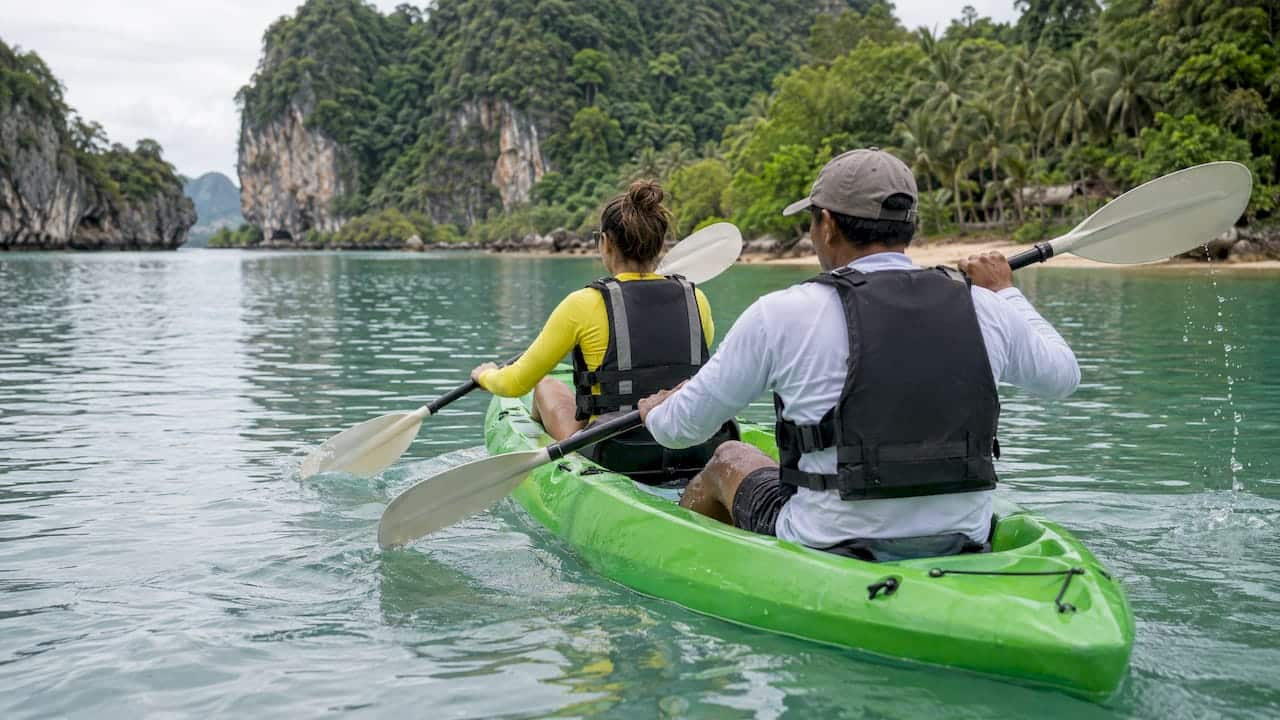
Non-Swimmer Kayaking in Phuket: How to Do It Safely
Yes, you can go kayaking in Phuket if you cannot swim, as long as you wear a life jacket, paddle in a group with a guide and pick a day when the sea is calm. The trip type matters more than your swimming ability: a guided outing in sheltered water is a very different thing from setting off alone in open sea. We run adventure and island tours from Phuket, including kayak tours with hotel pick-up and flexible last-minute booking, so you can sort out the details with a local team before you go.
TL;DR
- Non-swimmers should always wear a life jacket on the water, and kayak in open water only with a group or guide (ThaiSafe water sports guide, March 2026).
- Avoid open-water kayaking in the Andaman monsoon, which runs roughly May to October and is at its roughest in August and September.
- Choose a guided trip with life jackets supplied, and follow beach flags and staff instructions on the day.
- Take at least 1.5 litres of water per person for a half-day trip and 3 litres for a full day.
- Tell your operator you cannot swim when you book, so the right trip and seat are planned for you.
Table of Contents
- Is it safe to kayak in Phuket if you cannot swim?
- What makes a kayak trip suitable for a non-swimmer
- When to go, and when to stay on the beach
- Your pre-trip checklist
- Which kind of trip suits you best
- Travelling with children or a mixed group
- What to do on the day
- Snorkelling and other water activities as a non-swimmer
- Our view: calm water, good gear, good people
- Plan your Phuket water day with us
- FAQ
- Sources
Is it safe to kayak in Phuket if you cannot swim?
It can be, and plenty of first-timers do it. A sit-on-top or tandem sea kayak is stable, you sit low, and the pace is gentle. The risk is not the paddling itself. It is what happens if you tip, get pushed off course by wind or tide, or end up in rougher water than you planned for.
Three things reduce that risk to a sensible level:
- A properly fitted life jacket, worn the whole time, not stowed under your seat.
- A guide and a group, so someone knows the water, watches the weather and can reach you quickly.
- The right conditions, meaning calm seas, good visibility and no warnings flying on the beach.
The safety guidance we rely on says non-swimmers should always wear a life jacket and should not kayak in open water during monsoon conditions. For open-water kayaking and sea caves, it recommends going with a group or guided tour (ThaiSafe). That is the approach we would suggest to a friend, too.
What makes a kayak trip suitable for a non-swimmer
Not every kayak outing is the same. When you compare options, look at these five things.
Sheltered water and a short route
Bays, lagoons and coastal routes with little wind and swell are far easier to manage than exposed stretches. A shorter route also means less time on the water, less fatigue and less chance of conditions changing under you. Our guide on matching your fitness to Phuket kayak routes, tides and tour type explains how route length and tides change how demanding a trip feels.
A guide who watches the tide
Some kayak routes pass through tidal caves and low entrances. Those should be entered only with an experienced guide who knows the tidal patterns (ThaiSafe). If you cannot swim, this is not a place for improvising.
A tandem seat
Paddling with a partner or a guide in a two-person kayak gives you a steadier boat and someone to share the effort. If you are nervous, ask for this when you book.
Life jackets supplied and sized properly
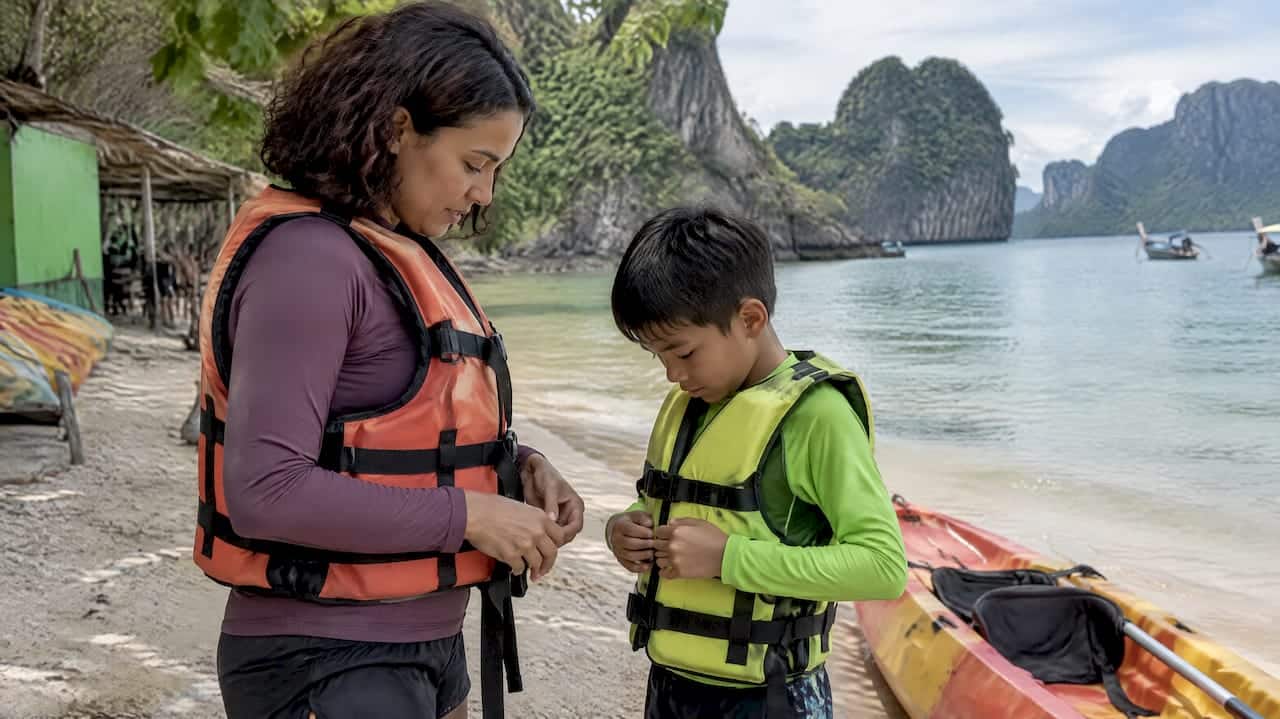
Travel guidance reporting on the Tourism Authority of Thailand’s advice suggests choosing licensed operators that provide life jackets and cancel when conditions are unsafe for kayaking and other marine excursions (TakeTravelInfo, 2025). A good jacket sits snug, does not ride up past your chin when you lift the shoulders, and has all buckles done up. Children need a child-sized jacket, not an adult one pulled tight.
A calm-weather cancellation policy
A trip that can be moved or cancelled when the sea turns rough is a trip that keeps you safe. You want an operator who will make that call early rather than push on.
When to go, and when to stay on the beach
Phuket’s sea has a rhythm. The Andaman coast monsoon runs from about May to October, and August and September are usually the worst months for rough water (ThaiSafe). In that window, non-swimmers should avoid open-water kayaking altogether.
The drier months, roughly November to April, are the natural season for paddling. The sea is typically calmer and visibility is better, which is why most kayak and island tours concentrate there. Even so, a single windy afternoon can change things, so check the day, not just the month.
Beach flags are your daily signal. Phuket police have run monsoon beach-safety campaigns, for example at Bang Tao Beach in June 2025, urging people to obey beach flags and lifeguard instructions as strong waves and rip currents become more frequent in peak monsoon season (Thaiger). If a red flag is up, or the staff say the sea is not right, take the reschedule and enjoy another activity that day.
Quick decision guide
| Situation | Sensible choice for a non-swimmer |
|---|---|
| November to April, calm sea, guided group | Good time for a guided kayak trip, life jacket on |
| May to October, flags flying, swell visible | Postpone kayaking, pick a calmer activity or another day |
| August to September | Skip open-water kayaking |
| Sea caves or tidal entrances | Only with an experienced guide who knows the tides |
| Not sure how you will feel on the water | Book a short guided trip and say you cannot swim |
Your pre-trip checklist
Before you pay, go through this list. It takes five minutes and saves a lot of stress.
- Tell the operator you cannot swim. Do it when you book, not at the pier. It lets them put you in the right group, boat and seat.
- Confirm life jackets are included and ask for the right size for everyone, including children.
- Confirm the trip has a guide who stays with the group.
- Ask what happens in bad weather. You want a clear answer on rescheduling or refunds.
- Check the route type. Is it sheltered water, or open sea between islands?
- Pack water. Carry at least 1.5 litres per person for a half-day trip and 3 litres for a full day (ThaiSafe).
- Save the emergency numbers. In Thailand, 1669 is the ambulance line and 1155 is the tourist police (ThaiSafe).
- Wear sun protection. Reef-safe sunscreen, a hat and a rash vest help on a bright day on the water. Our Phuket boat trip packing list covers what to bring and the reef rules to follow.
Why a guided booking beats going it alone
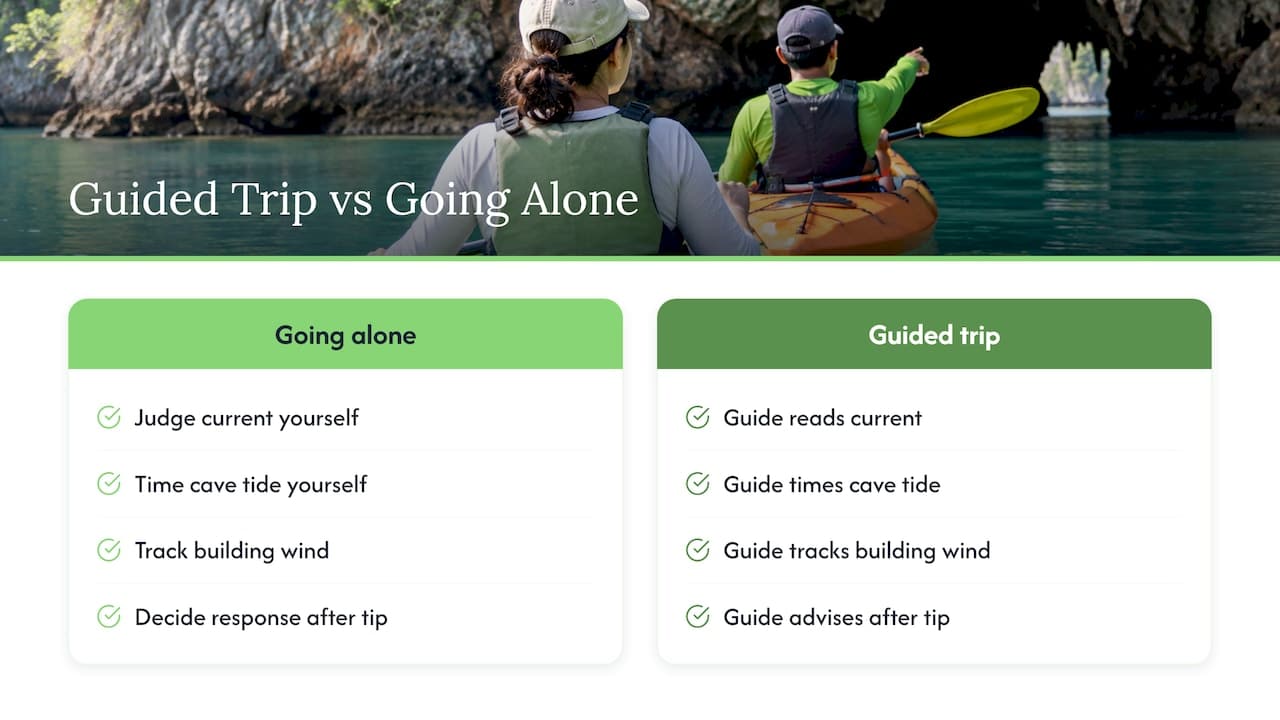
Hiring a kayak on the beach and paddling off is tempting, and the sea can look flat from the sand. For a non-swimmer, though, the point of a guided trip is everything you do not have to judge yourself: where the current runs, when the tide opens a cave, when the wind is building, and what to do if someone tips. A guide also gives your group one person whose job is to watch the water rather than the scenery.
Which kind of trip suits you best
Think about what you want from the day, then match the trip to it.
You want a gentle paddle with views
A short, guided coastal kayak is the simplest start. Keep the route short, go in the calmer season and wear the jacket from start to finish.
You want islands, beaches and plenty of time
A boat-based island day lets you enjoy the scenery without relying on your own paddling. Our Phuket island tours cover attractions such as James Bond Island, Phi Phi, Raya/Racha and Coral Islands. If kayaking is one part of the day rather than the whole day, you can try it in a calm spot and spend the rest enjoying the boat and the beaches.
You want a private, relaxed pace
A private boat charter lets you set the tempo with your own group. That suits families with mixed confidence in the water, or a nervous swimmer who wants a quiet day. Take a look at our private boat tours in Phuket.
You want something after dark
Bioluminescent night trips are a favourite for people who like the water but not a long paddle. Life jackets and permits are worth checking beforehand, and our guide on life jackets and permits on bioluminescent night tours shows what to look for.
Travelling with children or a mixed group
Families are a big part of who books with us, and the same rules apply, only more strictly. Everyone wears a jacket, adults stay close to children, and the group follows the guide’s directions on where to paddle. If one person in your party is a confident swimmer and another is not, tell the operator so the seating can be planned sensibly. Keep the first outing short, so a tired child does not turn a fun morning into a long one.
If some of your group would rather stay dry, a boat trip with optional paddling is a good compromise: everyone shares the same day, and each person picks their own level of activity.
What to do on the day
- Arrive early and listen to the briefing. It covers paddling, signals and where the group stays together.
- Put on your life jacket before you reach the kayak and have the guide check the fit.
- Sit centred and keep your weight low. Do not stand up or lean far over the side to take photos.
- Stay with the group. Do not drift off for a closer look at a cave or a beach.
- Drink water regularly, even if the breeze feels cool.
- Speak up. If you feel uneasy, say so. A good guide would rather change the plan than carry on.
Snorkelling and other water activities as a non-swimmer
Many readers asking about kayaking also wonder whether they can join a snorkel stop. Snorkelling is largely a surface activity, and with a flotation vest on, you float face-down and look at the reef below. Tell the crew you cannot swim, wear the vest the whole time and stay within the area the guide sets. Follow the reef rules in our packing list guide so you do not touch the coral.
If you would rather skip the water entirely, we also run land and sea adventures that do not require swimming, such as ATV adventures and guided jet ski tours. For those, our guide to life jackets and jet ski safety explains the gear you will wear.
Our view: calm water, good gear, good people
We have always believed that adventure should feel exciting, not worrying. Many guests tell us they would love to kayak in Phuket but hold back because they cannot swim. Our answer is simple: that should not stop you, as long as you set the trip up properly.
Choose the calm season. Wear a life jacket from the first minute to the last. Go with a guide, and tell us you are not a swimmer when you book so we can plan around it. Our tours come with hotel pick-up and flexible last-minute booking, which means you can wait for a good weather window rather than lock yourself into a bad day.
We are proud that our service is rated 99% issue-free by Trustindex, with a 4.5 rating from 237 reviews. Behind that number is a simple habit: we would rather reschedule a trip than rush one.
Carl
Plan your Phuket water day with us
If you want a relaxed, well-planned day on the water, our team can help you choose between kayak tours, island trips and private boat options, and arrange hotel pick-up. You can book online or through WhatsApp, and last-minute booking is available. Browse our island tours or the full tours and services list to find a trip that fits your group.

If you need a guide for a day, our Tour Guide service is listed at 3,000 THB, and airport transfers start from 800 THB for a taxi and from 1,200 THB for a minibus, which makes it easy to land and head straight out on the water.
FAQ
Can I kayak in Phuket if I cannot swim at all?
Yes, on a guided trip with a life jacket worn throughout. Tell the operator when you book so they can plan the group, seat and route accordingly. For open-water routes, go with a group or guide rather than on your own.
Is the monsoon season a bad time for non-swimmers to kayak?
It is the time to be most careful. The Andaman monsoon runs roughly May to October, with August and September the roughest, and non-swimmers should avoid open-water kayaking then. The calmer months from about November to April are the better choice.
What should I bring on a kayak day?
Bring at least 1.5 litres of water per person for a half-day trip and 3 litres for a full day, plus sun protection, a hat and a dry change of clothes. Our Phuket boat trip packing list goes through the rest.
Who do I call in an emergency in Phuket?
Call 1669 for an ambulance or 1155 for the tourist police. Save both numbers in your phone before you leave your hotel, and tell your guide at once if anyone in the group is in trouble.
Sources
- Water Sports Safety in Thailand: The Complete Guide, ThaiSafe
- Best Time to Travel to Phuket, Thailand, TakeTravelInfo
- Phuket police hit the sand in beach safety crackdown, Thaiger


