
Phuket Jellyfish Snorkel Safety: Vinegar First Aid and 4 Questions
Snorkelling around Phuket is usually fine, and most stings you might hear about come from mild species rather than dangerous ones. That said, risk isn’t tied to a fixed calendar month. It rises after onshore winds, monsoon transitions and local wash-ups, so a “safe season” chart alone won’t tell you the full story. If you see or feel a sting, get out of the water and flush the area with vinegar straight away, then check for local warnings before you go back in.
TL;DR:
- Jellyfish encounters around Phuket are unpredictable, with bluebottles and moon jellies being the most common, but box jellyfish are rare and potentially deadly.
- Wind, currents, and tides influence jellyfish presence more than the season, making daily local warnings and beach flags more reliable than calendar-based safety charts.
- Operators should conduct pre-entry site scans, carry vinegar, and have trained first-aiders aboard, with site conditions or recent sightings dictating trip adjustments.
- Immediate first aid requires at least 30 seconds of continuous vinegar application, avoiding fresh water rinses or rubbing, and removing tentacles with gloves or tweezers.
- Checking recent local reports and warnings before swimming significantly reduces the risk, as do wearing rash guards and avoiding visible jellyfish aggregations.
Table of Contents
- Common jellyfish near Phuket: what snorkellers should know
- When jellyfish are likeliest: seasonality and event-driven risks
- Recent local incidents and how authorities respond
- How to reduce the chance of contact while snorkelling
- First aid for jellyfish stings in Thailand (DMCR-aligned)
- Checklist: questions to ask your snorkelling operator before you go in
- A local view on jellyfish risk and safe snorkelling
- Qbic Travel’s snorkelling and island tours: a safety-first booking option
- Sources
- FAQ
Common jellyfish near Phuket: what snorkellers should know
Most jellyfish encounters around Phuket involve one of three broad types, and knowing the difference matters more than being able to identify one on sight.
- Moon jelly (Aurelia): pale, saucer-shaped and usually mild, causing itching or a rash rather than serious harm.
- Bluebottle (Physalia): painful and unpredictable, with tentacles that can trail metres below the surface even when the float looks small.
- Box jellyfish (Chironex relatives): rare around Phuket’s tourist beaches but potentially life-threatening, according to DMCR guidance, which notes box jellyfish can turn up in shallow coastal water, including bays and near mangroves.
Visual identification from a boat or the shore is unreliable. A calm-looking float can trail a hazard well beyond what’s visible, and a stranded specimen on the sand can still sting if handled. Never touch a jellyfish washed up on the beach, and tell your crew or a lifeguard the moment you spot one in the water.
When jellyfish are likeliest: seasonality and event-driven risks
Southern Thailand’s higher-risk window tends to sit around the southwest and northeast monsoon transitions, broadly overlapping April to October, but this isn’t a strict rule. Wind, currents and tides matter more day to day than the month on your calendar.
- Onshore winds and storm swells can push jellyfish, including bluebottles, into swimming areas within hours.
- Government monitoring around Karon Beach followed a bluebottle wash-up during the monsoon season, prompting stepped-up public warnings during monsoon conditions.
- Research on Physalia dispersion, including a PLOS ONE study on eDNA tracking in the Gulf of Thailand, points to patchy, event-driven occurrences rather than predictable monthly patterns.
Treat the day’s beach signs, lifeguard observations and your crew’s own checks as more reliable than any generic seasonal chart. A “safe” month can still throw up a bad afternoon if the wind turns.
Recent local incidents and how authorities respond
Phuket has seen a handful of notable sightings recently. In April 2026, officials warned beachgoers after moon jellyfish were found at Siam Bay and Racha Yai, advising against touching stranded specimens even though the species is generally not dangerous. The following month, a bluebottle wash-up near Karon Beach led to fresh monitoring instructions from Thai authorities.
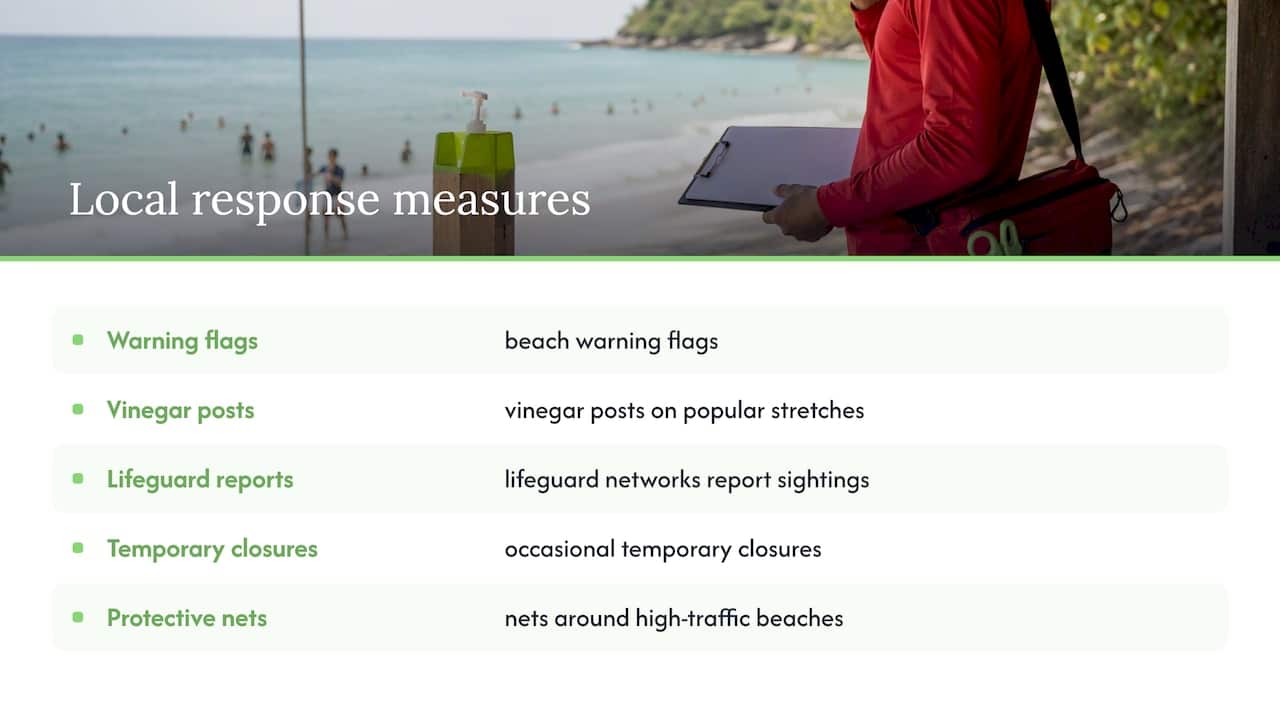
In practice, this monitoring shows up as beach warning flags, vinegar posts on popular stretches, lifeguard networks reporting sightings, and occasionally temporary closures or nets around high-traffic tourist beaches. Before you head out, a quick check of local news or a direct question to your operator about recent reports takes thirty seconds and tells you far more than an app ever will.
How to reduce the chance of contact while snorkelling
A few habits make a real difference to your odds of a sting-free day.
- Check daily local warnings and beach flags before you leave your hotel.
- Ask your operator whether the entry site is scanned immediately before you get in, and whether vinegar and a trained crew member are on board.
- Avoid swimming near any visible jellyfish aggregation, even if it looks harmless from a distance.
- Stick to netted or actively monitored areas where they’re provided.
- Wear a full-coverage rash guard or lycra suit on days when conditions or warnings suggest higher risk.
- If anything feels off, choose a different snorkel site or postpone the swim rather than pushing ahead.
Pro Tip: A rash guard won’t stop every sting, but it blocks most casual brushes against drifting tentacles, and it’s one less thing to worry about while you’re enjoying the reef.
Good crews will change the itinerary on the spot if jellyfish turn up, and that flexibility is worth more than any fixed schedule. For a fuller rundown of what a responsible operator checks, this snorkelling safety checklist for Phuket covers the details.
First aid for jellyfish stings in Thailand (DMCR-aligned)
If a sting happens, the sequence matters as much as the speed.
- Get out of the water and call for help immediately.
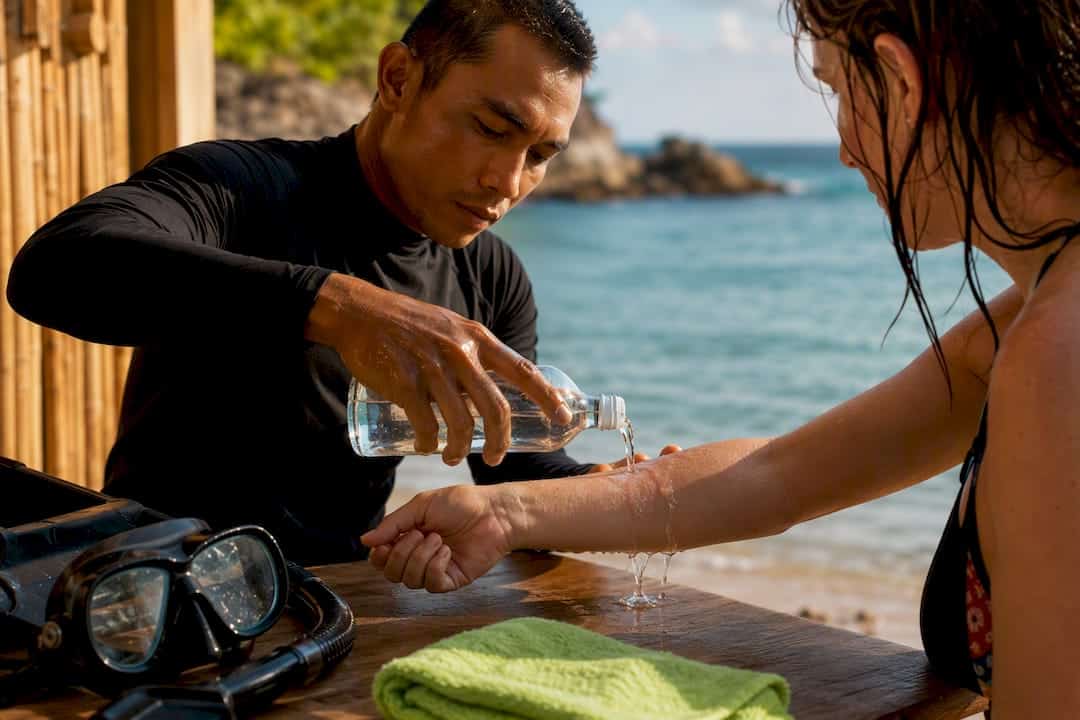
- Pour vinegar continuously over the affected area for at least 30 seconds. DMCR’s own first-aid protocol for box jellyfish sets this as the standard local response.
- Never rinse with fresh water and never rub the area, since both can worsen the sting.
- If tentacles are still attached, remove them only with gloves or tweezers, never bare hands.
- Watch for difficulty breathing, fainting or severe chest pain, and call 1669 immediately if any of these appear.
One value worth remembering: DMCR’s protocol specifies at least 30 seconds of continuous vinegar application, not a quick splash, before anything else.
Any operator running snorkel trips in areas with known jellyfish activity should carry vinegar as standard, have at least one trained first-aider aboard, and know the fastest route to the nearest hospital if things escalate beyond first aid.
Checklist: questions to ask your snorkelling operator before you go in
A short conversation before you board tells you most of what you need to know.
- Do you scan the entry site immediately before each swim, not just at the start of the day?
- Do you carry vinegar and have a crew member trained in jellyfish first aid?
- Will you change or cancel this stop if jellyfish are spotted, even if it means adjusting the plan?
- What’s the emergency procedure and nearest hospital if someone gets stung?
Ask these before you get in the water, not after. Operators who answer clearly and without hesitation are usually the ones who’ve thought this through properly, and this safety checklist for Phuket snorkelling sets out what those standards look like in practice.
A local view on jellyfish risk and safe snorkelling
I’d rather cancel a stop than risk a bad afternoon. If the crew briefing flags recent sightings, if there’s a visible aggregation near the entry point, or if the wind has been onshore for a day or two, that’s enough reason to move to another site. None of this is guesswork. It’s a handful of checks that take minutes and remove most of the guesswork about whether today’s the day to get in the water.
— Carl
Qbic Travel’s snorkelling and island tours: a safety-first booking option
Qbic Travel runs snorkel and island trips around Phuket with the same checks covered above built into how we operate: pre-trip site checks, vinegar on board, and crew briefed on local reports before guests get in the water.

- Boat trips to Coral Island, Phi Phi and nearby snorkel spots.
- Routing that can be changed if conditions or warnings require it.
- Crew and vinegar provided on snorkel-inclusive trips.
If you’d like to check availability or ask about current conditions before you book, our tours page has the full list of island and snorkelling options, or message us directly for a day-of status check.
Sources
- กรมทรัพยากรทางทะเลและชายฝั่ง (DMCR) — knowledge base
- Marine sentinels using eDNA to track Physalia sp. in the Gulf of Thailand — PLOS ONE (2025)
- Thailand.go.th — ministerial instruction and DMCR monitoring (May 2026)
- The Straits Times — tourists warned after moon jellyfish found on Phuket beach (2026-04-08)
FAQ
What beach has the most box jellyfish?
There’s no published ranking of Phuket beaches by box jellyfish numbers. DMCR guidance notes the species can appear in shallow coastal water, including bays and near mangroves, so it’s safer to check day-of warnings for your specific beach rather than rely on a fixed list.
Is it safe to swim in the sea in Phuket?
Swimming and snorkelling in Phuket are generally fine, and most jellyfish encountered are mild species like moon jellies. Risk rises after onshore winds or during monsoon transitions, so check local warnings and beach flags before entering the water on any given day.
Which months to avoid in Phuket?
There’s no strict “avoid this month” rule, though the southwest and northeast monsoon transitions, roughly April to October, tend to bring more jellyfish activity. Wind and current events matter more than the calendar, so a quiet April can still have a risky afternoon if conditions shift.
What to do if stung by jellyfish in Thailand?
Get out of the water immediately and pour vinegar continuously over the sting for at least 30 seconds, following DMCR’s first-aid protocol. Don’t rinse with fresh water or rub the area, and call 1669 if you notice difficulty breathing, fainting or chest pain.


