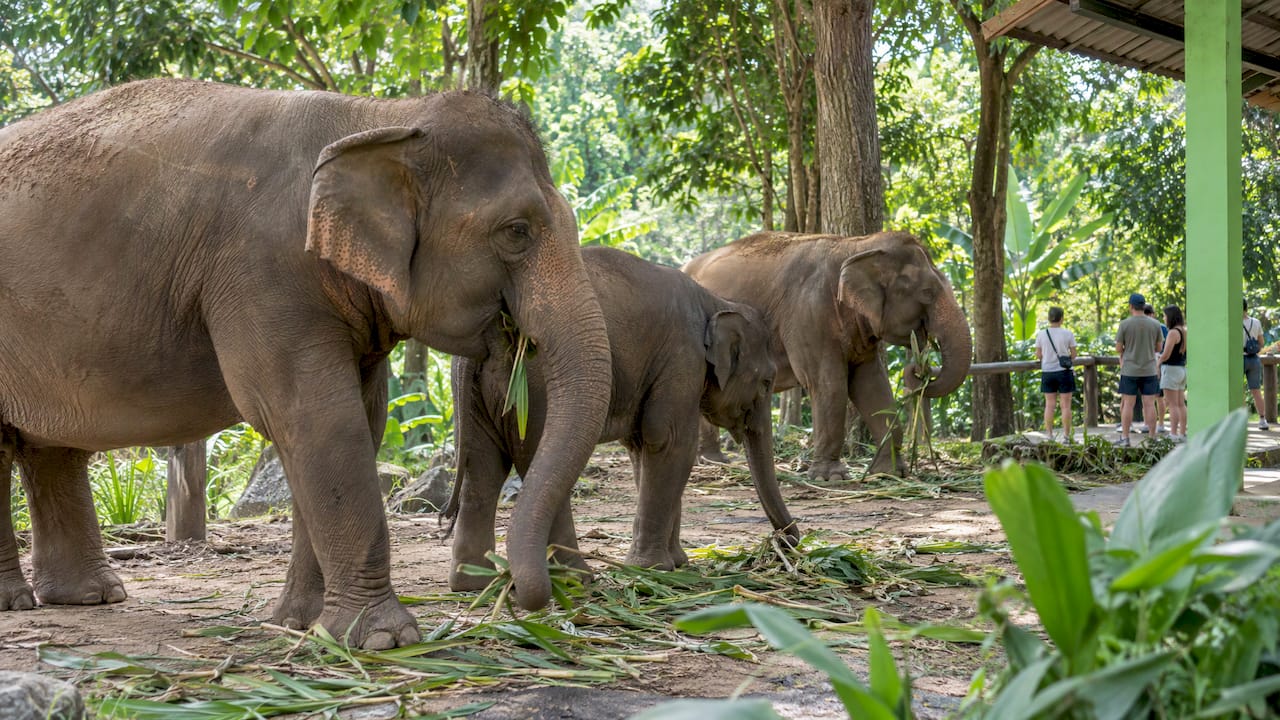
Ethical Wildlife Encounters in Phuket: How to Choose Well
The most ethical wildlife encounter in Phuket is one where the animal sets the terms: you watch, learn and perhaps help with its care, and nothing is made to perform, carry or pose for you. For most visitors that means a elephant care or sanctuary visit that is observation-based, and we can book one for you, with hotel pick-up, through our Phuket elephant sanctuary page. This guide explains what “ethical” means in practice, which standards exist in Thailand, which warning signs to look for and what to ask before you pay.
TL;DR
- Choose observation over interaction: watching elephants forage, bathe and socialise is the activity most consistent with their welfare, while riding, shows and posed photos are not.
- Thailand has a mandatory national standard for elephant facilities, and international guidelines set minimum welfare levels. Use them as your yardstick.
- Be wary of marketing built around what you get to do with the animal. If access to the animal is the product, look harder.
- Families can ask a handful of simple questions before booking. They take five minutes and save a disappointing day.
- Our elephant care and sanctuary visits are bookable online or via WhatsApp, with hotel pick-up.
Table of Contents
- What an ethical wildlife encounter in Phuket looks like
- The standards behind the label
- Which activities fit with elephant welfare
- Red flags in the advertising
- Five questions to ask before you book
- Planning the day around the animals
- Our perspective
- Book an elephant care or sanctuary visit with us
- FAQ
- Sources
What an ethical wildlife encounter in Phuket looks like
The phrase gets used loosely, so it helps to start with the principle most welfare organisations share. CompassionWorks International puts it neatly: the animals should not have to earn their care by entertaining people. A genuine sanctuary is organised around the animals’ needs. It offers lifelong care rather than breeding or trading, gives animals private space where they can retreat from visitors, and relies on independent standards rather than its own claims.
In Phuket, elephants are the headline animal, so most ethical-encounter questions come back to them. A good visit usually looks like this:
- You observe. Elephants forage, bathe, rest and socialise while you watch from a respectful distance.
- The elephant can walk away. Visitors are not allowed to corner, direct or restrain an animal for a photo.
- Guides explain the animals. You hear about each elephant’s history, diet and health, not a script about tricks.
- Visits are small and timed. Short slots for small groups mean the animals are not on show all day.
- Your help is about care. Some venues let visitors help prepare nutritional supplements tailored to individual elephants, which the Elephant Welfare Alliance describes as a rewarding, educational activity that supports welfare.
The Alliance also makes a point worth remembering: good welfare is not a completely human-free state. Captive elephants still need knowledgeable care, management and safety systems. The aim of its guidelines is to minimise unnecessary control and give the animals more choice, a principle it calls the joy of observation.
The standards behind the label
“Ethical” on a booking page is a marketing word. These documents are what give it substance.
Thailand’s national standard
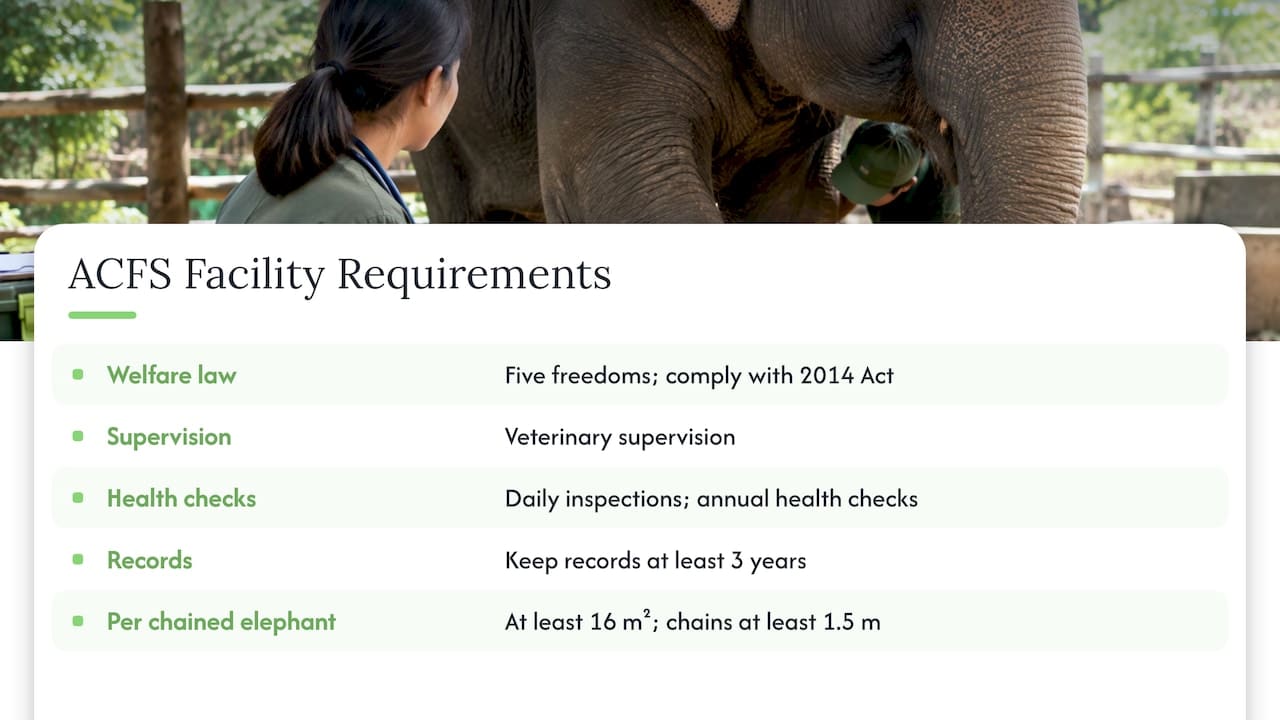
Thailand’s agricultural standards body, ACFS, publishes a mandatory standard for elephant facilities, TAS 6413-2021, “Good Animal Practices for Elephant Facility”, last updated in October 2025. It requires camps to meet the five freedoms of animal welfare and to comply with the Cruelty Prevention and Welfare of Animals Act B.E. 2557 (2014). It also sets practical rules: veterinary supervision, daily health inspections, annual health checks, records kept for at least three years, and at least 16 m² per chained elephant with chains of at least 1.5 m.
That is a legal floor, not a mark of excellence. Treat it as the minimum you should expect from anyone who keeps elephants.
The IUCN specialist group’s guidelines
The IUCN/SSC Asian Elephant Specialist Group published captive-elephant tourism guidelines in 2022. They are described as minimum, entry-level welfare standards for Thai tourism camps, and they assess both the camp as a whole and each individual elephant. Among the figures they set:
| Area | Minimum in the 2022 guidelines |
|---|---|
| Living space | At least 154 sq m per elephant (1,500 sq m preferred) |
| Sugary treats | Capped at 8% of daily calories |
| Drinking water | Clean water at least four times a day |
| Health | Annual health checks and a licensed veterinarian |
| Calves | Not removed from the mother before 3 years old |
| Heat | No working elephants in unshaded conditions above 38°C |
For camps with more than 30 elephants, a veterinarian must be full-time on site. The same document bans long-term chaining.
Elephant Friendly guidelines
The Elephant Welfare Alliance works to an “Elephant Friendly” standard guided by World Animal Protection’s guidelines. These put the elephant before the visitor experience: appropriate space, social opportunities, nutrition, veterinary care, enrichment and meaningful choice. Venues that meet them exclude riding, shows, tourist bathing, close-contact posing and direct hand-feeding and offer observation-based experiences instead.
The standards do not all draw the line in the same place. The IUCN guidelines, for instance, allow supervised bathing with limits, while the Elephant Friendly approach excludes it. When you are choosing, the stricter, observation-led approach is the one that leaves the animals the most freedom, and it is the one we would steer you towards.
Which activities fit with elephant welfare
Observing. Watching elephants forage, bathe and socialise is the activity the Elephant Welfare Alliance names as consistent with welfare. It is also the one that works best for families, because nobody has to be in the animal’s space.
Helping with care. Preparing supplements or learning about an elephant’s diet and health puts the visit around the animal’s needs. This is the idea behind an elephant care programme. You can see what we offer on our elephant care day page.
Riding. Riding forces an elephant to follow a human-directed route and timetable, shifts control away from the animal and, in many riding camps, elephants are chained for long periods when not giving rides. That is why Elephant Friendly venues do not offer it.
Shows and performances. Wendy Higgins of Humane Society International, quoted by Travel + Leisure, describes performances as entirely unnatural displays that elephants are forced to train for, with no welfare benefit. She adds that visiting exploitative establishments perpetuates boredom, frustration, pain and fear, and can endanger visitors too.
Bathing with visitors. Even where it is offered under guidelines, the limits are tight: no more than five visitors per elephant, at least one mahout (handler) present, no harsh control or hooks, and the elephant free to move away. If a venue cannot show you it meets every one of those conditions, choose observation instead.
Red flags in the advertising
Most bad experiences are visible on the booking page before you arrive. CompassionWorks lists the main warning signs: rides, bathing or showering with elephants, painting, tricks, selfies, walking beside the animals, breeding programmes and frequent chaining. Its rule of thumb is one to remember: if access to the elephant is the product, look much more closely.
A few more points that catch people out:
- “No riding, no chains, no hooks” is not proof. Thailand Elephants warns that claims like these can hide the fact that riding may be available on request, elephants may be chained at some point and bullhooks may be used when tourists’ backs are turned.
- Reviews can mislead. The same guide says review sites have had bad reviews removed and fake good reviews written. Read several sources and look for detail, not only star ratings.
- Chaining is not always a simple yes or no. The Elephant Welfare Alliance notes that temporary restraint can be needed for veterinary care, transport or safety, and that the principle is the least restrictive management compatible with welfare. What should worry you is chaining as a daily routine.
- Baby elephants without mothers are a sign something is wrong with how the animals are sourced.
Action for Elephants UK adds the physical signs to look for once you are there: chained animals, bullhooks, stress behaviour such as bobbing and weaving, and scars, wounds or malnutrition. If you see them, leave. You are not obliged to stay because you have paid.
Five questions to ask before you book
This is the short list for families and anyone booking on a phone. Message the operator on WhatsApp and ask:
- Is there any riding, performing or posed photography? The answer should be a clear no.
- Can visitors touch or hand-feed the elephants? Observation-based venues generally say no, or limit it to preparing supplements.
- Where do the elephants sleep and rest? Look for space and shade, and for chains only as a short-term measure.
- Is there a vet, and how often are the animals checked? The national standard requires veterinary supervision and daily health inspections.
- Is any independent body involved? Action for Elephants UK suggests looking for third-party accreditation such as GFAS or, in Thailand, vetting or support from the Save Elephant Foundation.
One more caution from Travel + Leisure: in Thailand captive elephants are legally classed as beasts of burden with few welfare protections, and the livestock ministry has been working on enforceable welfare standards. In other words, the law alone will not screen out a poor venue for you. Your questions will.
Planning the day around the animals
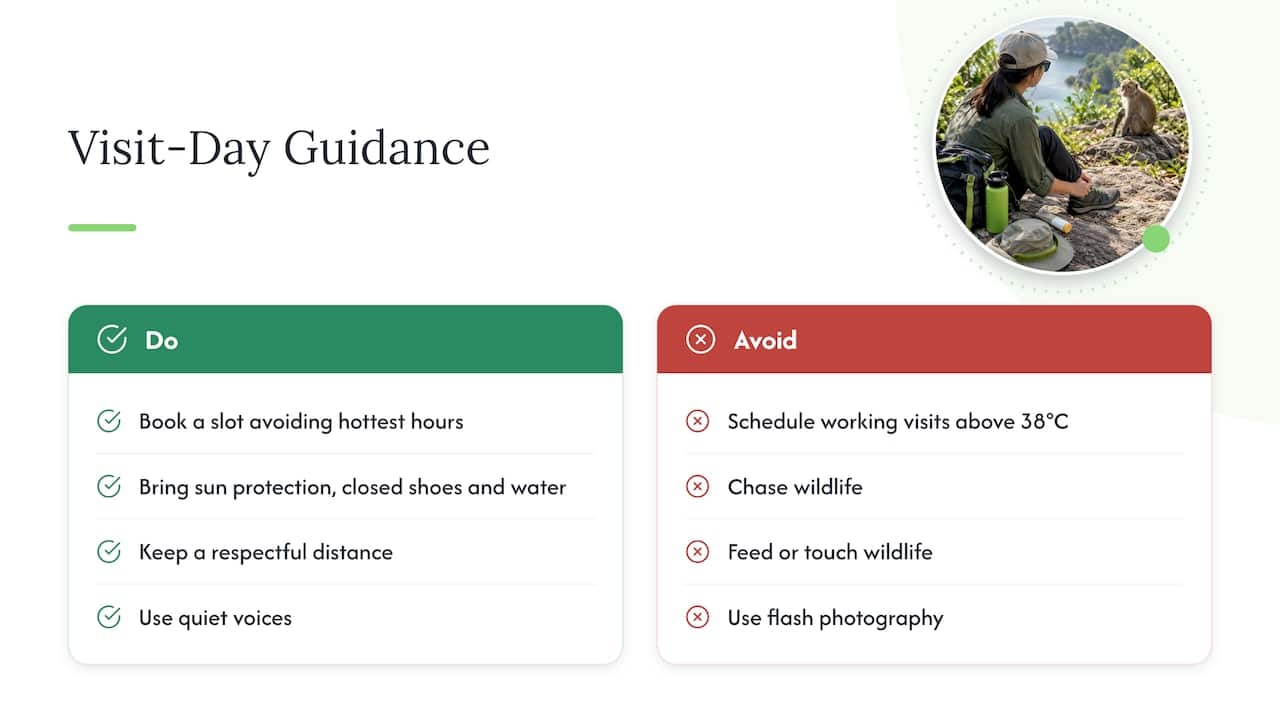
Elephant visits in Phuket tend to run in short morning and afternoon slots, so they fit neatly around a beach day, an island trip or a jet ski morning. If you are travelling with children, book the slot that avoids the hottest hours. The IUCN guidelines themselves treat heat above 38°C as unacceptable for working elephants, and a hot, tired family is not enjoying an animal visit either. Bring sun protection, closed shoes and water, and keep a respectful distance. Quiet voices and no flash photography make the visit better for everyone, including the elephants.
Phuket is also a place where the water is the main attraction, so wildlife often means what you see from a boat or snorkelling. The same principle applies: watch, do not chase, and never feed or touch what lives there. A good guide will say this before you leave the pier. If you are combining a care visit with island sightseeing, our Phuket island tours can be arranged around the same hotel pick-up. For a longer plan across the region, see our guide to visiting elephant sanctuaries ethically.
Our perspective
We run adventure and cultural tours in Phuket, and we know that most visitors want the same thing from a day out: something memorable that they can feel good about afterwards. That is why we point guests towards sanctuary visits and care programmes rather than anything built around making an animal perform.
Our view is simple. A good elephant day should feel unhurried. You should learn something, you should see the animals doing what elephants do, and you should leave without having asked one of them to do anything for you. When you book through us, you get a clear description of the programme, hotel pick-up and a team on WhatsApp who will answer your questions in plain language, including the five above.
We are proud of a 4.5 rating from 237 reviews and of a 99% issue-free service rate verified by Trustindex. Those numbers come from guests who wanted a smooth day, and we want an elephant visit to be exactly that: well organised, calm and respectful.
Carl
Book an elephant care or sanctuary visit with us
If you want the observation-led option, start with our elephant sanctuary tour. Prefer something more private? Our private VIP elephant care is another way to spend time around the animals, and you can browse all options on our elephant sanctuary destination page. Booking is online or by WhatsApp, with hotel pick-up and flexible last-minute availability.

If you would like to build the rest of the trip around it, our Phuket tours and activities cover island hopping, jet skis, ATV adventures and cultural sightseeing, so you can balance a thrilling day with a gentle one.
FAQ
Is it ethical to visit elephants in Phuket at all?
It can be, when the venue is organised around the elephants’ needs rather than visitor entertainment. The IUCN specialist group takes no position on tourism itself, but its guidelines set minimum standards for space, food, water, veterinary care and rest. Look for observation-based visits with no riding, shows or posed photos.
Are elephant riding and bathing ever acceptable?
Riding is excluded by Elephant Friendly standards because it puts the animal under human control and often involves long periods of chaining. Bathing is more nuanced: the IUCN guidelines allow it only with strict limits, such as five visitors per elephant and no hooks. Observation is the safer choice for welfare.
What should I look for when I arrive?
Check that the elephants have space and shade, are not chained, have no visible scars or wounds, and are not showing repeated stress movements such as bobbing and weaving. Also look for a calm, small-group visit and guides who talk about the animals’ care. If anything feels wrong, you can leave.
Are elephant visits suitable for children?
Yes, observation-based visits suit families well because nobody needs to be close to the animals. Choose a morning or late-afternoon slot to avoid heat, bring water and sun protection, and ask the operator about age guidance when you book.
Sources
- ACFS, Good Animal Practices for Elephant Facility (TAS 6413-2021)
- IUCN/SSC Asian Elephant Specialist Group, Captive elephant tourism guidelines (2022)
- Elephant Welfare Alliance, Elephant-Friendly Guidelines
- Elephant Welfare Alliance, Ethical Elephant Tourism FAQ
- CompassionWorks International, Ethical Elephant Tourism and Sanctuaries
- Travel + Leisure, How to Pick an Ethical Elephant Sanctuary in Thailand
- Action for Elephants UK, What to look out for with elephant tourism