
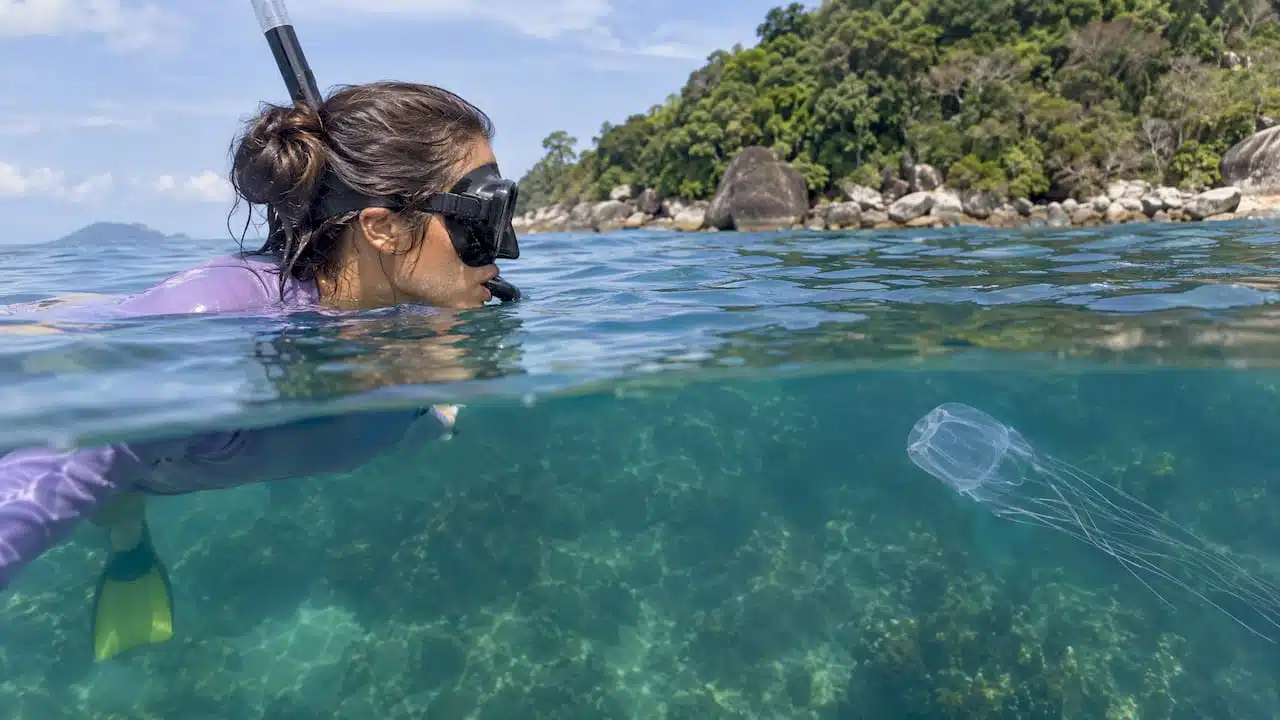
Jellyfish Stings While Snorkelling in Phuket: Risks and First Aid
Yes, there are venomous jellyfish in Phuket’s waters, but the chance of being stung is small, and most stings are mild. The sensible approach is simple: know the season, follow the beach warnings, cover up in the water, and know exactly what to do in the first minute if something goes wrong. This guide covers all four, using Thai government advice wherever it exists.
TL;DR
- Several jellyfish species appear seasonally in Thai waters. Most are harmless, but box jellyfish can be serious, according to the Tourism Authority of Thailand.
- Risk is highest in the rainy-season months, when winds and currents push jellyfish closer to shore. Check warnings before you go in.
- Wear a rash guard or lycra suit, stay inside buoyed safety zones and skip the water after heavy rain.
- If stung: get out, call 1669, keep the person still, pour vinegar over the area for at least 30 seconds, and do not rub or rinse with fresh water.
- Severe pain, confusion, chest discomfort or breathing trouble means emergency care immediately.
Table of Contents
- Are there dangerous jellyfish in Phuket?
- When and where jellyfish warnings matter most
- How to lower your risk before you get in
- What to do if you are stung
- Our perspective
- Plan a safer snorkelling day with us
- FAQ
- Sources
Are there dangerous jellyfish in Phuket?
There are. The TAT says several jellyfish species are found seasonally in Thai waters, that most are harmless, and that box jellyfish can pose a serious risk. It reports box jellyfish sightings at Nam Bo Bay in Phuket, and lists bluebottles, the blue dragon sea slug, stonefish, weever fish and sea urchins as other venomous creatures occasionally found in Thai waters.
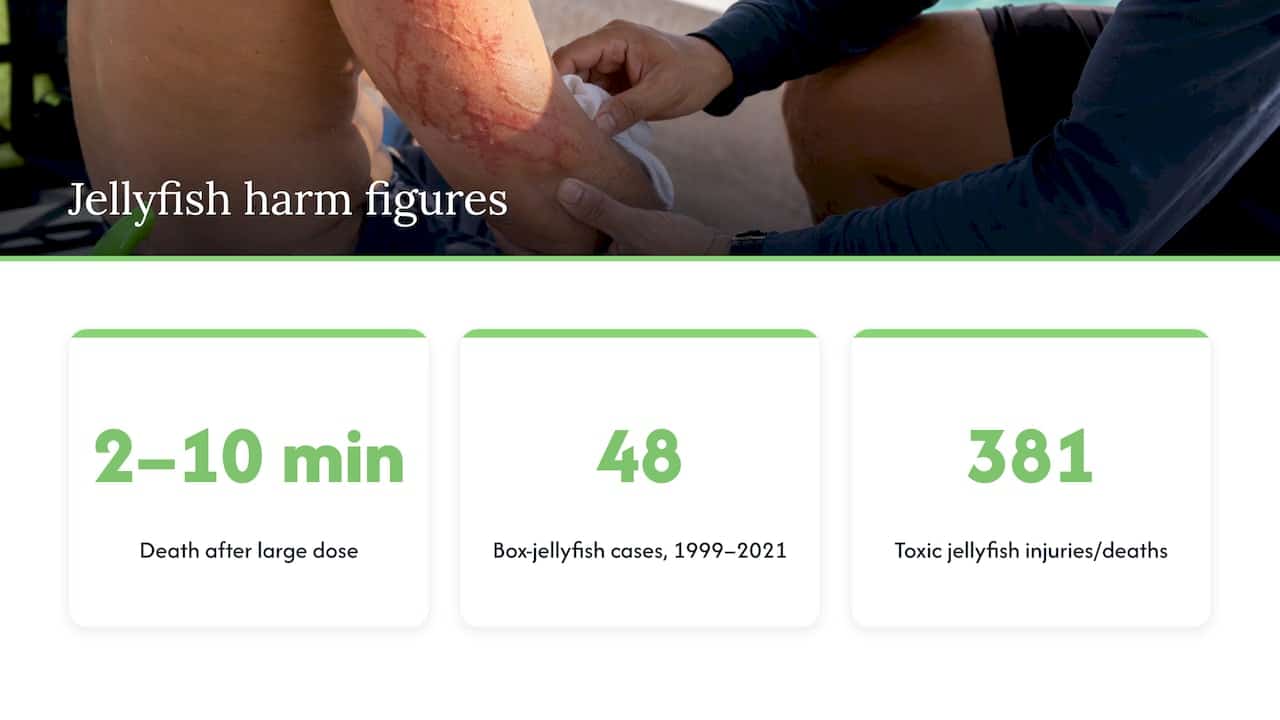
The Department of Disease Control (DDC) names the multi-tentacled box jellyfish (Chironex) as the most dangerous species in Thai waters. Its venom can reach the heart and, with a large dose, cause death within 2 to 10 minutes. The DDC counted 48 cases of serious injury or death from box jellyfish between 1999 and 2021.
A 2019 review in International Maritime Health recorded 381 injuries and deaths from toxic jellyfish in Thailand between 2003 and 2018. It also notes that single-tentacle jellyfish causing Irukandji-like syndrome in Thailand are believed to be Morbakka species.
Put those numbers in context: millions of people swim and snorkel in Thailand each year, and the TAT states that the chance of being stung by a venomous jellyfish is very small. That is a reason to be prepared, not to stay on the beach.
The species you are most likely to hear about
| Creature | What reports say | Typical effect |
|---|---|---|
| Box jellyfish (Chironex) | Sightings at Nam Bo Bay; the most dangerous species in Thai waters | Severe burning pain; can be life-threatening |
| Fire jellyfish (Pelagia) | Found at high density off Koh Aeo, Phuket, in March 2026 | Stinging or burning pain, red rash |
| Portuguese man-of-war (bluebottle) | Washed up on Karon and west Phuket in 2026 | Intense burning pain; severe cases can cause chest tightness or breathing difficulty |
| Chrysaora | Likely species behind stings at Patong and Kalim in October 2025 | Local skin irritation, red rash |
The detail behind the table: Thaiger reported that fire jellyfish, with a bell only 2 to 3 cm across, were found at about 100 per square metre at 3 to 5 metres depth off Koh Aeo, and the DMCR advised vinegar for at least 30 seconds plus prompt medical treatment. A Thai government release describes Portuguese man-of-war specimens on Karon Beach with floats of 2 to 3 cm and no injuries reported. And Nation Thailand reported that several tourists stung off Patong and Kalim suffered rashes and burning pain, with no serious injuries.
When and where jellyfish warnings matter most
Timing matters more than any other factor. The TAT says box jellyfish are more commonly seen in the monsoon months, when wind and currents bring them nearer to the coast. On the Andaman side that generally means the rainy season, roughly May to October. The DDC adds that jellyfish are more common in shallow coastal water after rainfall.
The TAT’s list of places with reported box jellyfish sightings includes Phuket (Nam Bo Bay), Ko Lanta and the Phi Phi marine park area in Krabi, Hua Hin, Cha-am, Ko Tao, Ko Samui, Ko Pha-ngan, Ko Mak and Ko Kut. Phuket is one of many, not an outlier.
Two details are worth knowing:
- Stings can happen near shore and in deeper water. Thaiger reported that some Patong swimmers did not realise they had been stung until symptoms appeared, because box jellyfish are nearly invisible in the water.
- Loose tentacles still sting. The same report notes that detached tentacles floating in the sea are a hidden hazard.
After the death of a boy from a box jellyfish sting in Nakhon Si Thammarat, the DMCR stepped up monitoring nationwide. Pattaya Mail reports that vinegar stations with first-aid instructions have been installed at many high-risk beaches, and that you can check the latest warnings at warning.dmcr.go.th or in the Marine Warning mobile app. Make that a habit on the morning of any snorkelling trip.
For the dry-season picture, our guide to snorkelling conditions in Phuket from December to March explains why those months are usually the calmer window.
How to lower your risk before you get in
None of this is complicated, and all of it comes from official Thai advice.
- Read the signs and ask. The TAT strongly advises following posted notices and the advice of lifeguards or local operators. Beach resorts have stepped up safety efforts, with warning signs, first-aid stations along many popular beaches and protective nets in some areas, though nets are not possible everywhere.
- Stay inside the buoys. The TAT advises avoiding swimming outside designated safety zones marked by buoys, at night, or after heavy rain.
- Cover up. The TAT recommends rash guards, lycra suits or long-sleeved clothing. The DDC suggests tight-fitting long sleeves and long trousers.
- Look at the beach. The DDC says not to swim after rain or when jellyfish carcasses are visible on the sand.
- Do not touch stranded jellyfish. Dead or washed up, they can still sting.
- Know where the vinegar is. Locate the nearest first-aid point or vinegar station before you swim.
A full-body lycra suit also helps with sun, which is a useful bonus on a long snorkelling day. For a wider checklist covering sea state, equipment and emergencies, see our 10 safety checks for snorkelling in Phuket.
What to do if you are stung
Speed and calm matter. This is the sequence the TAT and DDC give, which the DDC summarised as four steps:
- Leave the water and call 1669, Thailand’s national emergency medical number.
- Keep the person still and do not rub or scrape the area.
- Pour household vinegar (4 to 6% acidity) over the area continuously for at least 30 seconds. Do not use fresh water, drinking water, white liquor, urine or alcohol, per the DDC protocol.
- If symptoms persist or worsen, get to the nearest hospital promptly.
The DDC Director-General noted that vinegar can neutralise jellyfish toxins and prevent further venom discharge, and praised Patong lifeguards for having it at first-aid points. If the person is unconscious, not breathing or has no pulse, start CPR and keep going until help arrives. The DDC hotline for more information is 1422.
Signs that mean emergency care now
The TAT says to seek medical attention immediately for severe pain, confusion, chest discomfort, breathing difficulties or changes in skin colour. Do not wait to see whether it passes.
Tell the medical team you were stung by a jellyfish in the sea. The 2019 review notes that box jellyfish management is not yet part of the Thai medical school curriculum, and that delayed symptoms after Irukandji-like stings need hospital-based care. Saying clearly what happened helps staff act quickly.
A note on bluebottle stings
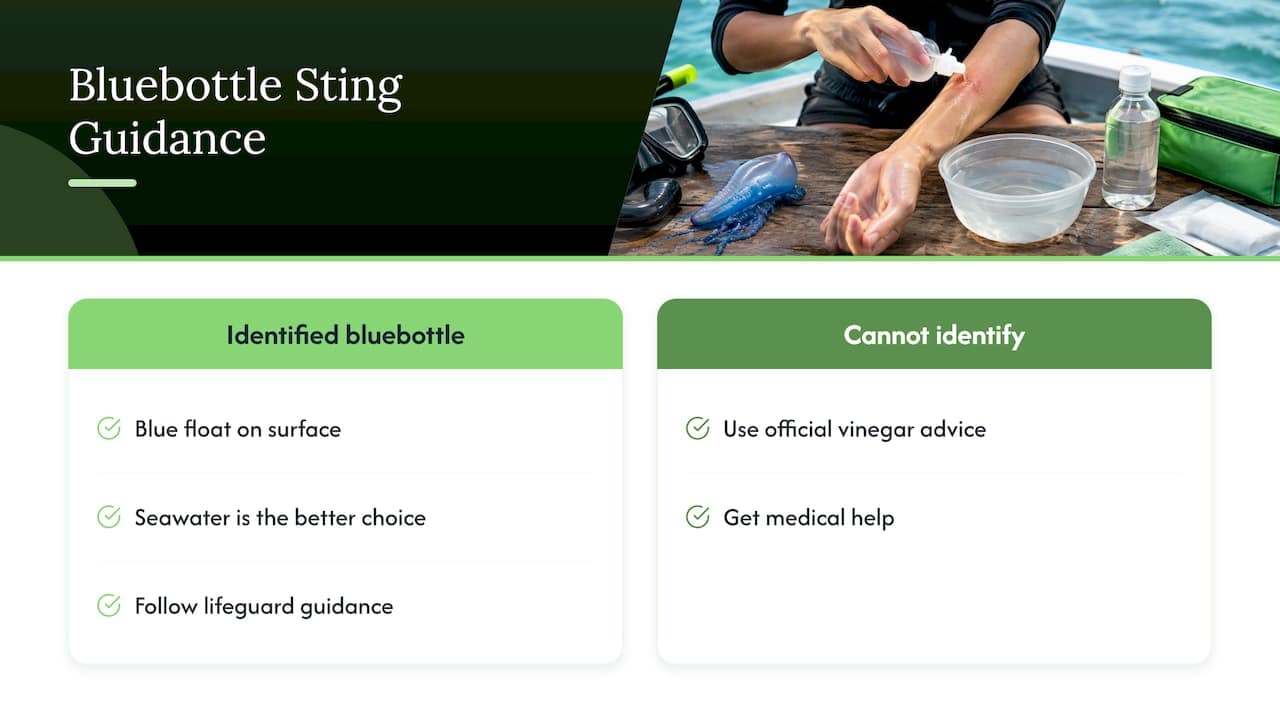
The same review says vinegar for Portuguese man-of-war stings is still debated, with some reports of extra nematocyst firing, and concludes that seawater is the better choice for bluebottle stings. If you can clearly identify a bluebottle (a blue float on the surface), follow lifeguard guidance on the spot. If you cannot tell, use the official vinegar advice and get medical help.
Our perspective
We run boat and island trips around Phuket every week, and we think a jellyfish scare should never be the thing that ruins a day on the water. In our experience, calm planning beats worry: check the sea and warnings in the morning, wear a rash guard, and know the emergency number before you leave the pier.
That is why we plan our itineraries around conditions, and why our team is happy to talk through the day with you on WhatsApp before you book. Our service has a 99% issue-free rate verified by Trustindex, and we want your snorkelling day to be part of that figure.
If conditions are not right for a stretch of coast, there is nearly always another bay or island that is. Flexible planning is the point of local knowledge.
Carl
Plan a safer snorkelling day with us
We offer island tours around Phuket and nearby islands, including trips to James Bond Island, Phi Phi, and Raya and Racha, with hotel pick-up and flexible last-minute booking. Prefer to have the boat to yourselves? We also run private and group boat excursions. See our island tours in Phuket or message us on WhatsApp and we will help you pick a route that suits the season.

For more on the week-by-week picture, our guide on jellyfish season and vinegar first aid goes through the questions guests ask us most.
FAQ
Are there poisonous jellyfish in Thailand?
Yes. The TAT says several species appear seasonally, most are harmless, and box jellyfish can be a serious risk. Box jellyfish sightings have been reported at Nam Bo Bay in Phuket. The overall chance of a venomous sting is very small.
How do you treat a tropical jellyfish sting?
Get out of the water, call 1669, keep the person still and pour household vinegar over the area for at least 30 seconds. Do not rub it or use fresh water. Seek medical care if pain is severe or symptoms worsen.
When is jellyfish season in Phuket?
Jellyfish come closer to shore in the monsoon months, which on the Andaman coast means roughly May to October. Stings have also been reported in October 2025, so check warnings at warning.dmcr.go.th at any time of year.
Should I snorkel if there is a jellyfish warning?
Official advice is to stay out of the water when venomous jellyfish have been sighted or warnings are in effect. Choose another day or another beach, and ask your operator or lifeguards what the current situation is.
Sources
- Jellyfish Safety Advice in Thailand (TAT)
- Department of Disease Control, box jellyfish advice
- Thaiger: fire jellyfish detected off Phuket
- Thai government: warning after Portuguese man-of-war found
- Nation Thailand: dos and don’ts after contact with venomous jellyfish
- Thaiger: box jellyfish scare at Patong Beach
- Pattaya Mail: beaches on alert after boy’s death


