
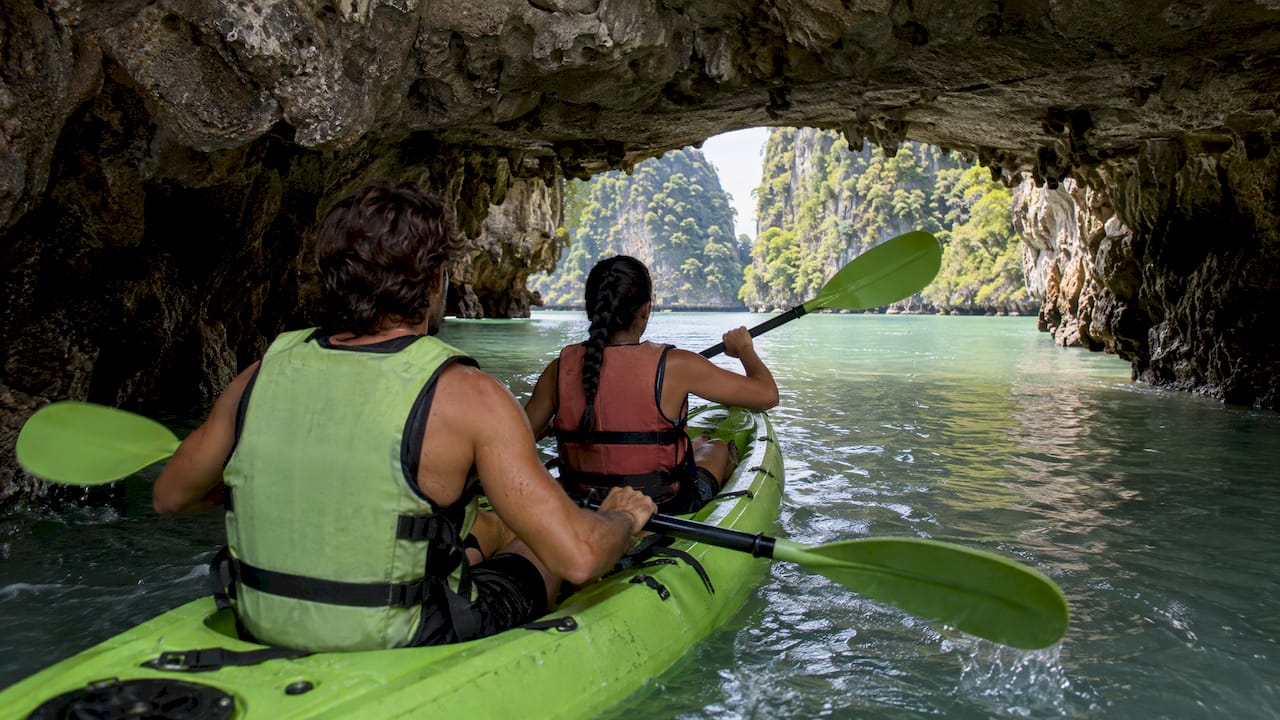
Phang Nga Bay Kayaking and the Tides: When the Caves Open
The tide decides everything in Phang Nga Bay. Many of the cave tunnels that lead into the famous hidden lagoons can only be paddled for a short window around low water. At high tide the entrance can disappear completely. So the best time for kayaking is not a fixed hour on the clock. It is whatever the tide table says for that day, and a good guide plans the route around it.
This guide explains how the tide shapes your trip, what to expect at the caves around Hong Island and Koh Panak, how to check tide times yourself, and how to plan a relaxed, safe day on the water.
TL;DR
- Tides control cave access. High water can seal a tunnel, and many passages are usable only for a short period around low tide.
- Timing beats time of day. Ask which tide your trip runs on rather than just what time you are collected.
- Check the official tables. The Royal Thai Navy Hydrographic Department publishes Thai-water tide tables every year.
- Go with a guide. A local crew reorders the stops around the tide, so you spend your time inside lagoons rather than waiting outside them.
- Expect to adapt. Rising water, rain and boat traffic can change the plan, and a flexible itinerary keeps the day fun.
Table of Contents
- Why tides matter so much in Phang Nga Bay
- Hong Island and Koh Panak: what to expect
- How to check the tide before your trip
- Best time to go, in practice
- What a guided sea-kayaking day looks like
- Safety rules that go with the tide
- Our perspective
- Plan your Phang Nga Bay day with us
- Questions to ask before you book any kayak trip
- FAQ
- Sources
Why tides matter so much in Phang Nga Bay
Phang Nga Bay is a field of limestone towers rising out of shallow, sheltered sea. Inside several of those islands are hongs. The word means “room” in Thai. A hong is a tidal lagoon inside a collapsed limestone chamber, open to the sky and ringed by steep cliffs, as described in a 2021 article on the hongs of Phang Nga Bay.
The same article explains the catch: whether you can get in depends on the tide. At high tide the entrance may be submerged, or even the whole cave. As the water falls, a way through can open up. Many passages are accessible only for short periods around low tide.
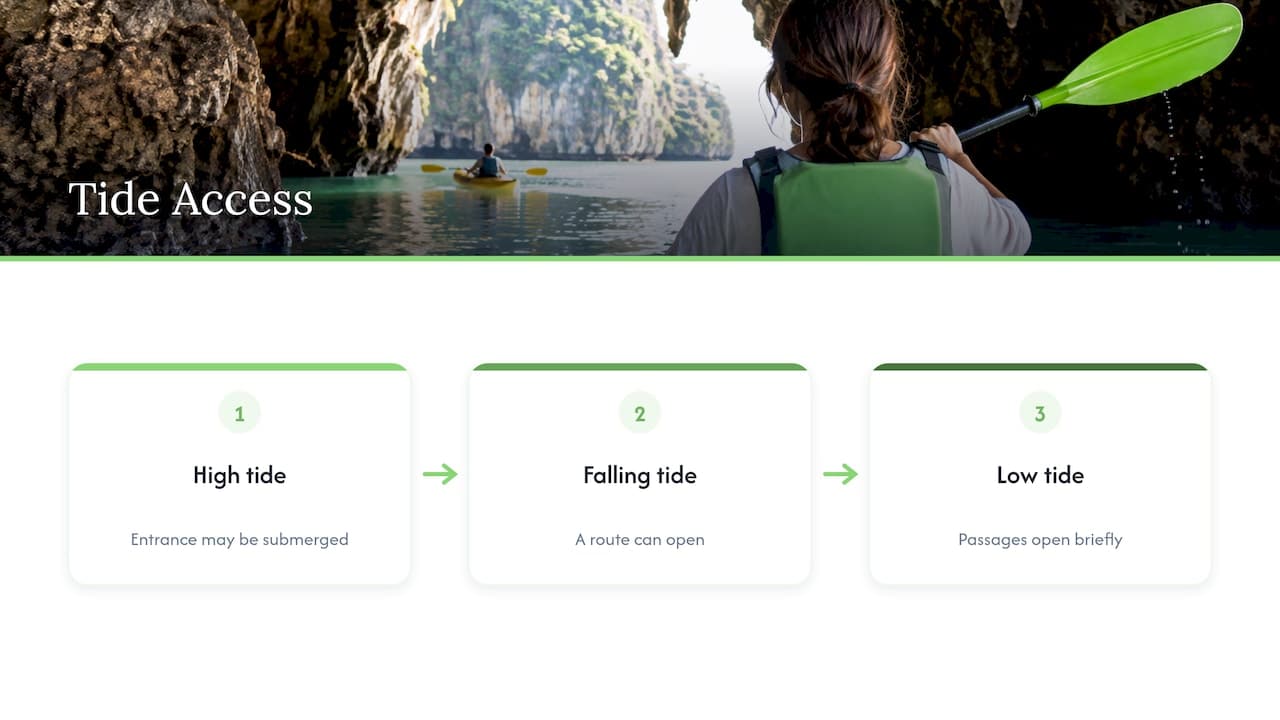
That is why kayaks are the right tool. A boat with an engine cannot fit through a low tunnel. A sea kayak, paddled by someone lying back or ducking down, can. It is also why the experience feels so special: you float through a dark tunnel and come out in a quiet, green lagoon that few people ever see from the outside.
What changes between high, mid and low tide
| Tide stage | What it usually means for paddlers |
|---|---|
| Low tide | Many tunnels are at their most open, but shallow sections can turn muddy. |
| Mid tide | Often the sweet spot for certain passages, with enough water to float and enough headroom to pass. |
| Rising tide | Headroom shrinks gradually, so guides watch the clock and the water level closely. |
| High tide | Some entrances are sealed. Mangrove channels and open-water paddling become the better choice. |
The mid-tide point is not a theory. A Wanderlust account from 2016 describes one cave passage that was navigable only at mid tide: at low tide sticky mud blocked the way, and at high tide the water sealed the entrance. The same writer describes returning on a rising tide, paddling through darkness and a narrowing exit, and turning back before the passage became too restricted to leave safely.
The lesson is simple. More water is not always better, and less water is not always better. Each cave has its own window, and that is local knowledge your guide carries.
Hong Island and Koh Panak: what to expect
These are the two names that come up again and again for sea kayaking in the bay.
Hong Island. The 2021 article on the hongs identifies it as a frequently visited destination. Its narrow tunnel may require canoeists to lie flat before they emerge into the central lagoon. Expect a short, slightly squeaky moment in the tunnel, then a wide, open-air lagoon with cliffs all around.
Koh Panak. Known for caves and mangrove-lined passages that lead into hidden lagoons. It is a popular stop for wildlife spotting as well as for paddling.
A word on exact times. Published sources describe the principle (tide decides access), but nobody can honestly give you one fixed time that works for every day, because the tide moves roughly an hour later each day and shifts across the lunar cycle. Any article promising “the cave opens at 10:30” is guessing. Use the day’s tide table, and let your guide confirm the plan.
How to check the tide before your trip
You do not need to be a sailor to read a tide table. Here is the quick routine.
- Find the official tables. The Royal Thai Navy’s Hydrographic Department publishes Thai-water tide tables for 2026, with listed stations including Khura Buri, Ao Thap Lamu and Krabi Pak Nam. Those are the nearest reference points to Phang Nga Bay.
- Know it is an annual publication. The Navy’s notice from its Hydrographic Department says the Thai Waters Tide Tables are published for the coming year and recommends mariners obtain them for safe navigation. Always use the table for the year you travel.
- Note low and high water for your date. Look for the times of the lowest and highest points of the day.
- Ask about the plan. Message your operator and ask which stage of the tide the kayaking part will fall on. A confident answer is a good sign.
- Stay flexible. Stations are nearby, not inside the bay, so local times can differ a little from the table. Your guide adjusts on the spot.
If you are also lining up flights or a wider Thailand trip, it can help to look at Pattaya holiday packages to compare how a Gulf of Thailand break differs from an Andaman Sea one. The tide patterns on the two coasts are different, which is one more reason to check the table for the exact coast you are paddling.
Best time to go, in practice
Most visitors ask for the best time of day. The honest answer has two parts.
- Tide first. Pick the day and departure so that the caves fall in a workable tide window. Your operator will usually choose the route order for you.
- Light and heat second. Early starts are cooler and calmer, and the lagoons are quieter before the larger groups arrive. Midday is hot, so a hat, sunscreen and water matter.
One ranking guide on wildlife kayaking suggests mornings are cooler and good for animal activity, and that late afternoon high tides can block access to caves. That fits what the research says about the tide: if your only slot is late afternoon, check that it does not land on high water.
Weather and sea conditions
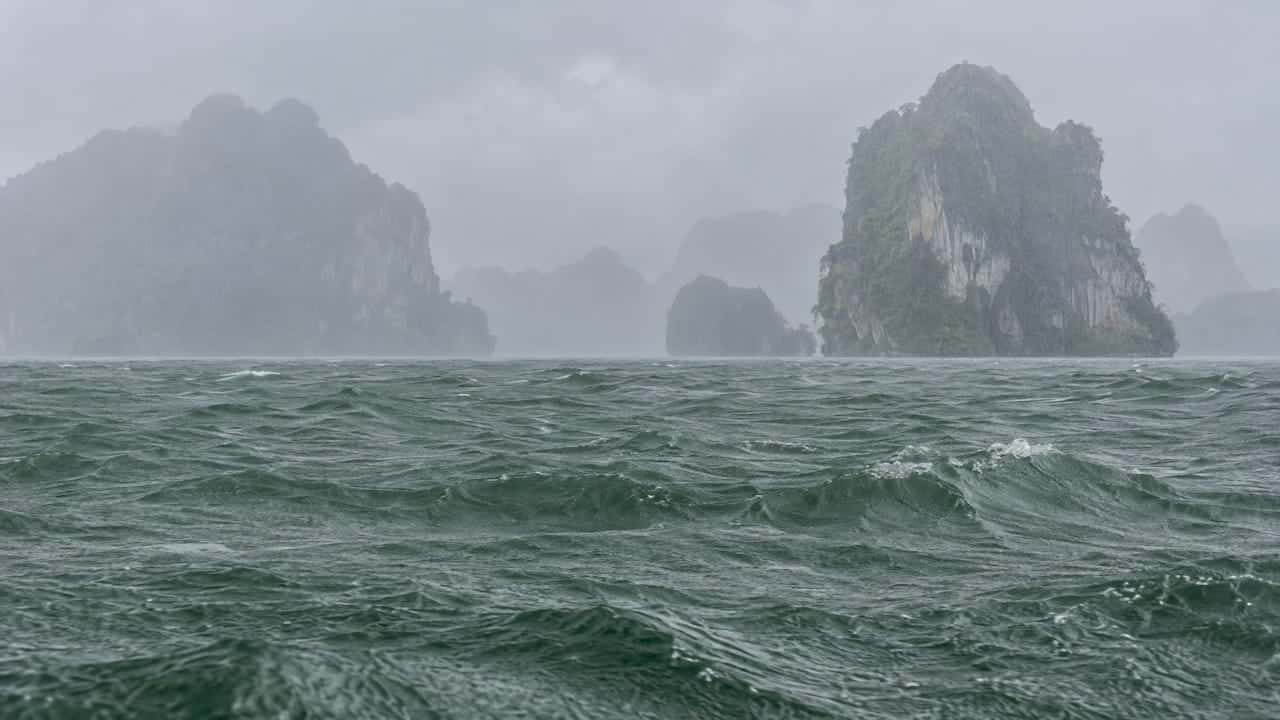
Season matters too. In the monsoon months, rain and wind can make the sea choppy and visibility poorer, so plans move. A good operator will reschedule or refund according to its policy rather than send you out in unsafe conditions. Ask about this when you book, not on the morning.
What a guided sea-kayaking day looks like
Most trips from Phuket follow the same rhythm, although every operator varies in the details:
- Hotel pick-up and a transfer towards the bay.
- A boat ride out between the limestone towers.
- A briefing, life jackets and paddles handed out.
- Two or three paddling sessions into caves, lagoons and mangroves, timed to the tide.
- A swim or a viewpoint stop, often near famous spots like James Bond Island.
- Lunch and the return to Phuket.
Many trips are done in tandem kayaks with a guide steering at the back, so you do not need experience. You just need to be comfortable in a life jacket and happy to lean back when the tunnel gets low.
What to bring
- A dry bag for your phone and wallet
- Reef-safe sunscreen, sunglasses and a cap
- Quick-dry clothes and a spare top
- Water shoes or sandals with a strap
- A small towel
- Cash for tips and snacks
Respect the bay
Phang Nga Bay is protected. Thailand’s environmental rules for Phang Nga restrict boating pollution and damage to specified marine resources in the protected areas. In practice: take your rubbish back, do not touch or stand on corals, and keep mangrove roots and cave walls intact.
Safety rules that go with the tide
- Never enter a tunnel on your own. The tide can rise while you are inside.
- Follow your guide’s turn-back call. If the passage narrows on a rising tide, turning back early is the right decision.
- Keep your life jacket on. Always, including inside the lagoon.
- Tell your guide about any worries. Claustrophobia, back pain or a fear of the dark are all easy to plan around if you say so before you board.
- Skip the cave if you are unwell or pregnant. Ask your doctor first, and let the operator know.
Our perspective
We run adventure and cultural tours from Phuket, and we plan bay days around the water, not around a brochure. A kayak day is only as good as its timing, so the first thing we look at is the tide table for your date.
Our approach is built on meticulously planned itineraries with flexible booking. If the tide changes the order of the stops, that is not a problem, it is the plan working. We also keep to what we promise: our customer service is rated 4.5 from 237 reviews, and our site shows a 99% issue-free rate verified by Trustindex.
If you want a kayak day with a view, tell us whether you prefer caves and lagoons, mangroves, or a mix with island stops. We will match the route to the tide and your group, whether that is a family with kids or a couple wanting something quiet.
Carl
Plan your Phang Nga Bay day with us
We offer adventure and sightseeing trips around Phuket and nearby islands, with hotel pick-up and flexible, last-minute booking by website or WhatsApp. For a first visit, start with our beginner’s guide to Phang Nga Bay kayaking, then look at the Phang Nga South Sea tours.

Want a quieter day with your own crew? Our private boat tours let you shape the pace, and our charter boats with crew suit bigger groups. For a luxury day on the water, a full day on the Singh Luxury Speed Boat is listed at 27,000–46,000 THB on our services page. Prefer something more active on the same trip? See our island tours or message us on WhatsApp and we will suggest a plan for your dates.
Not sure whether to choose a canoe or a kayak? Our short comparison of canoe vs kayak in Phuket covers it.
Questions to ask before you book any kayak trip
These questions help you get a well-timed day, wherever you book:
- Which part of the tide will the cave paddling fall on?
- What happens if the tide or weather blocks a cave?
- How many people are in each group, and how many guides?
- Are life jackets, park fees, lunch and hotel transfers included?
- What is the reschedule or refund policy?
A clear answer to the first two tells you the operator plans around the water. That is the difference between a day full of lagoons and a day spent floating outside them.
FAQ
What is the best tide for kayaking in Phang Nga Bay?
There is no single best tide, because each cave has its own window. Many passages are usable only for a short time around low tide, while some are best at mid tide when there is enough water to float but still enough headroom. Your guide picks the order of stops to match the day’s tide.
Can you kayak into the caves at high tide?
Often not. High water can submerge an entrance or even a whole cave, which is why tide timing matters so much. On high-tide stretches, guides switch to mangrove channels and open-water paddling instead, so you still get a good day.
Where do I find official tide times for Phang Nga Bay?
Use the Royal Thai Navy Hydrographic Department’s tide tables for Thai waters, which list stations such as Khura Buri, Ao Thap Lamu and Krabi Pak Nam. They are published for each year, so use the table for your travel year. Your guide will also check the plan against local conditions.
Do I need experience to kayak through the caves?
No. Guided trips normally use stable sea kayaks with a guide leading. You may need to lie back for a low tunnel, such as the narrow one at Hong Island, but that takes seconds and the guide will tell you when.
Is it safe to go in the rainy season?
Many operators run through the year, but wind and rain can change plans. A responsible operator will reschedule or adjust the route if conditions are not right. Ask about the weather policy when you book.
Sources
- Hongs of Phang Nga Bay, Thailand (2021)
- How to paddle through a Thai cave and come out the other side (Wanderlust, 2016)
- Royal Thai Navy tide tables for Thai waters
- Royal Thai Navy Hydrographic Department notice on the tide tables
- Ministry of Natural Resources and Environment announcement on Phang Nga


