

Reef Rules First: Phuket Boat Trip Packing List and Local Tips
Pack light, keep everything valuable dry, and put reef-safe sun protection at the top of the list, not an afterthought. A single 10 to 15 litre dry bag holds everything you actually need: reef-safe sunscreen or a rash guard, swimwear, a hat with a strap, water shoes, your regular medicines, a waterproof phone pouch, a bit of Thai baht, and your booking confirmation. Get those items sorted the night before and the rest of your Phuket boat trip packing list falls into place fast.
TL;DR:
- Reef-safe mineral sunscreen with zinc oxide or titanium dioxide is mandatory in marine parks, and swapping products on-site may incur fines up to 100,000 THB.
- Use a small dry bag and inner pouches to separate wet and dry items, and keep valuables, medications, and documents sealed and protected from spray.
- Wear swimwear with quick-dry clothing, a rash guard for sun and wind protection, and sturdy water shoes with a heel strap for rocky beaches to stay comfortable and safe.
- Bring personal prescriptions, motion sickness tablets, a power bank, waterproof pouch, and a small amount of Thai baht, and confirm what the operator provides before packing.
- Avoid bulky luggage, valuables, and unnecessary gear, and check ahead whether snorkel kits, towels, and drinking water are included to pack efficiently.
Table of Contents
- Your Phuket boat trip packing list, grouped and ready to copy
- Sun protection and reef-safe rules you need to know before you go
- Keeping your phone, camera and documents dry on the water
- What to wear on a boat trip in Phuket
- Travel meds and motion sickness: the small pharmacy that saves your day
- Chargers, power banks and keeping your phone alive for photos
- Cash, documents and confirming what’s included
- What not to pack, and quick tricks for speedboat transfers
- Questions worth asking your boat operator before you book
- Local tips from Qbic Travel Phuket
- Book your Phuket island day trip with the packing sorted for you
- Sources
- FAQ
Your Phuket boat trip packing list, grouped and ready to copy
Screenshot this. That’s genuinely the fastest way to use a packing list like this one, because you won’t want to be scrolling through emails at 6 AM while a minivan waits outside your hotel.
Split your gear into groups rather than one long jumble, and packing takes minutes instead of an anxious half hour.
Bag and storage
- A 10 to 15 litre dry bag or splash-resistant backpack, big enough for the day, small enough to stow under a speedboat seat
- One or two smaller waterproof pouches for phone, cards, and medication
Clothing
- Swimwear worn under quick-dry shorts or a top
- A spare dry layer for the ride back when the breeze picks up
- A light long-sleeve or rash guard for sun and wind
Sun protection
- Reef-safe mineral sunscreen (more on the rules below)
- A wide-brim hat with a chin strap
- Sunglasses with a retainer strap
Swim and snorkel gear
- Your own mask if you snorkel often and know your fit
- Fins only if you already own a pair you trust
- Everything else, rent through the boat operator
Health
- Personal prescriptions and motion-sickness tablets
- Basic first-aid items (see the health section below)
Electronics
- Phone in a waterproof pouch, power bank, spare memory card
Money and documents
- Small notes of Thai baht
- Photo or paper copy of your booking confirmation
On storage: speedboats have limited dry space, usually a single under-seat locker shared between several passengers, so a soft dry bag beats a rigid suitcase every time. Longtail boats often have even less cover, sometimes none, so assume spray reaches everything not sealed. On renting versus bringing your own snorkel gear, a well-fitting mask is the one piece worth owning if you snorkel more than once or twice a year. Fins, life vests, and snorkels are almost always included or rentable cheaply, so don’t waste bag space on gear the boat already carries.
Sun protection and reef-safe rules you need to know before you go
Thailand’s marine national parks restrict sunscreens containing oxybenzone, octinoxate, 4-MBC, and butylparaben, a position backed by the Department of Marine and Coastal Resources to reduce chemical damage to coral. If your itinerary includes a marine national park such as Similan, Racha Noi, or parts of the Phi Phi Islands, that rule applies to whatever’s in your bag.
Pro Tip: Check the label before you leave home, not on the boat. Once you’re at a national park pier, swapping products isn’t an option.
Legal explainers report that breaches of the national park sunscreen rule can carry fines reported as high as 100,000 THB, though enforcement varies by park and by season.
Practical steps that actually work:
- Choose mineral formulas listing zinc oxide or titanium dioxide as the active ingredient
- Skip anything labelled “reef safe” without checking the ingredient list yourself, since the term isn’t regulated
- Apply sunscreen before boarding, not once you’re on the water, because the first crossing exposes shoulders, hands, and feet to reflected glare
- Lean on a rash guard and hat to cut down how often you need to reapply mid-trip
Conservation groups working on reef restoration recommend pairing mineral sunscreen with clothing coverage precisely because it reduces the total chemical load reaching the water, and it means less reapplying with salty, sandy hands. Some operators hand out reef-safe sunscreen or brief guests on the rules before departure, so it’s worth asking when you book.
Keeping your phone, camera and documents dry on the water
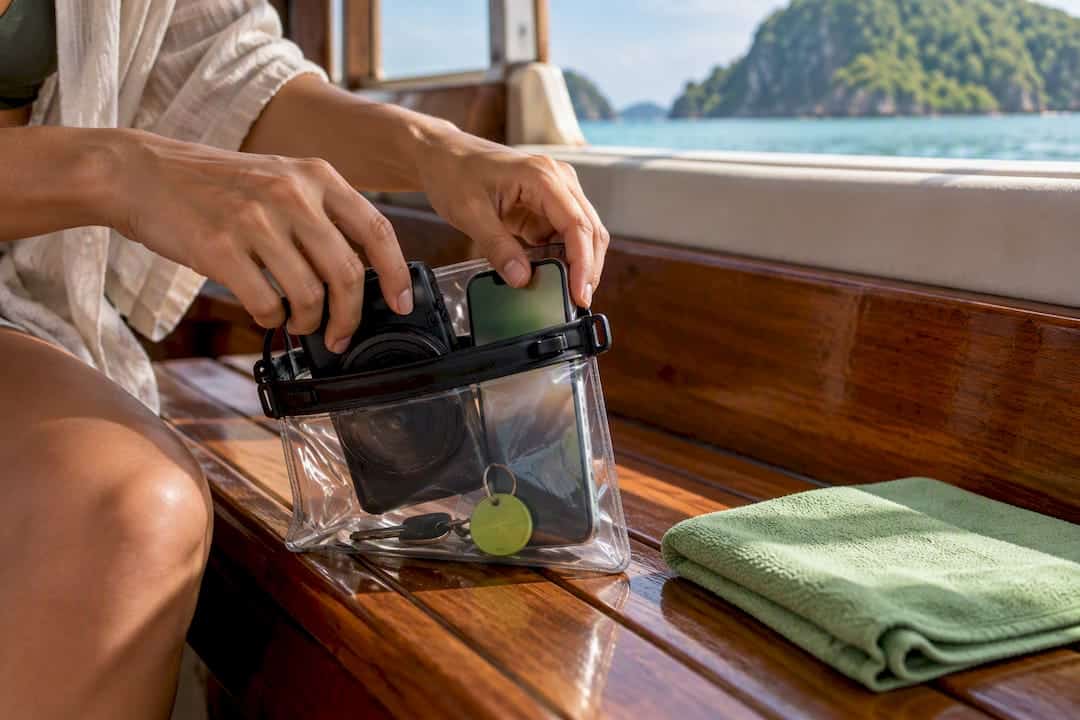
A dry bag alone isn’t quite enough. The habit that actually protects your gear is separating wet-use items from dry essentials, so one leak doesn’t ruin your passport photocopy along with your snacks.
What to use:
- One 10 to 15 litre dry bag as your main container
- Smaller zip-lock or roll-top pouches inside it for phone, cards, medication, and a passport copy
- A phone lanyard or float strap if you’re taking photos over open water
- Double-sealing anything electronic, one pouch inside another, before it goes near spray zones
Pro Tip: Stow your dry bag in the boat’s central locker or under a fixed seat rather than beside the rail. That’s where spray and sudden turns do the most damage.
Leave anything you don’t need at the hotel. Fine jewellery, spare cash beyond the day’s budget, and original passports are safer in a hotel safe than in a bag bouncing around a speedboat deck. A photo of your passport’s main page on your phone, stored in the pouch, covers most situations where you’d otherwise need the original.
What to wear on a boat trip in Phuket
Comfort on a boat comes down to layer you can add or strip quickly, plus footwear that won’t slide on a wet deck.
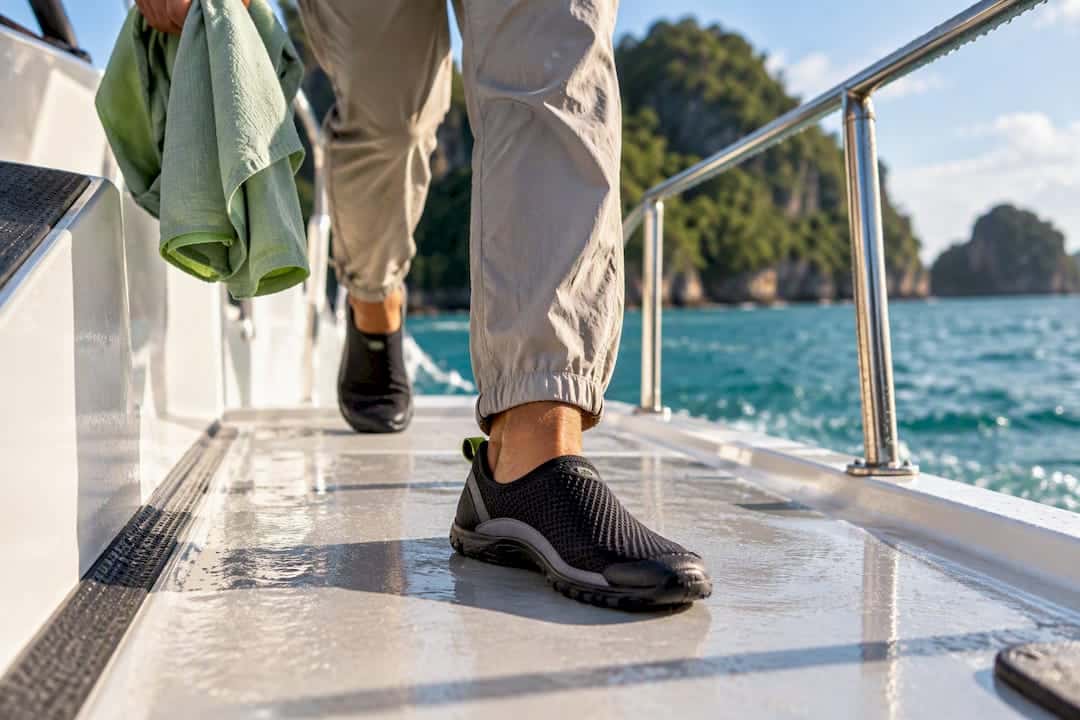
Wear swimwear under a quick-dry top or shorts so you’re ready to jump in the moment the boat stops. Pack a rash guard for both sun coverage and a bit of warmth, since the crossing back can feel breezy even in tropical heat. A light windbreaker or cover-up earns its space in the bag on choppier days.
Footwear and beach terrain:
- Water shoes or grippy sandals with a heel strap, useful on rocky or coral-edged beaches
- Skip heavy trainers, they’re slow to dry and useless in the water
If your itinerary includes a temple stop or a cultural site alongside the island hopping, pack a light sarong or a scarf to cover shoulders and knees.
Travel meds and motion sickness: the small pharmacy that saves your day
A short list of health items prevents most of the discomfort that ruins an otherwise great day trip to the Phi Phi Islands or a Racha crossing.
Pack these:
- Any personal prescriptions, in their original packaging
- Motion-sickness tablets, or ginger chews if you prefer a milder option
- Antihistamine for stings or reactions
- Antiseptic wipes and a few plasters
- Imodium, just in case
- Aloe vera gel for sunburn you didn’t quite avoid
Keep all of it in a sealed pouch inside your dry bag, not loose in a pocket. Life jackets are standard on Thai tour boats, and it’s worth telling the crew about any medical condition, allergy, or mobility issue before departure rather than mid-crossing.
Chargers, power banks and keeping your phone alive for photos
Most of a full day on the water gets spent taking photos, which drains batteries faster than you’d expect in the heat.
Bring:
- A waterproof phone pouch you can still use the touchscreen through
- A power bank in the 5,000 to 10,000 mAh range
- A spare memory card if you shoot a lot of video
- A slim cable organiser so charging cables don’t tangle with everything else
Charging availability depends on the boat. Larger cruise-style vessels sometimes offer USB points; speedboats and longtails almost never do. Keep your phone in its pouch and in a dry compartment when you’re not actively shooting, and dim the screen between shots to stretch the battery through the afternoon.
Cash, documents and confirming what’s included
Carry a small amount of Thai baht, enough for a drink at a beach stop or a souvenir, not your entire holiday budget. Confirm before you leave the hotel whether lunch, drinking water, towels, and snorkelling kit are included in your tour inclusions, since inclusions vary noticeably between operators even on similar routes.
Bring along:
- A printed or photographed copy of your booking confirmation
- A copy of your travel insurance policy number
- Your passport photo, not the original, where possible
A quick message to the operator the day before, confirming pick-up time, exact meeting point, and any special needs, saves confusion in the hotel lobby the following morning.
What not to pack, and quick tricks for speedboat transfers
Bulky suitcases, thick beach towels, and anything valuable you’d hate to lose overboard have no place on a day boat. Speedboats especially have minimal storage, so oversized bags end up wedged awkwardly or left with the crew, out of reach until the trip ends.
Keep wet and dry items physically separate in your bag from the start, rather than trying to sort them out mid-trip with salty hands. Secure your hat with its strap before boarding, since a gust off open water will take an unsecured hat in seconds. A compact microfibre towel dries faster and packs smaller than a hotel towel, and it’s worth bringing since towels aren’t always supplied on day tours.
Pre-departure checklist, five minutes before you leave the hotel:
- Sunscreen applied, hat strap checked
- Dry bag packed, phone and cards in their inner pouch
- Medication sealed inside the bag, not in a loose pocket
- Booking confirmation and cash in an accessible pocket
- Passport left in the hotel safe unless the tour specifically requires it
Questions worth asking your boat operator before you book
A two-minute conversation before booking clears up most packing confusion. If you’re chartering a larger vessel, the checklist on this yacht trip planning guide covers similar ground for bigger boats.
Ask directly:
- Is snorkel kit included, or is it a rental add-on?
- Are towels and drinking water provided?
- What’s the exact pick-up time and meeting point?
- Are life jackets provided for all ages, including children?
- Is there a charge for equipment rental beyond the base price?
Mention any children in your group, mobility needs, or dietary restrictions when you book, not on the morning of the trip. Operators can prepare properly, whether that means a smaller life vest, easier boarding access, or a different meal option, when they know in advance.
Local tips from Qbic Travel Phuket
The bags people forget most often aren’t the big ones. It’s the hat strap left at home, the meds tossed loose into a beach bag instead of a sealed pouch, and sunscreen bought at the airport that turns out to be banned in the park they’re visiting. Put sunscreen on before you board, not after, and keep anything you can’t afford to lose in a proper dry bag rather than a tote.
Guests booking with us tend to ask the same handful of questions, which is exactly why this list exists. Qbic Travel reports a 99% issue-free service rate verified by Trustindex, with a 4.5 rating from 237 reviews, and that consistency comes from sorting the small stuff before the boat leaves the pier.
— Carl
Book your Phuket island day trip with the packing sorted for you
This operator offers private and group boat trips to popular islands with hotel pick-up included, so many essentials such as snorkel kits, life jackets, and towels on most trips are provided before you board.

Browse the full range of island tours or check the complete tour listing to compare a full-day speedboat trip against a longer cruise. If you’re weighing up boat types before booking, our guide to speedboats versus catamarans explains the practical differences in comfort and storage. Message us on WhatsApp or book directly online, confirm your pick-up time, pack the essentials from this list, and the rest of the day takes care of itself.
Sources
- กรมทะเล ประกาศสนับสนุน ห้ามทาครีมกันแดดอันตรายเล่นน้ำในแนวปะการัง – Department of Marine and Coastal Resources, Thailand
- Sunscreen Rules in Thailand: National Park Restrictions (2026) – Lex Bangkok
- Thailand’s sunscreen ban: what you need to know to avoid the 100,000 THB fine – DiveRACE
- What To Pack For A Phuket To Phi Phi Day Trip – SmartEnPlus
FAQ
What should I pack for a boat trip in Phuket?
Pack a 10 to 15 litre dry bag with reef-safe mineral sunscreen, swimwear, a hat with a strap, water shoes, personal medication, a waterproof phone pouch, and a small amount of Thai baht. Confirm with your operator what’s already included, such as towels or snorkel kit, before duplicating items.
What should I wear on a speedboat tour?
Wear swimwear under quick-dry clothing, with a rash guard for sun protection and a light layer for the breeze on the return crossing. Grippy water shoes or sandals with a heel strap handle rocky beaches far better than trainers.
Is 50,000 THB enough for a Thailand trip?
That depends heavily on your travel style, length of stay, and whether accommodation and flights are already booked, so there’s no single figure that fits every traveller. For a single boat day trip, you’d only need a small amount of cash, enough to cover drinks, snacks, or souvenirs beyond what your tour includes.
What are the dos and don’ts in Phuket?
Do check whether your itinerary enters a marine national park, since certain sunscreen ingredients are restricted there, and dress modestly if a temple stop is included. Don’t bring chemical sunscreens into protected marine areas, don’t pack valuables you’d hate to lose on a boat, and don’t skip checking your tour’s exact inclusions before you pack.
Does Qbic Travel provide snorkel gear and life jackets?
Life jackets are standard on Qbic Travel boats, and snorkel kit availability depends on the specific tour, so it’s worth confirming when you book through the tours page. Current pricing for each trip is listed directly on the site rather than fixed across every package.


