
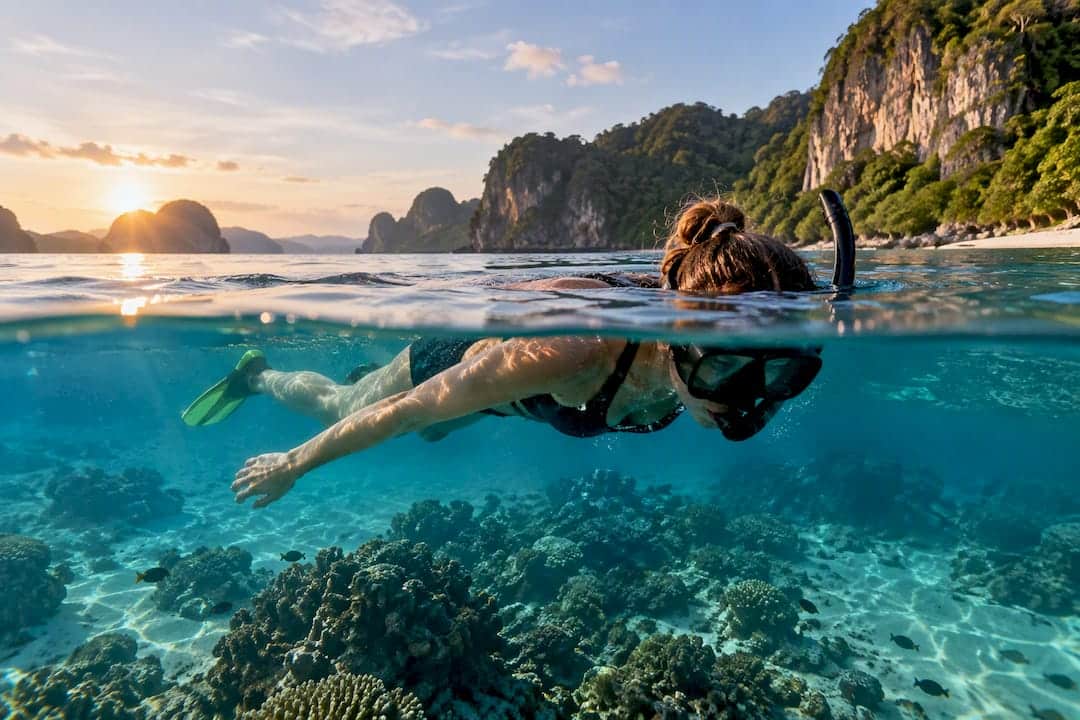
Avoid Cancellations: Phuket Snorkeling Conditions December to March
Snorkelling conditions in Phuket are currently at their best if you’re reading this between November and April, with December to March delivering the calmest seas and clearest water. Outside that window, expect rougher swells and a higher chance of cancelled boat trips. Whatever the month, book an early-morning departure and check the beach flags before you wade in. Some local operators run snorkel-friendly trips that align with this seasonal pattern, often including safety checks in their itineraries.
TL;DR:
- Book early-morning trips during the dry season from November to April for the calmest seas and highest water visibility.
- Check beach flags daily before swimming, as red flags indicate dangerous conditions regardless of dry weather or sunshine.
- Be aware that conditions worsen from May to October with increased swells, rip currents, and higher cancellation rates, especially September and October.
- Opt for boat trips during peak months when marine life and water clarity are at their best, with December to March as the most reliable period.
- Reputable operators monitor sea conditions closely and adapt plans to ensure safety, rather than relying solely on weather forecasts.
Table of Contents
- Phuket snorkelling conditions by month: what the sea actually does
- Why morning departures and tides change everything
- What do Phuket’s beach flags actually mean?
- Your pre-swim safety checklist and packing list
- Which Phuket beaches and islands suit your snorkelling plan?
- Will your boat trip get cancelled?
- Marine conservation rules every snorkeller should know
- Why operators, not just weather apps, make the real difference
- Ready to book your Phuket snorkel trip?
- Sources
- FAQ
Phuket snorkelling conditions by month: what the sea actually does
Phuket sits between two very different halves of the year, and the split matters more than most travellers realise before they land. The dry season, roughly November through April, is when the Andaman Sea calms down and visibility opens up. December through March is the most dependable stretch of all, according to seasonal snorkelling data from Seaview180. The southwest monsoon, running May to October, flips that script: swells build, rip currents strengthen on the west coast, and boat operators cancel more often. September and October tend to be the wettest and most disrupted months of the year, per the Phuket weather guide.
Here’s how each stretch tends to play out on the water:
- November: Transition month. Seas are settling, visibility improving fast, and crowds haven’t peaked yet. Good for early planners.
- December: One of the best months. Calm mornings, strong visibility, ideal for first-time snorkellers and families.
- January: Peak reliability. Sea state is consistently calm and boat trips rarely cancel. Prices and crowds are also at their peak.
- February: Still excellent conditions, slightly quieter than January. A strong pick for anyone chasing marine life sightings.
- March: A smart compromise, according to TravelStayGuide’s Phuket research, since weather stays calm but crowds thin out.
- April: Warmer, still generally calm, though occasional pre-monsoon storms can appear late in the month.
- May: Monsoon begins. Seas grow choppier, particularly on west-coast beaches. Still snorkelable most days with careful timing.
- June to August: Mixed conditions. Some calm days, some rough ones. Suits flexible travellers and budget-focused trips, not surfers chasing waves specifically, though wave-riders often prefer this stretch.
- September: Often the wettest month. Cancellations rise sharply and visibility drops after heavy rain.
- October: Similarly disrupted, though the tail end starts easing towards November’s calmer pattern.
If reliable snorkelling every single day of your trip matters more than saving money, pay the high-season premium and travel December to March. If you’re comfortable with a looser plan and want lower prices and fewer crowds, the monsoon months can still deliver good days, per Phuket Expat Guide’s seasonal breakdown. You just need to hold your itinerary loosely.
Why morning departures and tides change everything
Mornings in Phuket are almost always calmer than afternoons, and that isn’t just a rule of thumb from local guides. Wind tends to build through the day as land and sea temperatures diverge, stirring up chop that clouds visibility by lunchtime. Booking the first boat out, or arriving at a shore-snorkel beach before 9am, gives you the clearest water of the day.
Snorkelling experts recommend floating more and kicking less, choosing calm windows and sheltered spots so you exert minimal energy in the water, which is safer as well as more enjoyable, according to Seaview180’s guidance. Tides matter too. Shore snorkelling around mid to high tide generally covers more reef and reduces the risk of scraping against exposed coral. Wind direction shifts with the monsoon: onshore winds during the southwest monsoon push swell straight into west-coast bays, while sheltered east-coast spots stay calmer during those same months.
What do Phuket’s beach flags actually mean?
Phuket uses a standardised flag system, and knowing it before you reach the sand is non-negotiable. Green means conditions are safe for swimming and snorkelling. Yellow signals caution, with choppier water than usual. Red means entering the water is prohibited. Double Red indicates extreme danger, and Red-and-White chequered is an evacuation order, telling everyone to leave the water immediately, according to Phuket Insider’s flag guide.
Pro Tip: A missing flag is not the same as a safe beach. Many quieter or unpatrolled stretches of coastline have no flag system at all, especially outside the main tourist beaches.
Some west-coast beaches remain genuinely unsafe even on bright, sunny mornings during monsoon months, because swell and rip currents build independently of how the sky looks, per Phuket Expat Guide’s safety notes. Lifeguards enforce red flags for good reason. Two practical habits solve most of the risk here:
- Check the flag at your specific beach that morning, not the general forecast for Phuket.
- Ask a lifeguard or your tour operator directly if you’re unsure, since local knowledge of that day’s swell beats any app.
Your pre-swim safety checklist and packing list
A few minutes of preparation prevents most snorkelling mishaps. Run through this before you get in the water:
- Check the beach flag and ask a lifeguard or operator for the day’s actual conditions.
- Confirm the weather forecast and any wind warnings for your specific bay.
- Attend your operator’s safety briefing in full, even if you’ve snorkelled before.
- Check your group size and confirm someone is watching swimmers at all times.
- Test your mask seal and snorkel fit before leaving the boat or shore.
For kit, pack a well-fitted mask and snorkel, a rashguard for sun protection, reef shoes for rocky entries, and a small bottle of vinegar for jellyfish stings. Sea temperatures around Phuket sit at a comfortable 28 to 30°C year-round, according to Phuket Expat Guide’s climate data, so a wetsuit isn’t necessary for warmth, though a rashguard still helps against stings and sun.
Pro Tip: If you’re stung, rinse the area with vinegar, not fresh water, and remove any tentacle fragments with tweezers rather than your fingers. If you see signs of a box jellyfish sting, welts, severe pain, breathing trouble, get medical help immediately rather than treating it yourself.
Which Phuket beaches and islands suit your snorkelling plan?
Matching your snorkel style to the right location matters more than chasing a single “best beach” answer. Sheltered east-coast bays hold up better during the southwest monsoon, since the swell direction pushes into the west coast instead. West-coast coves shine brightest in the dry season, when calm water meets clearer visibility. Boat-accessible islands further offshore, reached through private boat tours, tend to offer the best marine life sightings during peak-visibility months from December through April.
Think about what you actually want from the day:
- Easiest shore snorkel: A sheltered, shallow bay close to your hotel, ideal during dry-season mornings.
- Better wildlife sightings: A boat trip to nearby islands during peak-visibility months, when plankton bloom is lowest and water clarity is highest.
- Family-friendly shallow reefs: Calm coves with gentle entry points, avoiding anywhere with a history of strong currents.
Micro-local variation is real here. Two bays a short drive apart can have completely different sea states depending on that day’s swell direction, so always check conditions for your exact spot rather than relying on a general area reputation. For manta and whale shark season specifically, February through April tends to be the strongest window for sightings alongside good snorkelling visibility.
Will your boat trip get cancelled?
Cancellations happen when red or double-red flags go up, or when operators judge swell too dangerous for safe entry, and most reputable operators offer a reschedule or refund rather than sending you out regardless. Confirm that policy before you book, not after a cancellation email arrives. Booking morning slots, choosing flexible operators, and taking out travel insurance that covers activity cancellation all reduce disruption, particularly across shoulder months.
If your boat does cancel, you’re not necessarily stuck. A sheltered shore snorkel, a switch to a more protected island, or simply rescheduling for the next morning usually salvages the trip. Charter and private boat options, like those through Qbic’s charter service, tend to offer more flexibility here than large group tours.
Marine conservation rules every snorkeller should know
Phuket’s reefs sit within a network of marine parks and protected zones, and several everyday habits carry real environmental weight. Touching or standing on coral causes damage that can take decades to recover, since coral polyps are living organisms, not rock. Feeding fish disrupts natural feeding behaviour and can alter reef ecosystems over time. Anchoring directly on coral, rather than using designated mooring buoys, is one of the most damaging things a boat can do to a reef system.
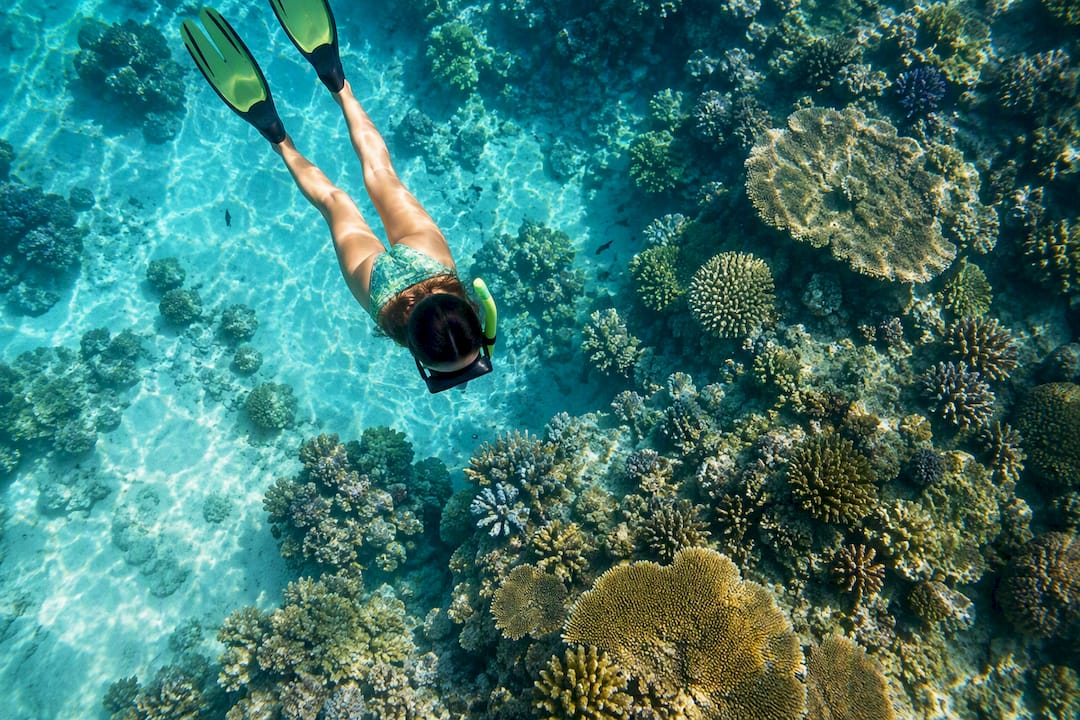
Reef-safe sunscreen matters more than many travellers realise. Standard sunscreens containing oxybenzone and octinoxate have been linked to coral bleaching, so reef-safe alternatives protect both your skin and the ecosystem you’re swimming through. Some marine park areas restrict the number of daily visitors or close specific reef zones seasonally to allow recovery, so it’s worth asking your operator whether your chosen site has any current access limits.
None of this should feel like a burden. Snorkelling responsibly, keeping a comfortable distance from coral, never touching marine life, packing out any rubbish, actually improves your experience. Clearer water and healthier reefs go hand in hand with the conservation habits that protect them.
Why operators, not just weather apps, make the real difference
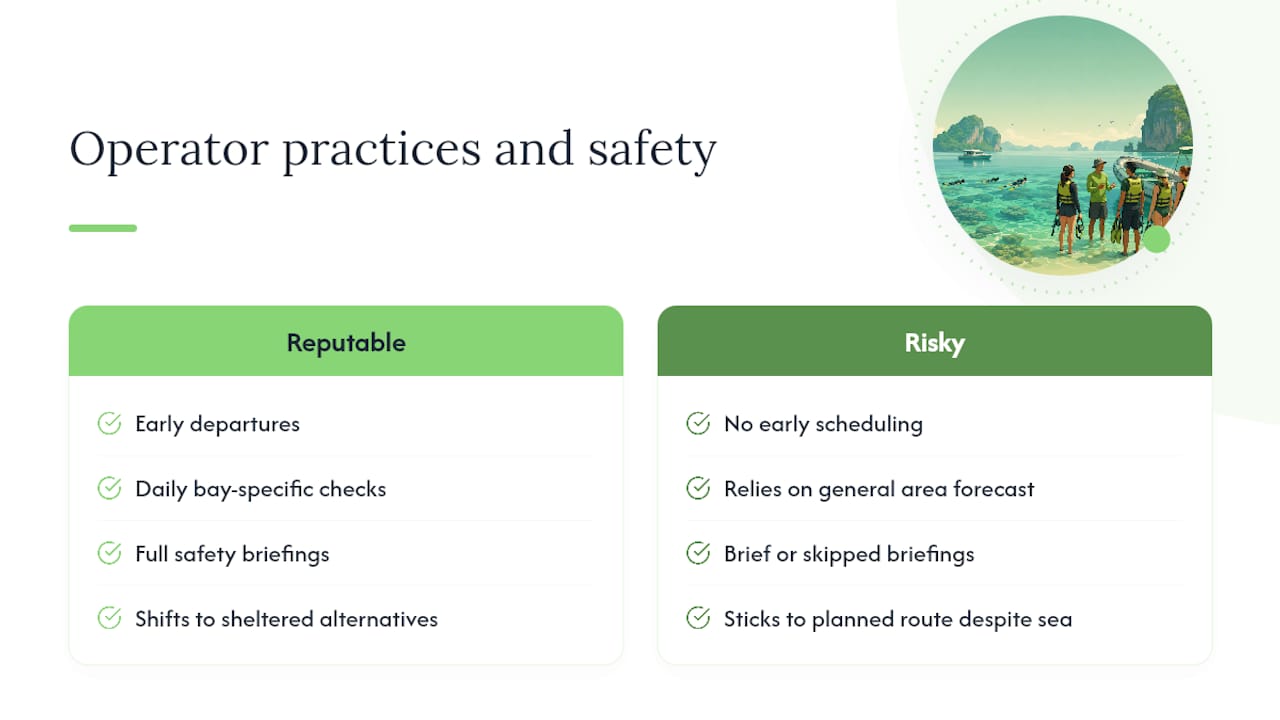
Most guides treat Phuket’s seasons as a simple calendar problem: go in dry season, avoid the monsoon, done. That’s true as far as it goes, but it misses the bigger factor, which is how an individual operator actually behaves when conditions turn marginal. A forecast can say “mostly calm” while one specific bay is running a dangerous rip current that morning. The difference between a great snorkel day and a genuinely risky one usually comes down to whether your operator checks that bay specifically, rather than trusting a general area forecast.
Reputable operators often build trips around that principle. Departures are scheduled early, safety briefings run in full before anyone enters the water, and itineraries shift to a sheltered alternative when sea state on the planned route looks marginal. Small-group sizes matter here too, since a guide watching six swimmers spots trouble far faster than one watching twenty. The seasonal advice above is useful. What actually keeps you safe on the day is an operator who treats “check the conditions” as a genuine daily task, not a line in a brochure.
— Carl
Ready to book your Phuket snorkel trip?
Booking with an experienced operator can be a practical alternative to piecing together a snorkel day from scattered forecasts and unfamiliar beaches. Such operators may check sea state on the morning of the trip and adjust plans accordingly.

Qbic’s private boat tours are built for exactly the timing and flexibility this article covers, early departures, small groups, and a route that can shift to calmer water if conditions demand it. If you’d rather charter your own boat and crew for full control over timing, the charter boat service offers that directly. For a wider set of snorkel-friendly day trips and island itineraries, browse the full tours page and check the season, group size, and reschedule policy before you pay. When you book, ask three things: what time the boat leaves, how the safety briefing works, and what happens if the flags turn red on the day.
Sources
Check these the morning of your trip, not the night before:
- What different flags on Phuket beaches mean — Phuket Insider
- Phuket weather guide — Phuket Expat Guide
- Thailand snorkeling seasons reframed — Seaview180
- Best time to visit Phuket — TravelStayGuide
FAQ
Which beach in Phuket is best for snorkelling?
It depends on the season: sheltered east-coast bays work better during the southwest monsoon, while west-coast coves shine during the November to April dry season. Boat trips to nearby islands, bookable through Qbic Travel, generally offer clearer water and better marine life sightings than shore spots.
What should you be careful of in Phuket?
Rip currents and sudden swell on west-coast beaches are the biggest hazard, particularly during the southwest monsoon from May to October. Always check the beach flag before entering the water, since red and double-red flags signal genuinely dangerous conditions, not just rough weather.
Which island in Thailand is considered the best for snorkelling?
There’s no single universal answer, since conditions shift by season and swell direction, but islands accessed by boat during the November to April dry season consistently deliver the clearest water and calmest seas. December through March is the most dependable stretch for island snorkel trips.
Is it safe to swim in the ocean in Phuket?
Yes, when you check the beach flag first and swim during dry-season months or calm mornings. Some unpatrolled beaches carry hidden risks even without a flag warning, so asking a lifeguard or your tour operator about that day’s specific conditions is the safest habit you can build.


