
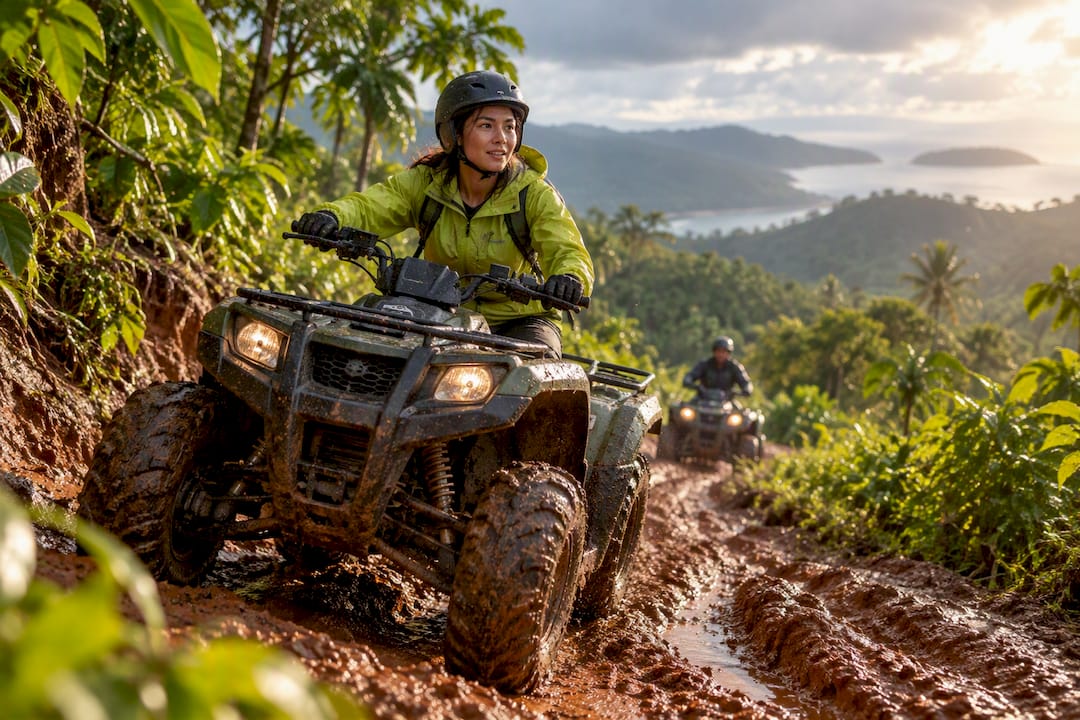
Book Morning Slots to Ride ATVs in Phuket May to October
Yes, you can ride ATVs in Phuket during the rainy season, and plenty of adventurous travellers do it every week between May and October. Trails get muddier and some afternoon slots occasionally get cancelled for safety, so book a morning departure, confirm the operator’s safety kit, and check their rebooking policy before you pay.
TL;DR:
- Booking a morning departure is highly recommended as trails tend to firm up overnight and afternoon rides are more likely to be canceled or shortened due to safety concerns.
- Reputable operators provide safety briefings, small guide-to-rider ratios, included insurance, and clear cancellation policies, especially important during heavy rain or stormy weather.
- Wet-season clothing should include quick-dry pants, long-sleeved tops, waterproof layers, and sturdy, grippy shoes to stay comfortable and safe on muddy trails.
- Trails with shaded plantations, mangroves, and the Big Buddha viewpoint hold up better in rain, but exposed ridges become risky and offer poor visibility during heavy downpours.
- Flexibility in booking and confirmed safety measures, along with choosing operators like Qbic Travel Phuket, help mitigate risks and make the most of a rainy-day adventure in Phuket.
Table of Contents
- What actually changes on the trails when it rains
- What safety standards should a rainy-season operator meet?
- What should you wear and pack for a wet-season ride?
- Which routes and viewpoints hold up best in the rain?
- How do you book smart when rain is a real possibility?
- Why Qbic Travel Phuket makes sense for a rainy-season ride
- Carl’s view: ride the rain, but read it first
- Book your rainy-season ATV adventure with Qbictravel
- Sources
- FAQ
What actually changes on the trails when it rains
Phuket’s monsoon runs roughly from May to October, and the pattern is rarely all-day rain. Showers tend to arrive in bursts, often in the afternoon, and it’s this rhythm that shapes how operators plan their days. Heavier, more frequent showers make trails muddier and can push guides to shorten routes or swap sections entirely to keep things safe on the wetter ground.
That’s the trade you’re making when you ride in the wet: a tougher surface for a genuinely different look at the island. Rubber plantations turn a deep, saturated green, waterfalls that trickle in the dry months actually flow, and you’ll often share the trail with far fewer riders than you would in January.
What you’re likely to meet on the ground:
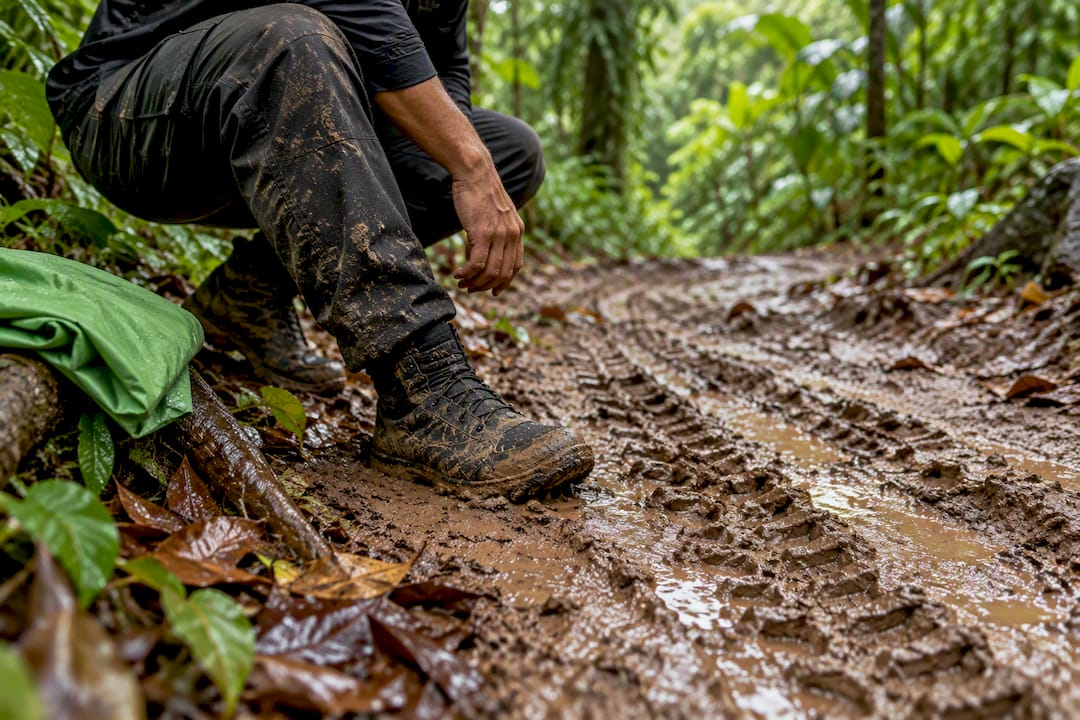
- Deep mud patches, especially on shaded jungle sections that don’t dry between showers.
- Slippery tree roots and loose stones on inclines.
- Standing puddles that hide ruts underneath.
- Occasional washouts on lower-lying trail sections after heavy rain.
Pro Tip: Book the earliest available departure. Trails that were churned into mud by yesterday’s downpour often firm up overnight, and morning slots dodge the afternoon storm cycle almost entirely.
Guides who work these trails daily read the ground quickly, and a shortened or rerouted circuit is a normal, sensible response rather than a sign anything’s gone wrong.
What safety standards should a rainy-season operator meet?
Riding a quad through mud is more physical than riding it on a dry, packed track, so the operator’s standards matter more in the rainy season, not less. Before handing over any money, confirm the following:
- Helmets and instruction are provided as standard. Reputable Phuket operators run a safety briefing and hands-on practice before you hit the trail, not just a five-minute wave towards the machines.
- Guide-to-rider ratios stay small. Structured tours tend to keep groups tight, with a guide leading and time built in for practice before the real riding starts, which matters more when the surface underfoot is unpredictable.
- First aid and accident insurance are included, not optional extras. Many established operators bundle a first-aid kit and accident insurance into every booking, along with a raincoat on wet days.
- Cancellation terms are written down, not vague. Ask directly what rainfall level triggers a cancellation, and whether you get a refund or a rebooked slot.
Ask about hotel pickup zones and whether your guide speaks enough English to brief you properly. Walk away if an operator can’t answer a straight question about insurance, has no formal safety briefing, or gives you a fuzzy answer on what happens if a storm rolls in. A trail with no rescue plan for remote sections is a genuine red flag, not just an inconvenience.
Reputable providers typically offer a straightforward choice: reschedule to another day within a set window, or a refund if no alternative slot works for your itinerary. That flexibility is worth more than a marginally cheaper price elsewhere.
What should you wear and pack for a wet-season ride?
Comfort on a rainy trail comes down to fabric choice more than anything else. Skip anything cotton, since it stays wet and heavy for the rest of the day.
- Quick-dry trousers and a long-sleeved top to protect your skin from mud splash and branches.
- A lightweight waterproof layer or poncho that packs small but keeps the worst of the rain off.
- Closed-toe shoes with real grip, ideally something you don’t mind getting muddy.
- A dry bag or heavy-duty zip-lock for your phone, wallet, and anything else you’re carrying.
- A spare change of clothes and a small towel left in your bag or vehicle for after the ride.
- Insect repellent and sun cream, since both matter even under grey skies.
Leave passports, jewellery, and anything irreplaceable in your hotel safe rather than in a dry bag on the trail. Most operators supply a raincoat, helmet, and sometimes a locker for your things, but always ask what’s actually included rather than assuming.
Which routes and viewpoints hold up best in the rain?
Not every trail type suits wet weather equally. Sheltered plantation tracks, jungle canopy sections, and mangrove channels handle rain far better than exposed ridgelines, which turn genuinely risky in a downpour and offer poor visibility even when they’re not.
Scenic stops worth prioritising when conditions allow:
- Big Buddha viewpoint, when cloud cover lifts enough for a clear view across the island.
- Mangrove channels, which stay atmospheric and green regardless of recent rainfall.
- Hidden beach stops, though it’s worth knowing in advance that some of these are more mangrove shoreline than postcard sand, as several riders have noted.
On ride length, shorter tends to be smarter in the wet. A 1.5 to 2 hour circuit gives you enough variety in scenery without pushing into the second hour, when reviewers consistently report trails getting muddier and more demanding on longer routes. Families and first-time riders should default to beginner-friendly, shorter circuits over the more adventurous long-distance options, saving the bigger loops for drier months.
How do you book smart when rain is a real possibility?
A little planning at the booking stage saves a lot of frustration later. Reserve a morning slot where you can, and if your schedule allows it, leave a spare day or two in your itinerary in case a reschedule becomes necessary.
- Confirm your hotel’s pickup zone in advance. Sample itineraries commonly cover Patong, Kata, Karon, Rawai, and Chalong.
- Ask exactly what’s bundled into the price, including raincoats, insurance, and secure storage for your belongings.
- Get clarity on “rain or shine” listings. Many operators run rides through light showers with a raincoat provided, but heavy rain typically triggers a free cancellation or rebooking rather than a refused refund.
- Check whether rain gear and insurance come as standard or as a paid extra, since pricing structures vary between operators.
Why Qbic Travel Phuket makes sense for a rainy-season ride
Qbic Travel Phuket publishes its own detailed local ATV guide covering clothing, timing, and trail expectations for exactly this kind of monsoon planning, alongside tailored itineraries and hotel pickup built into the booking.
What that looks like in practice for a wet-season rider:
- Flexible booking that accounts for changeable weather rather than a rigid, non-negotiable slot.
- Safety measures suited to wetter trails, discussed upfront rather than left as a surprise on the day.
- A track record backed by a 99% issue-free service rate verified by Trustindex, and a 4.5 rating from 237 reviews, both useful signals when you’re trusting a stranger with a wet trail and a machine.
Before you book, ask about morning departure times, whether a raincoat and insurance are included, typical group size, and whether the route suits family riders. Check the Jet Ski and ATV adventure page or send a message on WhatsApp to lock in a plan that fits the week’s forecast rather than fighting against it.
Carl’s view: ride the rain, but read it first
Light showers and early mornings are when rainy-season Phuket ATV riding earns its reputation, lush trails, cooler air, and a fraction of the crowds you’d fight in December. Heavy rain, thunderstorms, or visibly eroded trails are a different story entirely, and no scenic stop is worth pushing through those conditions.
Families and first-timers do better sticking to shorter, sheltered circuits during the wetter months rather than chasing the longest loop on the menu. An operator with a genuine rebooking policy and a real emergency plan turns a rainy day from a gamble into one of the better-value, lower-crowd experiences Phuket offers.
— Carl
Book your rainy-season ATV adventure with Qbictravel
Qbictravel is the practical route to a rainy-season ATV ride in Phuket, built around exactly the flexibility this guide has covered: morning slots, safety-first guiding, and a booking process that doesn’t leave you stuck if a storm rolls in.

Instead of gambling on a generic listing with no clear rain policy, you get a locally run operator that plans around the monsoon rather than pretending it doesn’t exist. Beyond ATVs, the operator also offers jet ski tours, boat excursions, and cultural sightseeing across Phuket and nearby islands, so a rained-out afternoon on the trails can easily become a different kind of adventure instead. Check the ATV and Jet Ski adventure page for current availability, or message the team on WhatsApp to confirm a morning slot that works around the week’s forecast.
Sources
- Mud, Marble, and Monsoon Breezes: An ATV Safari Through Southern Phuket – Adventure Collective Travel
- ATV Riding & Big Buddha from Phuket: 2-hour quad bike adventure
- Phuket: ATV Mangrove Jungle & Hidden Beach Tour
FAQ
Can you ride an ATV in Phuket during the rainy season?
Yes, most operators run ATV tours throughout the monsoon, generally from May to October, though trails get muddier and some afternoon departures may be shortened or cancelled for safety. Booking a morning slot with a flexible operator is the simplest way to avoid disruption.
Is it safe to ride an ATV in wet, muddy conditions?
It can be, provided the operator gives a proper safety briefing, keeps groups small, and supplies a helmet, first-aid kit, and accident insurance. Avoid riding during heavy rain, thunderstorms, or on trails that are visibly eroded or waterlogged.
What should I wear on a rainy-season ATV tour in Phuket?
Quick-dry trousers, a long-sleeved top, a lightweight waterproof layer, and closed-toe grippy shoes are the essentials. Pack a dry bag for valuables and a spare change of clothes for after the ride.
Will my ATV tour be cancelled if it rains?
Light rain rarely stops a tour, since most operators simply provide a raincoat and carry on. Heavy rain or unsafe trail conditions typically trigger a free cancellation or rebooking rather than a lost booking.
How much does an ATV tour cost with Qbic Travel Phuket?
Current pricing for Qbic Travel’s ATV tours isn’t published as a fixed rate online, so it’s best to check the ATV adventure page directly or message the team on WhatsApp for an up-to-date quote.


