
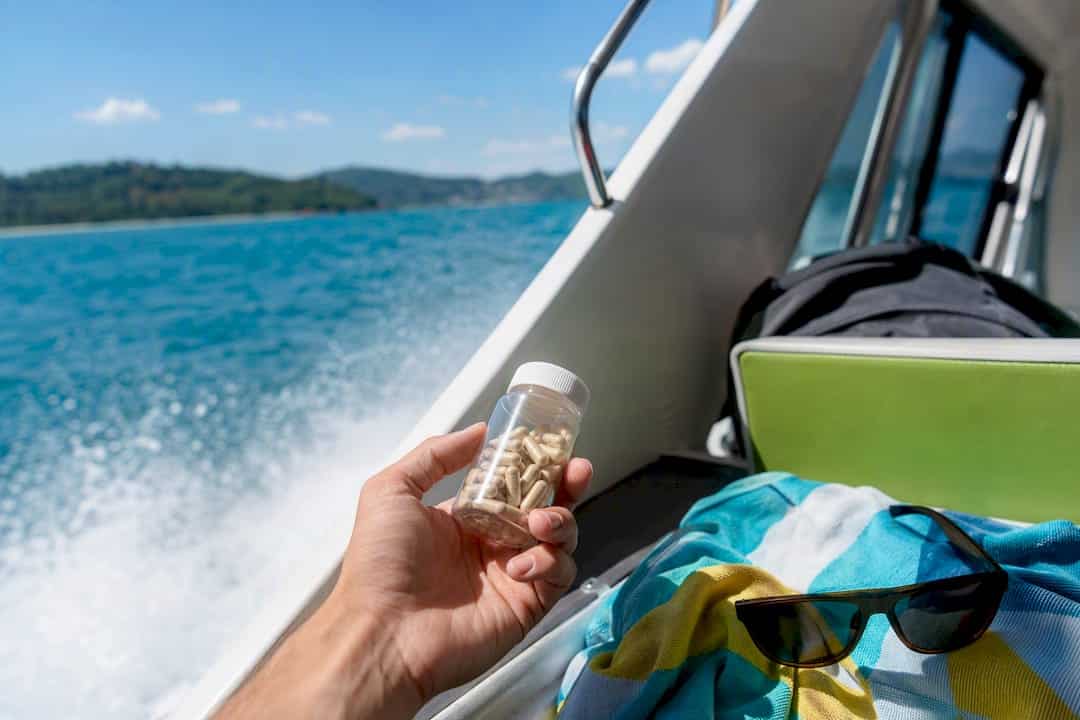
Seasickness on a Phuket speedboat: your prevention checklist
Most travellers can avoid serious seasickness on a Phuket speedboat by doing four simple things, in order: take a motion sickness tablet 30 to 60 minutes before boarding, drink water beforehand, sit mid-ship rather than at the bow or stern, and keep your eyes on the horizon once you’re moving. These steps address the exact mechanism that causes the queasy feeling in the first place, and they work for the vast majority of guests, even those who’ve felt rough on boats before. If you already know you’re prone to it, tell your operator at booking. A good one, Qbictravel included, can steer you towards calmer routes or a private boat charter instead of a packed group speedboat.
Before you board:
- Take dimenhydrinate, meclizine, or a Thai equivalent like Antamin well before departure to allow for effectiveness.
- Drink a substantial amount of water before boarding. Skip the greasy breakfast and alcohol.
- Ask for a mid-ship seat, ideally on the upper or open deck.
- Once moving, look at the horizon, not your phone.
TL;DR:
- Taking motion sickness medication 30 to 60 minutes before boarding significantly reduces the risk of seasickness on Phuket speedboats.
- Sitting mid-ship on the open deck and keeping your eyes on the horizon helps minimize sensory conflict and nausea during the trip.
- Sheltered routes and morning departures generally result in calmer seas and lower seasickness risk, especially during the monsoon season.
- Proper hydration, a light meal, and carrying backup remedies like ginger candies or menthol inhalers can improve comfort if symptoms start.
- Private or sheltered boat options are available for sensitive travelers, with operators like Qbic Travel proactively planning routes and seating to ensure comfort.
Table of Contents
- What causes seasickness on a speedboat in Phuket?
- How likely are you to get seasick, and how long does it last?
- Preparing the day before and the hour before boarding
- Where to sit and what to do if nausea hits
- Catamaran or speedboat: which gives you a calmer day?
- How Qbic Travel plans calmer days on the water
- Book a calmer speedboat day with Qbic Travel
- Key Takeaways
- Sources
What causes seasickness on a speedboat in Phuket?
Seasickness comes down to a mismatch between what your inner ear feels and what your eyes see. Your vestibular system, in the inner ear, senses every pitch and roll of the boat. If your eyes are fixed on a phone screen or a book, they report that everything is still. Your brain gets two contradictory signals, and nausea is its way of telling you something’s gone wrong. NOAA’s explanation of the sensory conflict is the clearest account of why horizon gaze and fresh air work so reliably as fixes: give your eyes and inner ear the same story, and the conflict eases.
Speedboats make this conflict worse than most other boats. They accelerate hard, slam over wake and swell, and change direction quickly, all of which pile motion cues on top of each other faster than a calmer vessel would. A few points worth knowing before you book:
- Open crossings, such as the longer run out to Phi Phi, expose you to more swell than sheltered routes.
- Sapam Bay and the inner Phang Nga channels tend to stay flatter, even when the outer sea is choppy.
- Southwest monsoon months (roughly May to October) bring rougher water and a higher chance of symptoms on any exposed run.
How likely are you to get seasick, and how long does it last?
Motion sickness is common enough on Phuket boat trips that local operators build prevention into their standard briefings, and Phuket Pearl’s guidance treats it as something most tours need to actively manage rather than a rare complaint.
Your personal risk goes up if: you have a history of motion sickness or migraine, you’re pregnant, or you’re travelling on an empty stomach or dehydrated.
Weather and route matter just as much as personal history. A flat, sheltered morning crossing to the Coral Islands carries far less risk than an exposed afternoon run in choppy conditions. Symptoms, when they appear, usually start within the first 12 to 24 hours of exposure to unfamiliar motion, according to NOAA, and they typically fade once your body adjusts or the boat stops moving. For a half-day speedboat trip, that often means the worst passes within 20 to 30 minutes of departure.
- History of motion sickness or migraine raises your odds noticeably.
- Rough seas or an exposed route can prolong symptoms well beyond the usual window.
- Most people acclimatise within half an hour if they follow basic prevention steps.
Preparing the day before and the hour before boarding
Getting this right starts the night before, not on the jetty.
- Eat something plain and light the evening before and the morning of your trip. Skip heavy, fried, or spicy food, and avoid alcohol, which dehydrates you and dulls your balance.
- Hydrate properly. Aim for 500ml to a litre of water in the hours before boarding, a point skippers and Phuket Insider’s operator guidance both flag as one of the few factors entirely within your control.
- Take your medication 30 to 60 minutes before boarding. Dimenhydrinate, diphenhydramine, and meclizine are all effective when timed this way, according to CDC travel health guidance. In Thailand, look for Antamin or Dramamine at any pharmacy or 7-Eleven.
- Pack backups. Ginger candies, acupressure wristbands, and a menthol inhaler weigh nothing and can help even if you’re not sure you’ll need them.
- Tell your operator when you book. Mentioning a history of seasickness lets the crew plan seating and, where possible, route.
Pro Tip: Anti-motion medication can cause drowsiness and dry mouth, so pair it with extra water throughout the day, not less. The CDC notes dehydration is a risk from both the condition itself and the drugs used to treat it.
Where to sit and what to do if nausea hits
Seat choice makes a real difference on a speedboat. The bow bounces hardest over waves, the stern catches engine fumes and following wake, so the middle of the boat, on the open deck rather than below, gives you the steadiest ride and the clearest view of the horizon.
- Sit mid-ship, above deck, facing forward.
- Keep your eyes on the horizon line, not on your phone, a book, or the water rushing past close to the hull.
- Get fresh air on your face; a shaded but breezy spot beats a stuffy cabin every time.
- Nibble a cracker or sip something sugary if you feel the first wave of queasiness.
- Chew ginger candy or use a menthol inhaler as an early intervention.
If nausea does hit, stay on deck rather than lying down below, since going below removes the horizon and airflow cues your brain needs to resolve the conflict. Face into the wind if you can, tell a crew member early (most carry extra water and remedies), and if you do vomit, aim downwind and let the crew guide you to the right side of the boat. Skippers on chartered trips report that a stop for a swim often resolves symptoms fast, simply because the motion causing the mismatch stops entirely.
Catamaran or speedboat: which gives you a calmer day?
If you already know rough water gets to you, the boat type matters as much as anything on this list.
- Multihulls and catamarans sit flatter in the water than single-hull speedboats, which cuts down the rolling motion that triggers most symptoms. Qbic Travel’s own comparison of speedboat versus catamaran options in Phuket goes into the stability difference in more detail.
- Route matters as much as vessel. Sheltered itineraries through Phang Nga Bay, the Coral Islands, or Sapam Bay stay calmer than the longer, more exposed crossing to Phi Phi.
- Morning departures are usually smoother, since wind and swell tend to build through the afternoon.
- Ask directly at booking: can the operator carry motion sickness tablets, offer mid-ship seating, or switch you to a sheltered route or a private boat tour if conditions look rough that day.
How Qbic Travel plans calmer days on the water
We build seasickness prevention into how we run trips, not as an afterthought. Guests who flag a sensitivity at booking get steered towards calmer routes, mid-ship seating, and, where it suits the group, a private charter instead of a packed group departure. Crews carry water and basic remedies as standard practice.
That approach sits behind Qbictravel’s 4.5 rating from 237 reviews and a 99% issue-free service record verified by Trustindex. It’s not a guarantee against rough seas, nobody can offer that, but it means the people running your day are actively working to keep it comfortable.
— Carl
Book a calmer speedboat day with Qbic Travel
If you’d rather hand the planning to people who already know which routes stay flat and which crews carry the right remedies, that’s exactly what Qbictravel does differently from a standard group tour booking. Mention your concern about seasickness when you book, and we can point you towards sheltered itineraries, morning departures, or a private boat tour where the route and pace are built around your comfort rather than a fixed group schedule.

That flexibility runs across the wider speedboat tour range, backed by the same 4.5 rating from 237 reviews and 99% issue-free service record verified by Trustindex that guests have come to expect from Qbictravel. Check available dates and mention your seasickness concerns when you book, and we’ll match you to the calmest option we’ve got running that day.
Key Takeaways
Most seasickness on a Phuket speedboat is preventable through correct medication timing, hydration, seat choice, and horizon focus, all backed by CDC and NOAA guidance.
| Point | Details |
|---|---|
| Time your medication | Take dimenhydrinate, meclizine, or Antamin 30 to 60 minutes before boarding, not after symptoms start. |
| Hydrate beforehand | Drink 500ml to a litre of water before departure; skip alcohol and heavy food. |
| Choose your seat | Sit mid-ship, above deck, and keep your eyes on the horizon rather than a screen. |
| Know your risk window | Symptoms usually start within hours of departure and ease as your body acclimatises or the boat stops. |
| Ask about calmer options | Qbictravel can offer sheltered routes, mid-ship seating, or private charters for guests prone to seasickness. |
Sources
- How to Prevent Sea Sickness on Your Phuket Island Adventure
- Motion sickness | CDC Yellow Book™
- What causes seasickness? | NOAA
- Is speedboat ride to islands very bumpy? | Phuket Insider


