

Wat Chalong temple: your complete visitor guide
Wat Chalong temple is Phuket’s largest and most visited Buddhist temple, officially known as Wat Chaiyathararam, and it genuinely earns that status. The centrepiece is a majestic tall golden chedi, the Phra Mahathat Chedi, which houses a sacred fragment of Buddha’s bone. Inside the prayer hall, you’ll find wax statues of two revered monks, Luang Pho Chaem and Luang Pho Chuang, their surfaces layered in gold leaf left by generations of worshippers. Entry is completely free, and the temple welcomes both Thai pilgrims and international visitors every day.
At a glance:
- Official name: Wat Chaiyathararam
- Location: Chalong Subdistrict, a short distance from Phuket Town
- Entry: Free (donations welcome)
- Opening hours: 7:00 AM to 5:00 PM daily
- Highlight: the grand pagoda housing a Buddha bone relic
The history and spiritual significance of Wat Chalong
Founded nearly two centuries ago, Wat Chalong carries nearly two centuries of history within its walls. King Rama III’s reign saw the temple originally recorded under the name Wat Chalong, before King Chulalongkorn later renamed it Wat Chaiyathararam. Locals, however, have always kept calling it Wat Chalong, and the name stuck.
The temple’s most dramatic chapter came in 1876, during the Chinese tin miners’ rebellion. Two monks, Luang Pho Chaem and Luang Pho Chuang, stepped forward as community leaders when armed conflict broke out across Phuket. They opened the temple as a sanctuary for villagers fleeing the violence, provided herbal medicine to the injured, and helped mediate between the warring factions. King Rama V later honoured both monks for their courage and compassion.
That legacy explains why Thai pilgrims travel from across the country to pay their respects here. The wax effigies of the monks are not decorative pieces. They represent living gratitude, and locals continue to apply gold leaf to the statues as an act of devotion.
- Luang Pho Chaem was born during the reign of King Rama III and ordained as a young novice, later becoming the temple’s most celebrated abbot.
- Luang Pho Chuang served alongside Chaem during the 1876 rebellion, sharing the work of sheltering and healing the wounded.
- Royal recognition from King Rama V cemented both monks’ status as spiritual heroes of Phuket.
- Ongoing veneration continues today, with Thai worshippers making the pilgrimage specifically to honour the monks’ memory.
What you need to know before visiting Wat Chalong
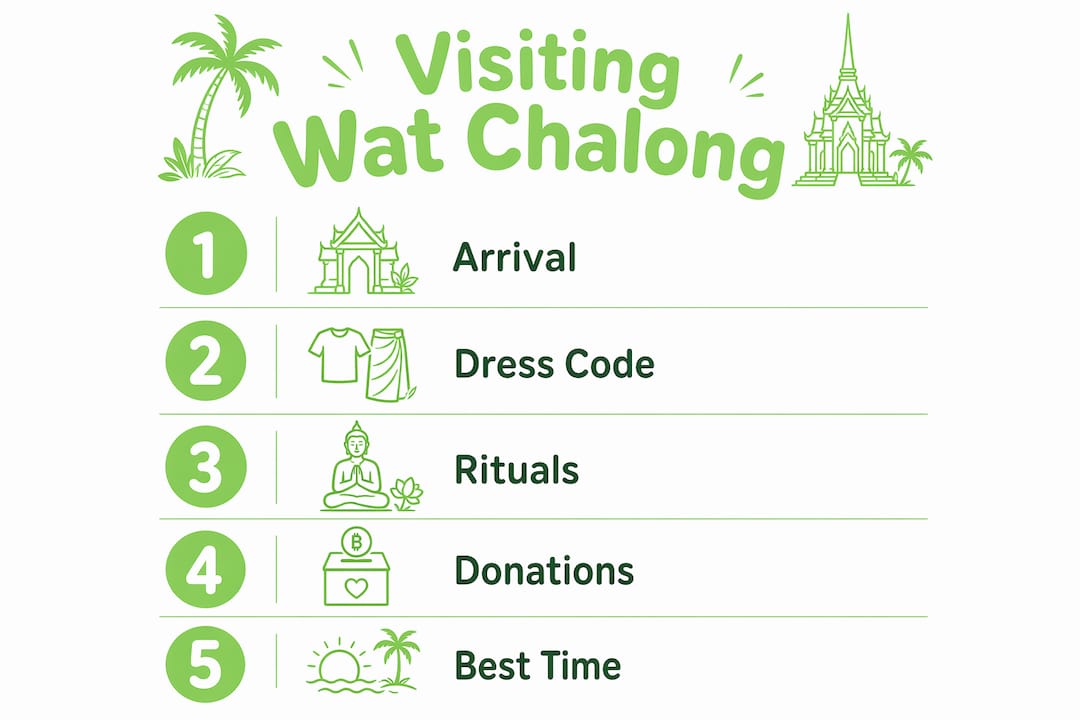
Planning your visit well makes a real difference to the experience. The temple opens daily at 7:00 AM, and the quietest window is between 6:00 AM and 9:00 AM, before tour groups arrive. A typical visit runs under an hour, though you could easily spend longer if you explore all three floors of the pagoda.
Dress code and entry rules:
- Cover your shoulders, chest, and knees. Sarongs are sometimes available at the entrance if you need one.
- Remove your shoes and hat before entering any temple building.
- Entry is free; donation boxes are placed around the grounds.
- Sleeveless tops and shorts are not permitted inside.
Getting there:
| Transport | Details |
|---|---|
| Grab or taxi | Most convenient from Phuket Town or beach areas; about 10 minutes |
| Songthaew | Shared minibus routes pass through Chalong; budget-friendly option |
| Scooter hire | Popular with independent travellers; easy parking on site |
| Car with driver | Ideal if combining with Big Buddha or Old Phuket Town |
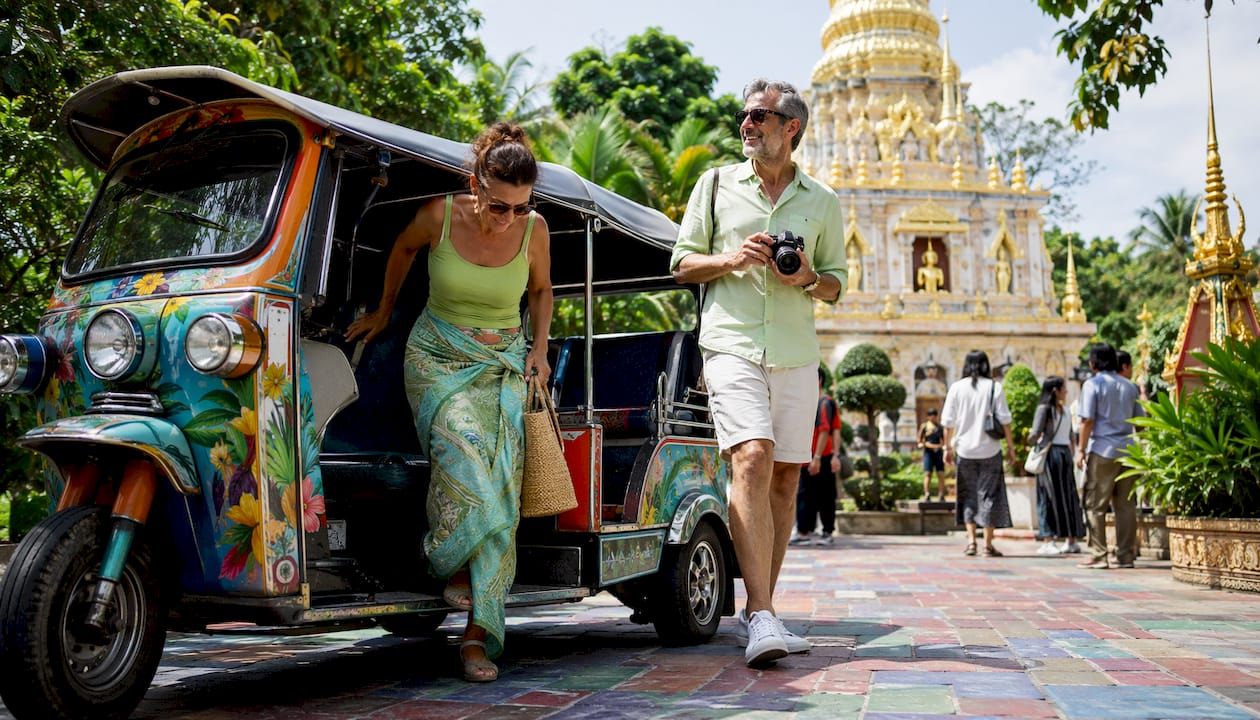
Free parking is available on site, but it fills quickly between 10:00 AM and 2:00 PM during peak tour bus arrivals. Arriving early in the morning sidesteps both the crowds and the parking scramble.
Pro Tip: Bring a small amount of cash for optional donations and incense offerings. Coin-operated machines near the pagoda dispense incense sticks, and the gesture is genuinely appreciated by the local community.
How to get the most from your time at the temple
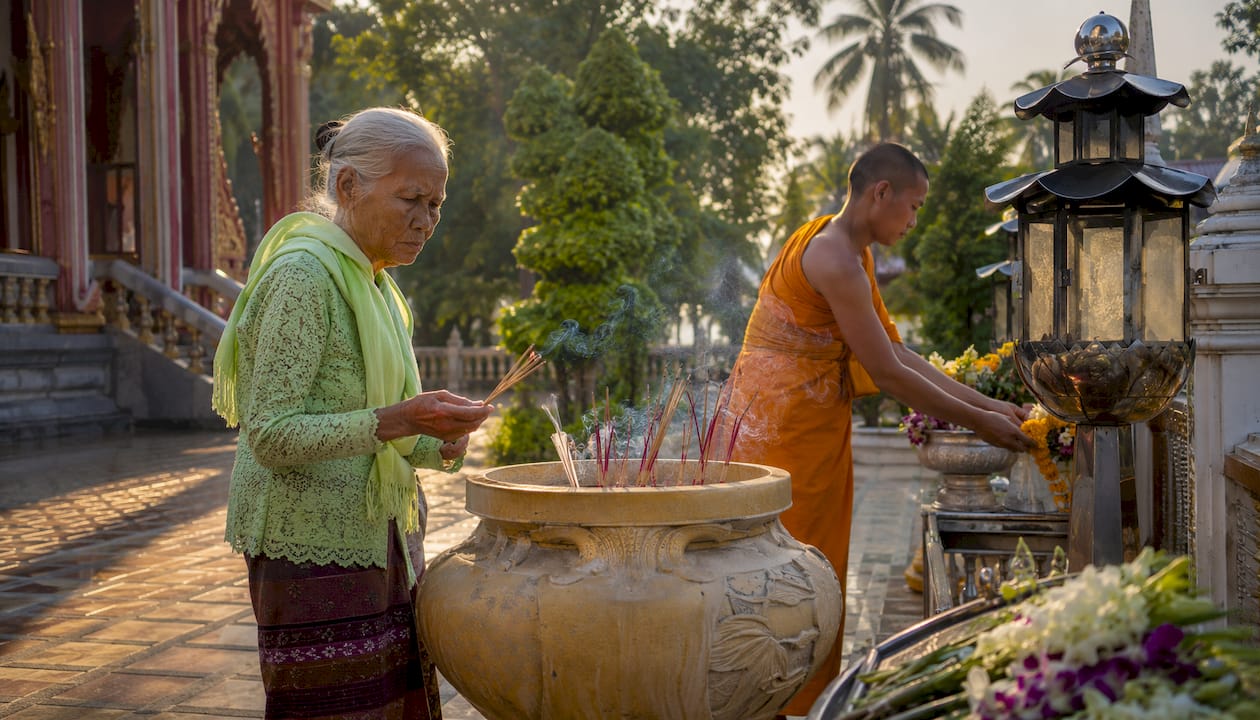
Wat Chalong is a vibrant, living temple, not a museum. On any given morning, you’ll see Thai families lighting incense, monks chanting in the prayer hall, and worshippers pressing gold leaf onto the wax statues of Luang Pho Chaem and Luang Pho Chuang. That energy is part of what makes it so memorable.
The firecracker ceremony is one of the most striking rituals you can witness. Worshippers set off firecrackers at a brick kiln on the grounds to signal that a prayer has been answered. It’s loud, joyful, and completely authentic. Stand back, watch, and let it unfold.
Key structures to explore:
- The Viharn (prayer hall): Houses the three wax monk statues covered in gold leaf, along with shrines and offerings.
- The Grand Pagoda (Phra Mahathat Chedi): Three floors of murals, Buddhist artworks, and shrines, rising 60 metres above the grounds.
- The temple market: Stalls selling trinkets, flowers, and incense line the outer grounds.
Pro Tip: Most visitors only reach the first or second floor of the Grand Pagoda. Climb to the third floor for the sacred Buddha bone relic and a panoramic view stretching toward the Big Buddha on the hillside. Very few tourists make it up there, so it’s genuinely peaceful.
Respectful behaviour at the temple:
- Speak quietly inside the prayer hall and pagoda.
- Never point your feet toward a Buddha image or monk statue.
- Ask permission before photographing worshippers during rituals.
- Follow the lead of Thai visitors when approaching shrines.
How to build a great cultural day around Wat Chalong
Seeing Wat Chalong on its own is worthwhile, but pairing it with nearby sites turns a single stop into a genuinely rich day out. The Big Buddha sits just 10 minutes away by car, perched on Nakkerd Hill with sweeping views across the island. Old Phuket Town, with its Sino-Portuguese shophouses and street art, adds a completely different layer of cultural texture.
- Start at Wat Chalong early (7:00 AM) to catch the morning calm and avoid tour groups.
- Head to the Big Buddha mid-morning for the views and the cooler temperatures before midday heat sets in.
- Spend the afternoon in Old Phuket Town, exploring the heritage streets, local coffee shops, and weekend markets.
If you’d rather leave the planning to someone else, hotels and resorts in Phuket often assist guests with cultural excursions, including visits to Wat Chalong, facilitating seamless cultural experiences through helpful local planning. Their guides bring genuine local knowledge, and the logistics are handled for you. For travellers who want to mix culture with a bit of adrenaline, Qbictravel also offers ATV and adventure tours that pair brilliantly with a morning at the temple.

Combining cultural visits with active experiences is one of the best ways to get a real feel for Phuket. Qbictravel makes that easy, with a 4.5-star rating from 237 reviews and 99% issue-free service verified by Trustindex.
Key takeaways
Wat Chalong temple is Phuket’s most historically significant Buddhist site, offering free entry, authentic living rituals, and a 60-metre pagoda housing a sacred Buddha bone relic.
| Point | Details |
|---|---|
| Free entry, dress code required | No admission fee, but cover shoulders and knees; remove shoes before entering buildings. |
| Best time to visit | Arrive between 7:00 AM and 9:00 AM to avoid crowds and secure free parking. |
| Monks Luang Pho Chaem and Luang Pho Chuang | Both monks are venerated for sheltering villagers during the 1876 rebellion; their wax statues are covered in gold leaf. |
| Third floor of the pagoda | The most spiritually significant level, housing the Buddha bone relic and offering panoramic views toward the Big Buddha. |
| Combine with nearby sites | Pairing Wat Chalong with the Big Buddha and Old Phuket Town creates a fuller, more rewarding cultural day. |


