

Role of longtail boats in cultural tours of Thailand
Longtail boats, known in Thai as rua hang yao, are the defining watercraft of Thailand’s rivers, canals, and coastal waters, and they sit at the heart of the country’s most authentic cultural tours. The role of longtail boats in cultural tours goes far beyond simple transport. These vessels carry centuries of spiritual tradition, boatbuilding craft, and community livelihood into every trip you take. Whether you are gliding through Bangkok’s khlongs or threading between limestone karsts in Krabi, a longtail boat connects you to a way of life that no air-conditioned coach ever could. Qbictravel has seen first-hand how these tours transform a standard holiday into a genuine cultural encounter.
What is the role of longtail boats in cultural tours?
Longtail boats are defined as long, narrow wooden vessels powered by a modified automobile or truck engine mounted on a long propeller shaft that extends behind the stern. That distinctive silhouette is instantly recognisable across Thailand. The craft traces its origins to the rua hua tong, traditional hardwood boats built by riverside communities who depended on waterways for trade, fishing, and daily movement. Traditional boatbuilding continues today, though younger generations increasingly diversify their livelihoods, which puts pressure on these customs.
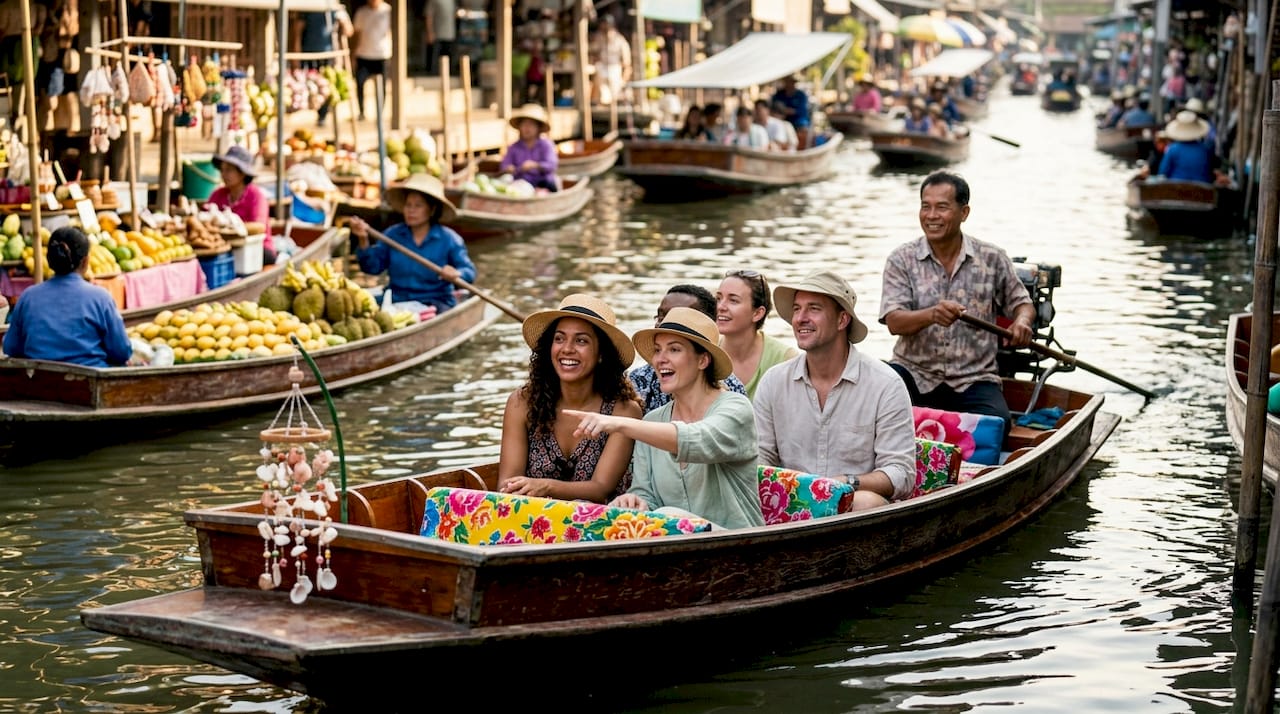
Cultural tours built around longtail boats give travellers direct access to riverine and coastal communities that remain largely invisible to land-based tourism. Slow-paced water travel on traditional vessels acts as a sacred bridge preserving intangible cultural heritage while supporting sustainable local economies. That is not poetic language. It is a practical description of how tourism spending on these boats funds traditional craftsmanship and keeps riverine lifestyles viable.
Where do longtail boats come from, and what do they symbolise?
The spiritual life of a longtail boat is as important as its engine. Thai boatmen believe each vessel holds a protective spirit called the jao reua. Rituals involving incense, jasmine garlands, and coloured cloths are performed regularly to honour this spirit and ensure safety and luck on the water. These are not performances for tourists. They are genuine acts of faith carried out by captains who depend on the boat for their income and their safety.
The decorative elements on a longtail boat each carry meaning:
- Painted eyes on the hull help the boat “see” ahead and avoid danger, a tradition shared with fishing cultures across Southeast Asia.
- Coloured cloths tied to the prow represent offerings to the jao reua spirit and are renewed at Buddhist festivals.
- Garlands of jasmine and marigold signal respect and gratitude, often placed before a long voyage or a new season.
- Hull colours vary by region and captain preference, but deep reds, blues, and golds dominate, each carrying associations with protection and prosperity.
Pro Tip: Ask your captain about the cloths on the prow before you set off. Most captains are proud to explain the ritual, and even a brief exchange through a guide opens a window into Thai spiritual life that no museum exhibit can replicate.
Understanding these symbols transforms a boat ride into a cultural heritage experience. You are not simply a passenger. You are a witness to a living tradition that has shaped Thai coastal identity for generations.
How are longtail boats used in modern tourism and local livelihoods?
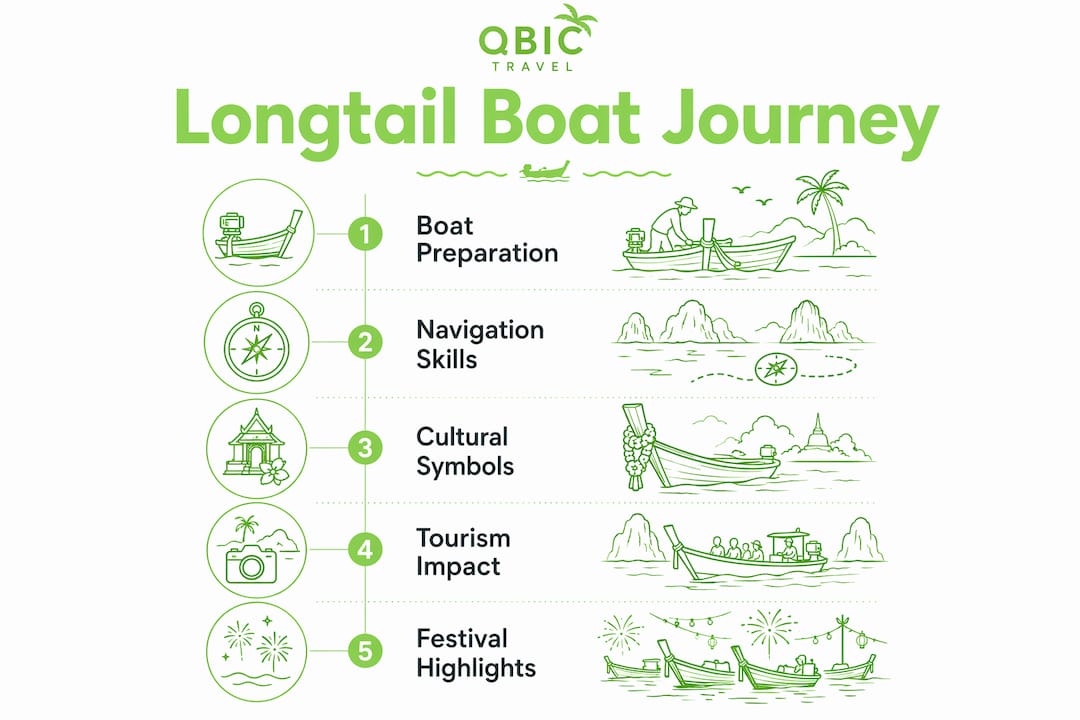
Longtail boats once powered entirely by sails and oars now run on diesel engines, but the craft and the culture around them remain deeply traditional. Today, their uses in tourism span a wide range of experiences:
- Island-hopping tours in Phuket and Krabi, visiting sea caves, hidden beaches, and snorkelling spots inaccessible to larger vessels.
- Canal tours in Bangkok, where a 4-hour longtail tour takes in temples, museums, and canal-side neighbourhoods, giving you a panoramic view of local life.
- Fishing village visits, where captains double as informal guides to their own communities.
- Private charters for couples or small groups seeking a quieter, more personal experience away from group tours.
The economic impact of longtail boat tourism is direct and local. Fares paid to independent captains stay within the community rather than flowing to large operators. River cruises on traditional vessels financially support traditional craftsmanship and riverine lifestyles in ways that hotel-based tourism rarely achieves. Choosing a longtail boat tour is, in practical terms, a decision to put money into the hands of the people who built and maintain Thailand’s water culture.
Tourism has also influenced traditional practices. Captains now carry life jackets and follow basic safety protocols that were absent a generation ago. Some routes are busier than they once were, particularly around Maya Bay and the Phi Phi Islands. The balance between access and preservation is an ongoing conversation in Thai coastal communities, and travellers who choose reputable, locally run operators contribute positively to that balance. For a broader perspective on how local culture shapes travel experiences, the role of local cuisine in tourism offers a useful parallel from another cultural dimension.
What can you expect on a longtail boat cultural tour?
Preparation makes the difference between a comfortable, enriching trip and an uncomfortable one. Here is what a typical longtail boat cultural tour looks like in practice:
- Duration. Most tours run 2–4 hours. Full-day private charters in the Krabi region can run longer and cost up to 7,500 THB. Shared rides on shorter routes start at around 150–300 THB.
- Sun exposure. You are on open water with no shade. Bring SPF 50+ sunscreen, a wide-brimmed hat, and UV-protective clothing. The sun reflects off the water and intensifies quickly.
- Noise. Longtail engines are loud. Earplugs are not excessive. Many experienced travellers carry them as standard kit.
- Mobility. Boarding requires stepping over a low gunwale onto an unstable surface. Travellers with limited mobility should confirm access arrangements before booking. Children under 3 and pregnant women are often advised against these tours.
- Entry fees. National park entry fees of around 200 THB may apply at certain destinations, separate from the boat fare.
- Cultural guidance. Local longtail captains often speak only basic English. Hiring an English-speaking cultural guide alongside your captain significantly deepens the experience.
Pro Tip: Book a private longtail charter rather than joining a large group tour if cultural immersion is your priority. Smaller groups allow you to stop longer at villages, ask questions, and move at a pace that suits genuine curiosity rather than a timed itinerary.
You can explore Phuket private boat tours for options that combine expert local captains with curated cultural stops, giving you the best of both worlds.
What are Thailand’s longboat racing festivals, and why do they matter?
Longboat racing festivals are among the most vivid cultural events in the Thai calendar. They are not tourist spectacles. They are community celebrations with roots in martial history and Buddhist tradition stretching back over 400 years.
| Festival | Timing | Location | Cultural significance |
|---|---|---|---|
| Lai Ruea Fai (Fire Boat Festival) | october to november | Nakhon Phanom | Marks the end of Buddhist Lent; illuminated boats float downriver |
| Longboat Racing Festival | september to november | Nan, Phichit, and others | Celebrates martial heritage and river community identity |
| Naga Fireballs Festival | october | Nong Khai | Linked to river spirits and the end of the Rains Retreat |
Traditional longboat racing festivals occur annually between september and november, timed to the end of Buddhist Lent. That timing is deliberate. The festivals mark the moment when monks emerge from their three-month retreat, and the river becomes a site of communal celebration. Watching a longboat race from the riverbank, surrounded by local families, gives you a cultural insight that no guided museum tour can match.
Travellers who plan their Thailand visit around these festivals gain access to a side of Thai culture that most package holidays never reach. The races draw local teams who train for months, and the atmosphere combines fierce competition with genuine community pride.
Carl’s take: what longtail boat tours actually teach you
I have been on longtail boats in Bangkok’s khlongs, off Railay Beach, and through the mangroves near Krabi Town. Each time, the thing that stays with me is not the scenery. It is the captain.
Most captains have worked these waters since childhood. They know every sandbar, every current, and every shortcut. They also know which temple on the canal bank was built by their grandfather’s generation, and which spirit house on the riverbank gets fresh offerings every morning. That knowledge does not appear on any map or in any guidebook. You access it only by being on the boat, at close quarters, with someone who has spent a lifetime on the water.
My honest advice: do not treat a longtail boat tour as a tick-box activity. The cultural heritage boat trip format works best when you slow down and pay attention. Hire a guide who speaks both Thai and English. Choose a Krabi boat tour with a reputable local operator rather than the cheapest option on a booking aggregator. The difference in cultural depth is significant.
The broader point is this: longtail boat traditions survive because communities find them economically viable. Every tourist who books a locally run tour, tips the captain fairly, and engages respectfully with the rituals on board contributes to that viability. Cultural preservation is not a passive process. It requires the active participation of travellers who care about what they are experiencing.
— Carl
Qbictravel’s longtail and boat tour options in Phuket and Krabi
Qbictravel curates boat experiences across Phuket and Krabi that pair expert local captains with genuine cultural insight, so you get more than a scenic ride.
Whether you want a private boat charter around Phuket’s outer islands or a full-day cultural excursion through Krabi’s sea caves and fishing villages, Qbictravel’s team handles the planning. Every itinerary is built around local knowledge, not a generic template. Qbictravel holds a 4.5 rating from 237 verified reviews, with 99% issue-free services confirmed by Trustindex. If you want to round out your Thailand trip with something beyond the water, the tours and cruises section covers the full range of cultural and adventure options available through the platform.
FAQ
What are longtail boats called in Thai?
Longtail boats are called rua hang yao in Thai, which translates directly as “long-tailed boat.” The name refers to the extended propeller shaft that gives the vessel its distinctive appearance.
How much does a longtail boat tour cost in Thailand?
Shared longtail rides start at around 150–300 THB for short routes. Private full-day charters in areas like Krabi can cost up to 7,500 THB, depending on duration and itinerary.
Are longtail boat tours safe for children?
Most operators advise against longtail tours for children under 3 and pregnant women due to noise levels, engine vibration, and the physical demands of boarding. Older children generally manage well with life jackets provided.
What is the best time of year for longboat racing festivals in Thailand?
Longboat racing festivals run annually between september and november, coinciding with the end of Buddhist Lent. Nan and Phichit are among the best locations to watch competitive racing with strong local atmosphere.
Do I need a guide as well as a captain on a longtail boat tour?
A separate English-speaking guide is strongly recommended. Local captains have expert navigational knowledge but often speak limited English, so a cultural guide provides the context that turns a scenic trip into a genuine cultural immersion experience.
Key takeaways
Longtail boat tours are the most direct way to access Thailand’s living water culture, combining spiritual tradition, local livelihoods, and authentic community encounters in a single experience.
| Point | Details |
|---|---|
| Cultural significance runs deep | Longtail boats carry the jao reua spirit and ritual practices that reflect centuries of Thai spiritual life. |
| Hire a guide alongside your captain | Local captains navigate expertly but often speak limited English; a cultural guide unlocks the full experience. |
| Costs vary widely | Shared rides start at 150–300 THB; private full-day charters in Krabi reach up to 7,500 THB. |
| Festivals offer peak cultural immersion | Longboat racing festivals between september and november provide unmatched insight into Thai community identity. |
| Tourism spending supports preservation | Booking locally run longtail tours keeps traditional craftsmanship and riverine livelihoods economically viable. |


