
Why local storytelling enhances cultural tours
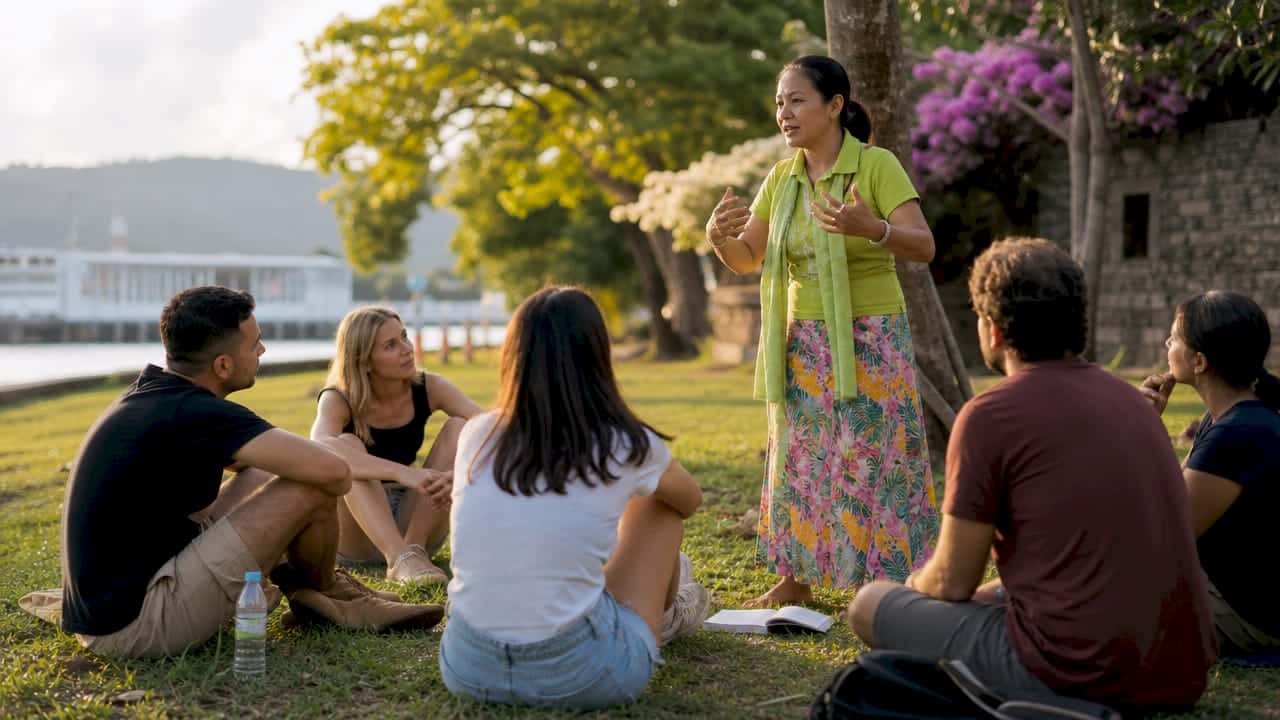
Local storytelling is defined as the practice of sharing community-rooted, culturally rich narratives during guided tours to deepen visitors’ connection to a heritage site or place. In heritage tourism, this practice is also known as heritage interpretation, a term used by UNESCO and cultural tourism researchers to describe how meaning is conveyed at significant sites. Understanding why local storytelling enhances cultural tours matters because it shifts your experience from passive sightseeing to genuine cultural immersion. You stop collecting landmarks and start understanding the people, histories, and values that shaped them. Whether you are exploring the old quarter of Phuket Town or a UNESCO World Heritage site in Europe, the stories told by local guides and residents are what make a place truly come alive.
How does local storytelling improve authenticity and emotional resonance?
Skilled local storytellers, including residents and trained guides, directly improve how authentic a cultural tour feels. Research published in Tourism Recreation and Culture links storytelling delivery quality to stronger visitor engagement and a heightened sense of heritage authenticity. That finding matters because authenticity is the single quality travellers most consistently seek when choosing cultural experiences over standard sightseeing.
Emotional resonance is the other half of this equation. A guide who grew up in a neighbourhood does not just recite dates. They describe the smell of a morning market, the sound of a festival, or the memory of a grandmother’s recipe. Those sensory details create an emotional bond that no guidebook can replicate. Authenticity requires community-sourced stories grounded in lived experience rather than solely factual claims.
Local narratives also serve diaspora and visiting heritage audiences in a unique way. For travellers reconnecting with ancestral cultures, hearing a story told by someone who still lives that culture carries a weight that a museum panel cannot match. The emotional impact is immediate and personal.
- Local guides bring lived experience that transforms facts into feelings.
- Resident storytellers add credibility and warmth that professional scripts often lack.
- Community voices reflect the full complexity of a place, including its contradictions and humour.
- Narrative delivery style (pace, tone, personal detail) shapes how deeply a visitor connects with a site.
Pro Tip: When booking a cultural tour, ask specifically whether your guide is a local resident or a trained heritage interpreter with community ties. That single detail predicts the quality of your storytelling experience more reliably than any star rating.
What is the impact of site-specific micro-stories on visitor engagement?
Site-specific micro-stories are short, place-anchored narratives tied to a precise location rather than a broad historical overview. The Placetelling® method, a narrative-performative approach developed in European heritage tourism, uses these micro-story nodes to pull visitors into reflective, exploratory engagement. Performative placetelling activates micro-story nodes beyond iconic landmarks, promoting slower and more meaningful heritage interaction.
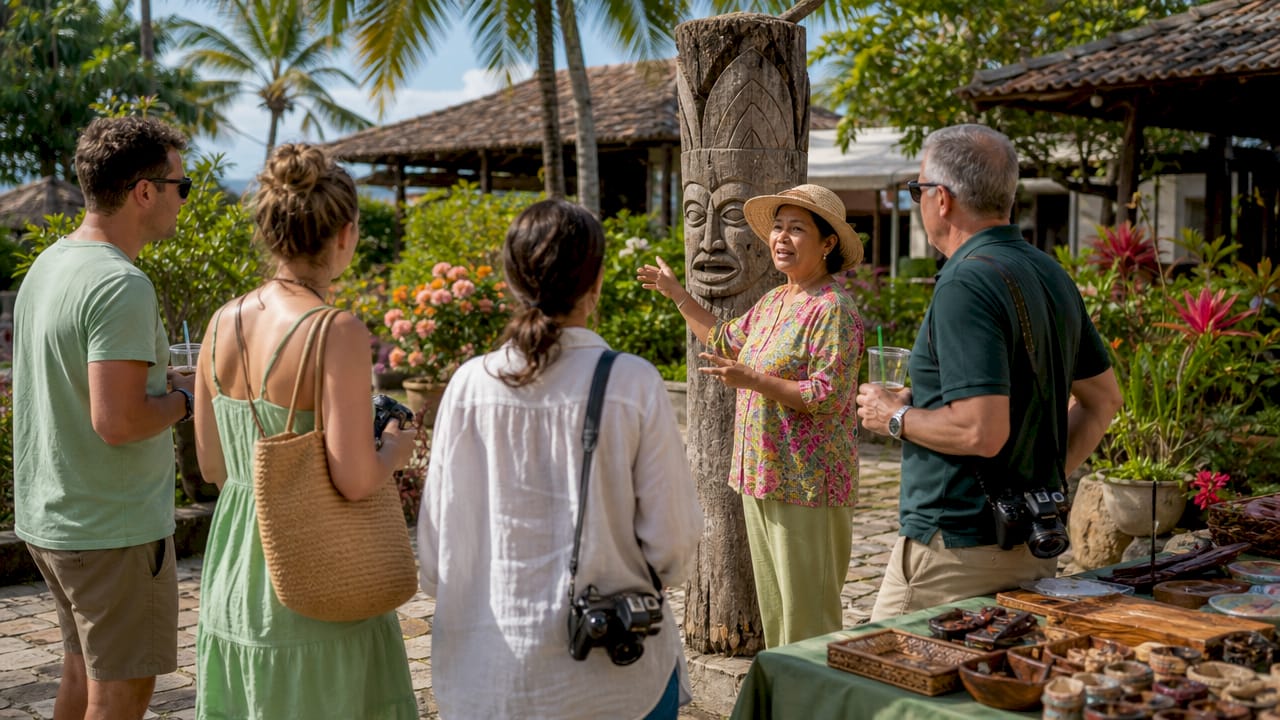
The DisAbitanti project in Italy demonstrated this clearly. Rather than routing visitors through a checklist of famous sights, guides used everyday local memories tied to specific streets, doorways, and squares. Visitors noticed more, lingered longer, and reported richer experiences. Treating everyday local memories as narrative nodes broadens what visitors notice, enriching the experience without lengthening tours.
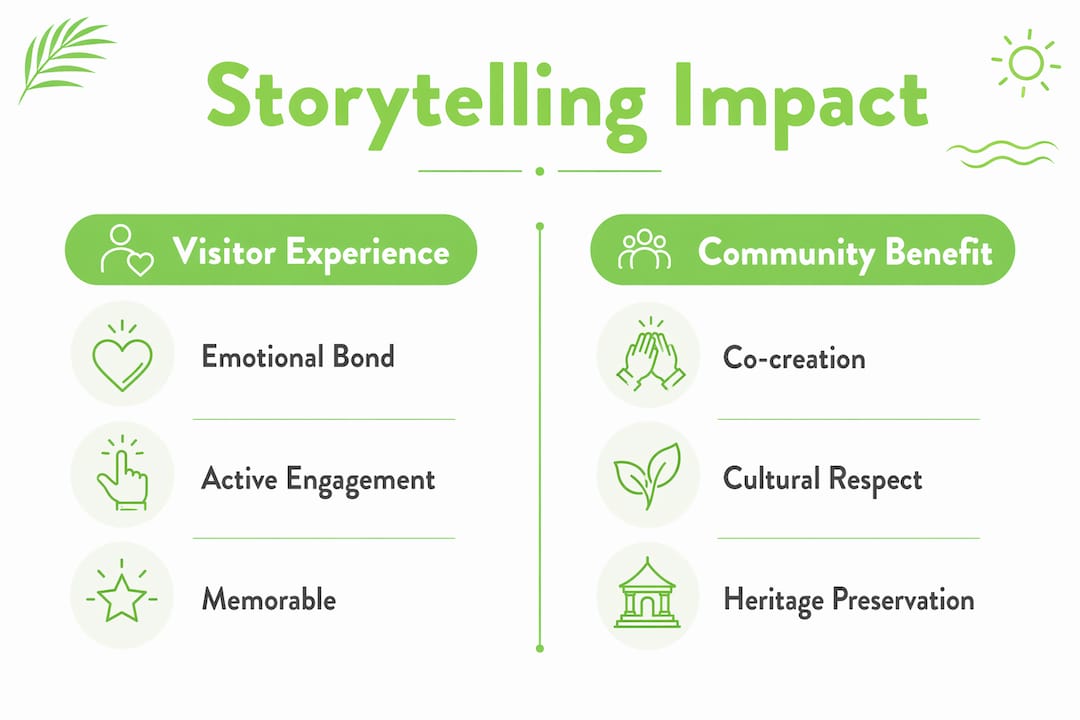
Community co-construction is equally important here. When residents help shape the stories told about their own neighbourhood, the narratives carry genuine meaning. This approach also supports sustainable tourism by giving communities ownership of their cultural representation, which reduces the risk of heritage being distorted or commercialised beyond recognition.
| Approach | Visitor experience | Community benefit |
|---|---|---|
| Iconic landmark checklist | Passive observation, surface-level facts | Minimal community involvement |
| Micro-story nodes (Placetelling®) | Reflective, exploratory engagement | Residents co-create and own narratives |
| Community co-constructed tours | Active participation, emotional depth | Shared cultural stewardship |
| Standard audio guide | Self-paced but often impersonal | No community input |
Pro Tip: Look for tours that include stops at unmarked or everyday locations, not just famous monuments. Those are the tours most likely to use micro-storytelling techniques that create genuinely memorable moments.
How does local storytelling foster place attachment and cultural respect?
Place attachment is the emotional bond a visitor forms with a location, and local storytelling is one of the most reliable ways to build it. Research published in NPJ Heritage Science shows that narrative immersion predicts behavioural intentions such as cultural responsiveness and stewardship following a heritage experience. In plain terms, visitors who feel emotionally connected to a place are more likely to treat it with respect and return to it.
Two routes drive this process. The first is cognitive realism: when a story is specific, detailed, and plausible, your brain accepts the place as genuinely significant. The second is emotional immersion: when a story makes you feel something, you form a personal relationship with the location. Both routes work together, and skilled guides use both simultaneously.
The timing of storytelling also shapes its impact. Embedding storytelling in walk-and-listen moments during visitor movement produces stronger emotional immersion than a static talk at the start or end of a tour. Moving through a space while hearing its story activates a physical and emotional connection that sitting in a briefing room simply cannot replicate.
- Cognitive realism builds intellectual respect for a site’s significance.
- Emotional immersion creates a personal bond that outlasts the tour itself.
- Walk-and-listen delivery anchors stories to the physical space, deepening both routes simultaneously.
- Behavioural outcomes include greater cultural sensitivity, reduced disruptive behaviour, and stronger intentions to return or recommend the site.
These outcomes matter beyond the individual traveller. When visitors leave a heritage site feeling genuinely connected to it, they become informal advocates. They share stories, recommend experiences, and support the communities that host them. That is the long-term value of narrative-rich cultural tours.
What makes storytelling inclusive and transformative in heritage tourism?
Inclusive storytelling means giving voice to multiple community perspectives at a heritage site, not just the dominant or most commercially convenient narrative. UNESCO’s Learning Landscapes initiative describes inclusive storytelling as a catalyst for heritage engagement and shared site management. The result is a richer, more honest visitor experience and a stronger relationship between communities and their heritage.
Value-based heritage interpretation, the framework UNESCO promotes, involves local stakeholders at every stage of tour design. Elders, young residents, minority groups, and tradespeople all contribute stories that reflect the full texture of a place. Visitors who encounter these multi-vocal narratives leave with a more nuanced understanding of culture than any single authoritative account can provide.
Diverse community voices foster dialogue and stewardship at heritage sites, strengthening visitor-community relationships and future site management. That is not just good ethics. It is good tourism design. Sites managed through co-creative storytelling tend to be better preserved and more financially sustainable over time.
- Multi-vocal narratives prevent the flattening of complex cultures into simple tourist-friendly summaries.
- Stakeholder involvement in tour design builds community pride and reduces resentment towards tourism.
- Dialogue-based interpretation invites visitors to ask questions and form their own views rather than simply receiving information.
- Co-stewardship outcomes mean communities feel invested in protecting the very sites that tourism depends on.
Inclusive storytelling also has a practical benefit for you as a traveller. Tours built on multiple community voices are simply more interesting. Contradictions, debates, and personal memories make a place feel real in a way that a polished official narrative never quite achieves. Heritage interpretation becomes transformative when it allows visitors to relate, discuss, and co-steward sites through multi-vocal storytelling.
Key takeaways
Local storytelling enhances cultural tours by combining emotional immersion, community authenticity, and place-specific narrative to transform passive sightseeing into meaningful, memorable engagement.
| Point | Details |
|---|---|
| Authenticity comes from lived experience | Stories grounded in community life create stronger emotional resonance than scripted facts. |
| Micro-stories deepen engagement | Place-anchored narratives tied to specific locations produce reflective, exploratory visits. |
| Storytelling builds place attachment | Narrative immersion predicts cultural respect and stewardship behaviours in visitors. |
| Inclusive voices enrich the experience | Multi-vocal, community-co-created tours deliver more nuanced and honest cultural understanding. |
| Delivery timing shapes impact | Walk-and-listen storytelling during visitor movement produces stronger emotional connection than static briefings. |
Why I think most cultural tours still get storytelling wrong
Most cultural tours treat storytelling as decoration. The guide recites a few colourful anecdotes between the real stops, the monuments and museums, and calls it cultural immersion. That approach misses the point entirely.
The tours that genuinely stay with you are the ones where the story is the tour. I have been on walks through Phuket’s old town where a local guide stopped outside a crumbling building that no map would ever mark and explained what happened there three generations ago. That moment told me more about Thai-Chinese heritage than any museum exhibit. It worked because the story was specific, personal, and tied to the exact ground beneath my feet.
The biggest pitfall I see is outsourcing storytelling to guides who have no community connection. Storytelling without community meaning lacks authenticity and emotional impact, regardless of how polished the delivery is. You can feel the difference immediately. A story told by someone who genuinely belongs to a place has a texture and confidence that a rehearsed script never achieves.
If you want to get the most from a cultural tour, prioritise operators who involve local residents in their tour design, not just as props but as co-authors. Ask who wrote the stories you will hear. Ask whether the guide grew up nearby. Those questions will tell you everything about the quality of the experience ahead. The role of skilled local guides in shaping that experience is genuinely underestimated by most travellers, and by many tour operators too.
— Carl
Qbictravel’s cultural tours: where local stories meet real adventure
Qbictravel builds its Phuket experiences around exactly the kind of local knowledge this article describes. The guides are not reading from a script. They know the island, its communities, and its stories because they live them.

Whether you want to explore Phuket’s cultural heritage on foot or combine it with something more exhilarating, Qbictravel’s Phuket tour experiences are designed to give you genuine access to local narratives alongside world-class adventure. From the winding lanes of Phuket Town to the open waters of the Andaman Sea, every itinerary is built to connect you with the real Thailand. Qbictravel holds a 4.5 rating from 237 reviews, with 99% issue-free service verified by Trustindex. That track record reflects a team that takes cultural authenticity as seriously as it takes safety.
FAQ
What is local storytelling in cultural tours?
Local storytelling in cultural tours is the practice of sharing community-rooted, place-specific narratives by local guides or residents to deepen visitors’ understanding and emotional connection to a heritage site.
Why does storytelling make cultural tours more memorable?
Narrative immersion creates emotional bonds and place attachment that outlast the tour itself, making experiences far more memorable than fact-based sightseeing alone.
What is Placetelling® and how does it work?
Placetelling® is a narrative-performative method that anchors short micro-stories to specific locations, encouraging slower, more reflective visitor engagement beyond iconic landmarks.
How does inclusive storytelling benefit heritage sites?
UNESCO’s Learning Landscapes initiative shows that multi-vocal community storytelling strengthens visitor-community relationships and supports long-term heritage site management and preservation.
How can I find tours that use genuine local storytelling?
Ask whether your guide has community ties to the area and whether local residents contributed to the tour’s narrative design. Those two questions reliably distinguish authentic cultural storytelling experiences from scripted alternatives.


