

What does adrenaline tourism mean: a clear guide
Adrenaline tourism means travelling specifically to take part in activities that trigger your body’s fight-or-flight response, producing a surge of epinephrine (commonly called adrenaline) and the physical rush that follows. It sits inside the broader category of adventure tourism, and this guide covers how the two terms relate, what types of activities qualify, why people seek these experiences, and how to stay safe doing it.
Table of Contents
- What does adrenaline tourism mean, and how does it differ from adventure tourism?
- How are adrenaline activities grouped and graded?
- What activities count as adrenaline tourism?
- Why do travellers seek out adrenaline experiences?
- What does the research say about the psychology of chasing adrenaline?
- How does adrenaline tourism affect the environment and local communities?
- Key takeaways
- Why guided, incremental experiences are the smartest way to start
- Qbictravel’s adrenaline-friendly tours in Phuket
- Useful sources and further reading
What does adrenaline tourism mean, and how does it differ from adventure tourism?
Adventure tourism is the formal industry term. The Adventure Travel Trade Association defines it as travel that combines at least two of three elements: physical activity, cultural immersion, and a connection with nature. Adrenaline tourism is a colloquial subset of that, where the emphasis falls squarely on activities that produce a perceived or real risk and the hormonal rush that comes with it.
Wikipedia’s overview of adventure tourism notes that extreme tourism sits at the far end of the same spectrum, distinguished by a higher degree of objective danger and, usually, greater professional involvement. Think of it as a sliding scale: soft adventure at one end, adrenaline-focused trips in the middle, and extreme sport expeditions at the other.
| ATTA element | What it means in practice | Typical adrenaline trip metric |
|---|---|---|
| Physical activity | Active participation, not passive sightseeing | High exertion, short bursts |
| Connection with nature | Outdoor, natural environments | Remote or coastal settings |
| Cultural immersion | Local context and community | Often secondary to the activity |
| Average trip spend | Industry-level estimate | Around US$3,000 per person |
| Average trip duration | Industry-level estimate | About eight days |
How are adrenaline activities grouped and graded?
Hard vs soft adventure
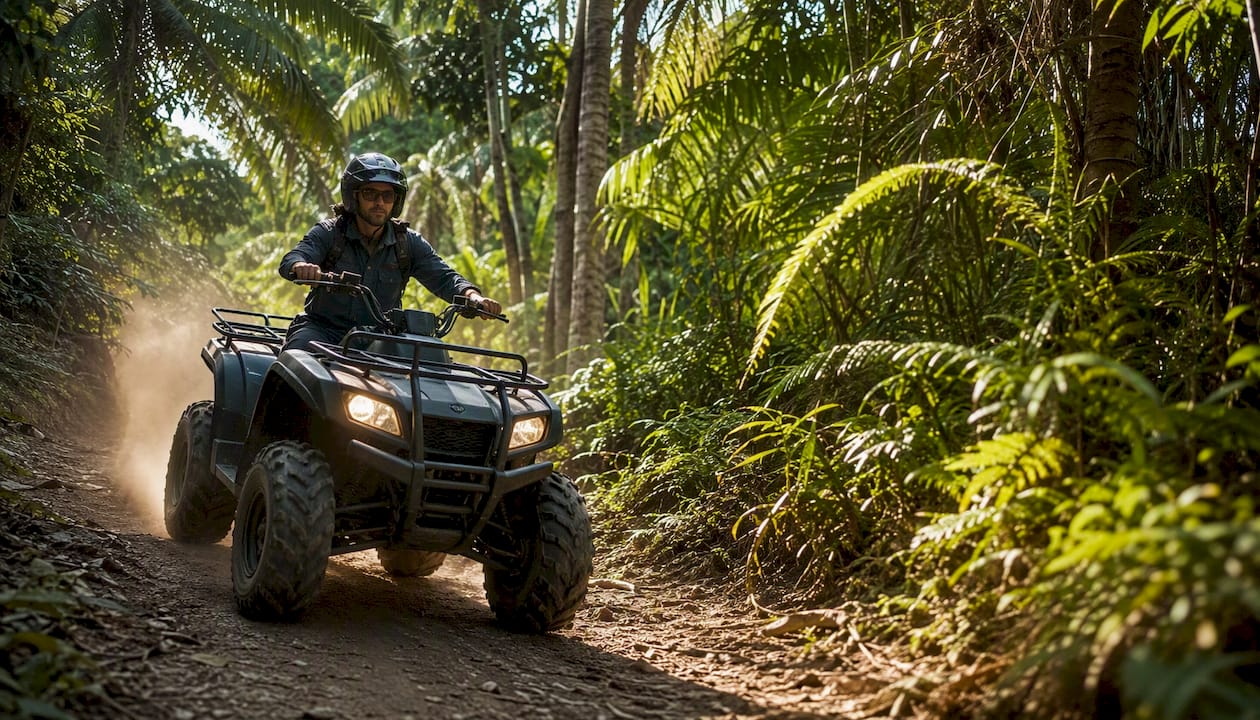
Soft adventure activities carry low-to-moderate risk and need little prior training. Kayaking on calm water, guided hiking, or an ATV trail ride all fit here. Most healthy adults can join with a short briefing.
Hard adventure involves significant objective risk, specialist equipment, and usually a formal qualification or guided certification. Rock climbing above a certain grade, white-water kayaking, and skydiving fall into this category.
Difficulty levels at a glance
| Level | Typical profile | Guide required? |
|---|---|---|
| Accessible | No prior experience needed, low risk | Recommended |
| Intermediate | Some fitness or basic skill needed | Usually yes |
| High-intensity | Specialist training, high objective risk | Always |
What activities count as adrenaline tourism?
The list is long. Medical News Today’s overview of adrenaline-driven activities includes skydiving, bungee jumping, white-water rafting, scuba diving, and canyoning as classic examples. Here is how they break down by environment, with UK-relevant options included:
Air
- Skydiving (tandem jumps available at centres across England and Scotland)
- Paragliding (popular in the Brecon Beacons and the South Downs)
- Zip-lining (Zip World in North Wales runs some of Europe’s fastest lines)
Water
- White-water rafting (River Tay in Scotland, River Tryweryn in Wales)
- Coasteering (Pembrokeshire and Cornwall are well-established spots)
- Jet skiing (guided tours available on coastal and inland venues)
Land
- Rock climbing (Peak District, Lake District, Snowdonia)
- Bungee jumping (several commercial sites operate across the UK)
- Off-road ATV driving (guided trail experiences throughout rural England and Wales)
Activities like skydiving and scuba diving typically require a certified operator and, for solo participation, a recognised qualification such as a PADI open-water certificate or a British Skydiving AFF course. Guided packages remove that barrier for beginners, which is one reason operator-led trips are the sensible starting point.
Why do travellers seek out adrenaline experiences?
The obvious answer is the rush. But research points to several deeper drivers.
Experts writing in The Conversation identify prestige, authenticity, and novelty as significant motivators alongside pure physical sensation. Completing a challenging activity signals something about who you are, both to yourself and to others. That social dimension is growing as travellers move away from mass-market holidays towards experiences that feel genuinely earned.
Flow states are another pull. When the challenge level matches your skill level closely, you enter a state of total absorption where self-consciousness disappears. Many experienced adrenaline tourists describe this as the real reward, not just the spike of fear at the start.
There is a caution worth noting. Healthline’s coverage of adrenaline-seeking behaviour explains that repeatedly chasing epinephrine rushes can mirror addiction patterns, with some people needing progressively more intense experiences to feel the same effect. Awareness of that tendency is part of doing this well.
Skilled participants also learn to reframe the fight-or-flight spike mentally, turning raw fear into controlled exhilaration. That mental shift separates reckless behaviour from genuinely skilled adventurous practice.
What does the research say about the psychology of chasing adrenaline?
The physiological mechanism is well established. Epinephrine is released by the adrenal glands in response to a perceived threat, producing the cluster of symptoms (raised heart rate, heightened alertness, faster breathing) that adrenaline tourists deliberately seek. The PMC research on adrenal physiology confirms this is a survival response repurposed for recreational use.
“The attraction to risk in adventure tourism is not simply about sensation-seeking. Prestige, authenticity, and the desire for experiences outside mass tourism are equally powerful drivers — and they are growing.” — The Conversation, citing adventure tourism research
The ATTA framework gives the industry a structured way to think about this: physical activity, nature connection, and cultural immersion together define the category. Adrenaline tourism amplifies the physical and emotional dimensions of that framework.
The practical recommendation from both physiology and psychology research is the same: incremental progression, proper rest between intense experiences, and honest self-assessment of motivation. Chasing the rush for its own sake, without those guardrails, is where the addiction-like patterns Healthline describes begin to emerge.
How does adrenaline tourism affect the environment and local communities?
High-footfall adventure activities can cause real harm if managed poorly. Erosion on popular trails, disturbance to nesting wildlife, and cultural intrusion in sensitive communities are documented impacts. Resource strain on water and waste infrastructure is a growing concern at popular destinations.
Practical steps you can take:
- Follow Leave No Trace principles on every trip.
- Ask operators whether local guides and suppliers are employed (money staying in the community matters).
- Stick to marked routes and respect seasonal closures for wildlife protection.
- Choose operators who are transparent about their environmental policies.
Pro Tip: Guided trips with locally owned operators are one of the most direct ways to reduce harm. Local guides know which areas are under pressure and route groups accordingly. Read more about how adventure travel supports local economies before you book.
Iceland is a useful example of destination-level thinking: Iceland’s travel trends show how popular adventure destinations are actively managing visitor flow to protect natural assets.
Key takeaways
Adrenaline tourism is a colloquial subset of adventure tourism, defined by activities that deliberately trigger the epinephrine response, and choosing it well means matching activity intensity to your skill level and booking with a qualified, insured operator.
| Point | Details |
|---|---|
| Core definition | Adrenaline tourism means travel built around activities that trigger the epinephrine (fight-or-flight) response. |
| Fits inside adventure tourism | The ATTA defines adventure tourism by physical activity, nature connection, and cultural immersion; adrenaline tourism emphasises the first. |
| Activity categories | Activities group by environment (air, water, land) and intensity (soft to hard adventure). |
| Top safety check | Verify operator qualifications, guide-to-client ratio, equipment standards, and insurance before booking. |
| Qbictravel option | Qbictravel offers guided jet ski tours, ATV adventures, and multi-activity packages in Phuket, rated 4.5 from 237 reviews. |
Why guided, incremental experiences are the smartest way to start
Most people underestimate how much the mental side of adrenaline tourism matters. The physiological rush is real, but the lasting satisfaction comes from feeling in control of something genuinely challenging. That is why the conventional advice to “just go for it” often backfires. Guests who arrive at a high-intensity activity without building up to it tend to spend the experience in pure survival mode rather than enjoying it.
The smarter approach is to treat your first adrenaline trip as a foundation, not a peak. A guided jet ski tour or an ATV trail ride gives you the epinephrine hit, the novelty, and the physical exertion without requiring specialist training. You learn how your body responds to that kind of stress in a controlled environment. From there, you can make an informed decision about whether to push further.

Qbictravel’s model in Phuket reflects this thinking. The 99% issue-free rate is not an accident; it comes from meticulous trip planning and local expertise that keeps guests in the exhilarating zone without crossing into the reckless one.
Qbictravel’s adrenaline-friendly tours in Phuket
If you are ready to put the theory into practice, Qbictravel offers some of the most accessible adrenaline experiences in Southeast Asia. The jet ski tours cover Phuket’s coastline and nearby islands, giving you speed, open water, and stunning scenery in a single package. For land-based thrills, the ATV adventures in Phuket take you through jungle trails and hillside routes with views that make the effort worthwhile.

Both options are guided, include hotel pick-up, and are designed for guests with no prior experience. Qbictravel holds a 4.5 rating from 237 verified reviews and a 99% issue-free service record. Last-minute bookings are welcome. Browse the full range at qbictravel.com or message via WhatsApp to check availability and confirm your spot.
Useful sources and further reading
- Physiological basis of the adrenal response (PMC)
- Adventure Tourism | Sports and Leisure | Research Starters
- Danger, prestige and authenticity draw thrill-seekers to adventure tourism
- Adrenaline junkie: What is it, and could you be one? (Healthline)
- Adrenaline junkie: Definition, symptoms and examples (Medical News Today)
- ADRENALINE definition & meaning (Merriam-Webster)
- Adventure tourism (Wikipedia)
- Adventure travel safety tips (U.S. Department of State)


