
Racha vs Phi Phi from Phuket: Choose for Snorkeling, Diving, or Views
Pick Racha when calm, clear water and a shorter boat ride matter most, especially for snorkelling or first dives. Pick Phi Phi when you want dramatic limestone cliffs, varied dive sites and bucket-list views, and you don’t mind a longer crossing and bigger crowds. For a quick, relaxed day out, Racha wins; for scenic photography or advanced diving, Phi Phi takes it.
TL;DR:
- Racha often offers 15 to 30 metres of visibility on good days, with mild currents and sloping reefs that suit beginners, families, and first dives.
- Phi Phi’s walls, caves, and swim throughs bring greater dive variety and denser reef life, but stronger currents make sites better suited to certified divers.
- Phi Phi’s crossing can take up to two hours each way, so choose an early departure; trips from Chalong or Rawai can shorten either route.
- Phi Phi adds a cash national park fee, while Maya Bay follows fixed visiting rounds, prohibits swimming, and closes annually during monsoon season.
Table of Contents
- At a glance: Racha vs Phi Phi in six points
- Scenery and landscape: cliffs, lagoons and beaches
- Marine life, visibility and suitability for diving
- Getting there: travel time and logistics from Phuket
- Crowds, seasonality and the best time to visit
- Costs and what to pack for each island
- Which island suits your travel style
- Local tips and sample day-trip itineraries
- Our honest take on choosing between them
- Book the trip that matches your priority
- FAQ
- Sources
At a glance: Racha vs Phi Phi in six points
Here’s how the two stack up on the things that actually shape your day:
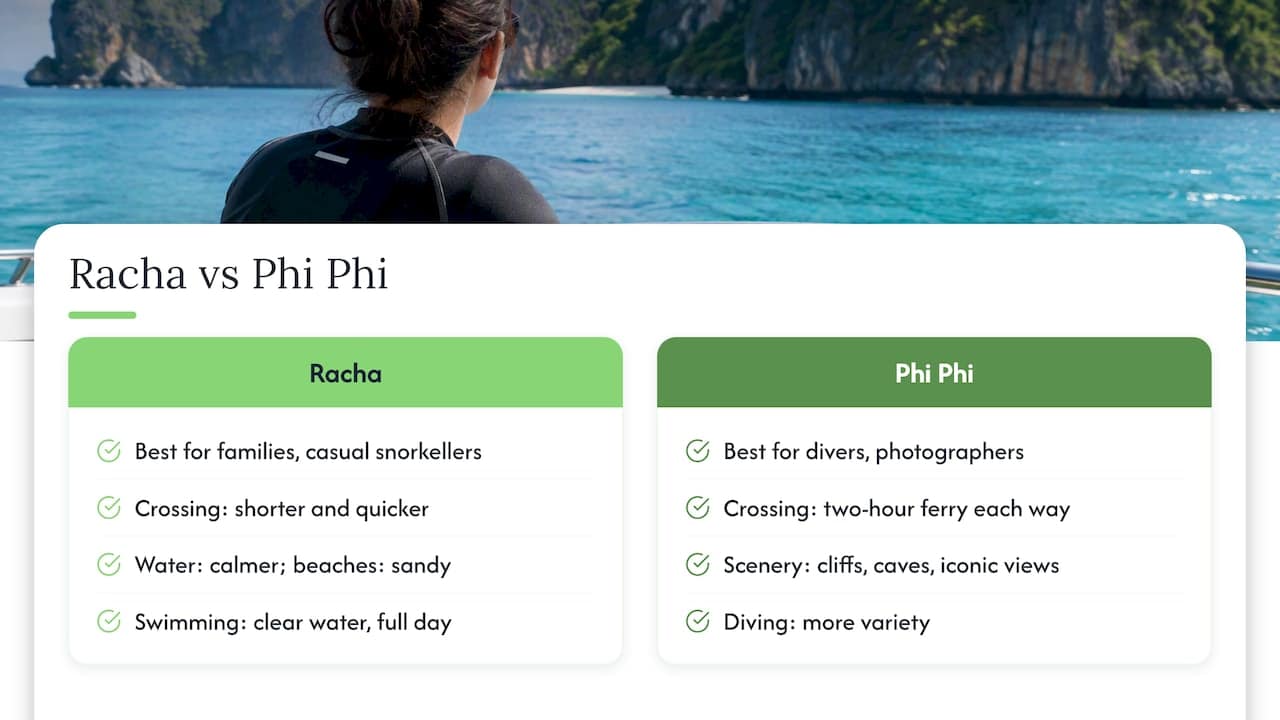
- Best for: Racha suits calm snorkelling and easy beach time; Phi Phi suits dramatic scenery and varied diving.
- Travel time from Phuket: Racha is a shorter speedboat hop; Phi Phi takes longer, sometimes up to two hours by ferry.
- Snorkel visibility: Racha’s water tends to run clearer and calmer across most of the year.
- Dive complexity: Phi Phi offers walls, caves and stronger currents suited to certified divers.
- Crowd level: Phi Phi draws heavier daytime crowds; Racha stays noticeably quieter.
- Cost implications: Phi Phi carries a national park entrance fee, plus Maya Bay visiting restrictions that Racha doesn’t have.
Scenery and landscape: cliffs, lagoons and beaches
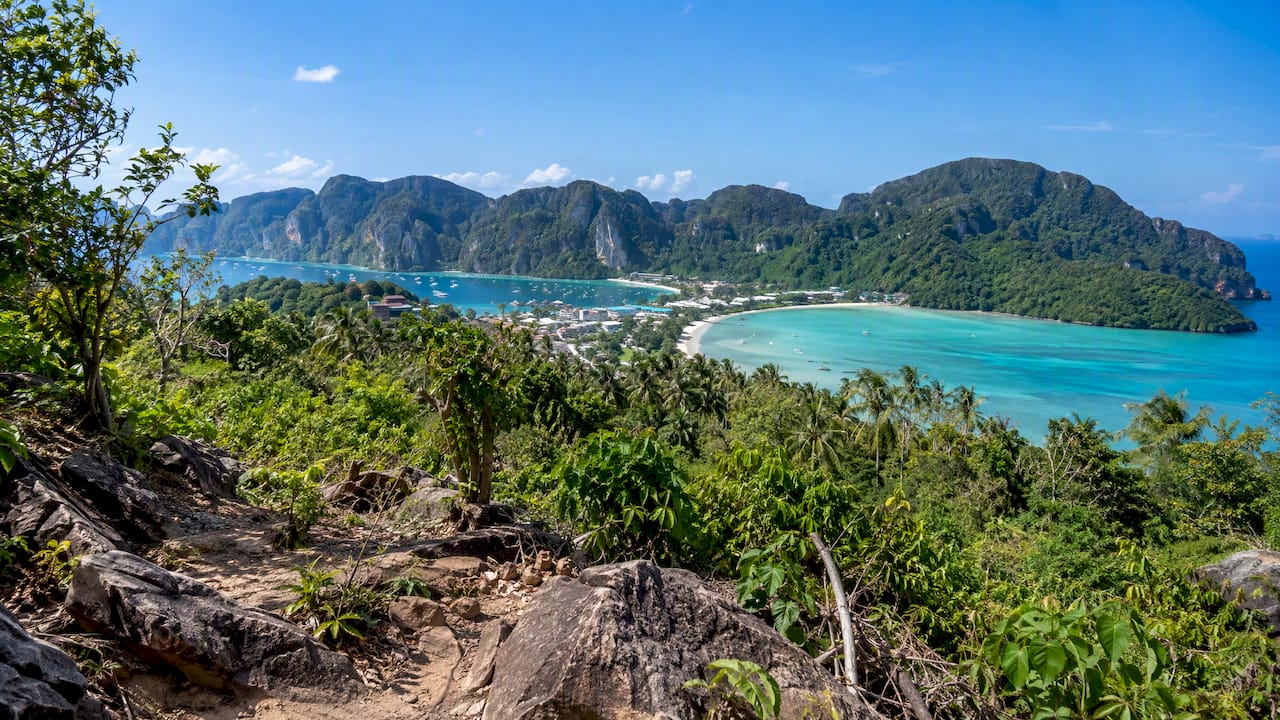
Phi Phi earns its reputation through its skyline. Towering limestone cliffs rise straight out of turquoise water, and the famous Hat Noppharat Thara–Mu Ko Phi Phi National Park protects viewpoints, hidden lagoons and Maya Bay itself, the cove made famous on screen. Walking trails lead to viewpoints over Ko Phi Phi Don’s twin bays, and the whole island rewards anyone travelling with a camera.
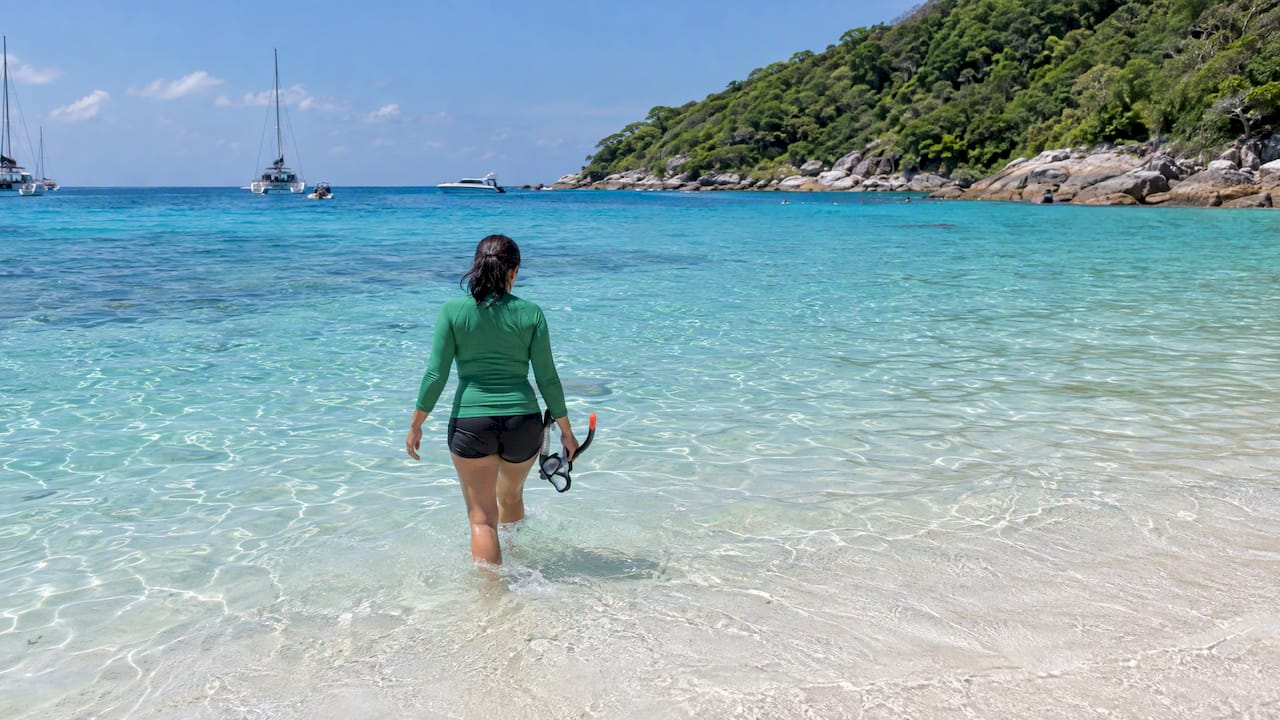
Racha offers a gentler kind of beauty. Racha Yai has long stretches of fine white sand and calm, shallow bays that are ideal for lounging and wading in before a snorkel. Racha Noi, by contrast, is rockier and built up from reef rather than sand, and swimming is discouraged in several of its bays. If you want postcard cliffs and walking trails, Phi Phi delivers more variety. If you want a beach to stretch out on between swims, Racha Yai is the easier choice.
Marine life, visibility and suitability for diving
Racha’s water tends to run clearer and calmer than Phi Phi’s for much of the year, often giving snorkellers and divers 15 to 30 metres of visibility on a good day. That clarity, combined with gently sloping reefs and mild currents, is why Racha Noi and Racha Yai are frequently recommended for beginner dives, Try Dives and family snorkelling. Turtle sightings are common, and the reef structure makes it easy to stay oriented underwater.
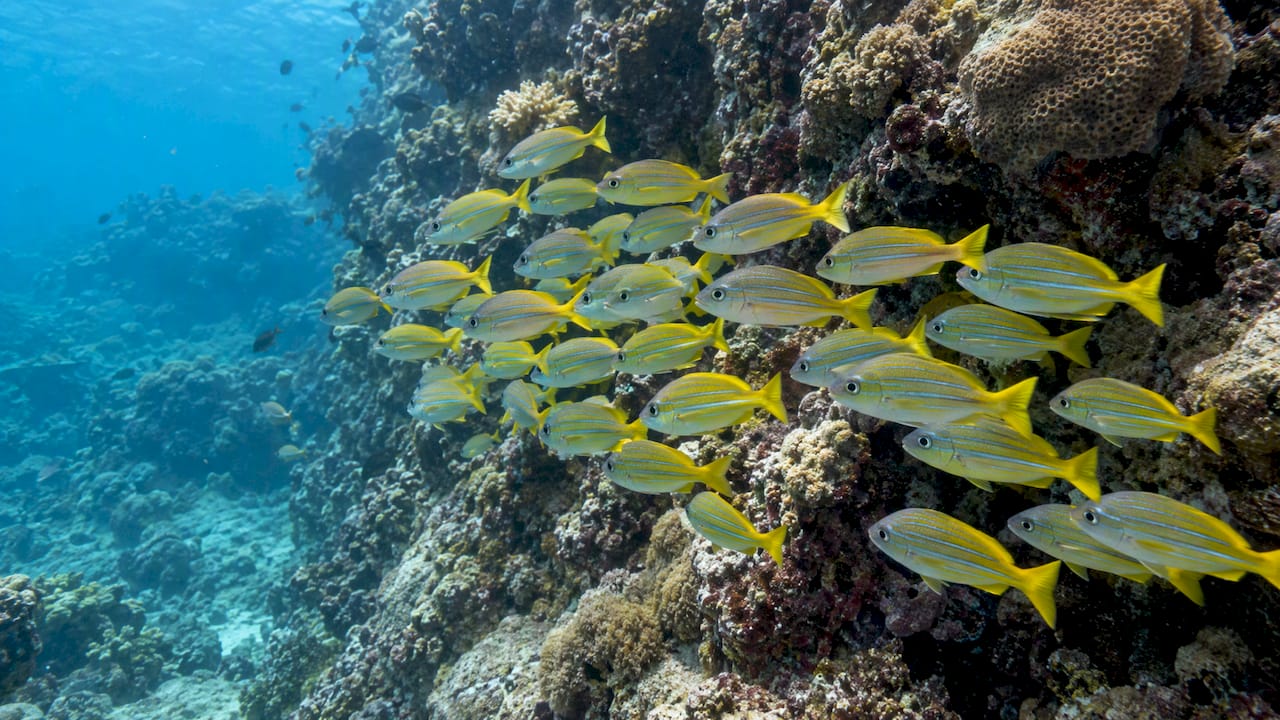
Phi Phi trades some of that calm for variety. Its snorkelling spots and dive sites sit among walls, swim-throughs and caves, with a denser mix of reef fish and coral thanks to the island’s varied geology. Currents can run stronger here, which is exactly why certified divers tend to get more out of Phi Phi than first-timers do.
Whichever island you choose, a reputable operator provides mask, snorkel and fins as standard, and checks visibility conditions before heading out, since murky water on a given day changes which sites make sense. Anyone building out a dive itinerary around Phuket can see the full range of skill levels catered for on our Phuket scuba diving page.
Getting there: travel time and logistics from Phuket
Distance is where the two islands diverge most sharply. Racha sits much closer to Phuket, so a private speedboat typically has you in the water within well under an hour. Phi Phi lies roughly 46 kilometres out, and a standard ferry or speedboat crossing can run up to two hours each way, which eats into your actual time on the island.
That gap matters for day-trip planning. A sunrise departure to Phi Phi buys you more hours before the crossing back, while a mid-morning start leaves a shorter window once you factor in the return journey. Racha’s shorter hop means even a later departure still leaves plenty of daylight for snorkelling, lunch and a second swim stop. Departure point also matters: trips leaving from Chalong or Rawai tend to shave time off both routes compared with piers further north.
Crowds, seasonality and the best time to visit
Phi Phi gets busy by mid-morning, once day-trip boats from Phuket and Krabi converge on Maya Bay and the main viewpoints. Sunrise or late-afternoon tours are the best way to see the bay without the crowds. The national park authority also runs Maya Bay on fixed visiting rounds, enforces a no-swimming rule in the bay and closes the area annually during the monsoon season, so check current closure dates before booking in 2026.
Racha stays noticeably quieter throughout the day, but arriving early still pays off. Boats heading out for sunrise departures tend to reach the island around 06:40, giving you calm water and empty beaches before later boats arrive.
Costs and what to pack for each island
Phi Phi’s entrance fee for foreign adults is set by the national park authority and is payable in cash on arrival, on top of whatever your tour operator charges for transport and equipment. Racha has no equivalent national park fee, which keeps a comparable day trip there generally cheaper once you add up the total cost.
Whichever island you pick, a few things make the day easier:
- Reef-safe sunscreen, since both islands sit within protected marine areas.
- Cash in Thai baht for park fees or small vendor purchases.
- Fins or reef boots if you plan to snorkel over rockier ground, especially around Racha Noi.
- Motion-sickness tablets if you’re prone to seasickness, particularly for the longer Phi Phi crossing.
Which island suits your travel style
Families and casual snorkellers get the most out of Racha: shorter crossing, calmer water and sandy beaches that make it easy to relax between swims. Certified divers, photographers and anyone chasing iconic scenery tend to prefer Phi Phi, where the cliffs, caves and dive variety reward the longer trip. If you’re short on time or prone to seasickness, Racha’s quicker crossing is the more comfortable pick, and it still delivers a full day of clear-water swimming without the fatigue of a two-hour ferry each way.
Local tips and sample day-trip itineraries
A typical Racha day with us starts with an early hotel pick-up, a short speedboat crossing, snorkel kit provided on board, and a beach lunch before a second swim stop, all bookable through our Racha Islands page. A Phi Phi day usually runs longer, taking in Maya Bay, Pileh Lagoon and a snorkel stop, and sits on our Phi Phi island tour page with the same hotel pick-up and lunch included.
These trips are designed around the islands’ actual conditions rather than a generic script, aiming to provide personalized experiences for visitors.
Our honest take on choosing between them
We recommend Racha whenever clear water and ease matter more than scenery, and Phi Phi whenever the cliffs and dive variety are the whole point of the trip. Either way, book the earliest departure slot you can.
— Carl
Book the trip that matches your priority
If clear water and an easy pace sound right, our Racha Islands day trip gets you there and back without the long crossing. Prefer the cliffs and lagoons instead? Our Phi Phi island tour covers Maya Bay and the main viewpoints in a single day, with hotel pick-up, snorkel kit and lunch included either way.

Staying connected while you’re island-hopping is easier with a local data plan too. Lumo eSIM sells Thailand plans from $1 that activate by QR code before you even land.
FAQ
Which is the prettiest island in Thailand?
Beauty is subjective, but Phi Phi’s limestone cliffs and Maya Bay are among the most photographed scenery in Thailand, while Racha’s white sand and clear water offer a quieter, equally striking alternative. Your preference likely comes down to whether you favour dramatic cliffs or calm, tropical beaches.
Was Phi Phi affected by the tsunami?
Phi Phi was significantly affected by the Indian Ocean tsunami, and the island has since rebuilt its tourism infrastructure. Today it operates as part of Hat Noppharat Thara–Mu Ko Phi Phi National Park, with visitor rules in place to protect its recovering ecosystem.
Which is better, Phi Phi or Krabi?
This depends on what you’re after: Phi Phi offers iconic island scenery and diving reached by boat, while Krabi’s mainland and nearby islands like Railay offer climbing, beaches and easier land access. For a Phuket-based day trip focused on islands, Phi Phi remains the more direct option.
Is Phi Phi or Phuket better?
They serve different purposes: Phuket is the base with airports, hotels and a wide range of day trips, while Phi Phi is one of several island destinations reached from it. Most travellers stay in Phuket and visit Phi Phi, Racha or other islands as day trips rather than choosing between them.
Sources
- Hat Noppharat Thara–Mu Ko Phi Phi national park (Tourism Authority of Thailand)
- Phi Phi National Park: Maya Bay, entrance fee & tours (National Parks Atlas)
- Holidaytribe


