

How to blend thrills and culture on a Thailand trip
The best Thailand trips alternate high-energy adventure days with cultural immersion, and the most practical structure for UK travellers is Bangkok, then Chiang Mai, then Phuket — spending a few nights in each. That rhythm gives you ancient temples, lush hill-country trekking, and open-water thrills without burning out. For the Phuket leg, Qbictravel is the ready-to-book local option: jet-ski tours, ATV runs, and zipline packages can all be booked online from the UK, with no agency middleman.
- Recommended structure: Bangkok → Chiang Mai → Phuket, alternating adrenaline and cultural days
- Minimum trip length: 5 days (express); 8 days (balanced); 12 days (deep immersion)
- Thrill bookings: Qbictravel handles jet-ski, ATV, and zipline in Phuket; book directly at qbictravel.com
- Cultural anchors: Wat Pho (Bangkok), Doi Suthep (Chiang Mai), Phang Nga fishing villages (Phuket coast)
- UK booking tip: Book flights 10–12 weeks out; secure activity slots 4–6 weeks ahead
Pro Tip: Don’t mix a full-day ATV run and a temple visit on the same day. You’ll be too tired to absorb either properly. Group your high-energy days, then schedule a cultural half-day the morning after.
Table of Contents
- What do the best blended Thailand itineraries actually look like?
- Which regions give you the best mix of thrills and culture?
- How do you plan and budget a blended Thailand trip from the UK?
- What should you pack for temples and thrills?
- How do you travel ethically when mixing culture and adventure?
- Why Qbictravel is a strong ready-to-book option for Phuket
- Key takeaways
- Why the blended approach produces the trips you actually remember
- Ready to book your Phuket thrill and culture day?
- Useful sources and further reading
What do the best blended Thailand itineraries actually look like?
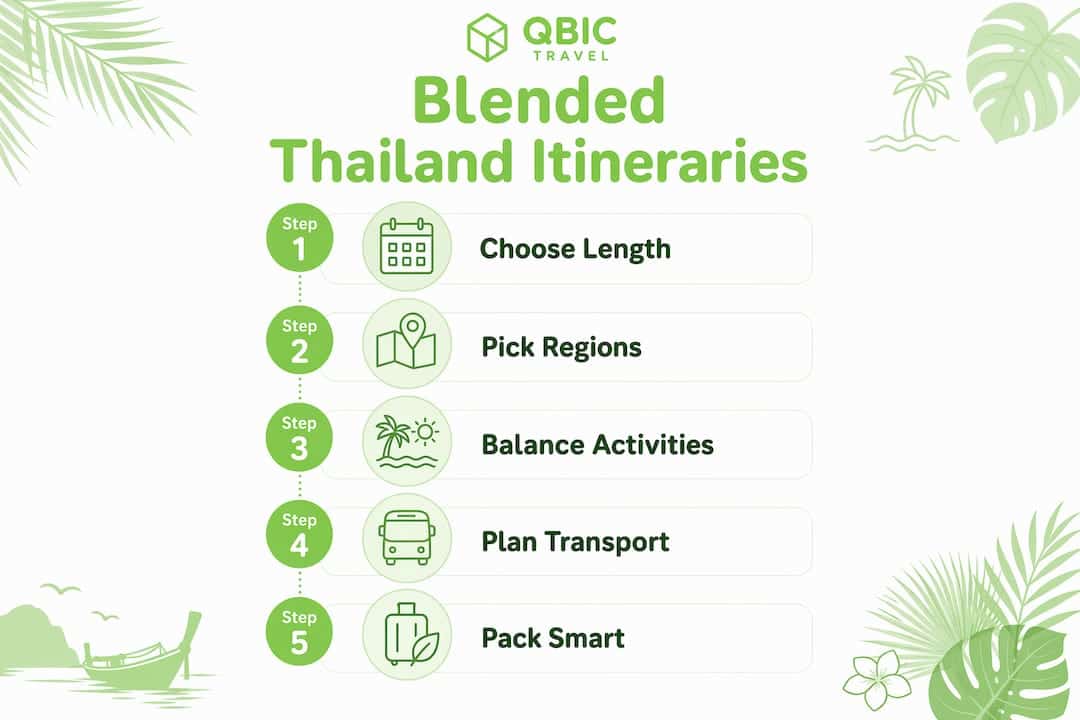
Adventure itineraries that combine kayaking, zip-lining, ATV, and trekking with cooking classes, temple visits, and hill-tribe interactions often run about a week or more. Here are three practical options built around that rhythm.
5-day express blend
- Day 1 — Bangkok arrival: Check in near the Chao Phraya river. Evening street-food walk through Yaowarat (Chinatown) to ease into the pace.
- Day 2 — Bangkok culture: Morning at Wat Pho and the Grand Palace complex. Afternoon long-tail boat along the river canals. Low-intensity, high-impact cultural day.
- Day 3 — Fly to Phuket: Afternoon arrival. Book a late-afternoon ATV seaview run to shake off the flight. Short, sharp, and spectacular.
- Day 4 — Full thrill day: Morning jet-ski island circuit around Phang Nga Bay. Afternoon rest or a local seafood market visit near Ao Po pier.
- Day 5 — Cultural close: Morning at Phuket Old Town (Sino-Portuguese shophouses, local coffee). Afternoon transfer to the airport.
Transport note: Bangkok to Phuket is a 1.5-hour domestic flight; AirAsia and Bangkok Airways both serve the route. Budget around £40–£70 return booked in advance.
Pro Tip: On a 5-day trip, resist the urge to add Chiang Mai. The travel time eats a full day each way. Save the north for an 8-day trip or longer.
8-day balanced itinerary
- Day 1 — Bangkok arrival: River-view hotel, evening Muay Thai bout at Rajadamnern Stadium.
- Day 2 — Bangkok temples and markets: Wat Arun, Chatuchak Weekend Market (Saturday/Sunday), rooftop sunset.
- Day 3 — Fly to Chiang Mai: Afternoon arrival. Walk the Old City moat district.
- Day 4 — Chiang Mai culture: Doi Suthep temple at dawn (cooler, fewer crowds). Afternoon hill-tribe village visit with a local guide.
- Day 5 — Northern thrills: Full-day canopy zipline through the Mae Kampong forest. Rest evening; light dinner in Nimman district.
- Day 6 — Fly to Phuket: Afternoon arrival. Settle in, plan the next day.
- Day 7 — Island thrill day: 8-island jet-ski tour (4 hours), followed by a Phang Nga fishing-village stop.
- Day 8 — Phuket Old Town and depart: Morning cultural walk, local breakfast, transfer to airport.
Transport note: Chiang Mai to Phuket has no direct flight from most carriers; route via Bangkok (1 hour + 1.5 hours) or use an overnight train Bangkok–Chiang Mai on the outbound leg to save a night’s accommodation.
12-day deep immersion
- Days 1–2 — Bangkok: Grand Palace, Wat Pho, Muay Thai evening, canal boat tour, and street-food night market.
- Day 3 — Overnight train to Chiang Mai: Sleeper from Hua Lamphong; scenic, affordable, and a cultural experience in itself.
- Days 4–5 — Chiang Mai culture: Doi Suthep, cooking class, old city temples, hill-tribe visit with a community guide.
- Day 6 — Northern adventure: Zipline or white-water rafting on the Mae Taeng river. Rest afternoon.
- Day 7 — Rest and explore: Chiang Mai Saturday Walking Street (Wualai Road). Optional elephant sanctuary visit (ethical, no-riding operators only).
- Day 8 — Fly to Phuket: Afternoon arrival.
- Day 9 — Phuket thrills: ATV beach run or zipline and ATV combo. Afternoon recovery at the beach.
- Day 10 — Phang Nga Bay: Sea-kayaking through limestone caves; James Bond Island stop; local seafood lunch.
- Day 11 — Koh Phangan day trip or Phuket cultural day: Phuket Old Town, Big Buddha, Chalong Temple. Or ferry to Koh Phangan for snorkelling and beach culture.
- Day 12 — Depart: Morning market, airport transfer.
Pro Tip: Pacing matters more than most travellers expect. Experts and operators consistently recommend alternating high-energy days with slower cultural slots to avoid burnout and actually absorb what you’re seeing.
Which regions give you the best mix of thrills and culture?
Each region in Thailand has its own personality. Knowing what each one does best helps you build a trip that feels varied rather than repetitive.
Bangkok
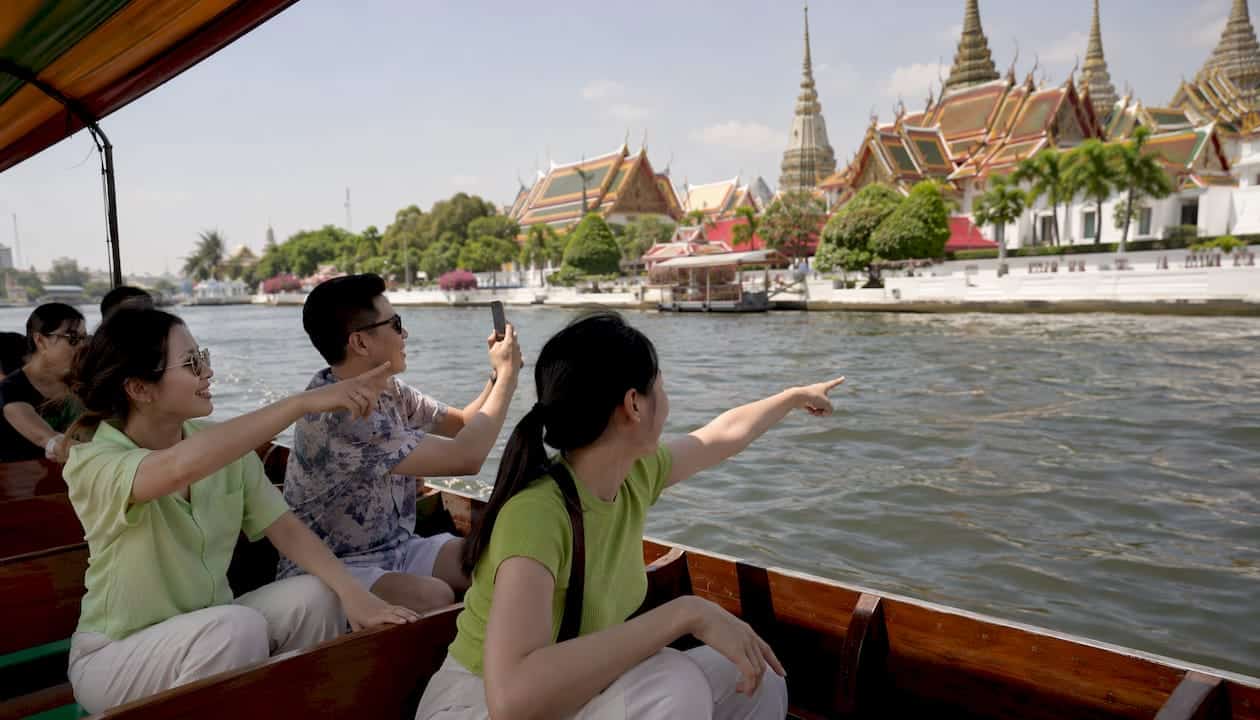
Bangkok’s cultural core is dense and walkable. Wat Pho, Wat Arun, and the Grand Palace sit within a short boat ride of each other along the Chao Phraya. The city’s lower-adrenaline thrills are just as rewarding: a Muay Thai evening at a proper stadium, a street-food tour through Yaowarat, or a tuk-tuk ride through the backstreets of Thonburi. Bangkok rewards slow mornings and energetic evenings rather than the reverse.
Chiang Mai and the northern highlands
Doi Suthep temple, perched above the city at 1,073 metres, is the cultural centrepiece of the north. Pair it with a hill-tribe village visit using a local guide (not a packaged “village tour” from a hotel lobby) and you get genuine cultural access rather than a performance. The adventure side is equally strong: canopy ziplines through Mae Kampong forest, trekking to Karen and Akha villages, and white-water rafting on the Mae Taeng river. The key here is using the physical activity as the route to cultural access. A trek that ends at a village is a fundamentally different experience from a drive-in visit.

Phuket and Phang Nga Bay
Phuket is where the thrills get seriously epic. Adventure tour options include ATV beach runs, jet-ski island circuits, zipline canopy tours, and river tubing. The cultural layer is often overlooked by visitors who stay on the beach: Phuket Old Town’s Sino-Portuguese architecture, the Jui Tui Shrine, and the fishing villages around Ao Po and Rawai are all within easy reach. Phang Nga Bay adds sea-kayaking through limestone caves and a stop at a Muslim fishing village on stilts, which is one of the most memorable cultural contrasts you’ll find anywhere in Southeast Asia.
- Jet-ski: Phang Nga Bay island circuits (half-day or full-day)
- ATV: Jungle and coastal runs; seaview routes available
- Zipline: Canopy tours in the hills above Patong
- River tubing: Lush jungle waterways near Khao Sok
- Cultural pairings: Phuket Old Town, Chalong Temple, Ao Po fishing village, local seafood markets
Koh Phangan
Koh Phangan is more than its Full Moon Party reputation. Outside the party calendar, the island has a genuinely relaxed beach culture, excellent snorkelling around Koh Ma and Haad Yao, and kitesurfing off the east coast. The cultural texture here is quieter: local temples, small fishing communities, and a food scene that’s far more authentic than the tourist strip around Haad Rin. Visit during the Loy Krathong festival (November) for a genuinely moving cultural experience.
Seasonal considerations
- November to February: Best overall conditions across all regions. Cool and dry in the north; calm seas in the south. Peak season, so book activities early.
- March to May: Hot and dry. Good for Phuket water activities; Chiang Mai can be smoky from agricultural burning in March–April.
- June to October: Monsoon season in the south. Phuket and Phang Nga Bay water activities are often suspended June–September. Chiang Mai is lush and green; shoulder season pricing applies. Koh Phangan’s east coast stays calmer than the west.
How do you plan and budget a blended Thailand trip from the UK?
Timing and booking timeline
Book long-haul flights from the UK 10–12 weeks ahead for the best fares; direct flights to Bangkok take roughly 11–12 hours from London. Domestic flights (Bangkok–Chiang Mai, Chiang Mai–Phuket, Bangkok–Phuket) should be booked 4–6 weeks out. Guided cultural experiences, particularly hill-tribe visits in Chiang Mai and Phang Nga kayaking tours, can sell out in peak season, so secure those 3–4 weeks ahead. Qbictravel activity slots in Phuket (jet-ski, ATV, zipline) can be booked online from the UK with a deposit.
Budget ranges (per person, excluding international flights)
| Budget level | Daily spend (approx.) | Accommodation style | Activity approach |
|---|---|---|---|
| Budget | £40–£70 | Hostels, guesthouses | Self-guided temples, local markets, one guided thrill activity |
| Mid-range | £80–£100 | 3-star hotels, boutique guesthouses | Mix of guided cultural tours and 2–3 booked thrill activities |
| Higher-end | — | 4–5-star resorts | Private guides, premium jet-ski/ATV packages, cooking classes |
These figures cover accommodation, local transport, food, and activities. International flights from the UK typically add £500–£900 return depending on season and lead time.
- Cheapest months to fly: May, June, and September (shoulder/low season)
- Most expensive: December and January (peak season, school holidays)
- Internal transport costs: Domestic flights £30–£80 one-way; overnight train Bangkok–Chiang Mai from £15–£40 (sleeper berth)
Transport tips
Domestic flights are the fastest option between Bangkok, Chiang Mai, and Phuket, but the overnight sleeper train from Bangkok to Chiang Mai is worth considering on the outbound leg. It saves a night’s accommodation, it’s comfortable, and it’s a genuine cultural experience. Private transfers between Phuket airport and your hotel (roughly 45 minutes) cost around £15–£25 and are worth booking in advance rather than negotiating at the rank.
What should you pack for temples and thrills?
A blended trip needs a smarter kit than a pure beach holiday or a pure adventure trip. You’re covering both ends of the spectrum in the same bag.
Packing checklist
For thrill activities:
- Sturdy closed-toe shoes or trail trainers (ATV, trekking, zipline)
- Dry bag for jet-ski and kayaking days
- Rash vest or UV-protective swim top (UV index in Phuket regularly exceeds 10)
- Swimwear and a quick-dry towel
- Sunscreen SPF 50+ (reef-safe for water activities)
- Lightweight waterproof jacket (monsoon shoulder season)
For cultural visits:
- Lightweight trousers or a long skirt (required at most temples)
- Modest tops that cover shoulders (carry a sarong as backup)
- Slip-on shoes or sandals (you’ll remove footwear at every temple)
- Small daypack for market days
General essentials:
- Portable power bank (long activity days drain phones fast)
- Copies of passport and travel insurance documents (digital and physical)
- Insect repellent with DEET (dengue risk is real in jungle areas)
- Reusable water bottle with filter
Health checklist
Check with your GP or a travel clinic at least 6–8 weeks before departure. Recommended vaccinations for Thailand typically include hepatitis A, typhoid, and tetanus; some travellers may need hepatitis B depending on activity type. Malaria risk is low in the main tourist areas (Bangkok, Chiang Mai city, Phuket) but higher in rural border regions. Dengue fever has no vaccine available to most UK travellers, so insect repellent is your primary defence. The NHS Fit for Travel website and gov.uk foreign travel advice are the most reliable sources for current health and safety guidance.
Pro Tip: Always confirm that your travel insurance policy covers the specific adventure activities you’ve booked. Standard policies often exclude jet-skiing, ATV riding, and ziplines unless you add an adventure sports extension. Check your policy before you book any thrill activity.
How do you travel ethically when mixing culture and adventure?
Thailand’s tourism industry is large and varied, and not every operator or attraction treats local communities or wildlife well. A few simple principles keep your trip on the right side of that line.
What to do
- Pay fair prices. Bargaining aggressively at local markets undercuts the people who need the income most. A few baht is nothing to you and meaningful to a market trader.
- Choose community-run experiences. Hill-tribe visits booked through community cooperatives or verified local guides put money directly into the village rather than a middleman’s pocket.
- Use local guides for sacred sites. A knowledgeable local guide at Doi Suthep or a Phuket shrine is both a cultural interpreter and a behavioural guide who helps you avoid accidental disrespect. This matters more than most travellers realise.
- Buy from markets, not tourist shops. Night markets and fresh markets support local producers; souvenir shops near major temples often don’t.
- Ask before photographing people. A nod and a smile go a long way. Photographing monks, children, or people at prayer without permission is considered disrespectful.
Red flags to avoid
- Animal shows, elephant riding, and tiger selfie attractions (these involve welfare practices that are widely documented as harmful)
- “Poverty tours” that treat local communities as spectacles
- Guides who are not licensed by the Tourism Authority of Thailand
- Operators who cannot show safety certifications for adventure activities
Practical ways to give back
Donate to verified community projects rather than giving cash to individuals on the street. The EF Adventures report found that 42% of adventure travellers will pay more for guided local experiences precisely because they want their money to reach communities directly. That instinct is right; the key is verifying that the operator actually delivers on it.
Why Qbictravel is a strong ready-to-book option for Phuket
Qbictravel specialises in exactly the kind of mixed-day experience this article is built around: a morning of high-energy thrills followed by a cultural stop, all handled by a single local provider who knows the island.
A sample Qbictravel blended day
- Morning (8:00 AM): Jet-ski island circuit around Phang Nga Bay, covering 8 islands in 4 hours. Guides brief you on safety before departure and accompany the group throughout.
- Midday: Return to Ao Po pier. Optional stop at a local seafood market for lunch (fresh catch, local prices).
- Afternoon (2:00 PM): ATV run through jungle trails with coastal views, finishing with a stop near a local shrine. Roughly 2 hours.
- Evening: Independent time in Phuket Old Town or Patong.
This kind of day, where the physical activity is the vehicle for reaching places and communities you wouldn’t otherwise access, is what separates a memorable trip from a list of ticked boxes.
Trust signals
- Trustindex verified: 99% issue-free service record
- 4.5 stars from 237 reviews on verified platforms
- Activities include jet-ski tours, ATV adventures in Phuket, zipline packages, river tubing, and city tours
Booking steps for UK travellers
- Browse the full activity range at qbictravel.com/tours
- Select your activity and preferred date; most tours show real-time availability
- Pay a deposit online (full payment details confirmed at booking)
- Receive a confirmation with meeting point, kit list, and guide contact details
- Contact Qbictravel directly via the website for bespoke or multi-day packages
Cancellation and customisation: Qbictravel accepts customisation requests for group sizes, mixed itineraries, and scheduling. Contact details and cancellation terms are listed on each product page.
Key takeaways
A blended Thailand trip works best when you alternate high-energy adventure days with cultural half-days, using Bangkok, Chiang Mai, and Phuket as your three main bases.
| Point | Details |
|---|---|
| Choose your itinerary length | 5 days (express), 8 days (balanced), or 12 days (deep immersion) — each works with the Bangkok → Chiang Mai → Phuket route. |
| Alternate intensity deliberately | Group adrenaline days together, then follow with a cultural or rest slot to avoid burnout and absorb more. |
| Book flights and activities early | Secure long-haul flights 10–12 weeks out; book guided activities 3–4 weeks ahead, especially in peak season (November–February). |
| Travel ethically | Use licensed local guides, choose community-run experiences, and confirm adventure operators hold valid safety certifications. |
| Book thrills with Qbictravel | Qbictravel offers jet-ski, ATV, and zipline packages in Phuket, rated 4.5 stars from 237 reviews with a 99% issue-free record. |
Why the blended approach produces the trips you actually remember
Most travellers who do Thailand purely for the beaches come back with great photos and a vague sense that something was missing. The ones who do it purely for the temples sometimes feel they’ve ticked boxes without feeling anything. The blended approach works not because it’s a compromise, but because the two modes genuinely reinforce each other.
Physical exertion lowers your guard. After a morning on a jet-ski or an ATV trail, you’re alert, present, and open in a way that a coach tour doesn’t produce. That’s exactly the state in which a conversation with a market vendor, a moment inside a shrine, or a meal with a local family lands differently. Cultural immersion enhances adventure travel precisely because it provides the narrative framework that makes the physical experience mean something beyond the adrenaline itself.
The other thing most guides don’t say clearly enough: according to EF Adventures, 77% of adventure travellers rate cultural immersion as extremely or very important when booking active trips, and cultural elements are often the cheapest and most memorable parts. A dawn visit to Doi Suthep costs almost nothing. A conversation with a fisherman at Ao Po pier costs nothing at all. The thrills are worth every penny, but the culture is what you’ll still be talking about in five years.
Ready to book your Phuket thrill and culture day?
Qbictravel takes the planning pressure off the Phuket leg of your trip. Rather than piecing together separate operators for jet-ski, ATV, and cultural stops, you get a single local provider with a verified 99% issue-free record and 4.5-star ratings from real travellers. Every activity comes with a full safety briefing, licensed guides who know the island, and the flexibility to mix and match experiences into a day that suits your group.

Whether you want a 4-hour jet-ski island tour around Phang Nga Bay, an ATV run through jungle trails, or a combined zipline and ATV package, Qbictravel has it bookable online from the UK right now. Check availability, pick your date, and secure your spot with a deposit. Your Phuket adventure day is one booking away.
Useful sources and further reading
The claims and planning figures in this article draw on the following sources:
- The Adventure Traveler Report, EF Adventures — supports the opening claim that 77% of adventure travellers rate cultural immersion as extremely or very important, and the finding that 42% will pay more for guided local experiences. Used in the responsible travel and planning sections.
- Adventure & culture: how to blend travel for more fun, Travel Reference — supports the pacing recommendation (alternating high-energy and cultural days) and the insurance/safety guidance. Used in the itineraries and health sections.
- Cultural highlights of Thailand & Krabi beach break, Wexas Travel — supports the seasonal planning callouts, particularly shoulder season advantages for mixed itineraries. Used in the regions and planning sections.
- How cultural immersion enhances adventure travel, Galapagos Traveller — supports the perspective section’s argument that culture provides the narrative framework for physical adventure.
- UK Foreign Travel Advice, gov.uk — primary source for health, safety, and entry requirements for UK travellers visiting Thailand. Used in the health and safety section.
- Types of adventure tours in Phuket, Qbictravel — used in the Phuket region section to list available thrill activities and cultural pairings.
- Jet Ski Phuket, Qbictravel — used in the Qbictravel case study and promo sections as the primary booking reference for jet-ski experiences.


