
Reef Closures in Phuket 2026: Dates and What’s Open Now
The reef closures around Phuket in 2026 were seasonal and are now over. Maya Bay closed from 1 August to 30 September, and the Similan and Surin parks closed from 15 May to 15 October. The closures repeat every year, so the pattern matters more than any single date. Phuket’s own island trips run all year, and we plan them around whichever sites are open. You can see our island tours here.
TL;DR
- Maya Bay (Phi Phi Leh) closed from 1 August to 30 September 2026 and reopened on 1 October, with swimming still not allowed.
- Similan and Surin marine parks were closed to tourism and overnight stays from 15 May to 15 October 2026, the usual low-season break.
- Ko Yung in the Phi Phi area has no reopening date, so no trip should include it.
- Closures are published each year by the Department of National Parks (DNP) and the Tourism Authority of Thailand (TAT), so check their notices before you book.
- Rules at open reefs apply all year: no touching or standing on coral, no banned sunscreens, and keep at least 2 metres from the reef.
Table of Contents
- The 2026 closure calendar at a glance
- Maya Bay: the closure most visitors hit
- Similan and Surin: the long monsoon break
- Why reefs around Phuket get closed
- What you can and cannot do on open reefs
- How to plan a trip around the closures
- Questions about closures that families ask
- Our view on reef closures
- Book a trip that fits the calendar
- FAQ
- Sources
The 2026 closure calendar at a glance
Three kinds of closure affect a Phuket holiday. Some are short and scheduled, some run through the whole monsoon season, and some are open-ended because a reef is recovering. This table shows what happened in 2026.
| Site | Park / area | Closed | Status |
|---|---|---|---|
| Maya Bay, Loh Samah, Ao Lo Ko | Phi Phi, Krabi | 1 Aug to 30 Sep 2026 | Reopened 1 October |
| Similan Islands | Phang Nga | 15 May to 15 Oct 2026 | Seasonal break ended |
| Surin Islands | Phang Nga | 15 May to 15 Oct 2026 | Seasonal break ended |
| Ko Yung | Phi Phi area | Open-ended | No reopening date |
The Similan and Surin dates come from The Phuket Express report on the DNP announcement, which says tourism and overnight stays were prohibited for the whole period. The Maya Bay window matches the DNP closure notice reported by trip4am, which also lists Ko Yung as closed with no reopening date. Koh Phi Phi Don itself was not on the 2026 closure list.
The TAT publishes the DNP’s full yearly schedule, and its 2026 (B.E. 2569) national park closure page went up in February 2026. Expect the same kind of page each year, usually early in the year. Treat that page, not a social post, as the final word.
Maya Bay: the closure most visitors hit
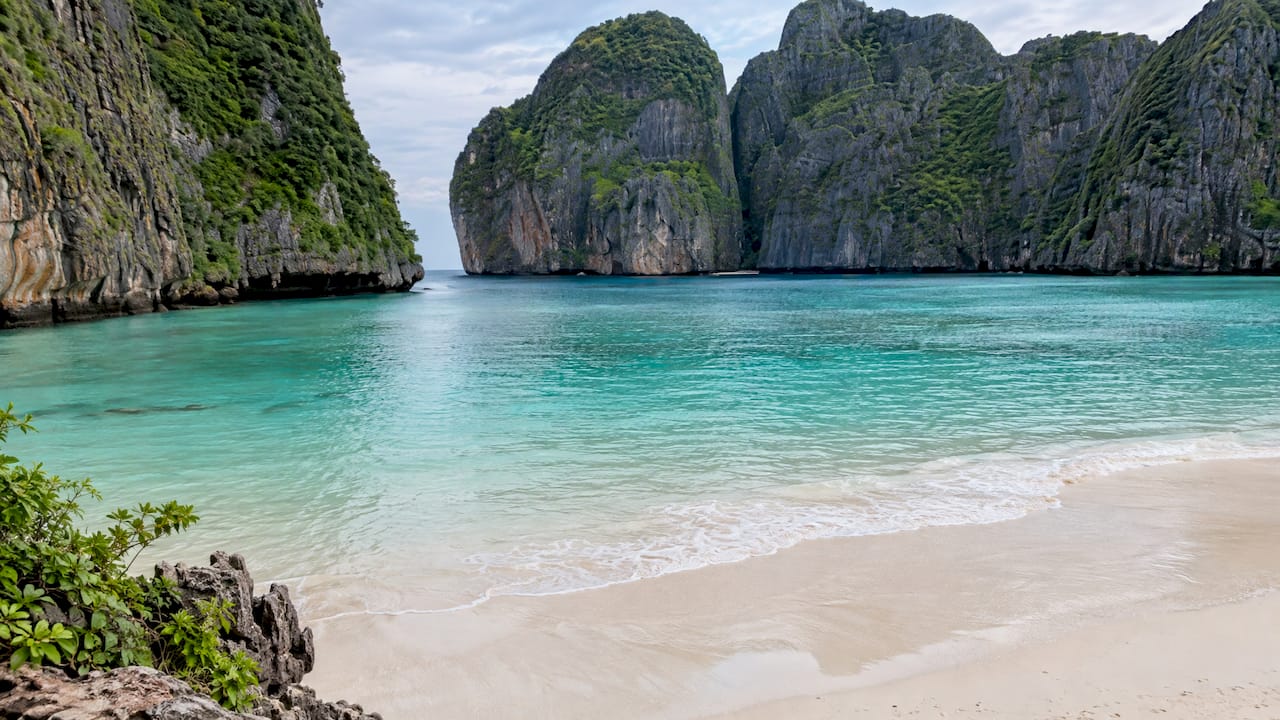
Maya Bay is on Phi Phi Leh, in Krabi’s Phi Phi Islands, and it is the beach many Phuket day trips are built around. It shuts every August and September. Time Out reports that the break eases pressure on the bay’s ecosystem and keeps visitors away when the southwest monsoon makes boat trips rougher. The bay also closed completely from 2018 until 2022, and it came back with tighter limits on visitor numbers and activities.
Since 1 October 2026 the bay has been open again, but swimming is off limits. Plan for a short stop to see the white sand and the limestone cliffs, not a beach day. Our guide to Maya Bay entry rules and timing covers how a visit works, and our Maya Bay closure page tracks the dates each year.
If you visit Phi Phi, note that there is a national park fee for visitors. We explain how it works in our Phi Phi island fee guide, including what happens when you book a tour.
Similan and Surin: the long monsoon break
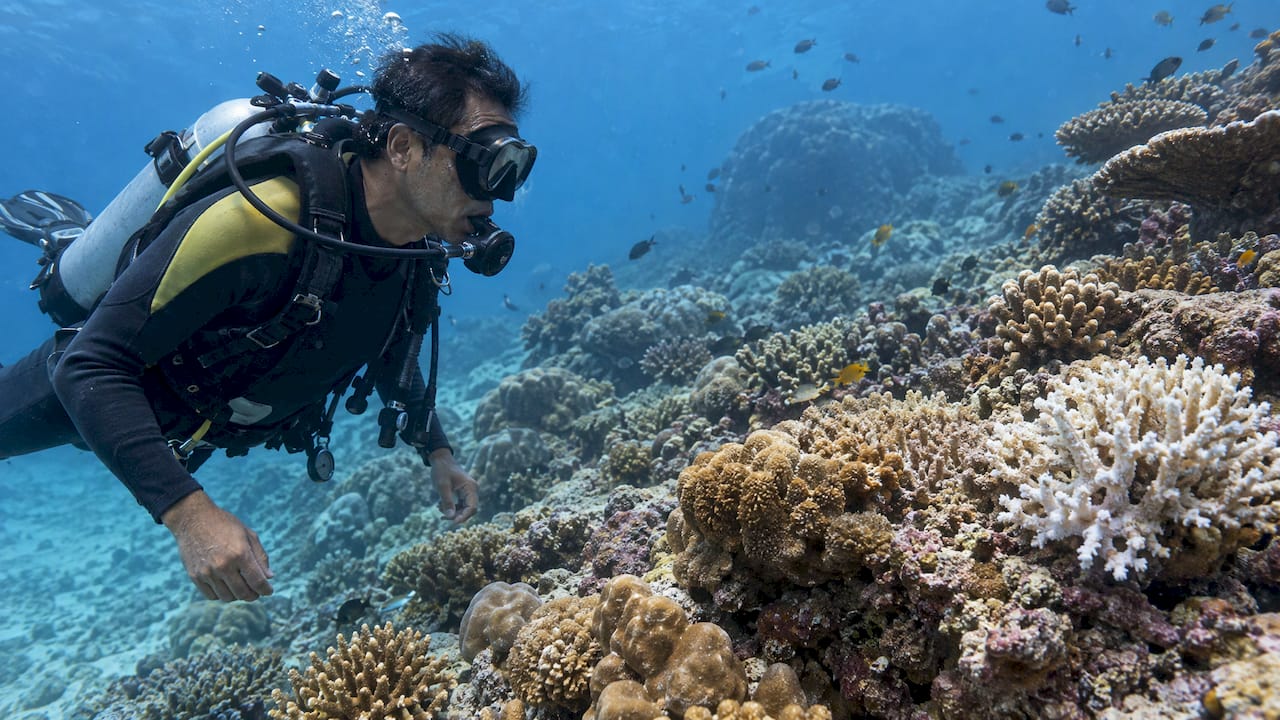
The two big Phang Nga marine parks close for five months every year. In 2026 that ran from 15 May to 15 October. The Similan Islands and Surin Islands are the most famous dive and snorkel destinations in the Andaman Sea. They sit well north of Phuket, so they are a long boat or liveaboard journey from the island.
The DNP gave two reasons: recovery of natural resources and visitor safety, according to trip4am’s summary of the notices. The seas in these months are rough. The second reason is plain common sense for anyone who has seen a monsoon swell.
Closed does not mean abandoned. The DNP reported that park staff kept doing underwater surveys during the Similan closure, sending raw data to the Marine National Park Research and Education Centre 2 in Phuket for analysis, so recovery measures can be planned. The Similan park head described the condition of the coral as a silent natural disaster with a continuing impact, which is why monitoring was stepped up.
If you want to compare the two destinations before you plan, our article on Phi Phi vs Similan helps you choose.
Why reefs around Phuket get closed
There are two different reasons, and they are easy to confuse.
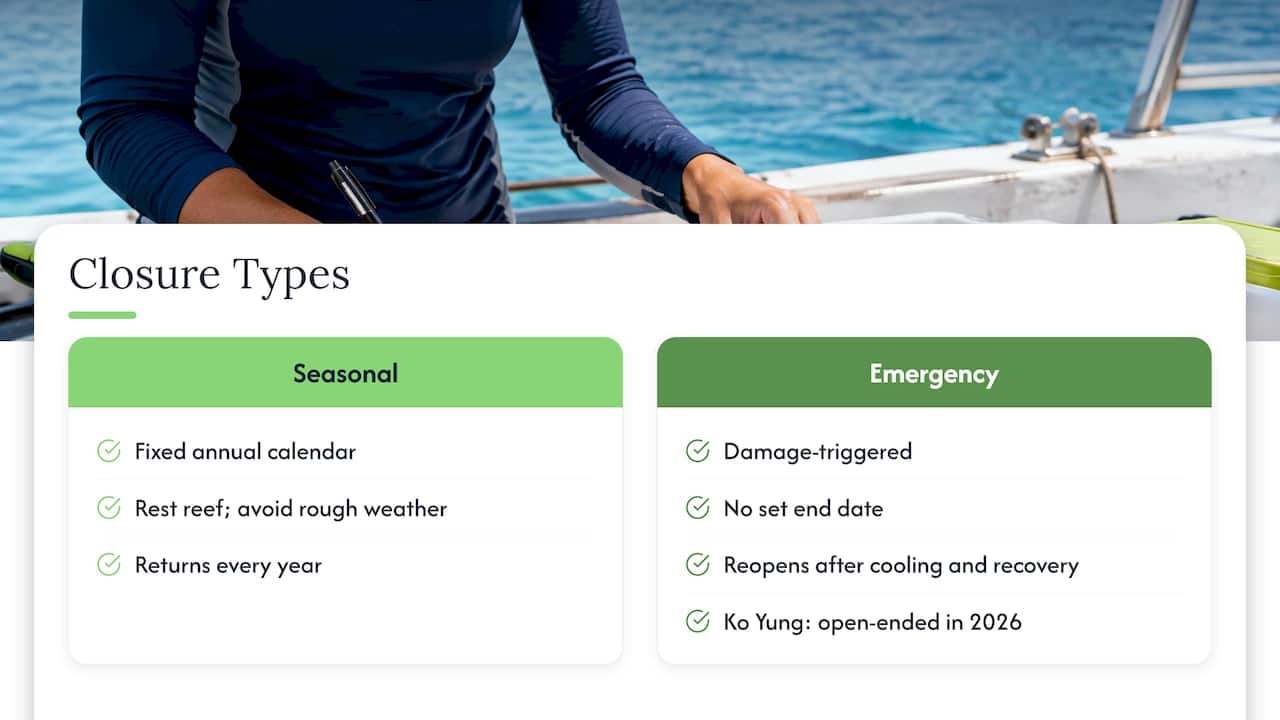
Seasonal closures happen on a fixed calendar. They give a reef or beach a rest and avoid the roughest weather. They come back every year.
Emergency closures respond to damage. In May 2024 the DNP closed 12 marine national parks, including Sirinat, Ao Phang-nga, Mu Koh Surin and Hat Nopparat Thara to Mu Koh Phi Phi, after 50 to 70 per cent of coral was found to be bleaching. Bleaching happens when warm water stresses coral and it loses the algae it lives with. The DNP set up shading devices to reduce sun exposure and installed temperature loggers to monitor the sea. It said it would consider reopening when temperatures fell and nature recovered.
So a notice that a site is shut for a few weeks is usually a seasonal break. A notice with no end date is usually a recovery closure. That is the case for Ko Yung in 2026.
What you can and cannot do on open reefs
Most of your Phuket snorkelling happens at sites that are open, and the rules there are strict. In October 2025 the DNP told all marine national parks to enforce them. Khaosod English reported that this included:
- No touching, stepping on or handling coral.
- Keeping at least 2 metres from coral reefs.
- No littering.
- Enforcing the sunscreen ban.
The sunscreen rule is the one tourists break most. Since 4 August 2021, sunscreens containing oxybenzone, octinoxate, 4-MBC or butylparaben have been banned in Thailand’s national parks under the National Park Act, with fines of up to 100,000 baht. The DNP Director-General has explained that these chemicals stop coral larvae from developing properly and can contribute to bleaching. Check the ingredients list before you pack, or wear a rash vest and hat instead.
For a fuller list of what is and is not allowed in the water, read our Phi Phi snorkelling rules.
How to plan a trip around the closures
Closures need not spoil a Phuket holiday. A few habits make them irrelevant.
- Pick the month first. Similan and Surin are a November to mid-May destination. If you travel between May and October, aim for the Phuket coast, Phang Nga Bay and the Phi Phi area instead.
- Check the live notice. The DNP and TAT pages are the sources. Boat operators change itineraries when a notice changes.
- Keep a flexible day. Monsoon weather can reorder your plans even when nothing is officially closed. A tour with free rescheduling saves the day.
- Choose operators who follow the rules. Ask what the itinerary includes before you pay.
- Stay connected. Park notices and weather updates arrive on your phone. A Phuket eSIM data plan means you can check a notice from the pier without hunting for wifi.
What to do when your favourite spot is closed
Phuket has plenty to offer when a reef is off the list. A boat day to James Bond Island and Phang Nga Bay, a Racha or Coral Island snorkelling stop, a sunset or bioluminescent trip, or a kayak outing all use waters that stay open through the closures. Jet ski and ATV days on land and coast do not depend on reef access at all. For a structured plan, our Phuket island hopping itinerary sets out day-by-day routes from three to ten days.
Questions about closures that families ask
Families tend to ask the same things. Is it safe? Will the kids still see fish? Do we need to change our plans?
The closure calendar protects the reef, and the rough-weather season is the reason for the longer breaks. Children can still snorkel easily on open sites with a life jacket and a guide. The important thing is to keep all reef contact off limits. That means no standing on coral, even in shallow water, and a mask-and-snorkel session at a distance. When you book, tell us the age of the youngest traveller so we can suggest the right stop.
Our view on reef closures
We back the closures, and we plan our trips around them. A reef that gets a break comes back, and the visitors who come next get a better day on the water.
Our island tours cover Phuket and nearby islands, and we offer hotel pick-up and flexible last-minute booking. That means a notice that changes your plans does not have to wreck the trip. If a site is shut, we point you to a site that is open.
The best thing a traveller can do is simple: read the dates, follow the reef rules and pick a trip with a team that knows the local waters. Our guests rate us 4.5 from 237 reviews, and the Trustindex score on our site shows 99% issue-free service.
Carl
Book a trip that fits the calendar
We run island tours, snorkelling and private or group boat excursions from Phuket, with hotel pick-up and flexible last-minute booking. Look at our island tours in Phuket and tell us your dates. We will match them to the sites that are open. If you like speed on the water or off-road, see our jet ski and ATV tours.

You can book online or by WhatsApp.
FAQ
Is Maya Bay open now?
Yes. Maya Bay reopened on 1 October 2026 after its two-month closure, and Time Out reported that swimming is not allowed. It closes again every August and September, so check the DNP notice for the next dates before you plan.
Are the Similan Islands open in 2026?
The Similan and Surin parks were closed from 15 May to 15 October 2026 and the break is now over. Their usual visiting season runs through the cooler, calmer months. Confirm the current status on the DNP or TAT page, because notices can change.
Will the reefs close again in 2027?
The seasonal closures have been part of the DNP’s conservation strategy for years, so expect Maya Bay and the Similan and Surin parks to close again. The exact dates are published each year, so check them before you book.
Can I use normal sunscreen when I snorkel?
Not always. Sunscreens with oxybenzone, octinoxate, 4-MBC or butylparaben are banned in Thailand’s national parks, with fines of up to 100,000 baht. Check the label, or cover up with a rash vest.
Sources
- The Phuket Express: Marine parks in Phang Nga close for five months
- trip4am: Thailand’s national park closures and reopenings 2026-27
- Tourism Authority of Thailand: 2026 national park closure schedule
- Time Out Bangkok: Maya Bay reopens October 1
- DNP: Similan coral surveys continue during the closure
- PRD Thailand: 12 marine national parks closed to combat coral bleaching
- Khaosod English: penalty for banned sunscreens in Thai marine parks
- Lex Bangkok: sunscreen rules in Thailand


