
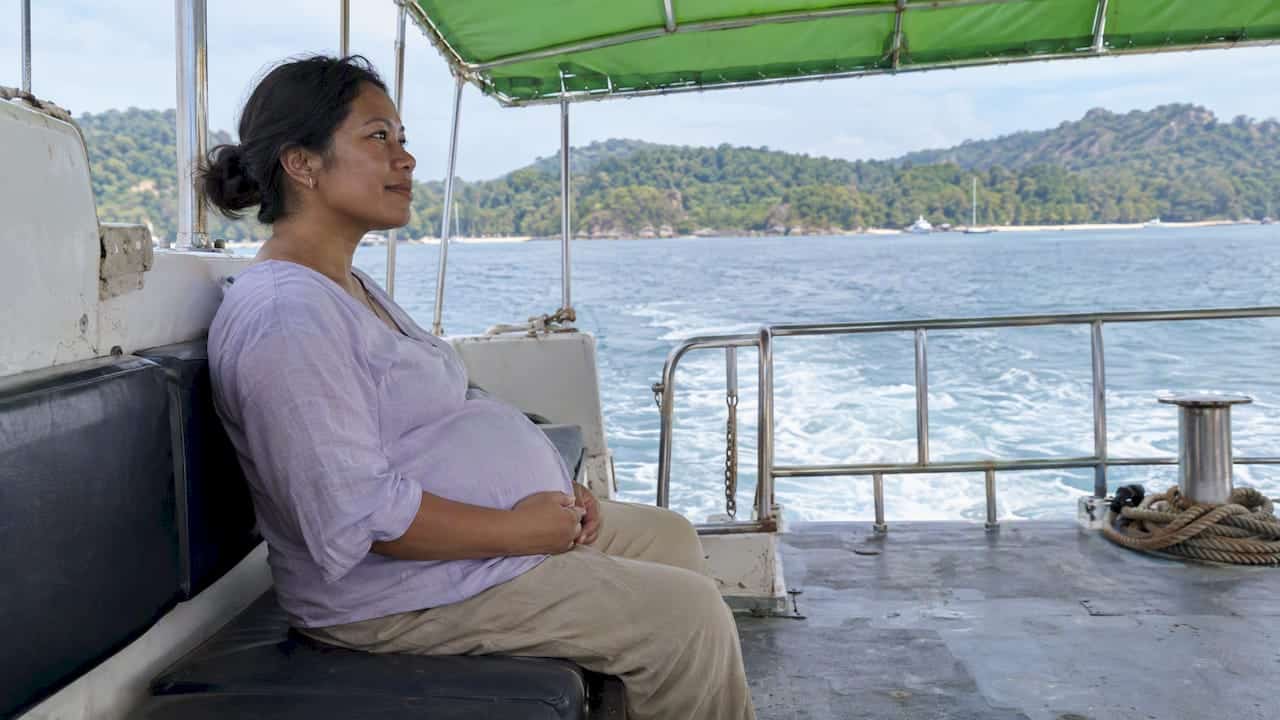
Pregnancy Boat Tour in Phuket: How to Go Safely
Yes, many women take a boat tour in Phuket while pregnant, but the right trip depends on how far along you are, your health, the sea conditions on the day and the operator’s own rules. Short, calm, well-planned trips are the usual choice. Long, fast, bumpy crossings far from a hospital are the ones to think twice about. Talk to your midwife or doctor first, then ask the tour provider direct questions before you pay.
This guide covers the weeks that matter, the boat types to consider, the questions to ask, a seasickness plan and what to do if the weather turns.
TL;DR
- Most women can travel in pregnancy with precautions, but ferry and boat companies may refuse heavily pregnant passengers, so confirm the operator’s policy before booking.
- Mid-pregnancy, roughly weeks 14 to 28, is generally described as the best time to travel.
- Choose shorter, calmer trips over long, fast, rough-water day tours, and skip any trip on a red-flag or stormy day.
- Get your doctor’s okay, carry your medical notes and plan how you would reach care from the route you pick.
- Message us on WhatsApp with your week of pregnancy and we will tell you honestly what we can and cannot arrange.
Table of Contents
- Is a boat tour in Phuket safe while pregnant?
- Which weeks are best for a Phuket boat trip
- Which kind of boat trip suits you best
- Questions to ask the tour provider before you book
- See your doctor before you book
- Preventing seasickness while pregnant
- Weather, waves and when to stay on land
- Packing and comfort for a pregnant passenger
- A sample low-stress day
- Plan your trip with us
- Common mistakes to avoid
- FAQ
- Sources
Is a boat tour in Phuket safe while pregnant?
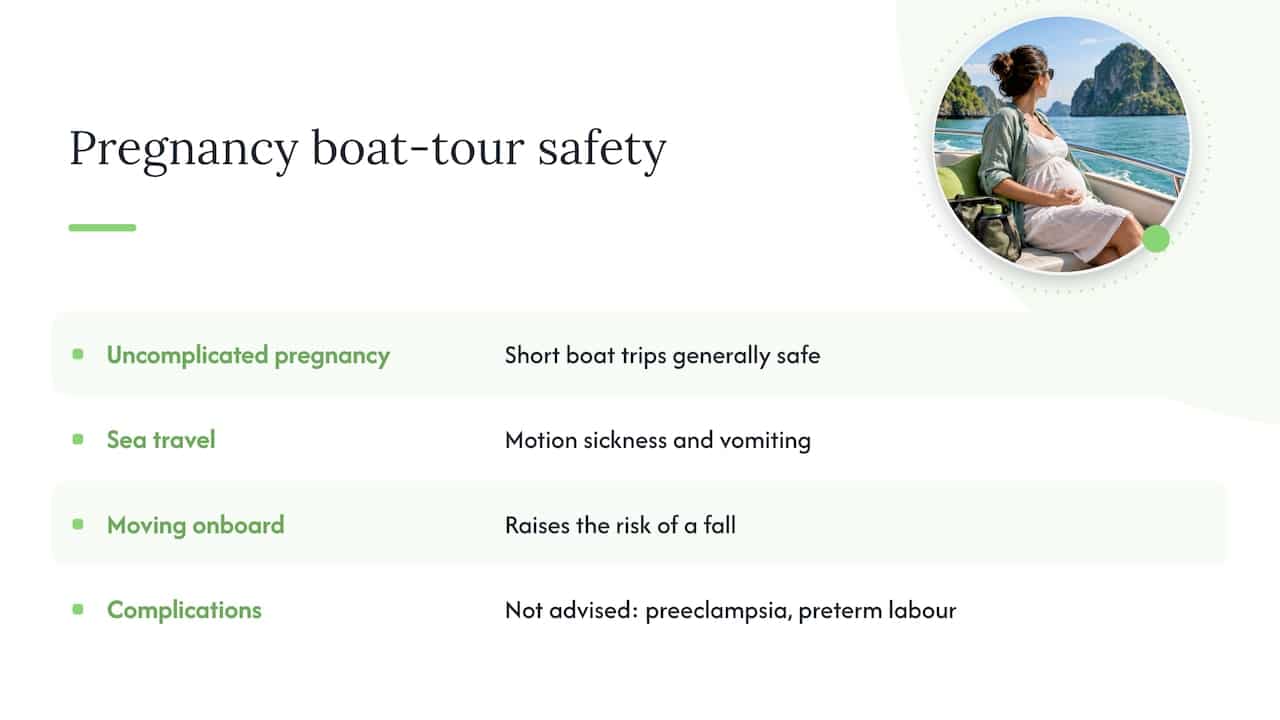
For many women with an uncomplicated pregnancy, a short boat trip is fine. MotherSafe, an Australian pregnancy information service, says short boat or ferry trips are generally safe in pregnancy. It also points out two things that matter on the water: sea travel can trigger motion sickness, nausea and vomiting, and moving around a vessel raises the risk of a fall.
That is the honest picture. The boat itself is rarely the problem. The problem is the combination of heat, waves, long hours, slippery decks and distance from a hospital. Phuket day tours often pack all of those into one day, so the choice of trip matters more than the decision to go at all.
Some situations are different. The American College of Obstetricians and Gynecologists (ACOG) says travel is not recommended for people with certain complications, including preeclampsia, preterm labour or prelabour rupture of membranes. If your pregnancy is high-risk, or you have had bleeding, contractions or any warning from your care team, the answer comes from your doctor, not from a tour page.
Which weeks are best for a Phuket boat trip
Timing is the first filter. ACOG says the best time to travel is mid-pregnancy, from 14 to 28 weeks, and that after 28 weeks travel may be riskier because the chance of going into labour is higher.
Here is how that tends to play out for boat days:
| Stage | What to expect on a boat day | Practical note |
|---|---|---|
| First trimester (to week 13) | Nausea and tiredness can make waves and engine fumes hard going | Plan for shade, snacks and an easy exit option |
| Weeks 14 to 28 | Usually the most comfortable window for travel | Still check the operator’s rules and the sea forecast |
| After week 28 | Higher risk and many operators set limits | Expect refusals on speedboat or ferry-type crossings |
| After week 32 | Many companies refuse boarding | Confirm in writing before you pay |
On operator limits, the NHS notes that ferry companies may refuse heavily pregnant passengers, often beyond 32 weeks on standard crossings and 28 weeks on high-speed crossings. A Thai hospital group gives similar advice: Ram Hospital’s 2026 guidance says to check ferry and speedboat restrictions, since travel is often restricted after 28 to 32 weeks, and to consult a specialist before travelling.
A tour operator’s cut-off can be earlier or later than these figures, so treat them as a pattern, not a promise. Ask for the exact rule for the exact trip.
Which kind of boat trip suits you best
Not every Phuket boat trip is the same experience. Think about four things: speed, duration, deck space and how much you can control.
Calmer, shorter, more flexible
- Private boat trips. When the boat is just for your group, you can usually ask for a slower pace, more breaks, shade and a shorter route. Our private boat tours in Phuket are built around the group, so tell us your week of pregnancy and what you need.
- Sheltered-water routes. Phang Nga Bay is often suggested for pregnant visitors on travel forums because the water inside the bay tends to be calmer than open-sea crossings. That is community experience, not medical advice, so judge each day by the forecast.
- Half-day outings. Fewer hours means less heat, less sun and less time away from land.
Trips to think twice about
- Long, fast speedboat days to Phi Phi or the outer islands. These involve open-water stretches, bouncing and many hours on board.
- Jet skis and similar rides. Hard bumps and abrupt jolts are not what a pregnant body needs. We would not suggest them during pregnancy, and the same goes for ATV rides. Save them for after the baby arrives.
- Party boats with crowded decks, alcohol and loud music.
- Any trip in rough weather. More on this below.
If you are comparing vessel types, our guide to longtail boats versus speedboats explains how each feels on the water, which helps you judge comfort for your own situation. If you are weighing routes, see how to pick an island hopping route for 1 to 10 days and then cut the plan down to the shortest, calmest leg.
Questions to ask the tour provider before you book
A good operator will not mind you asking. Write the answers down or keep the WhatsApp message.
- What is your policy for pregnant passengers, and at which week? Ask whether it differs by boat type.
- How long is the crossing, and how fast does the boat go? Ask for the time on open water, not the total trip length.
- Is there shade and a place to sit with a backrest? Standing for hours on a moving deck is tiring.
- Are the steps and jetties easy to use? Wet boarding ladders are a common fall risk.
- Is there a toilet on board? This matters more than most people expect.
- What happens if the weather turns? Ask about the cancellation, reschedule and refund terms.
- How far is the nearest pier from each stop, and how would you reach a hospital? The WHO lists access to health care services as one factor that affects health risks during travel, so know your exit before you leave.
- Can we skip a stop or return early? Flexibility is the real comfort feature.
If an operator is vague or tells you it is fine without asking your week of pregnancy, treat that as a warning sign.
See your doctor before you book
This is the one step we ask every pregnant guest to take. Your doctor or midwife knows your history, so they can tell you whether a boat day is sensible at all.
The WHO advises travellers to visit a travel clinic, preferably 4 to 8 weeks before departure or earlier, and says pregnant travellers may have extra considerations, including vaccinations and other precautions. In practice, bring these questions to the appointment:
- Is my pregnancy low-risk enough for a boat day at my current week?
- Is there anything I should avoid, such as speed, heat or long sitting?
- Which symptoms mean I should go to a hospital straight away?
- Can I get a letter confirming my due date and fitness to travel?
Carry a copy of your maternity notes. If you want them on your phone, a digital medical-records app can help you keep your medical records ready for travel insurance, so a Thai clinic can see them quickly if you need care. Check also that your insurance policy covers pregnancy-related care and your due date. Many policies have limits, so read the wording before you fly.
Preventing seasickness while pregnant
Nausea is the most common complaint on a boat, and pregnancy can make it worse. The good news is that most prevention is simple.
- Sit midship and low, where movement is smallest, and keep your eyes on the horizon.
- Eat something light before you go. An empty stomach tends to make nausea worse, and a heavy, greasy breakfast does not help either.
- Sip water often and keep ginger sweets or plain crackers in your bag.
- Get fresh air. Stay out of fumes from the engine and avoid reading or looking at your phone.
- Choose the morning. Seas are often calmer early, and the heat is lower.
For more ideas, this guide to morning sickness remedies covers bedside tricks that also work on a boat. We also wrote a seasickness prevention checklist for Phuket speedboats that you can adapt for a slower trip.
On medicines, take advice first. Motion-sickness tablets can cause drowsiness, and if you are pregnant you should ask a pharmacist or doctor before taking them. MotherSafe gives the same advice: speak to a doctor or pharmacist before using motion-sickness medicine. Do not borrow tablets from a friend or buy them over the counter at a pier without asking.
Weather, waves and when to stay on land
Phuket’s sea can change quickly, especially in the monsoon months. For a pregnant passenger, a rough day is a no, not a test of nerve. Waves mean bouncing, slipping and nausea, and a long crossing back to shore.
A simple rule: if you are unsure, postpone. Thailand’s Tourism Authority says swimmers should watch beach flag warnings, where a red flag means swimming is dangerous and prohibited, and green means calm conditions. Use the same caution for boarding: a red flag or a storm warning is a reason to wait for another day.

Our guides can help you read the conditions: Phuket boat trip weather and five questions to ask and a rain plan for Phuket boat days. Build one spare day into your itinerary, so a cancelled boat does not become a stressful scramble.
Packing and comfort for a pregnant passenger
Small comforts make a big difference when you are carrying extra weight and feeling the heat.
- Sun protection. A wide hat, light long sleeves, reef-safe sunscreen and sunglasses. Heat is tiring, so stay in the shade when you can.
- Water and snacks. More than you think you need.
- Grippy shoes or sandals for wet jetties and decks. Flip-flops are a trip hazard.
- A light cover-up for wind on open water.
- Your medical notes, insurance details and a charged phone.
- A small cushion or rolled towel for back support on hard seats.
Our boat trip packing list covers the rest, including reef rules. If you also have a little one in the group, read boat tours in Phuket with a baby for family-specific tips.
A sample low-stress day
Here is how a pregnant guest in mid-pregnancy might shape a relaxed day, once their doctor has agreed:
- Early start with a light breakfast and a hotel pick-up, so you avoid rushing.
- A short, private boat trip to one or two calm stops, not a seven-island marathon.
- Long breaks in the shade with water, fruit and a seat with back support.
- Swim only if you feel well, in calm shallow water, and skip anything slippery or rocky.
- Back on land by early afternoon, with the afternoon left to rest.
We can build something similar around your plans. Tell us your week of pregnancy and what feels comfortable, and we will say plainly what is realistic.
Our view: slow down, not stay home
Every season we hear from guests who are expecting and worried they will miss Phuket’s islands. Our view is that a pregnancy does not have to mean no sea. It means choosing the right kind of day.
We built our business around planned, personalised trips, with hotel pick-up, flexible last-minute booking and a team you can message on WhatsApp. That matters for pregnant guests, because the best safety tool is a conversation before the day: your week, your doctor’s advice, the forecast, the boat and the route.
We would steer you toward a private, unhurried outing, and away from the thrill rides we also sell. We say this about our own jet ski and ATV tours: they are for later. Our 4.5 rating from 237 reviews and 99% issue-free rate, verified by Trustindex, come from setting honest expectations, and we will do the same with you.
If we think a trip is not right for you at your stage, we will say so and suggest a calmer alternative.
Carl
Plan your trip with us
We run island tours and private boat trips around Phuket with hotel pick-up, and we handle bookings online or on WhatsApp. If you are looking for a gentler option, start with our private boat charters or browse the island tours. Published prices on our services page include MV Phuket Champagne at 3,500–4,800 THB and a full day on the Singh Luxury Speed Boat at 27,000–46,000 THB. Because speed matters in pregnancy, ask us about each boat before you choose.

Send us your dates, group size and week of pregnancy through the Qbic Travel website and we will suggest what fits. We cannot give medical advice, so please keep your doctor in the loop.
Common mistakes to avoid
- Booking the big day trip first and asking questions later. Check the operator’s policy before you pay.
- Trusting the date of a forum post. Rules differ between operators and change over time, so ask for the current policy.
- Skipping travel insurance details. Confirm cover for pregnancy and your due date.
- Pushing through the weather. A cancelled day is better than a rough one.
- Taking tablets without advice. Ask a pharmacist or doctor about motion-sickness medicine.
- Overplanning. One stop done well beats five stops done tired.
FAQ
Can I go on a boat tour in Phuket when I am pregnant?
Often yes, if your pregnancy is uncomplicated and your doctor agrees. Short, calm trips are the better choice. Always confirm the operator’s rules for pregnant passengers before you book.
What is the latest week of pregnancy for a boat tour?
There is no single answer. Guidance says ferry companies often refuse passengers beyond 28 weeks on high-speed crossings and 32 weeks on standard ones, and ACOG says mid-pregnancy is the best time to travel. Each tour company sets its own limit, so ask for it in writing.
Is a speedboat or a slower boat better in pregnancy?
A slower boat with a shorter open-water stretch and a seat with back support is usually more comfortable. Fast speedboats bounce more in waves, which raises the risk of nausea and falls. Ask the operator about speed and route length.
Can I take seasickness tablets while pregnant?
Only after asking a pharmacist or doctor. These medicines can cause drowsiness, and pregnancy changes what is suitable. Non-drug steps such as sitting midship, light snacks and fresh air are a good first line.
Should I book a private or a group trip?
A private trip gives you more control over pace, stops and timing, so many pregnant guests prefer it. Group tours can work too if the operator accepts pregnant passengers and the trip is short. Ask whether you can return early.
Sources
- Travelling in pregnancy, NHS
- Travel in Pregnancy, MotherSafe factsheet
- Travel During Pregnancy, ACOG
- Travel and health, WHO
- Safe Travel During Pregnancy: When and How Far?, Ram Hospital
- Motion Sickness in Thailand
- Important information on marine tourism in Thailand, TAT News
- Morning sickness remedies
- Travel insurance medical records


