
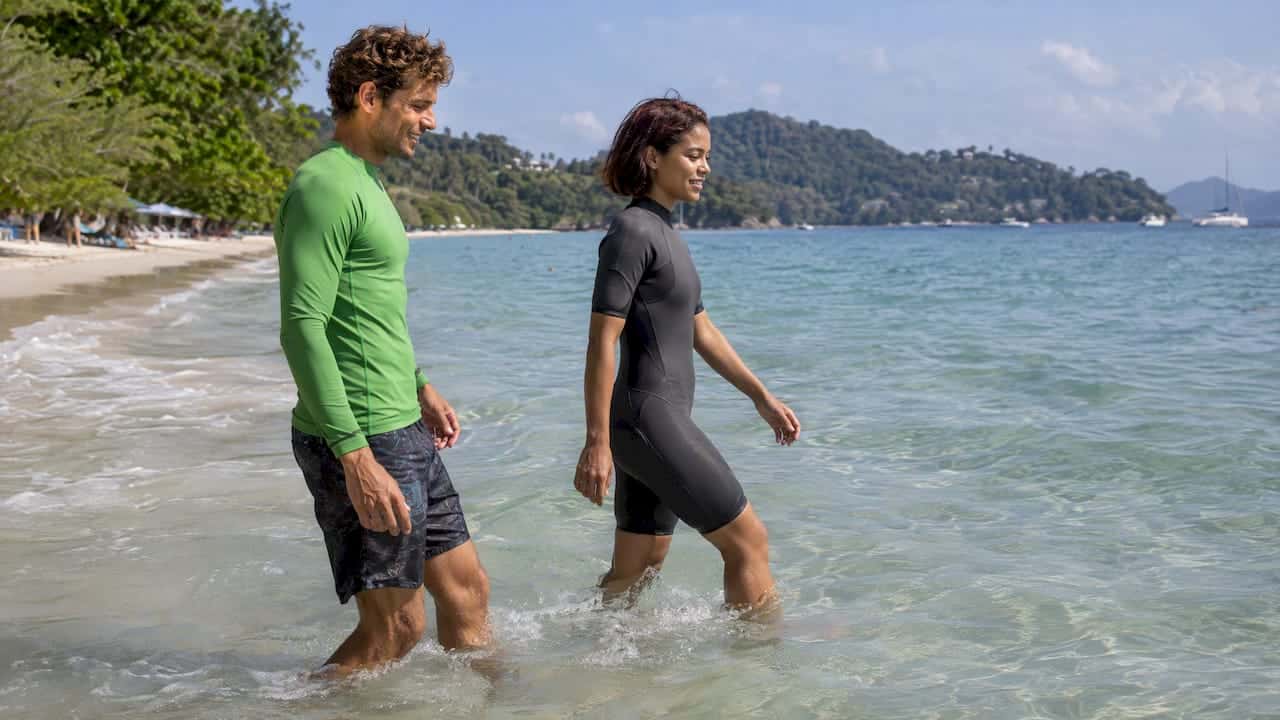
Rash Guard vs Wetsuit in Phuket: What to Wear in the Water
For most people in Phuket, a rash guard is the better choice. The sea stays warm all year, so a full neoprene wetsuit is usually more than you need. Wear a rash guard for snorkelling, island hopping, jet skis and swimming. Consider a thin wetsuit only for several dives in a day, long sessions in the water, or if you chill easily. Below we cover what each one does, how the seasons change the answer, and what to pack for each activity.
TL;DR
- Rash guard: the default in Phuket. It gives sun protection, stops chafing and cuts the risk of jellyfish and sea lice stings, with no overheating.
- Wetsuit: worth it for multiple dives, long days of surfing practice, or people who get cold easily. A 3 mm suit is plenty. Anything thicker is too hot.
- Both together: a rash guard under a wetsuit makes the suit easier to put on and helps prevent collar rub.
- Monsoon season: jellyfish and sea lice are more common, so full-coverage lycra is a smart choice even for a short swim.
- A rash guard is not a life jacket and not sunscreen: wear a vest when the guide asks, and use reef-safe sunscreen on exposed skin.
Table of Contents
- What is the difference between a rash guard and a wetsuit?
- How warm is the sea in Phuket?
- When a rash guard is enough
- When a wetsuit makes sense
- Can you wear a rash guard under a wetsuit?
- Stings and sun: what the rash guard protects you from
- Rash guards are meant to get wet
- What to wear by activity: a quick guide
- Packing checklist for a day on the water
- Safety on the water
- Our perspective: what we tell guests
- Ready to get on the water?
- FAQ
- Sources
What is the difference between a rash guard and a wetsuit?
A wetsuit is made of neoprene foam. It traps a thin layer of water against your skin, and your body warms that layer. That is how it insulates in cooler seas. A rash guard is a thin, stretchy synthetic top (often lycra or polyester) with a different job: it protects against UV, chafing and minor scrapes in warm water rather than keeping you warm.
That difference shapes everything else:
| Rash guard | Wetsuit (3 mm) | |
|---|---|---|
| Main job | Sun, rubbing, light scrapes, stings | Warmth, plus some protection |
| Feel in Phuket heat | Light, dries fast | Warm, can be stuffy out of the water |
| Buoyancy | None | Adds lift, so divers need more weight |
| Putting on | Seconds | A few minutes, sweaty when dry |
| Best for | Snorkelling, jet ski, kayak, swimming, surf practice | Long dives, cold-sensitive people, early dives |
You will also see “shorty” wetsuits (short sleeves and legs) and long-sleeved lycra suits called stinger suits or dive skins. They sit between the two. A lycra dive skin gives full-body coverage without foam, which suits Phuket well.
How warm is the sea in Phuket?
Warm enough that cold is rarely the problem. Recorded monthly averages run from 28.1°C in January to 30.5°C in May. Even the coolest month is bath-like compared with Europe or Australia.
A useful rule of thumb from divers: around 28°C and above, a rash guard alone can be enough, while in the mid-20s most people want a wetsuit. Phuket sits comfortably on the rash guard side of that line. Individual tolerance still matters, and we cover that below.
Two caveats:
- Depth and currents: at the deeper dive sites you can hit a cooler layer. It is a small drop, but over a 45-minute dive it can make a difference.
- Wind and rain: a boat ride back in a squall after being wet feels much colder than the water temperature suggests. Bring a dry towel and a light layer for the boat.
When a rash guard is enough
For surface activities in warm water, a rash guard does everything you need. A rash guard is a breathable swim or sun shirt meant to protect skin from sun and irritation, and it suits warm-water swimming and surface activities.
Here is how that works out for the most common Phuket activities.
Snorkelling and island hopping
You spend a long time face-down, with your back and the backs of your legs exposed to a strong tropical sun. That is how most people get burnt in Phuket. A long-sleeved rash guard covers the worst of it and means less sunscreen on your back. It also helps with the sea’s less pleasant residents, which we cover below.
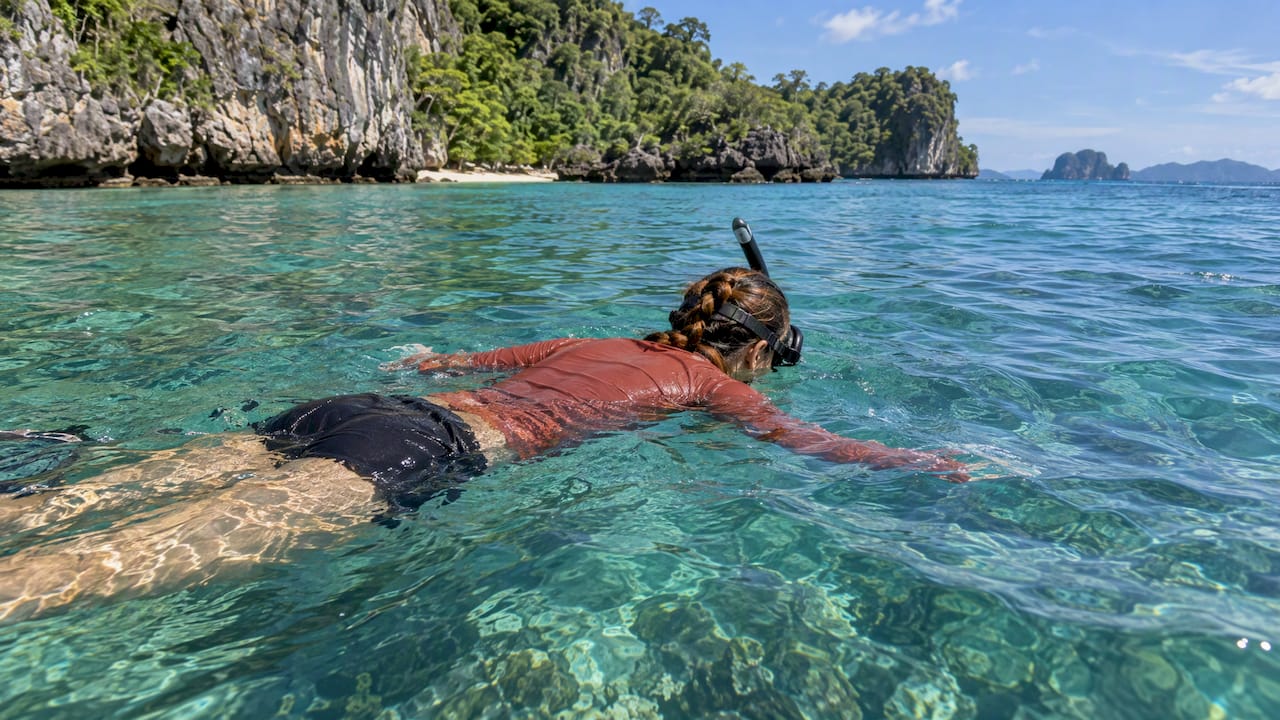
On a trip to places like Coral Island, Raya or Phi Phi you will be in and out of the water several times. A rash guard dries quickly on deck, and you will not roast in a wet foam suit between stops.
Jet ski and ATV days
On a jet ski you will be splashed constantly, and sun and wind add up over a few hours. A rash guard over board shorts or a swimsuit works well, and it dries as you ride. Most guests wear a rash guard or a light long-sleeved top, shorts and secure water shoes or sandals. A wetsuit is overkill and gets hot when you stop moving. For ATVs, you are on dry land and in mud, so quick-dry clothes you do not mind getting dirty are best.
Swimming, kayaking and paddleboarding
Same logic. If you are going to be on the water and not in it, you want sun cover and freedom of movement. A rash guard gives you both. Choose a snug fit so it does not ride up or flap, and a UPF-rated fabric if you can find one.
Beginner surfing
Board rash is the real enemy for beginners. Lying on a board for an hour rubs your chest and stomach raw, and a rash guard solves that. In Phuket’s warm water you generally do not need foam at all. For a taster, see our surf options on our services page.
When a wetsuit makes sense
A wetsuit is not pointless in Phuket. It just applies to fewer situations.
- Multiple dives in one day. Between dives on a boat in the wind, you cool down. A thin 3 mm suit keeps you comfortable. One dive writer says that if you feel cold, a 3 mm long wetsuit is generally more than enough.
- Longer or deeper dives. More time at depth means more heat loss.
- If you get cold easily. Some people shiver in 28°C water after 30 minutes. That is normal. If that sounds like you, take the wetsuit.
- Reef protection when you will be close to rock or coral. Foam adds a layer against scrapes, though you should never touch the reef anyway.
- Early morning or late afternoon sessions when the air is cooler and the wind is up.
There is a trade-off. A thicker wetsuit adds buoyancy, so divers need more weight on their belt and work harder in the water. That is why many divers who dive in the tropics choose a 3 mm suit or thinner, and why some are happy in a rash guard alone for a single day dive.
If you are trying scuba for the first time, your instructor will tell you what to wear and what is available on the boat. You can read more about discovering scuba diving in Phuket and what the experience involves. For the best months for bigger marine life, see our guide to the Phuket diving season.
Can you wear a rash guard under a wetsuit?
Yes, and many people do. A rash guard under a wetsuit helps you stay warm and protects against chafing. One diver says they wear one under their suit on every dive in cooler water, because it makes the suit easier to put on and helps prevent collar chafe.
In Phuket, it is a nice option if you are wearing a shorty and want a bit more arm coverage, or if you find neoprene itchy against bare skin. Pick a thin, snug rash guard so it does not bunch up under the suit.
Stings and sun: what the rash guard protects you from
This is the strongest argument for wearing something on your torso and arms, whatever the temperature.
Jellyfish and sea lice
The Tourism Authority of Thailand notes that protective swimwear such as rash guards, lycra suits or long sleeves can reduce the risk of jellyfish stings. Stings are more commonly seen in the monsoon months, when winds and currents bring them closer to shore. Local guides put the rainy season at roughly May to October, with reports usually peaking from June to September.
Sea lice (the itchy rash some swimmers get) are tiny jellyfish or anemone larvae. They get trapped under swimwear and sting, so rinse and change out of wet kit soon after getting out. A rash guard is not a perfect shield, but it reduces bare skin exposure for the arms and torso.
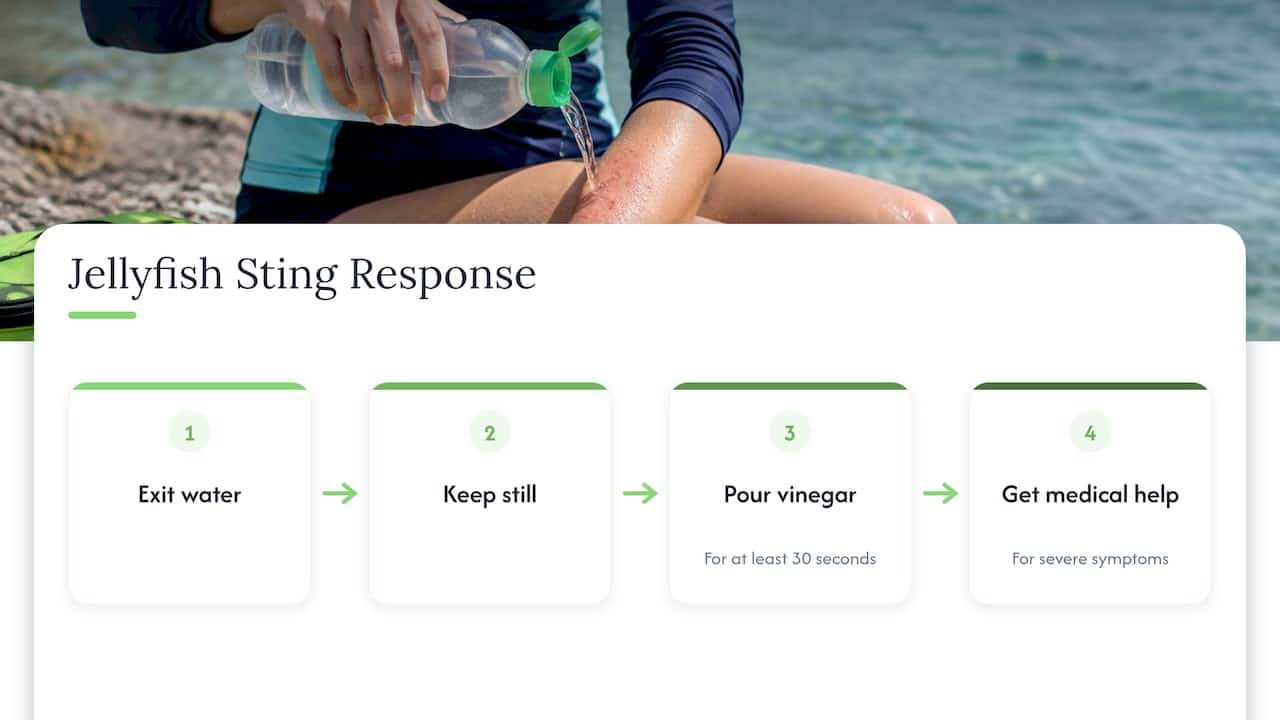
If someone is stung, the TAT advice is to get them out of the water, keep them still and pour vinegar over the area for at least 30 seconds. Do not wash a sting with fresh water. Anything severe, such as breathing trouble, spreading pain or a child badly stung, needs a doctor or the nearest hospital straight away. For more, read our guides to jellyfish and snorkel safety and 10 safety checks for snorkelling in Phuket.
Sun
The sun at this latitude is fierce, and reflection off the water makes it worse. A long-sleeved rash guard cuts your exposed area by a lot. For the rest, use reef-safe sunscreen, which avoids chemicals that damage coral. Apply it on the face, neck, hands, feet and the backs of the legs, and top up after you get out of the water.
Reef and board scrapes
A rash guard stops minor abrasion, but it will not save you from coral cuts. Keep your fins and hands away from the reef, and do not stand on coral. A wetsuit gives a bit more cover, but the rule is the same.
Rash guards are meant to get wet
Yes. A rash guard is made to be worn in the water, and it dries fast thanks to synthetic fabric. That is the whole point: it does not soak and sag like cotton.
Two tips for Phuket:
- Do not wear a cotton T-shirt instead. It gets heavy, stays wet, and rubs under the arms. A synthetic rash guard is better.
- Rinse it in fresh water after each trip and dry it in the shade. Sun, salt and sunscreen wear the fabric down and fade the colour over time.
What to wear by activity: a quick guide
| Activity | Best choice | Why |
|---|---|---|
| Snorkelling, island trip | Long-sleeved rash guard, swim shorts or leggings | Sun and sting protection, quick drying |
| Jet ski tour | Rash guard or light long-sleeve, board shorts | Spray and sun, no overheating |
| Beginner surf | Rash guard, board shorts | Avoids board rash |
| One day dive | Rash guard or 3 mm shorty | Depends on how you feel the cold |
| Several dives, or long dives | 3 mm wetsuit, optional rash guard underneath | Stays warm between dives |
| Monsoon season swim | Long-sleeved rash guard or lycra suit | Fewer stings |
| Kids | Full-coverage UV swimsuit | Sun, and easy to dry |
Packing checklist for a day on the water
- Long-sleeved rash guard (bring a spare if you are doing several days)
- Board shorts or a swimsuit
- Water shoes or secure sandals
- Reef-safe sunscreen and lip balm with SPF
- Hat and sunglasses with a strap
- Dry towel and a dry top for the ride back
- A small bottle of vinegar if you are going in rainy season, and ask your guide where the first aid kit is
- A waterproof pouch for your phone
Safety on the water
Clothing is only part of staying safe. Choose an operator with proper insurance, attend the safety briefing and use the life jackets or vests provided. On snorkel trips our guides fit vests, and we explain why in our piece on snorkel vests vs life jackets. A rash guard gives you no buoyancy, so do not treat it as a substitute. For conditions through the cooler, drier months, see our snorkelling conditions guide.
Our perspective: what we tell guests
We get this question a lot, and our answer is almost always the same: bring a rash guard, leave the wetsuit at home. Our guests spend their days on boats, on jet skis and in the water around the islands, and the thing that ruins a holiday is rarely cold. It is sunburn on day one, or a sting that could have been avoided.
So here is what we suggest. Pack a long-sleeved rash guard for each of your water days, and put it on before you get on the boat, not after you are already pink. If you are travelling in the rainy season, treat full coverage as standard. If you are trying scuba and know you feel the cold, tell your instructor so they can offer a thin suit.
We plan our itineraries around the weather and sea conditions, and we will reschedule when the sea is not right. If you are not sure what to wear for a particular trip, message us before you go and we will tell you what guests usually wear on that route.
— Carl
Ready to get on the water?
If you would like to see Phuket’s islands in your new rash guard, we run island tours with hotel pick-up, and adventure days with jet skis and ATVs. You can look at our Phuket island tours, or see the jet ski and ATV adventures. You can book online or by WhatsApp, and last-minute bookings are possible. We have a 4.5 rating from 237 reviews, and our site cites a 99% issue-free service rate verified by Trustindex.
FAQ
Is a wetsuit necessary for diving in Phuket?
Not always. With water between roughly 28°C and 30°C through the year, many divers are happy in a rash guard for a single day dive. A 3 mm suit is the sensible choice if you feel the cold, are doing several dives or dive deeper. Ask your dive operator what they recommend for your site.
Can I wear a rashie under a wetsuit?
Yes. A thin rash guard under a wetsuit makes the suit slide on more easily and reduces rubbing at the neck and arms. It also adds a little warmth. Choose a snug fit so it does not bunch.
Are rash guards meant to get wet?
Yes. They are made from quick-drying synthetic fabric and are designed for swimming, snorkelling and watersports. Rinse yours in fresh water after use, and let it dry in the shade.
Will a rash guard protect me from jellyfish?
It reduces the risk on the covered skin, and the TAT lists rash guards and long sleeves as protective swimwear. It is not a guarantee, as your face, hands and feet remain exposed. If you are stung, get out of the water, pour vinegar on the area and see a doctor if symptoms are serious.
What colour should I wear on a boat trip?
Pick what you like for comfort and visibility. We would not rely on colour as a safety measure, and we have no checked source on colour and marine life. Bright colours are easy for guides to spot in the water, which is useful on a busy snorkel stop.
Sources
- Difference between a rash guard and a wetsuit explained
- Phuket Average Sea Temperatures
- Understanding Wetsuits, Drysuits, and Rash Guards
- Wetsuit vs. Rash Guard: Which Should You Wear?
- Rash Guard vs. Wetsuit Diving: Which You Need, by Water Temp
- Jellyfish Safety Advice in Thailand (TAT News)
- Jellyfish Season in Phuket: Box Jellyfish, Sea Lice and Safety
- Water Sports in Phuket: The Ultimate Guide


