
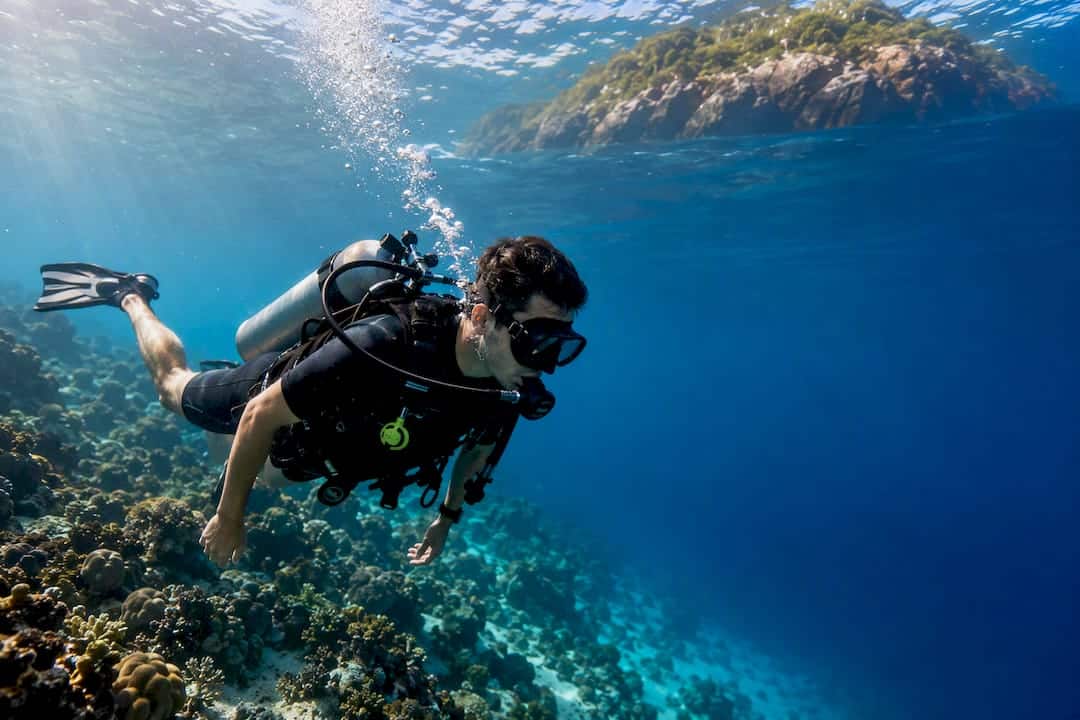
Racha Yai and Racha Noi: Beginner Diving in Phuket, 12m Max Depth
Yes, beginners can dive in Phuket, no certification needed. The fastest route is a PADI Discover Scuba Diving try-dive, which pairs pool practice with one or two supervised ocean dives to around 12 metres. If you have a few extra days and want a card to take home, a multi-day open-water course gets you certified, and finishing the theory online before you land trims real holiday time off the course.
TL;DR:
- Beginner divers should prioritize operators that explicitly limit depth to around 12 metres and maintain low student-to-instructor ratios.
- The best beginner sites are Racha Yai and Racha Noi, which offer calm, sheltered waters with visibility often exceeding 15 metres year-round.
- A Discover Scuba Diving try-dive typically includes pool practice, one to two ocean dives, and costs vary by extra services like photos or park fees.
- Full certification courses take 2 to 4 days with online theory, and completing the e-learning before arrival can save time during the trip.
- Always verify that the dive operator is certified by PADI or SSI, insists on medical forms, and offers transparent, written itineraries to ensure safety and quality.
Table of Contents
- Beginner options in Phuket: try dives, day trips and certification paths
- Where should beginners dive around Phuket?
- What a beginner day trip looks like
- How do you progress from a try-dive to full certification?
- Safety, medical forms and age rules for beginners in Phuket
- How do you pick a beginner-friendly dive operator?
- Local evidence and Qbic Travel credentials
- What beginners actually need to know before booking
- Book your first dive with Qbic Travel
- Sources
- FAQ
Beginner options in Phuket: try dives, day trips and certification paths
Three routes get you underwater, and the right one depends on how much time you have and how sure you are that diving is your thing.
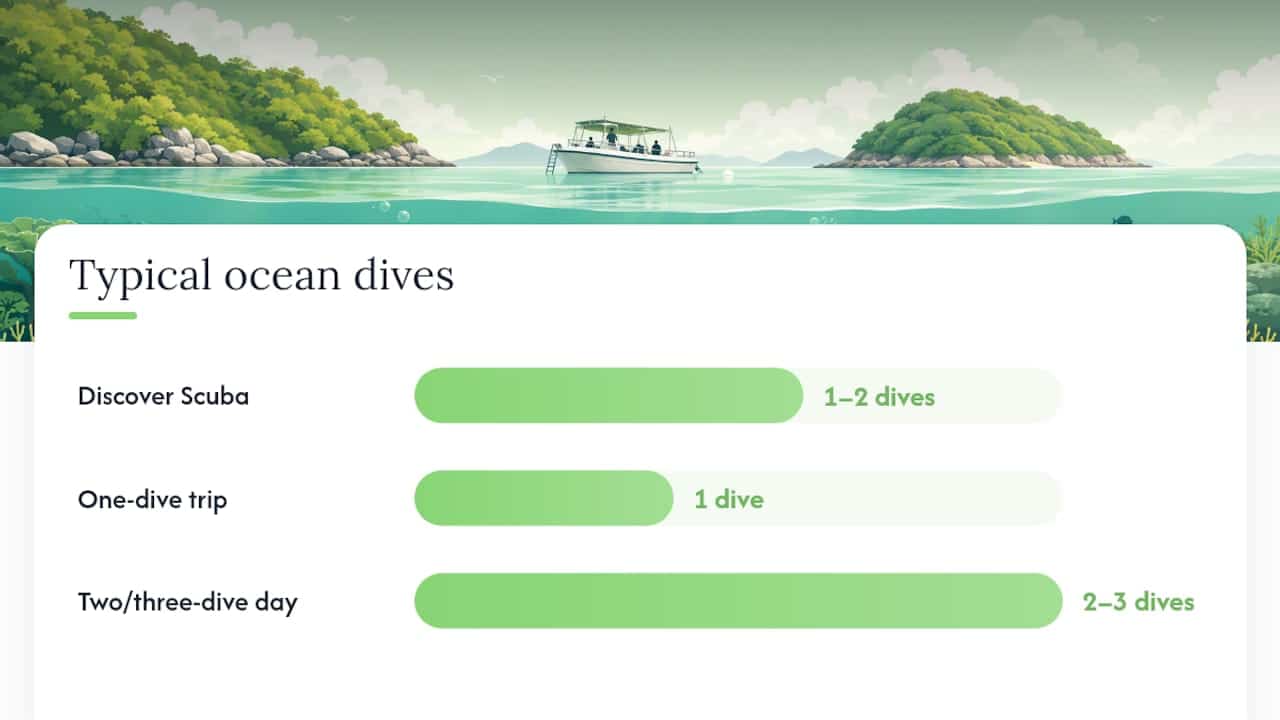
Discover Scuba Diving is the low-commitment option. You start in confined water (a pool or a shallow, sheltered bay) running through breathing and mask skills with an instructor, then move to one or two ocean dives with close supervision throughout, part of the Discover Scuba Diving in Phuket format offered by most local centres.
Day trips build on that same base but vary in scale:
- One-dive trips: shortest option, ideal if you’re nervous or short on time.
- Two or three-dive days: more bottom time, usually including lunch and full gear.
- Open-water certification: the full PADI or SSI qualification, recognised worldwide.
Expect prices for a try-dive day trip to vary, with additional costs typically for photos, gratuities, and national park fees. If you’re weighing this against a single dip in the water, the Try Scuba Diving 1 Dive format is built for exactly that.
Where should beginners dive around Phuket?
Two islands do the heavy lifting for first-timers: Racha Yai and Racha Noi. Sheltered bays, gentle currents, and visibility that regularly hits 15 to 20 metres make them the default beginner sites, a point local operators repeat consistently when describing suitable first-dive locations.
Phi Phi’s headline dive sites, by contrast, are frequently restricted to certified divers. National park rules and stronger currents make several of them unsuitable for someone doing their first ocean dive, so don’t be surprised if an operator steers you away from them regardless of how good the photos look online.
A few seasonal notes worth knowing:
- November to April brings the calmest seas and best visibility around the Racha Islands.
- Low season (roughly May to October) can still offer good diving, but expect more surface chop and occasional cancellations.
- Chalong Pier is the main departure point, and it’s around 45 minutes to an hour by boat to the Rachas, which is why most beginner trips run as a full day rather than a rushed half-day.
Fancy diving when the big marine life shows up? Certain months bring manta rays and whale sharks into range for lucky groups.
What a beginner day trip looks like
A typical Discover Scuba Diving day runs something like this:
- 7:00 to 8:00 AM: hotel pickup, transfer to Chalong Pier.
- 8:30 to 9:00 AM: boat departure, safety briefing en route.
- 10:00 AM: arrival at Racha Yai or Racha Noi, confined-water skills practice in shallow water.
- 11:00 AM to 12:30 PM: first supervised ocean dive, typically capped at around 12 metres and lasting up to 50 minutes.
- 12:30 to 1:30 PM: lunch on the boat.
- 1:30 to 3:00 PM: second dive for those doing a multi-dive package.
- 4:30 to 5:30 PM: return transfer to your hotel.
Gear, weight belts, and instructor supervision are standard inclusions. Photos, video packages, and travel insurance usually cost extra. Pack reef-safe sunscreen, a rash vest, and motion-sickness tablets if you’re prone to seasickness. Loose, quick-drying clothing for the boat ride works better than anything cotton, which stays damp all day.
How do you progress from a try-dive to full certification?
A Discover Scuba Diving session is a taste test. Open Water Diver certification is the real qualification, recognised at dive sites worldwide, and it’s a bigger commitment.
- Course length: typically 2 to 4 days, combining theory, confined-water skills, and 4 to 6 open-water dives.
- Digital theory: completing the e-learning modules before you arrive is widely encouraged by Phuket dive centres, and it can cut a full day off your in-water schedule.
- Dive mix: some centres run all boat dives, others mix in beach dives depending on conditions and package.
- Price bands: budget prices vary depending on the operator, group size, and whether national park fees are bundled in.
If you’re already sold on getting certified while you’re here, a Phuket diving certification day-trip guide breaks down what a tourist-friendly course schedule actually involves.
Safety, medical forms and age rules for beginners in Phuket
Every reputable centre asks you to complete a medical statement before you get in the water. The minimum age for Discover Scuba Diving is commonly a young age (around 10 years), and if you tick “yes” to any condition on the form (asthma, heart issues, recent surgery, certain medications), you’ll need written clearance from a doctor before diving.
Be honest on that form. Instructors aren’t trying to catch you out. They’re trying to keep you from a genuine medical event 12 metres underwater, which is a far worse place to discover a problem than on dry land.
Instructor supervision typically runs at low ratios for try-dives, and most centres offer private tuition for an extra fee if you’re anxious. That one-to-one time makes a real difference for nervous first-timers.
Pro Tip: Ask about DAN dive insurance before you book. Divers’ Alert Network is the industry-standard emergency cover, and most instructors will recommend it without you even asking.
Basic rules that matter every single dive: no alcohol beforehand, equalise your ears early and often on descent, and never skip the ascent rate your instructor sets.

How do you pick a beginner-friendly dive operator?
Not every centre on the island runs the same standard. Here’s what to check before you hand over a deposit:
- Confirm certification: the centre should be a registered PADI or SSI operation, not a loosely affiliated freelancer.
- Check group sizes: ask how many students per instructor on the ocean dive, not just the pool session.
- Inspect the gear: worn regulators or ageing BCDs are a red flag worth walking away from.
- Get the itinerary in writing: pickup time, dive count, maximum depth, and return time should all be stated upfront.
- Ask about rescue procedures: a confident, specific answer beats a vague reassurance every time.
- Confirm the medical form is mandatory: if a centre skips this step, skip the centre.
Red flags include evasive answers about depth limits, no written schedule, and pressure to skip the pool session “to save time.” Morning trips generally see calmer water, so book early where you can, and always confirm your exact pickup time the night before.
Local evidence and Qbic Travel credentials
PADI’s own Phuket guidance backs up what local operators tell you on the ground: Discover Scuba Diving is the standard entry point, confined-water practice comes first, and depth limits around 12 metres are the norm for first-timers.
Local, experienced instructors who speak multiple languages make a genuine difference when you’re trying to follow underwater hand signals for the first time. Booking pages sit directly on the Qbic Travel site for anyone ready to check dates.
What beginners actually need to know before booking
The advice most guides give about diving in Phuket isn’t wrong, it’s just incomplete. Everyone tells you to check for a PADI or SSI badge on the website. Fewer tell you to ask about student-to-instructor ratios on the actual ocean dive, which is the number that matters far more than a logo in a footer.
Here’s where conventional wisdom falls short: it treats “beginner-friendly” as a fixed label rather than a seasonal condition. A site that’s perfect in February can be a rough, low-visibility slog in August. The Racha Islands earn their reputation because they stay forgiving across most of the year, not because they’re magically immune to weather.
If you take one thing from this guide, prioritise the medical form and the pre-dive briefing over the marketing photos. A centre that spends real time on your comfort in the pool before the ocean dive is doing the job properly. One that rushes you through it to hit a boat schedule is cutting the one corner that actually protects you.
— Carl
Book your first dive with Qbic Travel
Qbic Travel is a straightforward route to the same beginner dive experience this guide has walked you through, without needing to compare a dozen operator websites yourself. You get a curated try-dive day trip to the Racha Islands, an upgrade path to a full open-water course if you catch the bug, and the flexibility to book privately if you’d rather not join a big group.

A typical booking includes hotel transfer, full gear, and instructor supervision throughout. Private tuition is available on request for anyone who wants extra reassurance in the water. If a full-blown certification feels like the better fit for your trip, the PADI Diving Course Phuket page lays out the packages, or start smaller with the Discover Scuba Diving Phuket option and decide from there. Check available dates and book your slot directly on the Qbic Travel site.
Sources
- Diving in Phuket
- Discover Scuba Diving in Phuket – Blue Divecenter – PADI 5 Star
- Open Water Diver Course – No Gravity Dive Center
FAQ
What is the 120 rule in diving?
The “120 rule” is a rough guide some divers use to estimate safe no-decompression limits, but it’s a technical-diving rule of thumb rather than something beginners need to memorise. On a Discover Scuba Diving trip, your instructor manages depth and time limits for you, keeping you within roughly 12 metres throughout.
Is diving in Phuket worth it?
Yes. Phuket offers warm water year-round, beginner-friendly sites with good visibility at Racha Yai and Racha Noi, and a dense network of PADI and SSI centres running everything from single try-dives to full certification courses.
Where can a beginner dive in Thailand?
Phuket is one of Thailand’s most accessible beginner diving hubs, with short boat rides to sheltered islands and centres experienced in running Discover Scuba Diving sessions for total first-timers.
Where is the best place to dive in Phuket?
Racha Yai and Racha Noi are the standard answer for beginners, thanks to calm water, strong visibility, and legal access that busier sites like the main Phi Phi dive points don’t always allow for uncertified divers.


