
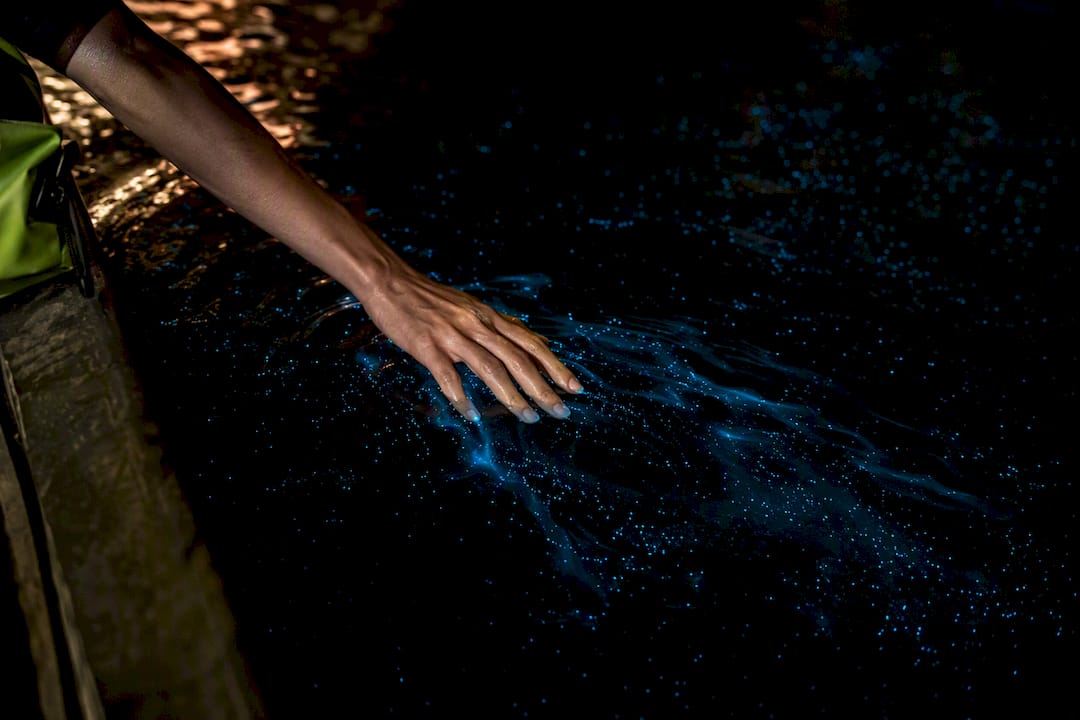
Phuket’s Phang Nga lagoons beat Krabi beaches for bioluminescence
Phang Nga Bay, reached from Phuket, is the more reliable bet for seeing glowing plankton, because its sheltered lagoons and sea caves concentrate the organisms far better than Krabi’s open coastline. Krabi still delivers good nights, especially around Railay and on evening island cruises, but the odds are steadier on the Phuket side. Book a guided night tour into Phang Nga Bay close to a new moon, or if Krabi suits your itinerary better, choose an evening cruise that includes a dedicated plankton swim.
TL;DR:
- Bioluminescence sightings are more reliable and consistent in Phang Nga Bay’s enclosed lagoons and caves than on Krabi’s open beaches, especially near a new moon.
- From Phuket, tours depart directly by boat with shorter transfer times, while Krabi’s trips involve longer crossings to nearby islands or beaches, affecting accessibility and timing.
- The best chances to see bright plankton glows are during calm, dark nights near the new moon, with sheltered lagoons offering the highest concentration of organisms.
- Guided kayak trips and private boat charters increase the likelihood of catching a strong display by leveraging tide and current knowledge, typically lasting between 10 and 20 minutes.
- Photos of bioluminescence often exaggerate the glow, and taking good pictures requires long exposures, high ISO, and stabilizing equipment like a tripod or rolled towel.
Table of Contents
- Bioluminescence Phuket vs Krabi: how the two compare
- Where to see bioluminescence near Phuket
- Where to see bioluminescence in Krabi
- When is the best time to see bioluminescence?
- Which tour format gives you the best chance?
- Why your photos won’t look like your memory
- How to stay safe and tread lightly at night
- What running local tours teaches you about chasing the glow
- Book a bioluminescence-friendly night tour from Phuket
- Sources
- FAQ
Bioluminescence Phuket vs Krabi: how the two compare
If you’re deciding between Phuket or Krabi night tours, the choice really comes down to what you value more: consistency or convenience. Phang Nga Bay’s lagoons and caves trap calm, dark water where plankton gathers in dense pockets, and local guides know exactly which channels to paddle into on any given night. Krabi’s beaches sit on open coastline, so tides, wind, and the glow of beachfront bars all play a bigger role in whether you see anything special.
Getting to each spot looks quite different too. From Phuket, most bioluminescence tours depart by boat directly from the island, often combined with a Phang Nga Bay day trip that runs into evening. From Krabi town or Ao Nang, you’re usually looking at a longtail or speedboat transfer to nearby islands, with the plankton stop tacked onto a sunset or dinner cruise.
Here’s the quick breakdown:
- Reliability: Phang Nga Bay’s enclosed lagoons and caves usually beat Krabi’s open beaches for consistent glow.
- Access from Phuket: Direct boat departures, often same-day, with shorter transfer windows.
- Access from Krabi: Longtail or speedboat trips to Railay, Ao Nang islands, or the Phi Phi vicinity, sometimes with a longer crossing.
- Experience type: Phuket favours calm kayak paddles and cave exploring; Krabi favours beach swims and evening cruise packages.
- Best for: Choose Krabi if you want a full evening out (sunset, dinner, plankton swim); choose Phuket if you want the highest odds in a sheltered lagoon.
Neither destination is a bad choice. It’s more about matching the experience to how you like to travel.
Where to see bioluminescence near Phuket
Phang Nga Bay is where most guides send serious plankton-hunters, and for good reason. Its limestone karsts create dozens of semi-enclosed lagoons and sea caves where tidal water gets trapped overnight, giving plankton a calm, dark environment to build up in. Local captains who run this water regularly develop a feel for which lagoons are glowing the brightest on any given evening, something you simply can’t replicate by turning up alone.
A few spots stand out for consistency and character:
- Phang Nga Bay’s hidden lagoons – sheltered from wind and open-sea currents, these are the most dependable bet for a strong glow, and the reason this bay is widely considered the safest choice for reliable sightings.
- Hong Island lagoons – accessible by sea kayak through narrow limestone gaps, where the darkness inside the rock walls intensifies the effect the moment your paddle disturbs the water.
- Koh Panak’s sea caves – tight, sheltered passages that make a striking comparison point if you’ve already tried an open beach elsewhere, since the water barely moves until you touch it.
- Racha and Nai Harn – occasional displays happen here, but as open beaches exposed to swell and coastal light, they’re far less predictable than the bay’s lagoons.
Most Phuket-based tours run three to five hours in the evening, departing from marinas on the island’s east coast. Pack a light waterproof jacket, a dry bag for your phone, and swimwear you don’t mind getting salty. If you want a dedicated read on the local geography before booking, this guide to bioluminescence spots near Phuket covers the lagoon layout in more detail, and the Phang Nga South Sea tour category lists the boats that run there.
Where to see bioluminescence in Krabi
Krabi’s plankton scene revolves around a handful of beach and island spots, each with its own trade-offs. Sightings are commonly reported at Railay Beach, Phra Nang Beach and Ao Nang, but because these are open-coast locations, light pollution from beach bars and resorts can wash out a mild display before you even notice it.
- Railay and Phra Nang: Easy to reach on foot from most Railay accommodation, but exposed beaches mean the glow depends heavily on how dark and calm the night happens to be.
- Ao Nang evening cruises: Longtail and speedboat operators run island-hopping itineraries that fold a plankton swim into a sunset or dinner package, which suits travellers who want more than just the glow.
- Phi Phi vicinity, including Loh Dalum: Sometimes produces excellent displays, but reaching it usually means a longer island crossing, so it works better as part of a multi-day Phi Phi stay than a quick evening add-on.
Booking tips matter here. Always check whether the itinerary you’re buying actually includes a plankton swim, since some Ao Nang sunset cruises stop short of it. A typical Krabi evening cruise packages the swim into a longer night out, sunset, a beach barbecue, then the plankton stop, and that swim portion is often brief, usually lasting only minutes, so treat it as the finale rather than the main event. Factor in national park fees where the route passes through protected marine zones, and if Krabi is your base, the Krabi tour booking page is a useful starting point for comparing itineraries.
When is the best time to see bioluminescence?
Timing decides more of your outcome than the destination itself. The single biggest factor is moon phase: plankton glow is faint compared to moonlight, so nights within a few days either side of a new moon give you the clearest view. A full moon can wash out even a strong display in Phang Nga Bay’s lagoons.
Tides matter almost as much. Experienced Phang Nga Bay captains read tides and currents to work out where plankton has aggregated on a given night, and that micro-location knowledge is exactly why a guided trip outperforms a random beach walk. Calm, sheltered water holds concentrated plankton far longer than open, wind-churned coastline.
Seasonality is more nuanced than a simple wet or dry season split. Displays happen year-round in sheltered lagoons, but brightness shifts with local runoff, currents, and how calm the sea has been over the preceding days, rather than tracking the calendar alone.
Quick planning checklist:
- Check a lunar calendar and aim for dates near the new moon.
- Look at the wind forecast; calmer nights mean calmer water and better concentration.
- Favour enclosed lagoons and caves over open beaches when you have the choice.
- Ask your operator whether recent nights have been productive, since local guides track this closely.
Pro Tip: If your travel dates land near a full moon, don’t cancel the trip, just shift your expectations towards a cave or lagoon spot where rock walls block most of the ambient light.
Which tour format gives you the best chance?
Your choice of tour format changes your odds almost as much as your choice of destination. Here’s how the main options stack up:
- Guided sea kayak into lagoons – slow, quiet paddling lets you reach narrow channels that larger boats can’t enter, and the stillness means every paddle stroke triggers a visible response in the water.
- Private Phang Nga night boat charters – give you flexibility to chase the best-reported lagoon that evening rather than following a fixed group schedule.
- Longtail or speedboat evening cruises (Krabi-style) – cover more ground and usually bundle in sunset views and dinner, trading a shorter plankton window for a fuller night out.
Guides and experienced captains matter more than most first-time visitors expect, because guided tours outperform beach-searching precisely by using tide and current knowledge to find where plankton has pooled. A typical plankton stop, whichever format you choose, runs somewhere between 10 and 20 minutes once you’re actually in the glowing water. If you’re weighing a full-evening island cruise against a dedicated night-swim trip, the cruise usually wins on overall value unless you’ve already covered the islands during the day.
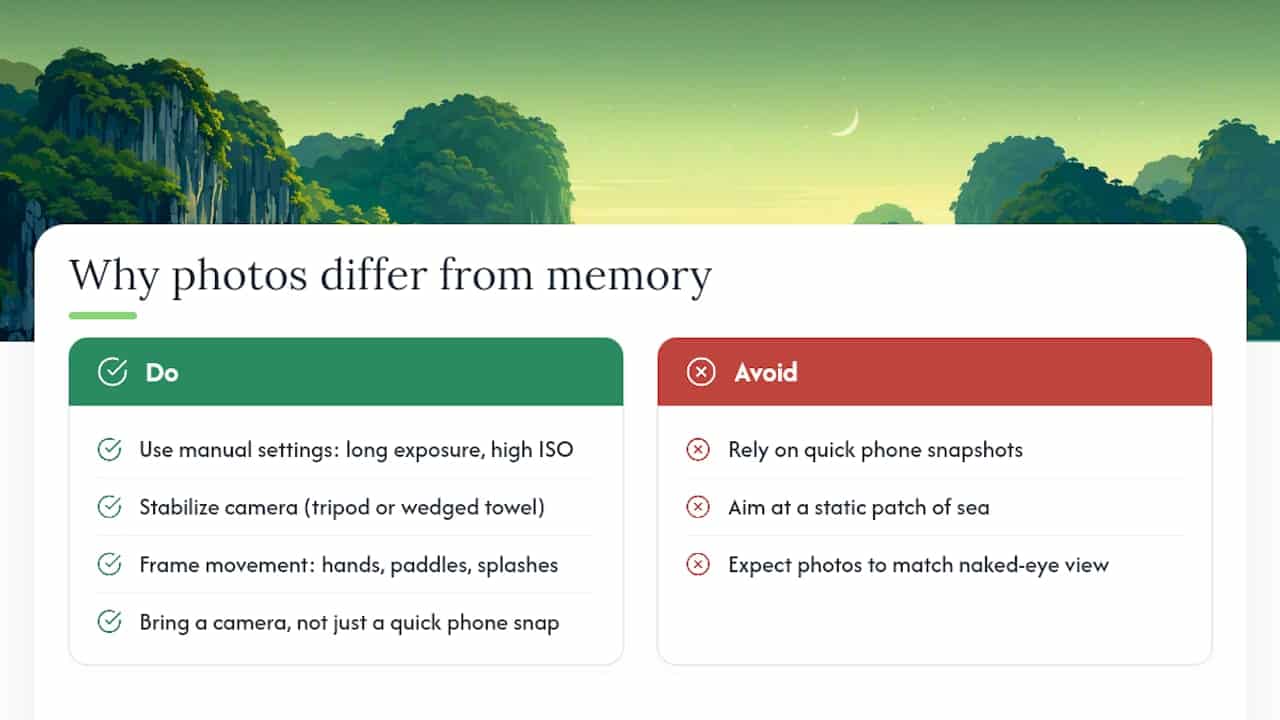
Why your photos won’t look like your memory
Bring your camera, but manage your expectations before you do. Human eyes and camera sensors process light completely differently, and long-exposure photography often exaggerates bioluminescence far beyond what you actually saw with the naked eye. That viral glowing-blue-wave photo almost certainly used a 10 to 20 second exposure.
For a real shot at capturing it, use manual camera settings: a long exposure, a high ISO, and something to keep the camera still. Phone cameras generally struggle here without a specialist night mode or a clip-on lens, so don’t expect miracles from a quick snapshot. Since the glow is triggered by movement, aim your shot at hands trailing through water, paddle strokes, or small splashes rather than a static patch of sea.
Pro Tip: A compact tripod or even a rolled-up towel wedged against the boat rail gives you enough stability for a proper long exposure without the camera shake that ruins most on-water night shots.
How to stay safe and tread lightly at night
Night water always deserves a bit more caution than daytime swims, glowing or not. Wear a life jacket if you’re at all unsure of your swimming ability in the dark, stay close to the boat, and always follow your guide’s instructions on where it’s safe to enter the water.
- Skip the flash entirely; it does nothing for the shot and disturbs other visitors’ eyes.
- Never scoop, bottle, or otherwise collect plankton to take home.
- Avoid brushing against coral or rock formations, especially around Phang Nga Bay’s caves.
- Book with operators who visibly follow national park rules and fee structures.
- Bring a torch with a red filter, a light jacket, drinking water, and biodegradable sunscreen.
Where routes pass through protected marine areas, expect a small park fee built into your tour price, and treat that as a sign the operator is doing things properly.
What running local tours teaches you about chasing the glow
Years of taking guests out on Phuket’s water teaches you one thing quickly: the confident answer isn’t always the honest one. Plenty of operators will promise a guaranteed light show regardless of moon phase or weather, and that’s simply not how plankton behaves. The nights that actually deliver are the ones where the guide has checked the tide charts and the lunar calendar before setting a departure time, not the ones that just run a fixed nightly schedule.
What tends to separate a memorable night from a disappointing one isn’t luck so much as flexibility, being willing to shift the route to whichever lagoon has been glowing well over the past few nights. Pairing a strong daytime itinerary, islands, cliffs, a sunset stop, with a properly timed evening plankton visit gives you the best of both worlds rather than a rushed add-on. That’s the approach worth looking for whichever destination you choose.
— Carl
Book a bioluminescence-friendly night tour from Phuket
There are tour operators offering combined boat, kayak, and transfer bookings for a Phang Nga Bay night out, providing one itinerary and hotel pickup with local guides who track which lagoons have been glowing well.

Qbic’s Phang Nga South Sea tour category covers the bay’s lagoon and cave routes that give you the best odds of a strong display, while the private boat tours page suits travellers who want a flexible evening departure timed to the moon phase rather than a fixed group schedule. Every trip includes hotel pickup and an experienced local guide who reads tides and conditions before choosing where to take you.
Check the current lunar calendar, pick a date near the new moon, and browse the full Phuket tours listing to lock in your evening slot.
Sources
- Best Beaches to See Bioluminescent Plankton in Krabi
- Krabi sunset and plankton cruise: timing, moon phase · Oasimo
- Phang Nga Bay weather, tides and best time
- How to capture blue plankton photos on iPhone or camera
- Smithsonian Ocean: Bioluminescence
FAQ
Which is more beautiful, Krabi or Phuket?
Both have striking limestone scenery, but Phang Nga Bay’s karsts near Phuket are often considered the more dramatic backdrop for a night tour, while Krabi’s Railay and Phra Nang beaches offer postcard-perfect daytime views.
Which beach has the best bioluminescence?
No single beach guarantees the strongest glow every night, but sheltered lagoons in Phang Nga Bay near Phuket tend to be more consistent than open beaches like Railay or Ao Nang in Krabi.
Where can I see bioluminescent water in Thailand?
The most reliable spots are the enclosed lagoons and caves of Phang Nga Bay near Phuket, with Krabi’s Railay, Phra Nang, and Ao Nang beaches offering good but more weather-dependent alternatives.
Where can I see bioluminescent plankton in Krabi?
Railay Beach, Phra Nang Beach, and Ao Nang are the most commonly reported spots, and many evening island cruises from Ao Nang include a short plankton swim as part of a longer sunset itinerary.


