
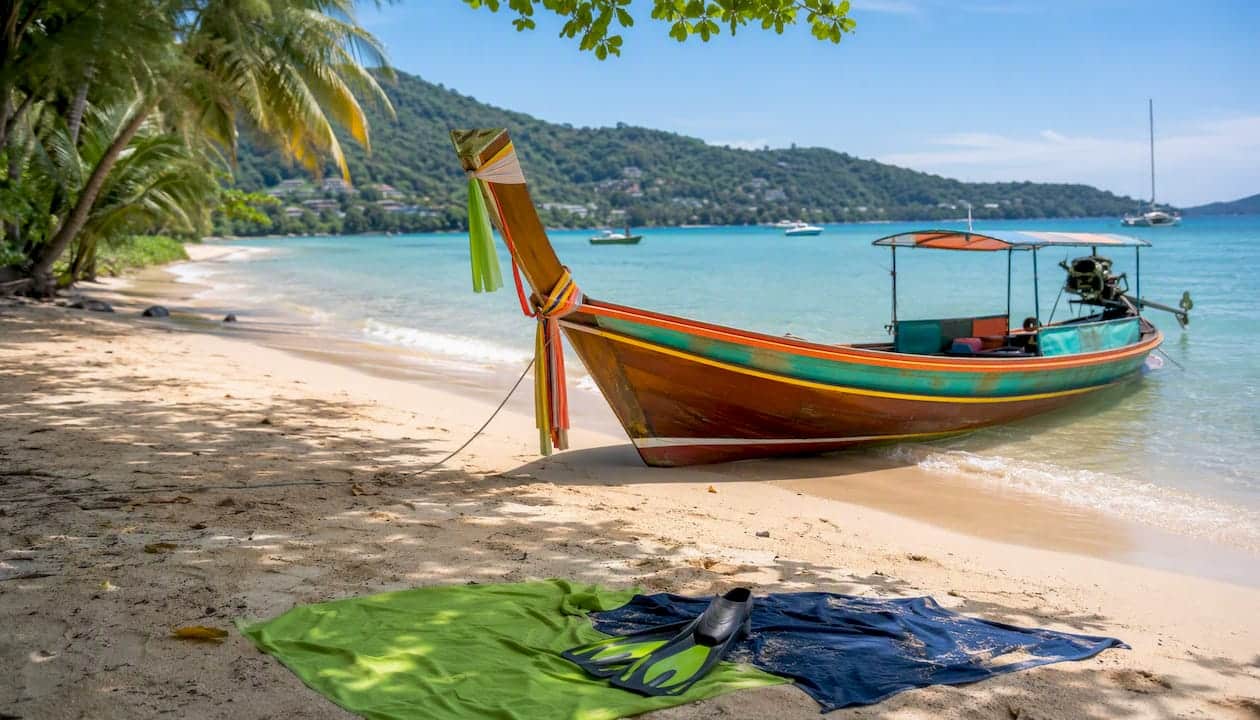
Phuket island hopping itinerary: practical 3–10 day plans
The most practical Phuket island-hopping itinerary follows a clean north-to-south loop: Phuket → Phi Phi → Koh Lanta → Koh Lipe, using Phuket as your base for the first night or two before moving south. This recommended Andaman coast route suits 7–10 days comfortably, though shorter versions work well if you trim the southern stops.
Your best base neighbourhoods in Phuket are Kata, Karon, Chalong, or Phuket Town. All four sit within easy reach of Rassada Pier (the main departure point for Phi Phi) and Chalong Pier (for Racha, Coral Island, and private charters). Staying near Patong is fine for nightlife, but the extra morning drive to the pier costs you time and stress.
First bookings to make:
- Ferry or speedboat from Rassada Pier to Phi Phi (book at least 2–3 weeks ahead in high season, November–February)
- First night’s accommodation on Phi Phi or Koh Lanta, depending on your pace
- Any Similan or Surin Islands day trip, if relevant (these sell out fast and run November–April only)
- A flexible or refundable ticket for your most weather-sensitive sea crossing
Pro Tip: Schedule your longest open-sea crossing (typically Koh Lanta to Koh Lipe) as early in your trip as possible. If rough weather forces a cancellation, you still have buffer days to rebook rather than missing the island entirely.
Key takeaways
The most practical Phuket island-hopping itinerary is the north-to-south loop (Phuket → Phi Phi → Koh Lanta → Koh Lipe), paced at no more than two boat days per five days to keep the trip enjoyable and resilient to weather changes.
| Point | Details |
|---|---|
| Best season to travel | November–April gives calm seas, open ferry routes, and access to Similan and Surin Islands. |
| Recommended loop | Phuket → Phi Phi → Koh Lanta → Koh Lipe suits 7–10 days with scheduled high-season ferries. |
| Pacing rule | Two island boat days per five-day stay reduces fatigue and absorbs weather cancellations. |
| Book early in high season | Ferry tickets and Similan liveaboards sell out weeks ahead; book 2–3 weeks minimum for December–February travel. |
| Qbictravel for local logistics | Qbictravel offers hotel pickup, private boat trips, and guided island tours with 99% issue-free service and flexible booking. |
Table of Contents
- When should you travel, and where should you base yourself?
- Sample Phuket island hopping itineraries: 3, 5 and 7–10 days
- How do you get between the islands?
- What can you do on each island?
- Practical tips for a smooth island-hopping trip
- Optional add-ons worth considering
- How Qbictravel makes island hopping easier from Phuket
- What most Phuket island-hopping guides get wrong
- Qbictravel: your local partner for Phuket island adventures
- Sources
When should you travel, and where should you base yourself?
Choosing the right season
November through April is the sweet spot for the Andaman coast. Seas are calm, skies are clear, and every ferry route runs on schedule. December and January bring the most reliable conditions and the heaviest crowds, so prices peak accordingly. February and March offer a slightly quieter window with equally good weather.
From mid-May to mid-October, the southwest monsoon hits the Andaman side hard. Many speedboat services reduce frequency or pause entirely, and the Similan and Surin Islands national parks close for conservation during this period. You can still visit Phi Phi and Koh Lanta in shoulder season (October, early May), but expect choppier crossings and check cancellation policies before booking.
How many days do you need?
- 3 days: One island day trip (Phi Phi or Phang Nga Bay) plus Phuket highlights. Tight but satisfying.
- 5 days: Two island boat days plus one land day. Keeping to two boat days in a five-day stay is a widely recommended approach to avoid travel fatigue and absorb cancellations without panic.
- 7–10 days: The full Phuket → Phi Phi → Koh Lanta → Koh Lipe loop, with room for a Phang Nga Bay detour or a Similan day trip.
Which pier serves which island?
Phuket has several departure points, and knowing which one you need saves a frantic morning taxi hunt.
- Rassada Pier (east coast, near Phuket Town): Phi Phi Islands, Koh Lanta, and most scheduled ferry services
- Chalong Pier (south): Racha Yai, Racha Noi, Coral Island (Koh Hae), and private charters
- Bang Rong Pier (north): Koh Yao Noi and Koh Yao Yai
- Ao Por / Thalane Pier (northeast): Phang Nga Bay tours and some Koh Yao services
Staying in Kata or Karon puts you roughly 20–30 minutes from Chalong and 30 minutes or more from Rassada. Phuket Town is the closest to Rassada, making it the sharpest choice if Phi Phi or Koh Lanta is your first stop. Choosing a pickup-friendly base near your departure pier genuinely saves morning time and stress.
Sample Phuket island hopping itineraries: 3, 5 and 7–10 days
3-day itinerary
- Day 1 — Phuket arrival and base setup. Check in near Chalong or Kata. Visit Big Buddha in the late afternoon. Dinner in Phuket Old Town. Accommodation: budget guesthouse or mid-range hotel in Kata/Karon.
- Day 2 — Phi Phi Islands day trip. Depart Rassada Pier by speedboat (45–70 minutes). Visit Maya Bay, Pileh Lagoon, and Monkey Beach. Return by 5 PM. Accommodation: same Phuket base.
- Day 3 — Phang Nga Bay or Coral Island. Half-day sea canoeing tour to James Bond Island and the Hong Islands, or a short speedboat hop to Coral Island (Koh Hae, roughly 15–30 minutes from Chalong). Afternoon free for markets or a spa. Accommodation: Phuket or depart.
5-day itinerary
- Day 1 — Arrive Phuket. Settle into Kata or Phuket Town. Evening walk through the Old Town’s Sino-Portuguese streets.
- Day 2 — Phi Phi day trip. Full-day speedboat tour from Rassada Pier. Snorkelling at Pileh Lagoon, lunch on Ton Sai Beach. Back by early evening.
- Day 3 — Land day. Big Buddha, Wat Chalong, and a cooking class or street food tour. This recovery day also acts as your weather buffer.
- Day 4 — Racha Islands or Phang Nga Bay. Racha Yai from Chalong Pier (30–45 minutes) for diving or snorkelling, or a big-boat Phang Nga Bay tour with sea canoeing through the cave hongs.
- Day 5 — Depart or extend. Morning free for a final beach visit or market. Afternoon transfer to airport or onward ferry.
7–10 day loop
This is the full Andaman coast island-hopping route: Phuket → Phi Phi → Koh Lanta → Koh Lipe.
- Days 1–2 — Phuket base. Arrive, settle, and do one Phuket day trip (Phang Nga Bay or Coral Island).
- Day 3 — Transfer to Phi Phi. Morning speedboat from Rassada Pier. Afternoon: explore Ton Sai village and Long Beach. Overnight: Phi Phi (budget bungalow or mid-range resort).
- Day 4 — Phi Phi full day. Early Maya Bay visit (before 9 AM for smaller crowds), snorkelling at Bamboo Island, sunset from the Phi Phi viewpoint. Overnight: Phi Phi.
- Day 5 — Transfer to Koh Lanta. Ferry via Koh Phi Phi Don (roughly 1.5–2 hours). Check in at Long Beach or Klong Dao. Afternoon beach time. Overnight: Koh Lanta (mid-range or boutique).
- Day 6 — Koh Lanta diving or snorkelling. Day trip to Koh Rok or Koh Ha for world-class snorkelling. Overnight: Koh Lanta.
- Day 7 — Transfer to Koh Lipe. High-season ferry (roughly 2.5–3 hours). Check in, explore Walking Street. Overnight: Koh Lipe (budget to mid-range).
- Days 8–9 — Koh Lipe. Snorkelling around Koh Adang, beach-hopping between Sunrise, Sunset, and Pattaya beaches. Overnight: Koh Lipe.
- Day 10 — Return. Ferry back north or fly from Hat Yai (nearest airport) if time is short.
How do you get between the islands?
Transport options at a glance
Speedboats are the fastest and most flexible option for shorter legs. They carry 10–30 passengers, run multiple daily departures on popular routes, and cut crossing times significantly compared with ferries. The trade-off is a bumpier ride, which matters in shoulder season.
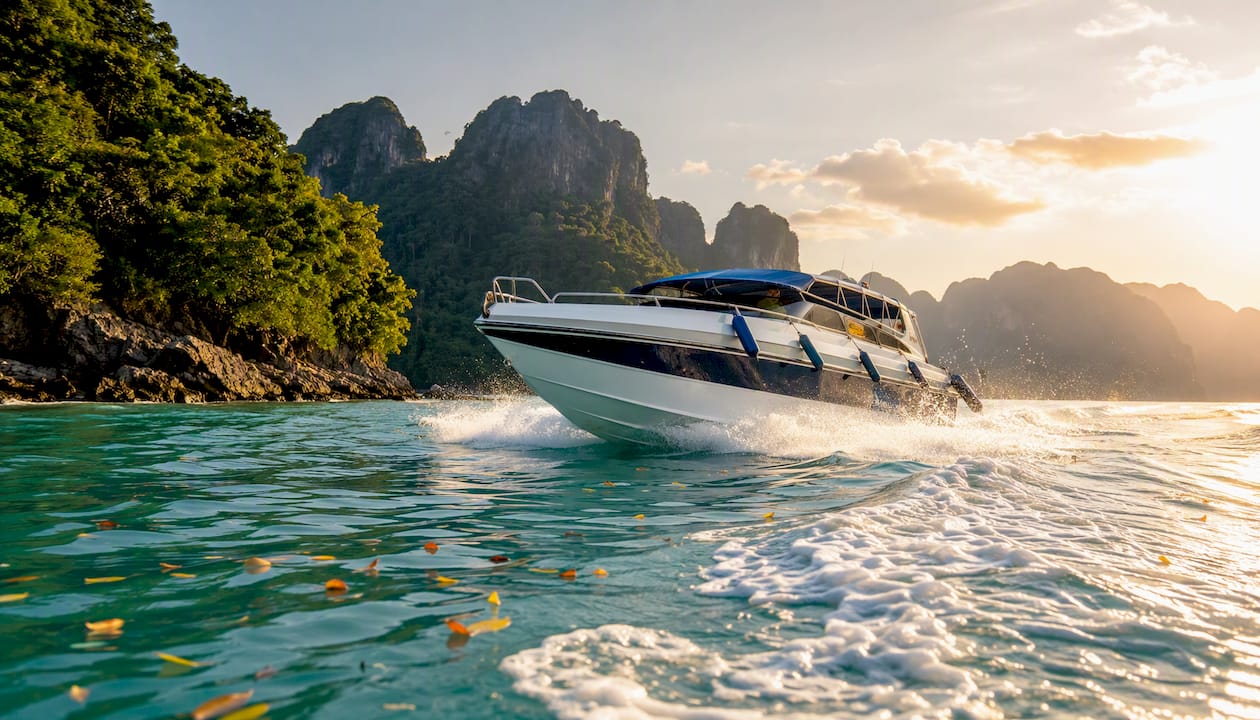
Shared ferries (high-speed or standard) suit longer legs like Phi Phi to Koh Lanta or Koh Lanta to Koh Lipe. They’re steadier, cheaper per seat, and often include luggage space. Slower, but far more comfortable for a 2–3 hour crossing.
Private charters give you full flexibility on timing and route. They cost substantially more (THB 12,000+ per day is a rough benchmark), but for groups of six or more, the per-person cost becomes reasonable and you gain same-day contingency control.
Long-tail boats handle short hops within an island group or to nearby beaches. They’re not suited for open-sea crossings but are perfect for reaching quieter coves around Phi Phi or Koh Lanta.
Key departure piers
- Rassada Pier (Phuket): main hub for Phi Phi, Koh Lanta, and scheduled ferry services
- Chalong Pier (Phuket): Racha Islands, Coral Island, private charters
- Bang Rong Pier (Phuket north): Koh Yao Noi, Koh Yao Yai
- Ao Por / Thalane Pier (Phuket northeast): Phang Nga Bay tours
- Khao Lak piers (mainland, 1.5 hrs north of Phuket): primary launch point for Similan and Surin Islands
Typical durations and ballpark costs
Shared speedboat day trips commonly run THB 1,200–4,000 per person depending on route and inclusions; ferry tickets for longer legs often cost THB 350–1,200.
Costs are indicative estimates and vary by operator, season, and inclusions. Always confirm current fares directly with the operator before booking.
In high season (December–February), book ferry tickets at least two weeks ahead. Shoulder season (October, early May) gives more walk-up availability, but always have a backup date in mind.
Pro Tip: Allow at least 30–45 minutes between a hotel pickup and pier departure. Traffic around Phuket Town and Chalong can be unpredictable in the morning, and missing a speedboat departure often means waiting hours for the next one.
What can you do on each island?
Phi Phi Islands
Phi Phi Don is the main inhabited island; Phi Phi Leh is where you’ll find Maya Bay. Since the bay’s conservation closure and controlled reopening, visitor numbers are capped and early-morning arrivals (before 9 AM) give you the best experience before tour boats stack up. Most day trips depart from Rassada Pier, with speedboats taking 45–70 minutes and ferries 1.5–3 hours.
Top 3 things to do:
- Snorkel Pileh Lagoon (emerald water, dramatic limestone walls)
- Hike to the Phi Phi viewpoint for a panoramic shot of the twin bays
- Swim Long Beach or Monkey Beach in the late afternoon when crowds thin
Suggested time budget: Full day minimum; overnight if you want the island to yourself at dawn. Safety note: Currents around Phi Phi Leh can be strong. Follow guide instructions and avoid swimming outside marked areas.
Koh Lanta
Koh Lanta Yai is the island most travellers mean when they say “Koh Lanta.” It’s quieter and more spread out than Phi Phi, with a long west-coast beach strip running from Klong Dao in the north to Kantiang Bay in the south. It works brilliantly as a multi-night base because the diving and snorkelling day trips to Koh Rok and Koh Ha are genuinely world-class.
Top 3 things to do:
- Dive or snorkel Koh Rok (vivid coral, visibility often exceeding 20 metres in high season)
- Explore the Old Town pier village on the east coast for local food and wooden shophouses
- Kayak through the mangroves at the southern national park
Suggested time budget: Two nights minimum. Safety note: Koh Lanta’s west-coast surf picks up in shoulder season; check beach flags before swimming.
Koh Lipe
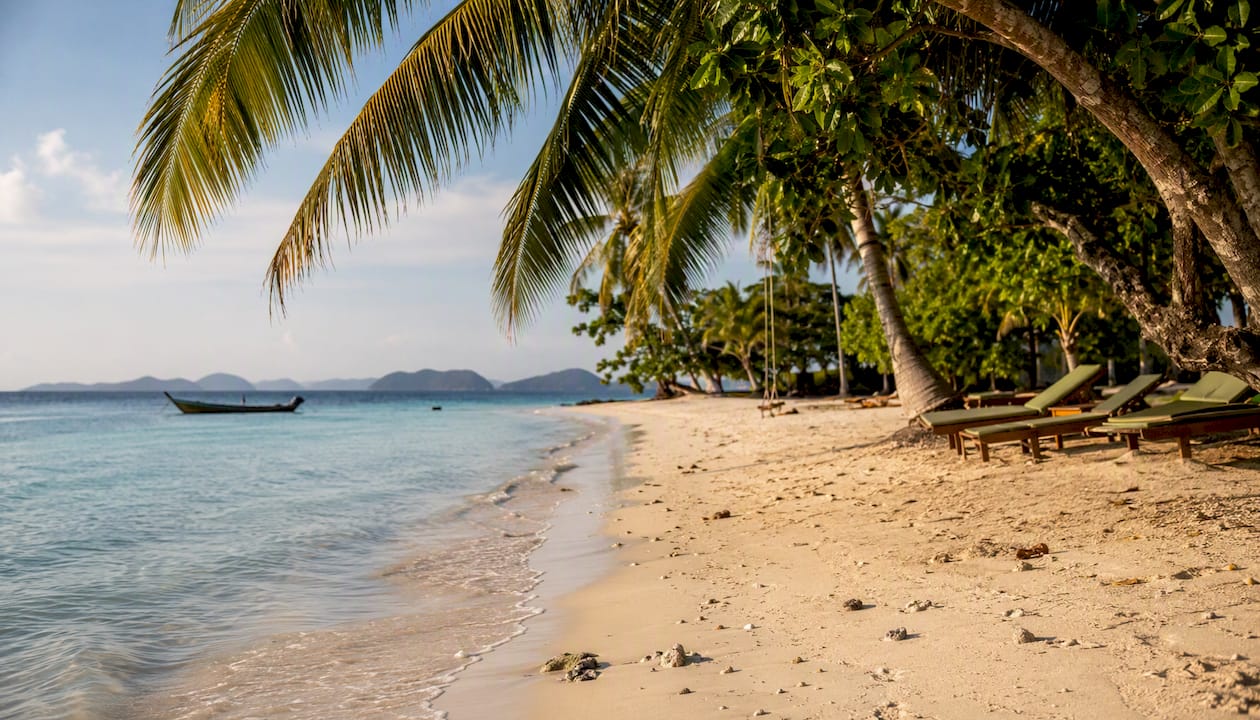
Koh Lipe sits near the Malaysian border and is only reachable by boat. High-season ferries run November–May; outside this window, services become irregular or stop entirely. The island is small enough to walk across in 20 minutes, with three main beaches (Sunrise, Sunset, and Pattaya) and excellent snorkelling around Koh Adang just across the channel.
Top 3 things to do:
- Snorkel the coral gardens off Sunrise Beach
- Take a long-tail to Koh Adang for a quieter beach and forest walk
- Watch the sunset from Sunset Beach with a fresh coconut in hand
Suggested time budget: Two nights. Safety note: Koh Lipe has no hospital; carry a basic first-aid kit and travel insurance that covers medical evacuation.
Phang Nga Bay (James Bond Island and Hong Islands)
Phang Nga Bay is a half-day or full-day trip from Phuket, typically by big boat departing from Ao Por or Thalane Pier. Combined tours include sea canoeing through cave hongs, a stop at the floating village, and lunch. The big-boat format is calmer than a speedboat, making it a good pick for travellers who get seasick or are travelling with young children.
Top 3 things to do:
- Paddle a kayak through the cave hongs at high tide
- Visit Khao Phing Kan (James Bond Island) for the iconic limestone pillar
- Explore Ko Panyi, the Muslim fishing village built on stilts
Suggested time budget: Full day. Safety note: Tidal timing matters for the cave hongs; operators plan entry windows, so follow the guide’s lead.
Racha and Coral Islands, Koh Yao, Similan and Surin
- Racha Yai and Racha Noi: 30–45 minutes from Chalong Pier. Clear water, good diving for all levels, calm in high season. Coral Island (Koh Hae) is even closer at 15–30 minutes and suits families or half-day trips.
- Koh Yao Noi and Koh Yao Yai: 30–45 minutes from Bang Rong Pier. Quiet, rural, and far less visited than Phi Phi. Good for cycling, kayaking, and a genuine off-the-beaten-track feel.
- Similan and Surin Islands: Open November–April only. Most trips run from Khao Lak, roughly 1.5 hours north of Phuket. World-class diving, pristine beaches, and strict conservation rules. Worth the extra planning if diving is a priority.
Practical tips for a smooth island-hopping trip
What to pack
Keep your bag light. Island hopping means moving between boats, tuk-tuks, and longtail taxis, and a heavy suitcase becomes a genuine problem on a wooden pier.
- Reef-safe sunscreen: standard sunscreen is banned in several Thai marine parks, including around the Similan Islands
- Waterproof dry bag: protects your phone, passport copy, and cash on every boat transfer
- Light daypack: leave the big bag at your Phuket hotel or a luggage storage service
- Basic medical kit: sea-sickness tablets, antihistamine, plasters, and rehydration sachets
- Rash guard or UV shirt: sun exposure on open water is intense, especially between 10 AM and 2 PM
Money and payments
National park entry fees apply at several stops: Phi Phi Leh (Maya Bay area), Phang Nga Bay, and the Similan and Surin Islands all charge fees, typically collected at the pier or on the boat. Carry cash in Thai Baht (THB) for these, as card readers are not always available on smaller islands. ATMs exist on Phi Phi Don and Koh Lanta but are limited on Koh Lipe, so withdraw before you travel south.
Sea safety and cancellations
Rough weather cancellations are a real possibility in shoulder season. If your operator cancels, most reputable services offer a rebooking or refund. Travel insurance that covers trip interruption is worth having, particularly for a multi-island itinerary where one missed ferry can cascade into missed accommodation bookings. For sea sickness, take medication 30–60 minutes before boarding rather than waiting until you feel unwell.
Luggage storage and island transfers
Most hotels in Phuket Town, Kata, and Karon offer free or low-cost luggage storage for guests. If you’re moving islands for 2–3 nights, leave your main bag at your Phuket base and travel with a daypack or small soft bag. Rigid suitcases are awkward on longtail boats and speedboat boarding platforms.
Visa and entry requirements
Most nationalities receive a visa exemption for Thailand of up to 30 or 60 days depending on their passport. Check the current rules with the Royal Thai Embassy or the official Thai immigration authority before you travel, as exemption periods and conditions can change. No COVID-19 entry requirements are currently in place, but confirm the latest health entry rules with your airline or the Thai government’s official travel information before departure.
Optional add-ons worth considering
The core loop covers the highlights, but a few extras can genuinely lift a trip if the timing and budget work.
Liveaboards and multi-night dive trips
A liveaboard is the best way to dive the Similan and Surin Islands properly. Day trips from Khao Lak reach the outer islands, but a 2–4 night liveaboard gets you to the more remote sites (Richelieu Rock, Koh Bon, Koh Tachai) with multiple dives per day. Most liveaboards require at least an Open Water certification; advanced certification opens the deeper and more technical sites. The season runs November–April, and popular boats fill up months in advance.
When a liveaboard makes sense:
- Diving is a primary goal, not an add-on
- You have at least 3–4 days to dedicate to the Similan area
- You’re travelling November–April
Bioluminescent tours and sunset kayak trips
Bioluminescent plankton tours run from several Phuket operators on dark-moon nights, typically paddling through mangrove channels or calm bays where the water glows blue-green with movement. They’re a genuinely memorable experience and suit any fitness level. Sunset kayak trips around the Hong Islands or Phang Nga Bay are similarly low-effort and high-reward, particularly for photographers.
Jet-ski island tours
For thrill-seekers who want speed and flexibility, a guided jet-ski island tour covers multiple stops in a fraction of the time a ferry takes. These work best as a half-day add-on to a Phuket base day rather than a replacement for a full island visit.
Slotting add-ons into your itinerary:
- 5-day trip: Replace one land day with a bioluminescent evening tour or a sunset kayak half-day
- 7-day trip: Add a Similan day trip from Khao Lak on Day 4 or 5, returning to Phuket before the Phi Phi ferry
- 10-day trip: Build in a 2-night liveaboard after Koh Lanta before heading to Koh Lipe
The Similan diving season and liveaboard availability are the most time-sensitive bookings in any Andaman itinerary. Plan Similan access as a dedicated block with a mainland transfer from Khao Lak rather than treating it as a casual day trip from Phuket.
How Qbictravel makes island hopping easier from Phuket
Planning a multi-island trip involves a lot of moving parts: ferry timings, pier locations, weather contingencies, and the question of what to do on land days. Qbictravel handles the logistics that tend to trip up first-time visitors, with hotel pickup included on most tours and flexible booking available for last-minute changes.
For the Phi Phi leg, the Phi Phi Islands Getaway tour covers the key stops with a guided group, removing the need to coordinate your own speedboat tickets and snorkelling gear. If you prefer more space and flexibility, the luxury Phi Phi catamaran option suits couples or small groups who want a premium experience without chartering a full private boat.
For Phang Nga Bay, the Phang Nga South Sea tour covers James Bond Island, sea canoeing, and the floating village in one day, with a big-boat format that’s steadier than a speedboat for those who prefer calmer crossings.
On land days, Qbictravel’s Phuket city tours cover Old Town, Big Buddha, and local markets, making it easy to fill a recovery day with genuine cultural content rather than just wandering. For adventure seekers, the 8-island jet-ski tour packs multiple island stops into four hours of high-energy riding.

Browse the full range of island tours and boat trips on the Qbictravel site, or get in touch via WhatsApp to build a bespoke day around your dates and group size.
What most Phuket island-hopping guides get wrong
Most island-hopping guides treat the itinerary as a checklist: hit every island, fill every day, maximise the count. That approach produces exhausted travellers who spend more time on boats than on beaches.
The research behind this guide points to something more useful: two boat days in a five-day trip is not a compromise, it’s the optimal structure. A third boat day in the same window increases your exposure to cancellations, cuts your recovery time, and means you’re too tired to enjoy the island you finally reach. The travellers who get the most out of Phuket’s island network are the ones who build in a land day, use it to actually rest or explore Phuket Town, and arrive at each island with energy rather than sea legs.
There’s also a persistent myth that you need to rush south to Koh Lipe to “do it properly.” Koh Lipe is genuinely beautiful, but it’s a long ferry ride and a logistically demanding final stop. For a first visit to the Andaman coast, Phi Phi plus Phang Nga Bay plus one night on Koh Lanta delivers more variety per day than the full loop rushed in seven days. Save the Koh Lipe leg for a return trip when you know the pace suits you.
One more thing worth saying plainly: the Similan Islands are not a casual add-on. If diving the Similans is on your list, plan it as its own dedicated block from Khao Lak, ideally with a liveaboard, and treat it as a separate trip within your trip. Bolting it onto a Phuket-based itinerary as a long day trip from the wrong pier is the single most common planning mistake on this route.
Qbictravel: your local partner for Phuket island adventures
Sorting out ferry tickets, pier transfers, and last-minute weather changes on your own is manageable, but it eats into the time you came to spend on the water. Qbictravel gives you a local team that already knows which boats run on time, which routes suit which weather windows, and how to pivot when conditions change.
The 8-island jet-ski tour is one of the most popular options for travellers who want speed and variety in a single four-hour session, covering multiple stops that a standard ferry itinerary would spread across two days. For a more relaxed pace, the private boat tours let you set the route, the timing, and the group size, with hotel pickup included and WhatsApp support available for same-day changes. Browse the full island tour range or message the team directly to lock in your dates.
Sources
- Phuket Island Hopping: A Self-Guided Itinerary for the Islands Near Phuket
- Andaman coast island hopping (Phuket → Phi Phi → Koh Lanta → Koh Lipe)
- The best island hopping Phuket guide to 8 islands
- Phuket island hopping guide for first‑time visitors


