

Why small group tours make for better adventures
Small group tours deliver better adventures because they give you access, not just transport. With a small number of travellers, a vetted local guide, and pre-confirmed logistics, the format opens doors that larger groups physically cannot fit through. You eat in family-run restaurants that seat twelve. You visit artisan workshops where the owner actually talks to you. You reach remote natural sites before the crowds arrive. That is the core of it.
Here is what sets small group travel apart at a glance:
- Access to hidden destinations unreachable by large coaches or cruise ships
- Authentic cultural immersion through private ceremonies, local meals, and artisan visits
- Expert local guides who act as cultural interpreters, not crowd controllers
- Flexible, personalised pacing that adapts to your group’s energy and curiosity
- Genuine social bonds with like-minded travellers who share your appetite for adventure
- Minimal logistical stress with permits, transport, and accommodation handled for you
- Enhanced safety and peace of mind, particularly for solo and solo female travellers
- Lower environmental impact and stronger support for local economies
The small group format sits in a sweet spot between the isolation of solo travel and the impersonal churn of a large coach tour. Every advantage below flows from that single structural fact: fewer people means more access, more attention, and greater freedom.
Table of Contents
- Why small group size unlocks places larger tours simply cannot reach
- How small groups create authentic cultural immersion
- What makes expert guides so valuable on small group adventures
- How flexible pacing transforms the adventure experience
- Why the social bonds formed on small group tours last
- How small group tours reduce hassle and keep you safe
- Expert insight: why personalised access defines the small group experience
- Key takeaways
- Qbictravel: small group adventures built for real explorers in Phuket
Why small group size unlocks places larger tours simply cannot reach
Access, not transport, is the defining benefit of travelling in a small group. A coachload of 45 people follows the standard tourist circuit because the infrastructure for genuine local access does not exist at that scale. Restaurants cannot seat them as one table. Remote campsites cannot absorb them. Sacred sites close their doors.
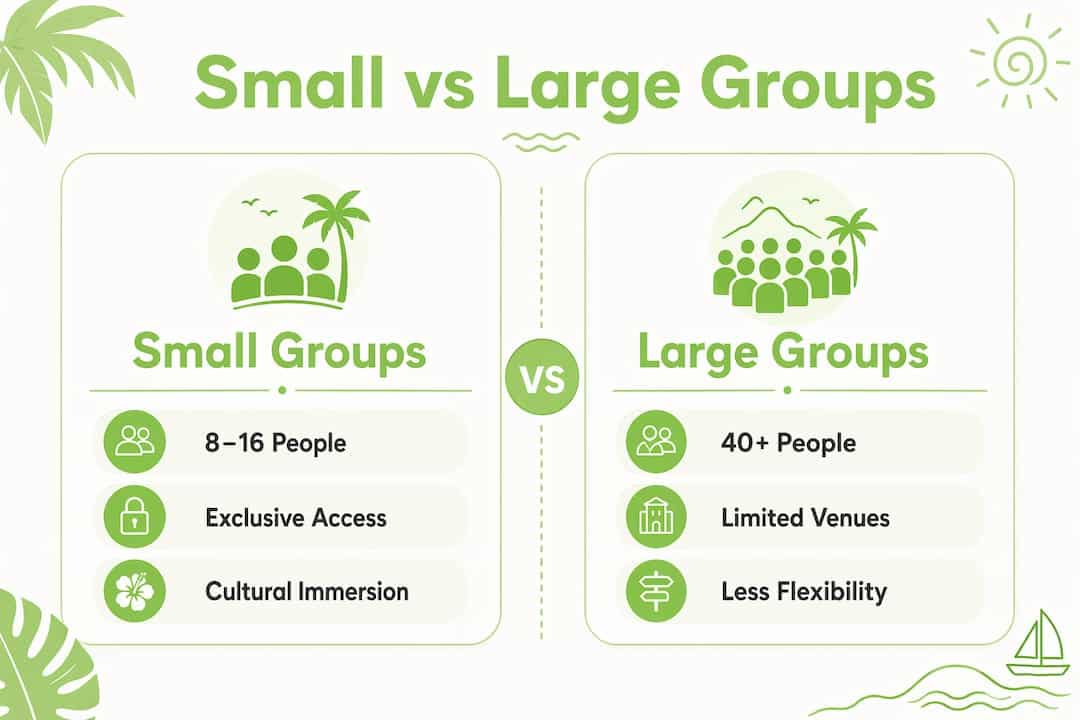
A small group changes the equation entirely. You can visit a village home, share a meal in a riad courtyard designed for a family, or enter a private conservancy where large operators have no allocation. These are not optional extras bolted onto an itinerary. They are the itinerary.
What small group size makes possible that large tours cannot:
- Dining in family-run restaurants and local eateries
- Visiting working artisan cooperatives, weaving studios, and craft workshops
- Accessing remote natural sites reachable only by small vessels or on foot
- Attending private or semi-private cultural ceremonies that require trust and small numbers
- Staying in boutique guesthouses and characterful properties rather than chain hotels
- Entering heritage sites at off-peak timings negotiated by the guide’s local relationships
The contrast with large group travel is practical, not philosophical. Big tours are limited by venue capacity and logistical constraints. A family-run eatery in a Thai fishing village cannot host 40 people. A secluded waterfall trail cannot safely accommodate a coach party. Small groups simply fit where large ones cannot.
| Feature | Small group (8–16 people) | Large group (40+ people) |
|---|---|---|
| Venue access | Family homes, boutique spots, remote sites | Tourist-oriented venues only |
| Cultural intimacy | Private ceremonies, artisan workshops | Staged demonstrations |
| Accommodation | Characterful, locally owned properties | Chain hotels with group capacity |
| Wildlife viewing | Quiet, unhurried, guide-led | Crowded viewpoints, rushed timing |
| Flexibility | Itinerary adjusts to group interest | Fixed schedule, no deviation |
Pro Tip: When booking a small group tour, ask the operator specifically what “exclusive access” means for their itineraries. The best operators can name the exact venues, timings, or relationships that make their access genuinely different from a standard tour.
How small groups create authentic cultural immersion
Genuine cultural connection requires trust, and trust takes time to build. Small groups earn it because they arrive as guests rather than a crowd. Local communities open up differently when the number of visitors is small enough to feel respectful rather than overwhelming.

The difference shows up in concrete moments. A master weaver in a village invites a group of ten to watch and ask questions. A family in a rural Thai community shares a meal and stories. A local elder shares oral history with visitors who are genuinely listening. None of these experiences scale to a coach tour. They depend on intimacy.
Small group tours also support local economies more directly than mass tourism. When your group eats at a family-run restaurant, stays in locally owned accommodation, and buys crafts directly from artisans, the money stays in the community. That economic impact creates sustainable livelihoods rather than funnelling revenue to large hotel chains.
Sustainability is woven into the small group model. Fewer travellers mean a reduced carbon footprint per person, less pressure on fragile ecosystems, and more considered interactions with local wildlife and communities. For travellers who care about the impact of their adventures, the format aligns with those values without requiring any extra effort.
What makes expert guides so valuable on small group adventures
The difference between a good guide and an exceptional one becomes most visible in a small group setting. When a guide is not managing 40 people, they can actually do their job: interpret the destination, respond to individual curiosity, and adapt the narrative in real time.
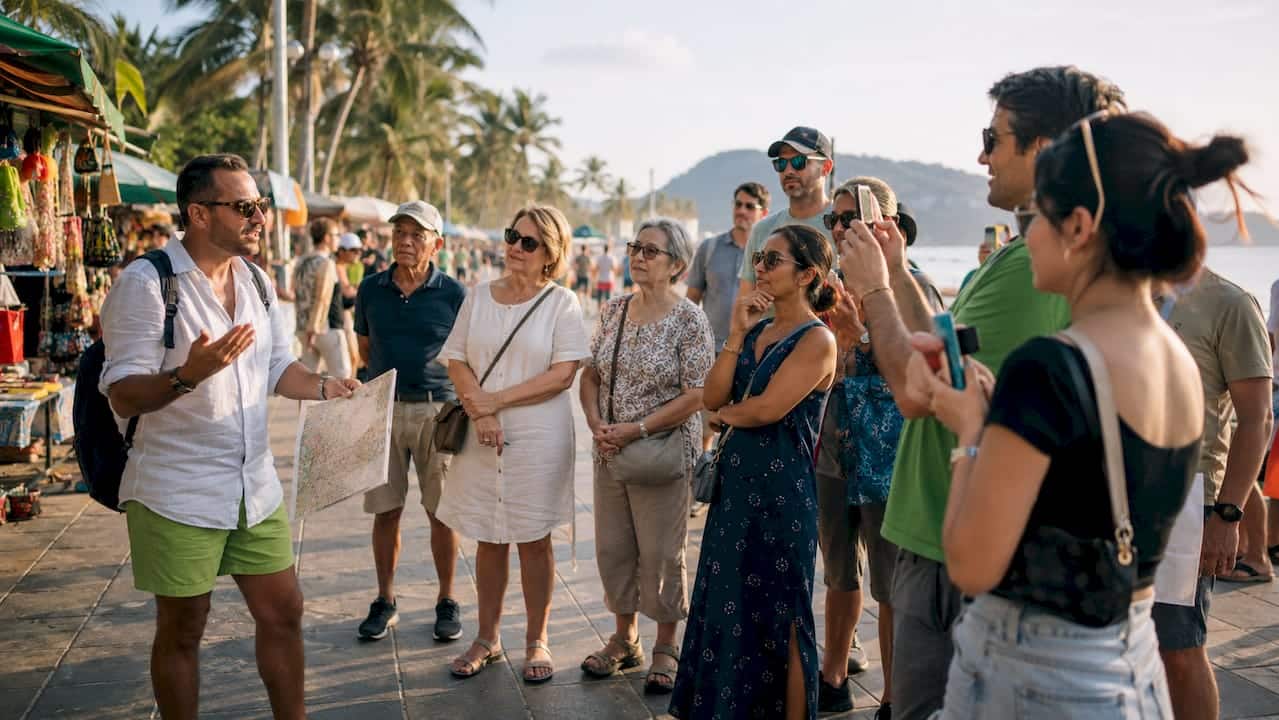
A vetted local guide maintains relationships with site managers, local families, and restaurant owners. They know where the non-public entrances are. They can negotiate a 30-minute window at a heritage site after the main tourist flow has moved on, or take you to a viewpoint at 5am in the right light, before the day hikers arrive. That kind of access depends entirely on years of local relationship-building.
What expert guides deliver in a small group context:
- Tailored storytelling based on the group’s interests and knowledge level
- Spontaneous route adjustments to maximise wildlife sightings or cultural moments
- Personal answers to individual questions, not scripted commentary
- Insider tips on local food, hidden spots, and timing that no guidebook carries
- Smooth logistics so the group never has to think about what comes next
- First aid training and local emergency knowledge for remote adventures
You can read more about why local guides matter for adventure trips and how their expertise shapes the entire experience. The guide is not a feature of the tour. In a small group, they are the tour.
How flexible pacing transforms the adventure experience
Rigid schedules work for mass tourism because they have to. Moving 45 people through a destination requires military precision. Small groups operate differently. The itinerary bends to the group’s energy, curiosity, and the unexpected moments that make travel memorable.
Small group tours build in unscheduled free time and optional activities as a deliberate design choice, not an afterthought. That free time might mean an impromptu hike down a trail the guide spotted that morning, an extra hour at a market because the group is genuinely absorbed, or simply a quiet coffee at a local café while the world goes by.
- Spontaneous stops become possible when the group is small enough to pivot without chaos
- Extended visits happen when a location captures the group’s imagination
- Rest when needed without holding up dozens of impatient fellow travellers
- Optional activities let individuals customise their day within the group structure
- Wildlife and seasonal moments can be incorporated as they arise, not ignored because the schedule says otherwise
Pro Tip: The best small group tours balance structure with breathing room. Look for itineraries that list “free time” or “optional activities” explicitly. That language signals an operator who understands that the best travel moments are often unplanned.
Small group pacing also benefits travellers with different physical capabilities or energy levels. Rest breaks do not hold up dozens of impatient tourists. The group naturally accommodates different rhythms, which means everyone enjoys the experience rather than enduring it.
Why the social bonds formed on small group tours last
There is something about sharing a genuinely challenging or awe-inspiring experience with a small group of people that accelerates friendship. Spotting lions on safari, summiting a mountain pass together, or sitting around a desert campfire with Bedouin guides creates bonds that a week of polite small talk in a hotel lobby never could.
Small group tours provide an instant community for solo travellers, removing the common barriers of isolation and safety concerns that solo travel can bring. The majority of participants on most small group departures are solo travellers, which means you are unlikely to be the only one travelling alone. The social conditions are genuine, not manufactured.
Who benefits most from the social dimension of small group travel:
- Solo travellers who want companionship without surrendering independence
- Couples who enjoy shared experiences but also want to meet new people
- Friends travelling together who gain a wider social circle on the road
- Mature travellers who value meaningful conversation over surface-level socialising
The group size matters here too. With 8–16 people, the social dynamic feels natural. Large enough that you will find people you genuinely connect with. Small enough that relationships go deeper than a polite nod at breakfast.
How small group tours reduce hassle and keep you safe
Planning a complex international adventure independently is genuinely hard work. Permits, transport connections, accommodation in remote areas, emergency protocols, local medical knowledge, and updated travel restrictions all require research, time, and local knowledge that most travellers simply do not have. Small group tours offload all of that, so your mental energy goes into the experience rather than the infrastructure.
What a well-run small group tour handles invisibly:
- Entry permits and site access bookings
- All transport between destinations, including remote transfers
- Accommodation reservations, including characterful locally owned properties
- Dietary requirements and meal arrangements
- Emergency protocols and first aid coverage
- Local customs guidance and cultural etiquette briefings
For solo female travellers in particular, the small group format offers a reassuring combination of independence and security. You explore unfamiliar destinations with the confidence that comes from travelling alongside a vetted guide and a close circle of companions, without compromising on freedom or comfort. The logistics are handled from start to finish, so the focus stays entirely on the adventure.
Expert insight: why personalised access defines the small group experience
The travel industry has a phrase for what separates small group tours from everything else: access, not just transport. A guide who has spent years in a destination, maintains relationships with local families and site managers, and knows the non-public routes is a fundamentally different product from a tour leader with a megaphone and a fixed script.
A vetted local guide’s relationship network permits experiences and timings that are simply unavailable to large groups or independent travellers. Petra at 6:30am before the tourist circuit arrives. A private conservancy in Kenya where large operators have no allocation. A Silk Road heritage site at golden hour, negotiated by a guide who knows the security staff personally. These are not lucky coincidences. They are the result of years of relationship-building that only small group specialists can leverage.
Expert guides in small groups have time to engage personally with every traveller, which transforms the storytelling and learning experience. You can read more about how local storytelling shapes the depth of cultural tours and why it matters for adventure travel.
Qbictravel holds a rating of 4.5 from 237 verified reviews, with 99% issue-free services confirmed by Trustindex. That track record reflects what happens when expert local knowledge meets careful group management: travellers come away saying the experience felt effortless, even when the adventure itself was anything but.
Key takeaways
Small group tours deliver better adventures because access, expert guidance, and flexible pacing combine to create experiences that larger groups structurally cannot replicate.
| Point | Details |
|---|---|
| Access is the core advantage | Groups of 8–16 reach family homes, remote sites, and exclusive venues that large tours cannot enter. |
| Expert guides change everything | Vetted local guides use personal relationships to unlock timings, routes, and cultural moments unavailable to independent travellers. |
| Flexible pacing deepens the experience | Built-in free time and spontaneous stops allow the itinerary to follow the group’s curiosity rather than a rigid schedule. |
| Solo travellers gain most | The majority of small group participants travel solo, gaining community, safety, and shared costs without losing independence. |
| Qbictravel delivers this in Phuket | With a 4.5 rating from 237 reviews and 99% issue-free services, Qbictravel offers expert-guided small group adventures across Thailand’s most epic landscapes. |
Qbictravel: small group adventures built for real explorers in Phuket
If everything above resonates with you, Qbictravel puts it into practice across Phuket’s most thrilling terrain. The focus here is on niche, high-energy adventures in small, carefully managed groups: jet ski island tours, ATV rides through jungle trails, cultural city excursions, and speedboat trips to hidden islands that larger operators simply cannot access with the same intimacy.

What makes Qbictravel different from a standard Phuket tour provider is the combination of expert local knowledge and genuine small group management. Guides know the terrain, the tides, the best light for photography, and the spots that do not appear on any tourist map. Every itinerary is planned to give you maximum adventure with minimum faff, whether you are a solo traveller, a couple, or a group of friends after something genuinely epic.
With a 4.5 rating from 237 verified reviews and 99% issue-free services confirmed by Trustindex, the track record speaks for itself. Browse the full range of Phuket small group tours and book online to secure your spot.


