

How families prepare Thailand adventure tours: 2026 guide
A family adventure tour in Thailand is defined as a multi-region trip combining outdoor activities, cultural experiences, and guided excursions across destinations like Bangkok, Chiang Mai, and the southern coast. Knowing how families prepare Thailand adventure tours makes the difference between a chaotic trip and an epic one. The key preparation pillars are itinerary design, budgeting, packing, activity selection, and safety planning. Get these right and Thailand rewards you with lush jungle trails, warm turquoise water, and memories that last a lifetime. This guide covers every step, with real costs, practical frameworks, and tips from the ground up.
How do families plan a Thailand adventure itinerary?
The three-region plan is the most effective structure for a 10-day family trip: three nights in Bangkok, three nights in Chiang Mai, and four nights on the southern coast. That allocation gives you enough time in each place without burning out the kids on travel days. Families who try to squeeze in five or six destinations end up spending more time in transit than on the ground.
A well-structured plan looks like this:
- Bangkok (nights 1–3): Temples, street food markets, and a Chao Phraya river boat ride. Keep activities within a short taxi or BTS Skytrain ride of your hotel.
- Chiang Mai (nights 4–6): Ethical elephant sanctuaries, cooking classes, and night bazaars. The city is compact and very walkable for families.
- Southern coast, Phuket or Krabi (nights 7–10): Island hopping, snorkelling, zip-lining, and beach days. This is where the big adventure activities live.
Internal flights between regions cost roughly £28–£63 per person when booked in advance. That is far better value than an overnight train with young children. Book flights at least six weeks ahead to lock in the lower fares.
Pro Tip: Treat each city as a base for day trips rather than a transit stop. Staying put for two or three nights reduces packing and unpacking fatigue, which matters enormously with kids.
Phuket is a natural anchor for the southern leg. It offers family-friendly activities across every age group, from gentle beach snorkelling to full-on ATV trails through the jungle.
What does a Thailand family adventure tour actually cost?
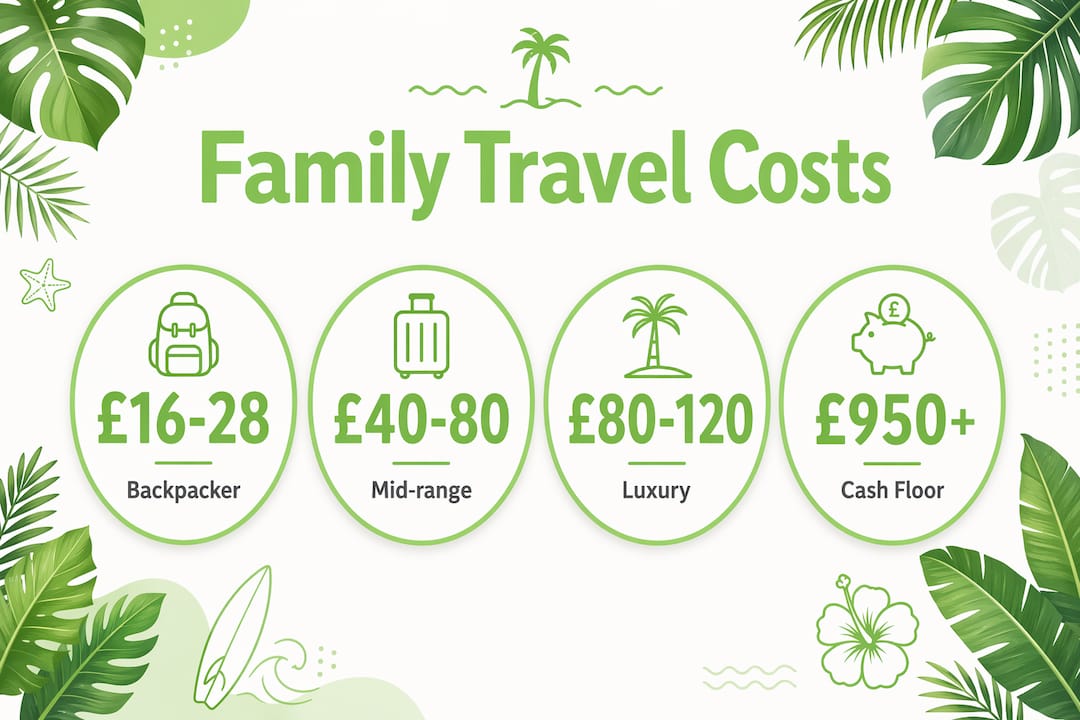
Thailand travel budgets fall into three clear tiers: backpacker at £16–£28 per person per day, mid-range at £40–£80 per person per day, and luxury at £120–£360 per person per day. Most families travelling with children land comfortably in the mid-range bracket.
A 14-day mid-range trip for two adults costs approximately £2,170. Add children and factor in activity discounts, since children under 8 often attend cooking classes and island hops free or at half price, and the total remains manageable.
Key costs to plan for:
- Accommodation: Mid-range family rooms run £35–£70 per night in Bangkok and Chiang Mai, slightly higher in Phuket resort areas.
- Activities: Rafting and zip-line sessions cost roughly 1,200–1,800 THB (£28–£42) per adult, with children discounted 25–50%.
- Combined day tours: An elephant sanctuary plus zip-line day runs 3,800–4,500 THB (£88–£104) per adult.
- Transport: Internal flights, tuk-tuks, and Grab taxis are the main costs. Budget £8–£16 per day for in-city transport.
Thailand immigration officers can ask families to show a cash floor of approximately £950 per family upon arrival. Carry this in a mix of cash and a travel card. Never rely solely on a single card abroad.
For a broader look at how travel finance works across different budget tiers, this travel cost overview breaks down accommodation and activity spending in useful detail.
What should families pack for adventure travel in Thailand?
Smart packing for Thailand means going light and going functional. The climate is hot and humid, activities involve water and mud, and you will be removing shoes at temples constantly. Pack for movement, not fashion.
Clothing and footwear essentials:
- Lightweight, quick-dry shirts and shorts for every family member
- One warm layer per person for air-conditioned buses and restaurants
- Water sandals with grippy soles for temple visits and wet terrain
- Closed-toe shoes for ATV and jungle activities
Health and safety items:
- DEET insect repellent (at least 30% concentration)
- Reef-safe sunscreen, SPF 50 minimum
- A basic first aid kit with plasters, antiseptic, and rehydration sachets
- Any prescription medications in original packaging, with a doctor’s letter
One packing decision that surprises most families: leave the toys at home. Local markets sell inexpensive, culturally interesting toys that children engage with far more than items from home. Giving each child a small daily allowance for market shopping also builds independence and keeps them genuinely excited about exploring.
Pro Tip: Pack a dry bag for each child on water activity days. It keeps phones, snacks, and spare clothes dry during island hops and river tubing sessions without adding bulk to your main luggage.
What are the best family adventure activities in Thailand?
Thailand offers a genuinely wide range of family-friendly adventure activities, and the best ones combine physical excitement with cultural learning.
Top activities suited to families with children aged 6 and above:
- Ethical elephant sanctuaries: Feeding and bathing elephants at a reputable sanctuary is one of the most memorable experiences Thailand offers. Choose operators that do not use riding or performance.
- Cooking classes: Typically cost 1,200–1,800 THB per adult and run two to three hours. Children love the hands-on format and the food is genuinely delicious.
- Island hopping: Day trips from Phuket or Krabi cost 1,500–3,000 THB per adult. Snorkelling gear is usually included.
- Zip-lining: Phuket has several well-maintained courses. Qbictravel’s Phuket zipline adventure is a strong option with clear safety briefings and age-appropriate platforms.
- ATV tours: Off-road trails through jungle and farmland are a huge hit with older children. Qbictravel’s ATV tours in Phuket include guided routes and full safety equipment.
- River tubing: A gentler water activity that works well for mixed-age groups.
Book activities through vetted platforms to guarantee safety certification. Booking through trusted operators eliminates the risk of unregulated street-tout experiences, which often lack proper safety equipment or insurance.
Avoid night-time road travel. Road safety risks from high motorcycle density and unpredictable traffic make night driving genuinely dangerous. Use daytime transport or internal flights for all inter-city moves.
How do families manage cultural expectations and travel stress in Thailand?
Thai culture is deeply family-oriented, and travelling with children opens doors that solo travellers never see. Expect warm, spontaneous interactions, particularly if your children have fair hair, which draws genuine curiosity and affection from locals. These moments create natural downtime for parents and genuine connection for kids.
The biggest mistake families make is packing too much into each day. Slowing the pace reduces sensory overload for children and produces richer experiences for everyone. One or two activities per day, with a long lunch break, works far better than a back-to-back schedule.
Thailand operates at its own rhythm, and embracing that is part of the experience. Tuk-tuks arrive when they arrive. Markets are loud and crowded. Street food smells extraordinary. Treating these moments as the adventure, rather than obstacles to manage, shifts the whole family’s mood. Children pick up on parental stress quickly, so your attitude genuinely sets the tone for the trip.
Key takeaways
Families who plan a Thailand adventure trip with a clear itinerary, realistic budget, and age-appropriate activities consistently report smoother, more enjoyable experiences than those who improvise.
| Point | Details |
|---|---|
| Use the three-region plan | Allocate three nights each in Bangkok and Chiang Mai, four nights on the southern coast. |
| Budget for the mid-range tier | Expect £40–£80 per adult per day; children often receive 25–50% discounts on activities. |
| Pack light and functional | Quick-dry clothing, reef-safe sunscreen, DEET repellent, and water sandals cover most situations. |
| Book activities through vetted operators | Safety certification and insurance are only guaranteed through reputable booking platforms. |
| Slow the daily pace | One or two activities per day prevents child fatigue and deepens cultural engagement. |
What I have learned from watching families get Thailand right (and wrong)
I have seen families arrive in Phuket with six-region itineraries, colour-coded spreadsheets, and suitcases full of toys from home. Within three days, the children are exhausted, the parents are stressed, and the spreadsheet is in the bin.
The families who genuinely thrive are the ones who treat the itinerary as a framework, not a contract. They book the big activities in advance, yes. But they leave afternoons open. They let a child’s fascination with a market stall turn into a 45-minute conversation with a vendor. That is the real Thailand.
The cash floor requirement catches people off guard every single time. Carry it. Do not assume a travel card covers the immigration check. I have watched families get pulled aside at Suvarnabhumi Airport because they could not demonstrate liquid funds. It is an avoidable stress.
On safety: the night road travel warning is not a guideline, it is a hard rule. Daytime Grab taxis and internal flights are cheap enough that there is no reason to take the risk. The motorcycle density on Thai roads after dark is genuinely alarming, even for experienced travellers.
Finally, trust the local operators who have skin in the game. Qbictravel’s 4.5 rating from 237 reviews and 99% issue-free service record, verified by Trustindex, reflects what consistent safety standards and local expertise actually look like in practice.
— Carl
Plan your Phuket adventure with Qbictravel
Qbictravel specialises in exactly the kind of experiences that make a family trip to Phuket genuinely memorable. From jet ski tours around Phuket’s stunning coastline to ATV adventures through lush jungle trails, every tour is designed with safety, fun, and local expertise at its core.

With a 4.5 rating from 237 verified reviews and 99% issue-free services confirmed by Trustindex, Qbictravel takes the guesswork out of activity planning. All tours include safety briefings, proper equipment, and guides who know Phuket inside out. Browse the full range of family adventure tours and book online in minutes.
FAQ
What is the best itinerary length for a family trip to Thailand?
A 10-day trip using the three-region plan covers Bangkok, Chiang Mai, and the southern coast without overpacking the schedule. This structure gives families enough time in each region for both activities and rest.
How much should a family budget per day in Thailand?
Mid-range family travel costs roughly £40–£80 per adult per day, with children often admitted to activities at 25–50% discount. Factor in a cash reserve of approximately £950 per family for immigration requirements.
What activities are safe for young children in Thailand?
Cooking classes, ethical elephant sanctuaries, island hopping, and river tubing all work well for children aged 6 and above. Book through vetted operators to guarantee safety certification and proper equipment.
Should families avoid night travel in Thailand?
Night-time road travel carries genuine safety risks due to high motorcycle density and unpredictable traffic. Use daytime transport or internal flights for all inter-city journeys.
Is it worth buying toys before travelling to Thailand with kids?
Leave toys at home. Local markets sell inexpensive, culturally interesting items that children engage with far more enthusiastically. Giving children a small daily market allowance also encourages independence and cultural curiosity.


