

Types of island cultural experiences: your 2026 guide
Island cultural experiences are immersive activities that connect you directly with local traditions, practices, and lifestyles, offering far richer understanding than standard sightseeing ever can. Across the Pacific, Southeast Asia, and South America, travellers are moving beyond beach days and boat trips to engage with living cultures on their own terms. The best island cultural tours share one quality: they centre the community, not the camera. Whether you are drawn to kastom village ceremonies in Vanuatu, homestays on Lake Titicaca, or craft workshops in the Solomon Islands, the depth of what you gain depends entirely on how you show up. This guide covers the most rewarding types, with practical advice on doing each one well.
1. What are the types of island cultural experiences worth seeking?
Island cultural experiences, also called community-based cultural tourism, range from single-day village visits to multi-day homestays and indigenous festival participation. The term covers any activity where local traditions, governance, or daily life are the main event. What separates meaningful experiences from performative ones is community control and revenue transparency. The most enriching encounters happen when local people set the terms, not tour operators chasing convenience.
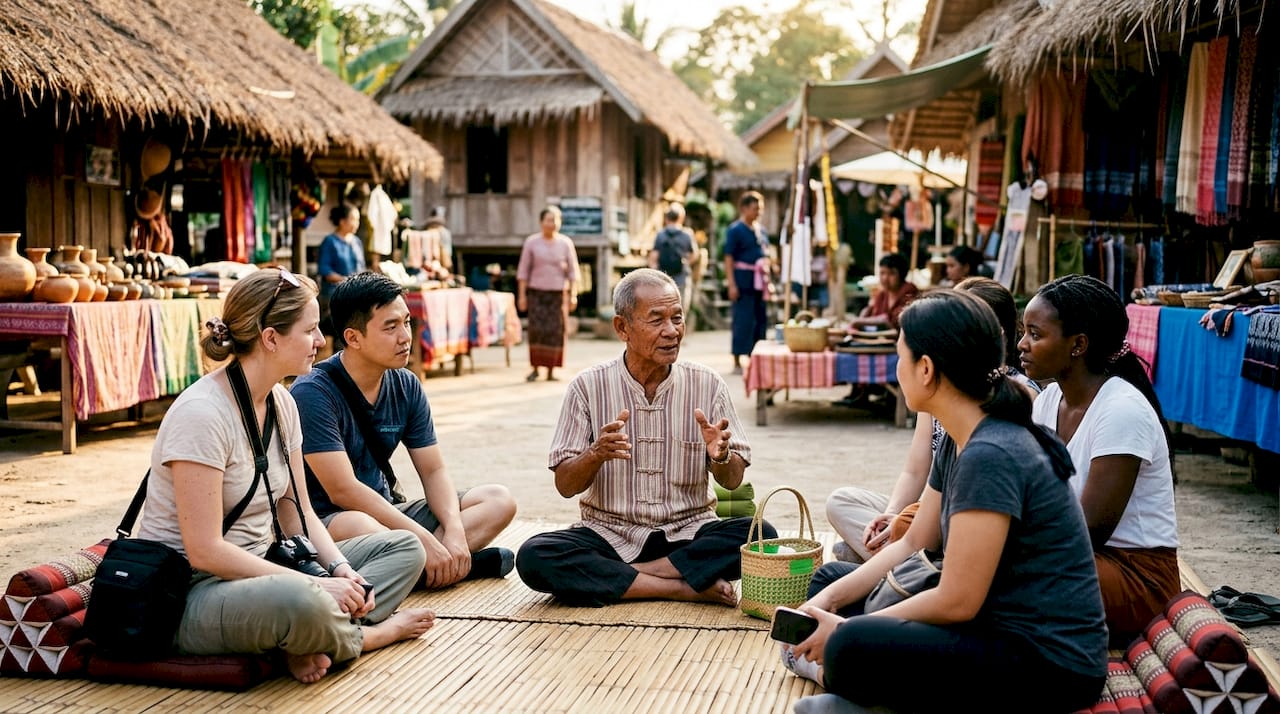
2. Kastom village visits in Vanuatu
Vanuatu is the world’s most linguistically dense nation, with 138 distinct languages spoken across its islands. That linguistic richness reflects a cultural depth that makes it one of the most rewarding destinations for immersive island heritage experiences. Kastom refers to the traditional laws, rituals, and social structures that govern village life, and it remains very much alive.
A well-run kastom village visit includes:
- Kava ceremonies — the ritual preparation and sharing of kava root drink, central to community decision-making
- Land diving (Naghol) — a gravity-defying tradition on Pentecost Island performed to bless the yam harvest
- Sand drawing — a UNESCO-recognised art form where complex patterns are drawn in a single continuous line
- Pig roast feasts — communal meals that mark significant social and ceremonial occasions
Properly structured kastom visits report 94% visitor satisfaction with cultural authenticity, compared to 67% for generic island tours. That gap is significant. It tells you that the structure of the visit matters as much as the destination itself.
Pro Tip: Choose operators with transparent, community revenue-sharing schemes and groups capped at 15 people. Larger groups almost always result in performative interactions rather than genuine exchange.
3. Homestays at Lake Titicaca, Peru
Lake Titicaca sits on the border of Peru and Bolivia, and its islands offer some of the most talked-about cultural encounters in South America. The contrast between visit types here is stark and instructive.
| Visit type | Duration | Community benefit | Depth of engagement |
|---|---|---|---|
| Half-day Uros tour | 3–4 hours | Low, often indirect | Surface level, photo-focused |
| 2-day Amantani homestay | 2 days | Direct payment to host family | Farming, cooking, textile co-ops |
Half-day Uros island tours frequently pressure visitors to buy goods or pay for boat rides, with little revenue reaching the community directly. A 2-day homestay on Amantani or Taquile island changes the equation entirely. You sleep in a family home, help with daily tasks, and participate in weaving or cooking alongside your hosts.
Look for these markers when choosing a Lake Titicaca tour:
- Direct payments made to host families, not pooled through an agency
- Language support or a bilingual local guide
- Small groups of no more than 10 travellers
- Explicit mention of textile co-operative visits or community-run activities
The longer format also gives you time to understand the significance of Andean textile traditions, which encode social identity, marital status, and community belonging in every pattern.
4. The Flying Fish Festival on Orchid Island
Orchid Island, off the southeastern coast of Taiwan, is home to the Tao people, whose Flying Fish Festival is a living, cyclical indigenous tradition. It is not a ticketed performance. Ceremonies occur only when flying fish are available, governed by a seasonal calendar that the community, not a tourism board, controls.
The festival follows strict protocols that visitors must respect:
- Photography is restricted or entirely prohibited during ceremonies
- Dress codes are enforced, and modest clothing is non-negotiable
- Participation is by invitation only, never assumed
- Certain areas and times are subject to taboos that outsiders must observe
“Authentic experiences like spontaneous ceremonies or community feasts happen on short notice and require respectful flexibility.” — Cultural adventures and community influence
Indigenous festivals operate on natural cycles, not tourist timetables. If you visit Orchid Island hoping to witness the Flying Fish Festival, build flexibility into your itinerary and accept that an invitation is a privilege, not a given. Patience and openness are the entry requirements.
5. Tribal tours in Indonesia: Mentawai and Korowai
Indonesia’s island archipelago contains some of the most geographically and culturally varied tribal communities on earth. Two stand out for travellers seeking immersive island cultures: the Mentawai of West Sumatra and the Korowai of Papua.
The cost difference between these two experiences reflects the logistics involved:
- Mentawai tribe tours cost USD 215–620 per person for 3–7 day itineraries, covering village stays, craft participation, and guided forest walks
- Korowai region tours cost USD 1,500–3,500 or more, due to charter flights and long boat journeys into remote Papua
Both offer genuine immersion, but the Korowai experience demands considerably more planning and budget. Typical activities across both destinations include:
- Participating in traditional tattooing or body decoration rituals
- Learning to use traditional tools and weapons under local guidance
- Sharing meals prepared using ancestral cooking methods
- Observing or joining daily village routines such as fishing and foraging
Pro Tip: If budget is a constraint, the Mentawai islands offer equally authentic engagement at a fraction of the cost. Prioritise operators who pay guides and community members directly rather than through a centralised agency.
For travellers who want to combine active exploration with cultural access, island hopping experiences can serve as a practical framework for planning multi-island cultural itineraries across Southeast Asia.
6. Arts, crafts, and customary practices in the Solomon Islands
The Solomon Islands offer a different kind of cultural engagement, one built around music, craft, and community governance rather than ceremonial spectacle. Traditional arts here are both cultural markers and income sources, making them a genuine part of contemporary island life.
Key cultural activities available to respectful visitors include:
- Are’are panpipe ensembles — intricate bamboo pipe music with deep ceremonial and social functions, performed by communities in Malaita Province
- Weaving and carving workshops — run by community cooperatives where you work alongside artisans rather than watching from a distance
- Customary marine closures (Tabu areas) — practical governance systems that restrict fishing in certain zones, blending ecological management with cultural law
- Community-run markets — where local produce, crafts, and cooked food reveal everyday island life without any tourist packaging
Engaging with local markets, craft cooperatives, and school music programmes reveals authentic contemporary island life in a way that scheduled tours rarely match. These non-touristic spaces carry the real texture of daily existence.
The Marshall Islands offer a parallel lesson. Canoe-building revival linked to tourism has successfully re-engaged local youth with ancestral skills by connecting those skills to modern economic opportunity. Reviving traditional practices works best when young people see a future in them, not just a past.
| Cultural activity | Location | Community benefit |
|---|---|---|
| Are’are panpipe music | Malaita, Solomon Islands | Preserves ceremonial tradition |
| Canoe-building workshops | Marshall Islands | Youth engagement, tourism income |
| Textile co-operative visits | Taquile Island, Peru | Direct artisan income |
| Kastom village ceremonies | Vanuatu | Community-controlled revenue |
Local storytelling woven into craft sessions and market visits adds another layer of meaning. When an artisan explains the social function of a pattern or a song, the object or performance becomes a window into a whole way of life.
Key takeaways
The most enriching island cultural experiences are community-controlled, transparently funded, and built around genuine participation rather than observation.
| Point | Details |
|---|---|
| Authenticity requires structure | Kastom village visits with community revenue-sharing report 94% satisfaction vs 67% for generic tours. |
| Homestays outperform day trips | 2-day Lake Titicaca homestays offer direct host payments and hands-on cultural participation. |
| Indigenous festivals are not performances | The Flying Fish Festival on Orchid Island follows natural cycles and strict protocols, not tourist timetables. |
| Budget shapes access, not authenticity | Mentawai tours at USD 215–620 deliver genuine immersion; Korowai tours cost more due to logistics, not cultural value. |
| Non-touristic spaces reveal real life | Local markets, craft co-ops, and school music programmes offer cultural depth that scheduled tours rarely match. |
What I have learnt from chasing authentic island culture
I have spent years watching travellers arrive at island communities with the best intentions and leave having seen very little of real value. The pattern is almost always the same. They book the convenient tour, join a group of 30, spend 45 minutes in a village, and come home with photographs of people who were paid to pose.
The shift happens when you stop treating culture as a backdrop and start treating it as a relationship. That means accepting that the Flying Fish Festival might not happen while you are there. It means paying more for a Korowai expedition because the cost reflects the community’s actual effort. It means sitting in a weaving cooperative for two hours not because it is on the itinerary, but because the woman teaching you has something worth hearing.
Sustainable cultural experiences depend on visitor respect for customary restrictions. That is not a soft principle. It is the practical condition under which communities agree to share their lives with outsiders at all. Break it once, and the community closes. Respect it consistently, and you get access that no tour brochure can promise.
The travellers I have seen get the most from island cultural immersion share one trait: they are genuinely curious and genuinely patient. They ask questions through guides, they follow local cues, and they leave money where it belongs, directly with the people who made the experience possible.
— Carl
Qbictravel’s island tours: culture meets adventure in Phuket
Phuket sits at the heart of one of Southeast Asia’s richest island regions, and Qbictravel has built its reputation on getting travellers beyond the beach and into the real character of the place. With a 4.5 rating from 237 reviews and 99% issue-free services verified by Trustindex, Qbictravel brings the same care to cultural access that it brings to every adventure on the water.
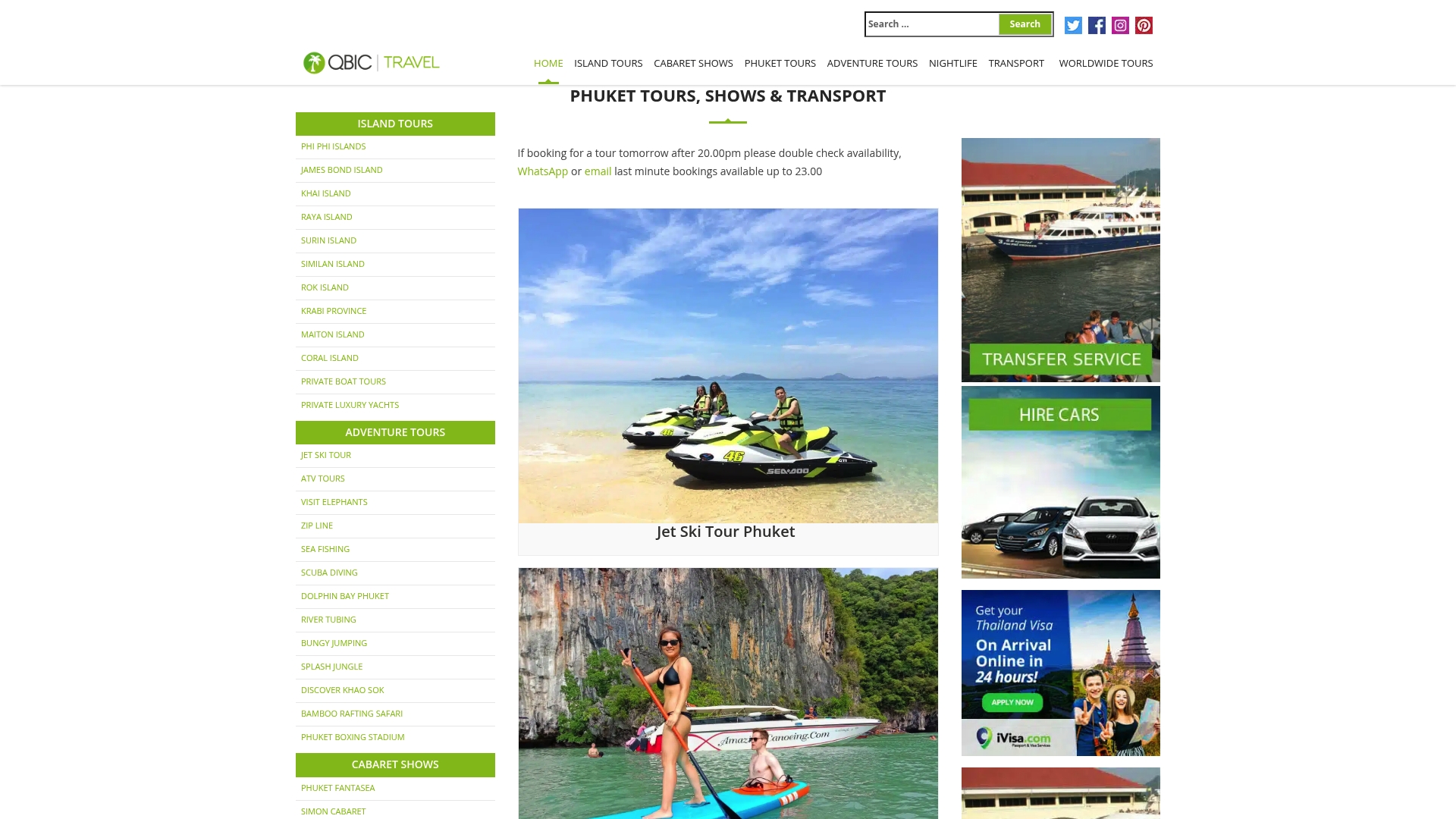
Qbictravel’s jet ski island tours cover up to eight islands in a single outing, giving you direct access to coastal temples, fishing villages, and cultural landmarks that are simply unreachable by road. For travellers who want to combine the thrill of open water with genuine cultural encounters, these tours offer a practical and exciting way in. Browse the full range of Phuket island tours and find the itinerary that fits your pace.
FAQ
What are the most authentic types of island cultural experiences?
Kastom village visits, multi-day homestays, and indigenous festival participation consistently deliver the most authentic engagement. The key marker is community control over revenue and access.
How do I tell a genuine cultural tour from a performative one?
Look for small group sizes (maximum 15 people), direct payments to host families or community members, and explicit community revenue-sharing policies. Tours that pressure you to buy goods or offer no transparency about where money goes are typically performative.
Is it respectful to attend indigenous festivals as a visitor?
Yes, if you follow local protocols strictly. Indigenous festivals like the Flying Fish Festival are living traditions with strict rules around photography, dress, and participation. Attend only by invitation and defer entirely to local guidance.
How much should I budget for immersive tribal tours in Indonesia?
Mentawai tribe tours cost USD 215–620 for 3–7 days. Korowai region tours in remote Papua cost USD 1,500–3,500 or more due to charter flights and boat logistics.
What cultural activities can I find beyond organised tours?
Local markets, craft cooperatives, and community music programmes offer deep cultural insight without tourist packaging. These non-touristic spaces reveal contemporary island life in a way that scheduled tours rarely replicate.


